Walking Toward a Sustainable Future: Reconnecting Rural China and the Netherlands
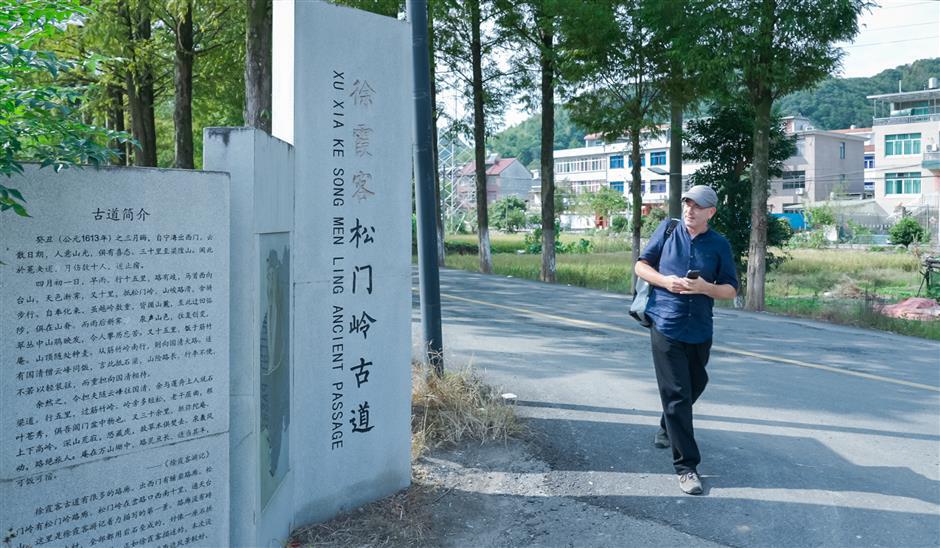
Harry den Hartog walked along a fragrant road bordered by osmanthus in northern Zhejiang Province. As industrial facilities faded into the background, the inherent beauty of the countryside became apparent.
In the past two years, the Dutch urban designer has traversed 1,800 kilometers on foot, exploring around 200 villages in the Yangtze River Delta region to gather insights on sustainable rural development.
Walking into real life
Den Hartog has been teaching at Tongji University in Shanghai since 2012. One of his research projects focuses on rural revitalization in China.
This project, initiated by Delft University of Technology in the Netherlands, explores a critical question: How can sustainable goals be achieved for small towns and rural regions?
Den Hartog's colleagues in the Netherlands have observed significant disparities between urban and rural areas, particularly in the northern regions. Many decisions are made in offices and conferences, often lacking a genuine connection to the realities of daily life in rural communities.
While large industrial parks, data centers, and power plants in rural areas may stimulate the economy, den Hartog argues that they harm the countryside and fail to meet local needs.
"We are searching for a new sustainable future for the development of rural areas," he stated.
He hopes to find solutions in the Yangtze River Delta region, particularly in Zhejiang Province, which shares many similarities with the Netherlands.
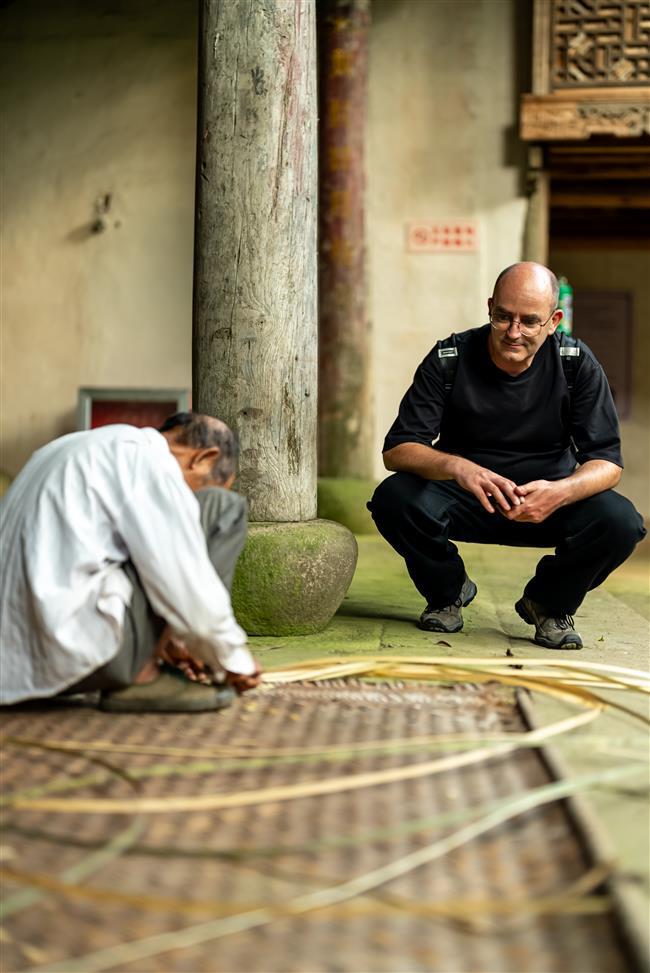
As one of China's most economically developed provinces, Zhejiang is at the vanguard of rural revitalization, driven by "common prosperity" programs and the "Two Mountains Theory," which emphasizes the significance of environmental conservation alongside economic progress.
Den Hartog said that its economic level is closer to that of Western European countries.
Zhejiang's rural areas are also conveniently located near major urban centers such as Shanghai and Hangzhou. These regions are accessible by public transportation in around three hours from major cities. They are easy to explore on foot, which is how den Hartog conducts most of his research.
"Walking," he shared with Shanghai Daily during a hike, "symbolizes slow speed and slow life."
He believes it provides a profound connection to the physical environment, enabling a better knowledge of distances and meaningful connections with locals that maps cannot.
Preserving heritage in a changing world
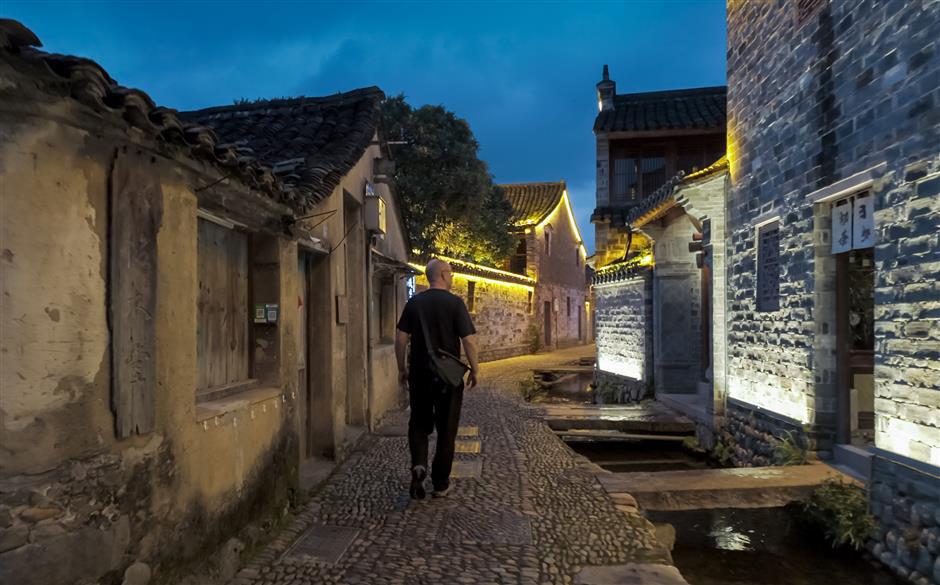
One of den Hartog's most enlightening discoveries is Qiantong Ancient Town, located in Ninghai County, near the port city of Ningbo. Founded in 1233, Qiantong is renowned for its distinctive architecture of the Ming and Qing dynasties (1368-1911), featuring tall horse-head walls, painted pillars, and carved wooden beams. Almost every household in the village shares the surname Tong, reflecting its history as a clan village.

Den Hartog explored the town with his local walking companion, Tong Junhui. Meeting local artists, government officials, and even farmers provides insights into local life, enriching his experience.
Tong is a local contractor who specializes in renovating historic structures. He grew up in Qiantong and learned carpentry from the local experts. He now spends his days rebuilding and reconstructing traditional structures based on original designs, both in Qiantong and around Zhejiang.
Many Qiantong houses were refurbished or rebuilt by Tong. He told Shanghai Daily that the renovation plans had to be approved by the authorities, ensuring the exterior match the original.
Villagers have the option to finance the renovations or rebuild themselves, which might cost several hundred thousand dollars, with the government providing a subsidy of US$100 per square meter. Or they can request complete government funding.
After reconstruction, the government holds usage rights for 15 years. During this time, villagers can lease the lands from the government for US¥4,000 -7,000 per year and reclaim full rights.
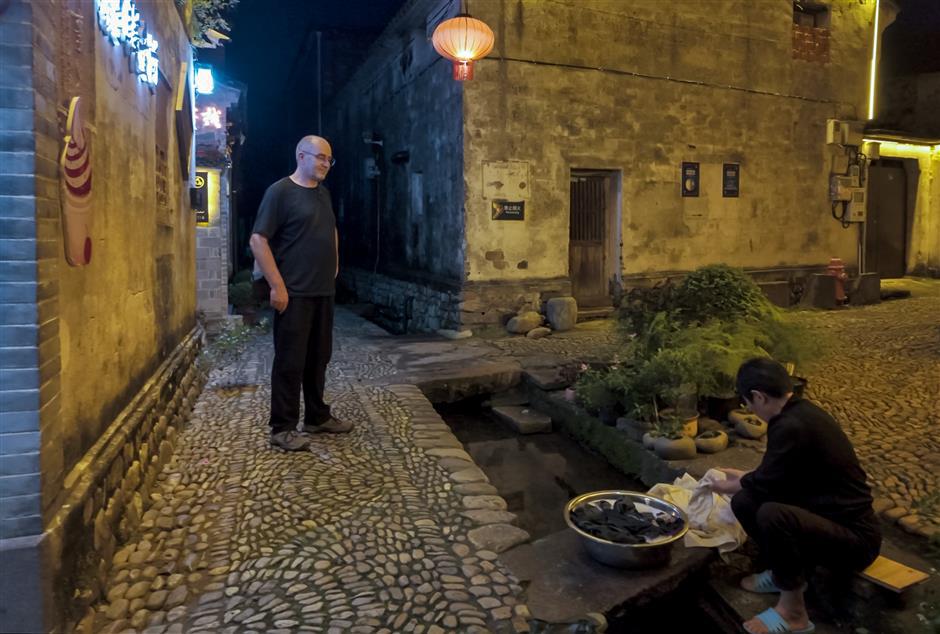
The town's water system fascinated den Hartog. The stream water was strategically redirected into the town around 1509 using the principles of Bagua, or the "Eight Trigrams," a system that represents natural forces. This approach ensured that every household had access to flowing water right outside their doorsteps.
In summer, this water cools the atmosphere and is vital to the villagers' everyday and social life. Villagers wash clothes and vegetables by the stream. Along the canals, they trade homemade loofahs and share the latest gossip.
This combination of history and adaptability distinguishes Qiantong as an example of the UNESCO Historic Urban Landscape strategy, which emphasizes the preservation of a community's social and cultural fabric in addition to physical structures. It represents a sustainable style of rural development that honors the past while preparing for the future.
Slow down and reflect
In his travel blog, den Hartog notes that the difference between urban and rural areas lies mainly in how people interact. In cities, individualism often prevails, even in a collectivist society like China. In contrast, rural areas foster interdependence, with people generally more hospitable and helpful, even to strangers.
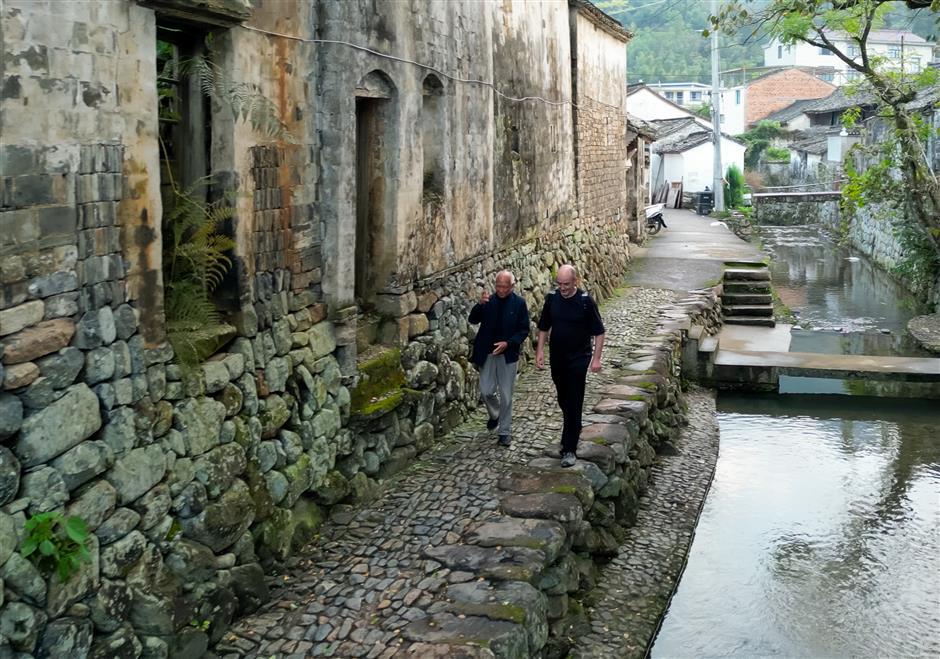
In Longgong Village, den Hartog met 83-year-old Chen Yong, a former primary school principal. When they encountered each other, Chen eagerly offered to show den Hartog around the village. Although he didn't speak English, they communicated effectively using translation apps and gestures.
Chen introduced den Hartog to several significant places, including the village's former primary school, a 460-year-old sycamore tree, the local ancestral hall, and the bus station – all key social hubs in the community.
"While walking with him through the village, I felt connected to the history of the village and his personal story. Experiencing it physically helps you understand the place far better than looking at maps or online information," den Hartog reflected in his blog.
Longgong Village, founded during the Song Dynasty, has a population of over 2,000. However, like many villages in China, younger generations have moved away. The primary school Chen once taught at has become a community center.
This trend is evident not only in Longgong and Qiantong but also in the Netherlands. One major focus of den Hartog's research back home is a rural area with a gorgeous landscape, yet it struggles as young people leave due to a lack of job opportunities, economic prosperity, and prospects, along with the absence of universities and other attractions.

Villages have seen their traditional way of life fade away, overshadowed by the forces of modernization and urbanization.
Den Hartog argues that people should take a moment to explore various alternatives, including small-scale, low-impact development that honors the unique characteristics of villages and their surrounding landscapes.
He is particularly interested in Ninghai County's walking trails, which are historically significant as the starting point for the renowned Ming Dynasty traveler Xu Xiake. As the “pioneer of hiking in China,” Xu traveled widely for decades, leaving behind “Xu Xiake's Travels”, a work of more than 600,000 characters. Ninghai was his starting point 431 years ago.
Xu Xiake's walking trails are being re-evaluated. Along the road in Ninghai County, den Hartog has found statues of Xu and pancakes named after him. Some of the ancient routes Xu walked in the mountains of Zhejiang have gained popularity as hiking trails for residents of neighboring cities like Shanghai and Hangzhou, offering an escape from urban life.
"I hope there won't be too many changes," he remarked.
Development and tradition seem well-balanced in the ancient town of Qiantong. Mass tourism has yet to overwhelm it thanks to the lack of large resorts or tourist facilities. Villagers and visitors use public areas, allowing daily life to continue. Tourism also provides meals and homestay jobs to some communities.
Tong said most local job seekers are older residents. This lack of employment has prompted many young people to leave. After the local school closed, Tong has relocate to downtown Ninghai for his children's education.
From the town's old cobblestone street, Tong remembers his extended family and the lively gatherings with family and friends in the courtyards. His new downtown apartment complex feels alienating, with neighbors barely knowing each other.
He wants to move back after his kids finish school. "Here we have mountains and rivers; we can fish in the river and hunt in the mountains," he said.

Editor: Chen Jie
In Case You Missed It...

 Oct 17, 2026