When the Sea Binds Two Shores: The Living Tradition of Sending Off the King Boat
Editor's note:
The United Nations has officially designated 44 Chinese traditions as world cultural heritage. This series examines how each of them defines what it means to be Chinese.
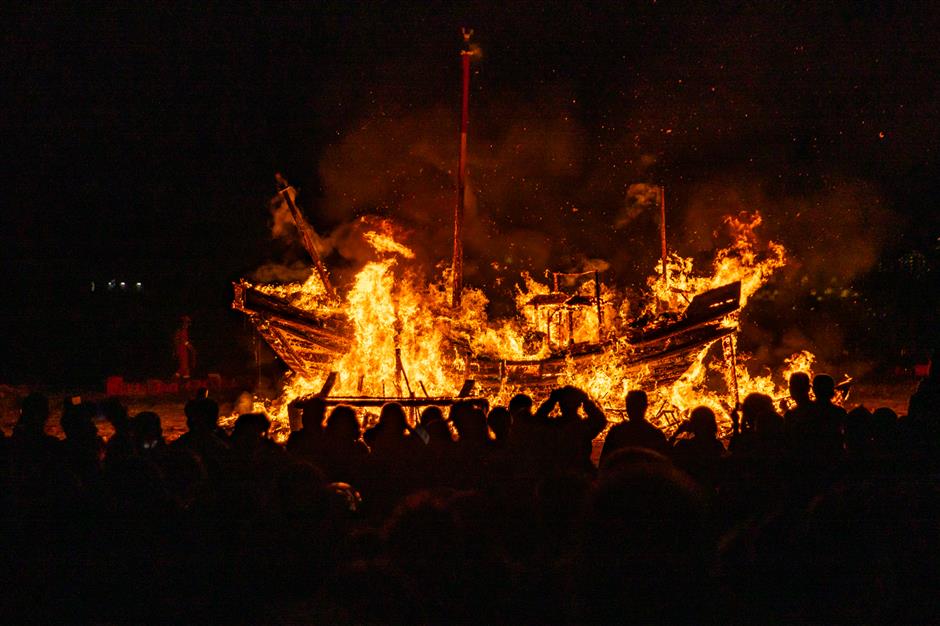
Flames leap into the night, devouring a magnificent wooden boat painted in brilliant red and gold. The crackling fire throws flickering shadows across the crowd as they bow and chant — sending off the divine "king boat," along with their hopes for peace and protection.
The Sending Off the King Boat ritual, also known as Wangchuan in China or Ong Chun in Southeast Asia, originated in the southern coastal provinces of Fujian and Guangdong during the 15th and 16th centuries. Over centuries of migration and maritime trade, it sailed beyond China's shores and took deep root in Malaysia.
The tradition, jointly nominated by China and Malaysia, was inscribed on the Representative List of the Intangible Cultural Heritage of Humanity by the United Nations Educational, Scientific and Cultural Organization (UNESCO) in 2020. It was the first joint nomination between China and a partner nation, marking a new chapter in heritage cooperation.
At its heart, the ritual honors Wang Ye, guardian deities believed to patrol on behalf of heaven, repel plagues and shield coastal communities from disaster. Every few years — sometimes three, sometimes four — communities ceremonially "invite" the deity to visit through a months-long preparation that mobilizes almost every household.
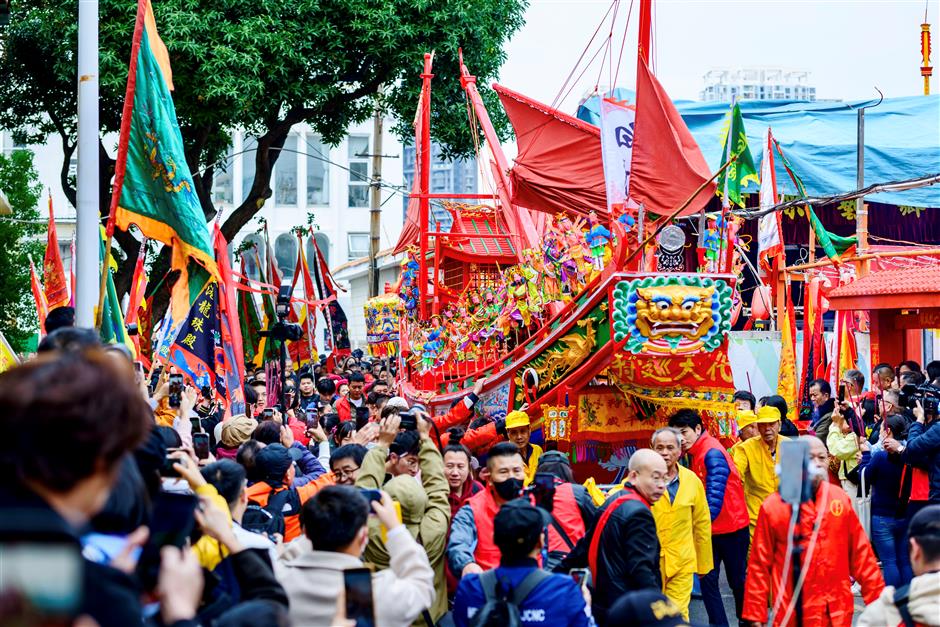
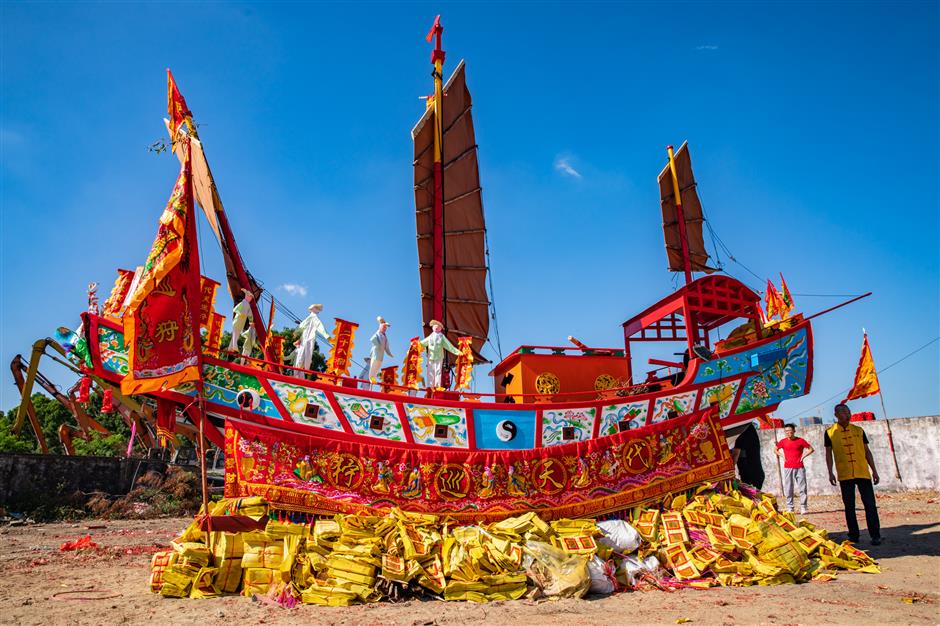
The process begins with divination to determine an auspicious time. Craftsmen then build a wooden king boat and fill it with offerings: incense, clothing and paper effigies. Typically around 7-8 meters long and 1.5 meters wide, the boats are elaborately decorated. Tall lamp poles, 5-6 meters high, are erected near the sea to call wandering souls — "good brothers," referring to those who died at sea.
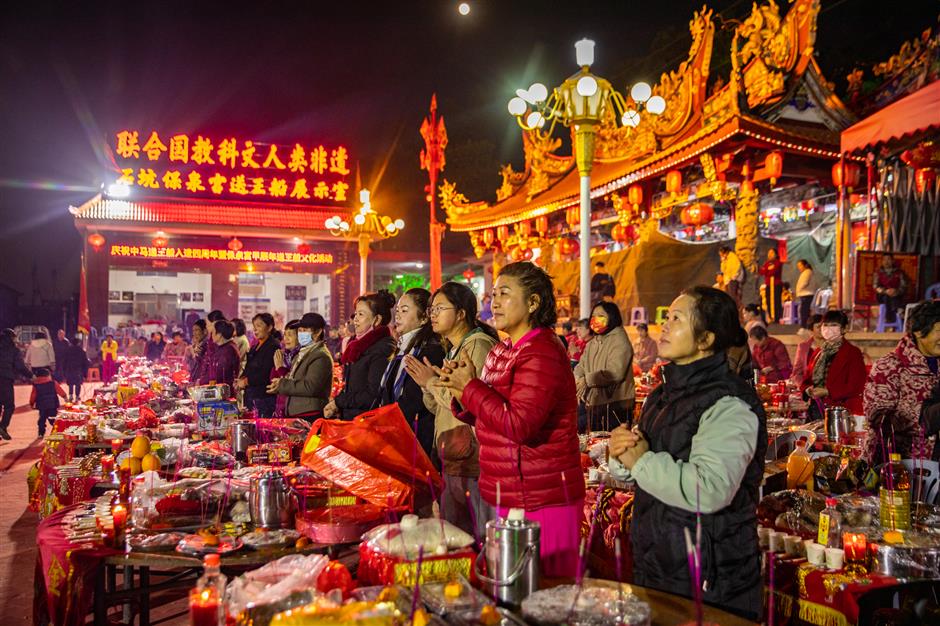
What follows is a series of vibrant rites: welcoming the deity from the sea, sacred blessings, community parades, offerings for the restless spirits, and finally the climactic farewell.
The boat is burned on the beach or open ground, symbolically returning the deity to the heavens by sea and flame — carrying with it prayers for prosperity, calm seas and favorable winds.
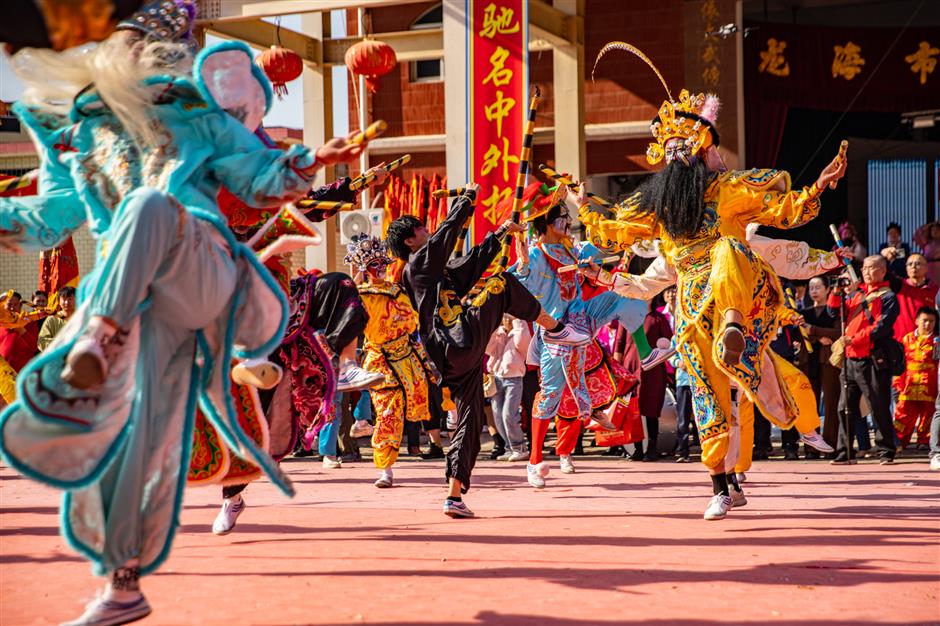
Beyond its spiritual significance, the ceremony is a living showcase of traditional culture. It brings together dragon and lion dances, martial troupes, opera performances, folk chants, exquisite paper crafts and specialized boat-building techniques.
In Fujian's coastal cities such as Xiamen and Zhangzhou, it is one of the year's most anticipated events. Nearly every home prepares offerings, and families set off firecrackers as the king boat procession passes.
The custom reflects Fujian's centuries-old seafaring spirit: reverent toward the ocean yet unafraid to navigate its uncertainties. It is a ritual born of the sea, reliant on the sea, and always returning to the sea.
Beginning in the 17th century, as Fujian people ventured to Southeast Asia, the king boat tradition traveled with them. Before departing, emigrants often carried a pouch of incense ash from their ancestral temples — a spiritual safeguard for the voyage. Once they settled in Malaysia's Malacca, Penang or Johor, the incense ash was installed in newly built temples, continuing worship of hometown deities and becoming emotional anchors for overseas Chinese communities.
In Malaysia, the custom evolved into a major cultural festival. In Malacca, temples honoring the "five kings" — Zhu, Wen, Chi, Li and Bai — host grand processions through historical streets, accompanied by pounding drums and glowing lanterns.
The event has since grown into a multicultural celebration. Malay, Indian and international visitors now join Chinese Malaysians in the crowds, turning the festival into a living example of coexistence and shared heritage.
To ensure the ritual's future, China and Malaysia jointly established the King Boat Protection Working Group, launching long-term cooperative efforts. The two countries now share digital archives, host training for young artisans, and build exhibition centers dedicated to king boat culture.
Exchanges between craftspeople, from boat-building to paper sculpture and traditional painting, help keep the artistry vibrant and rooted in contemporary society.
Editor: Zhang Liuhao