World Dialogue on China Studies Heads to Egypt
An Arab countries session of the World Dialogue on China Studies is scheduled for Cairo from September 28 to 30 to deepen academic exchanges between China and the Arab world, the China Studies account has announced.
Ahead of the gathering, the China Studies account has highlighted 10 works by Arab scholars, covering subjects from early travelers' accounts and Chinese philosophy to literary translation, development and foreign policy.
The event follows President Xi Jinping's state visit to Egypt earlier this month. During a visit to the Grand Egyptian Museum on September 2, Xi called for equality, mutual learning, dialogue and inclusiveness among civilizations. He urged the two countries to implement the Global Civilization Initiative, encourage exchanges and coexistence among different civilizations, and contribute to building a community with a shared future for humanity.
Held within the framework of the World Conference on China Studies, the overseas academic exchange is hosted by the Information Office of Shanghai Municipality and the Shanghai Academy of Social Sciences. Its organizers also include Shanghai International Studies University, the China-Arab Research Center on Reform and Development, Cairo University, the Egyptian Council for Foreign Affairs and the Al-Ahram Center for Political and Strategic Studies.
The 10 books offer the following perspectives. English titles below are descriptive translations of the titles in the Chinese reading list.
China and the Arabs in History
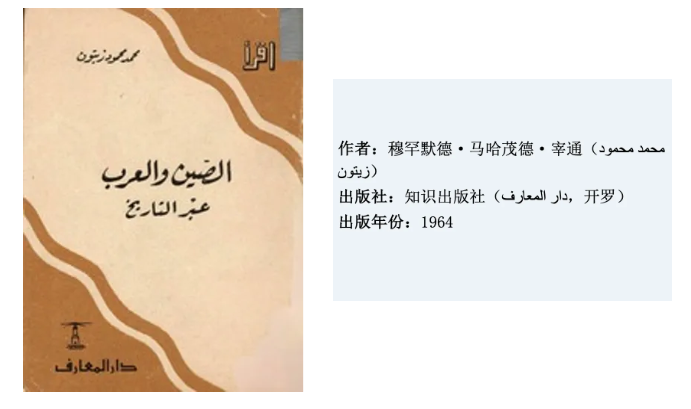
Long before modern diplomacy, Arab merchants, geographers and travelers were gathering knowledge of China through direct contact. Muhammad Mahmud Zaytun examines what they recorded about its cities, goods, customs, religions and achievements, alongside the exchanges that accompanied the arrival of Muslims in China.
His account shows how this knowledge accumulated and why Arabic writings matter as historical sources. They preserved descriptions of Chinese society, circulated knowledge about the East and kept China present in Arab intellectual traditions over many centuries.
Zaytun was an Egyptian writer, poet and researcher whose work ranged across Egyptian and Arab history as well as China.
Chinese Wisdom: An Analytical Study of Chinese Thought Since Antiquity
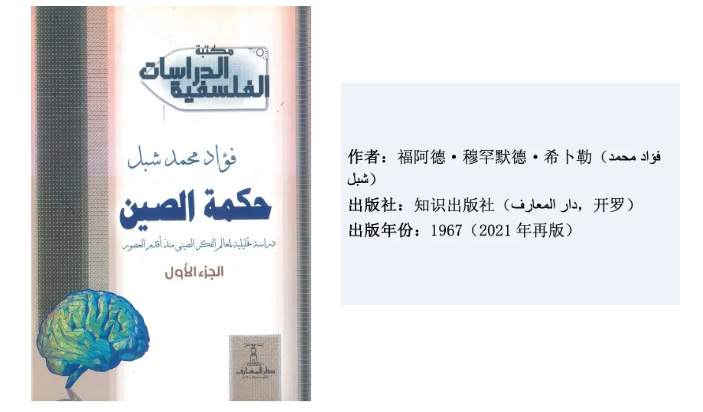
Fuad Muhammad Shibl's two-volume study introduces Arab readers to the ideas underlying Chinese civilization. Confucius and Confucian ethics, Laozi and Taoism, and the adaptation of Buddhism in China are central subjects, with Mohism and Legalism also considered in their historical settings.
The emphasis is on how these traditions shaped family obligations, social order, government and relations between people and nature. Shibl explores their connections, their concern with moral cultivation and practical life, and the ways they changed while remaining influential. Ancient thought, in this account, continued to inform Chinese political attitudes, social values and everyday conduct.
An Egyptian diplomat and scholar who served as ambassador to Indonesia, Shibl studied Asian civilizations, religious philosophy and world history.
An Introduction to Chinese Literature: Literary, Analytical and Historical Studies, 1766 BC-1980
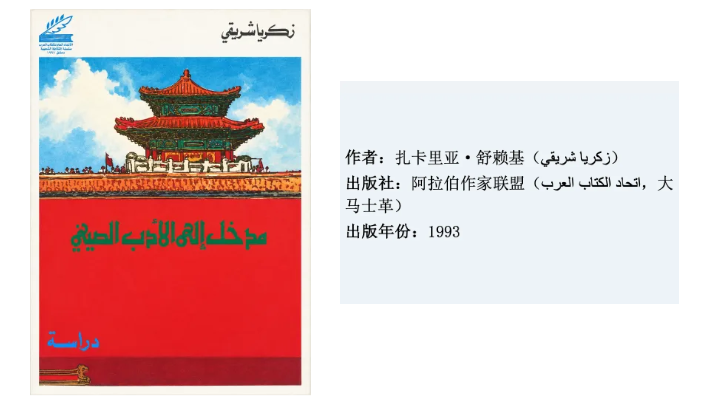
Syrian writer and diplomat Zakariya Shurayqi surveys Chinese literature from early texts and ancient verse to the beginning of the 1980s. Poetry, prose, historical writing, drama and fiction are examined through both literary analysis and the changing circumstances of Chinese life.
Dynastic history and intellectual traditions frame the earlier chapters. The modern discussion turns to the upheavals of the late Qing Dynasty, the New Culture Movement, the growth of vernacular writing and the emergence of new literary forms. It also considers literature's relationship with society and politics after 1949.
Shurayqi, a novelist and artist as well as a scholar of Chinese literature and art, served as Syria's ambassador to China.
The Chinese Experience: A Study of Its Ideological, Historical and Economic Dimensions
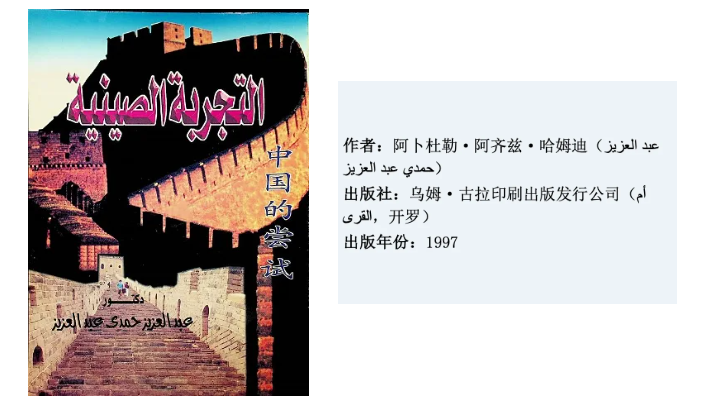
Abdel Aziz Hamdi approaches China's modernization through ideology, history and economics. He identifies the reforms associated with Deng Xiaoping as a turning point, examining the priority given to economic development and the interaction of opening-up, technological progress and modernization.
The study also addresses central economic management, local development and efforts to curb corruption. Hamdi argues that political stability, policy continuity, pragmatic reform and openness helped shape a development path rooted in China's circumstances, with institutions and policies adjusted over time.
An Egyptian sinologist and translator, Hamdi is a professor of Chinese in Al-Azhar University's Faculty of Languages and Translation. His research encompasses Chinese literature, thought and society, as well as translation between Chinese and Arabic.
The History of China and the Ancient East
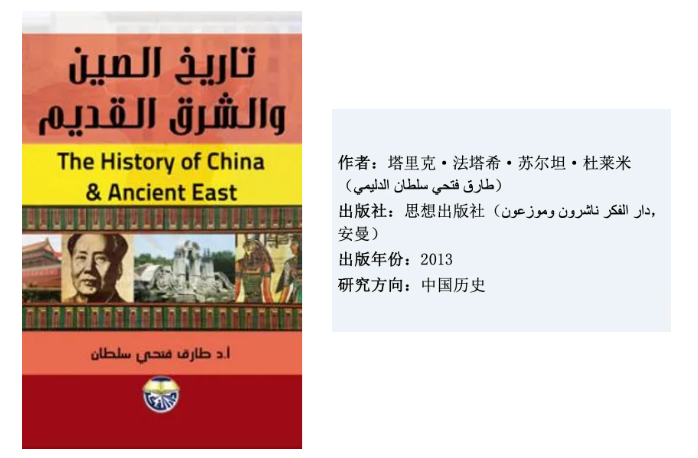
Tariq Fathi Sultan al-Dulaimi places China within the wider history of Asian civilizations. His survey moves from dynastic politics and cultural development to modern political and economic changes, while tracing links with Southeast Asia, regional commerce and the broader Eastern world.
Silk and porcelain illustrate China's role in transport, trade and craft production across Asia. The book also follows contacts with Arabs and West Asia, considers Southeast Asian kingdoms and examines colonial expansion and the circumstances of Muslim communities in the region. These connections provide the wider setting for its account of Chinese history.
Al-Dulaimi is an Iraqi history professor at the University of Mosul whose research covers Asian history, Islamic history and exchanges among Eastern civilizations.
China and the Global Strategic Balance After 2001: Future Prospects
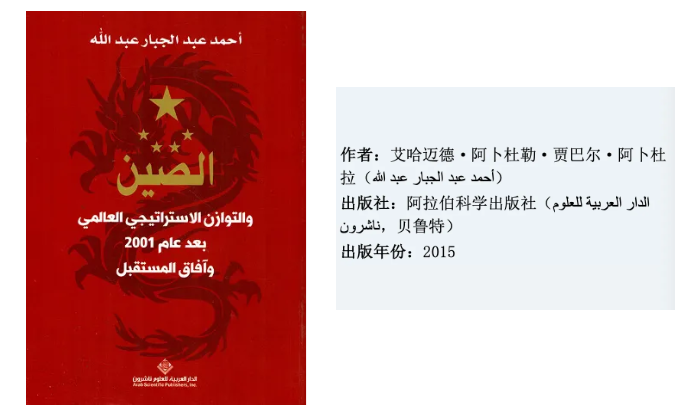
How might China's rise alter the distribution of power? Ahmed Abdul-Jabbar Abdullah examines that question against the international system that developed after 2001, assessing economic growth, technological advances, military capabilities and political influence.
The book considers how these resources affect China's ability to shape regional and global balances, including the implications for a US-led order. It explores China's possible place in a system moving toward two major poles or several centers of power. Abdullah argues that China's future strategic position depends on further strengthening its capabilities, widening its influence and responding effectively to its external environment.
An Iraqi political scientist at the University of Basrah, Abdullah studies international strategy, global power structures and Chinese foreign strategy, including the Belt and Road Initiative.
Sudan-China Relations, 1956-2011
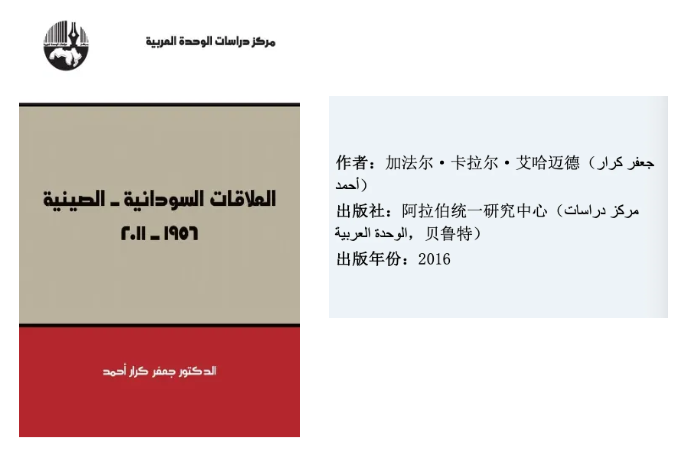
Jaafar Karrar Ahmed traces the relationship from Sudan's independence in 1956 to South Sudan's independence in 2011. Oil cooperation, particularly from the 1990s onward, is a major turning point, but the study also covers trade, investment, finance and exchanges in culture, education, science, technology and medicine.
Drawing on archives and firsthand material encountered during his diplomatic career, Ahmed asks why China attached importance to Africa early on and why Sudan had not fully used cooperation with China to achieve broader development. He credits Chinese capital and technology with advancing Sudan's oil industry and infrastructure while examining weaknesses in planning, governance and the distribution of benefits.
The Sudanese scholar and diplomat earned a doctorate in China-Arab relations at Nanjing University and undertook postdoctoral research at Peking University. He has held research posts at Shanghai International Studies University's Middle East Studies Institute and the China-Arab Research Center on Reform and Development, focusing on China-Arab and China-Africa relations.
Where the Nile Meets the Yangtze: A History of Literary Exchanges Between Egypt and China
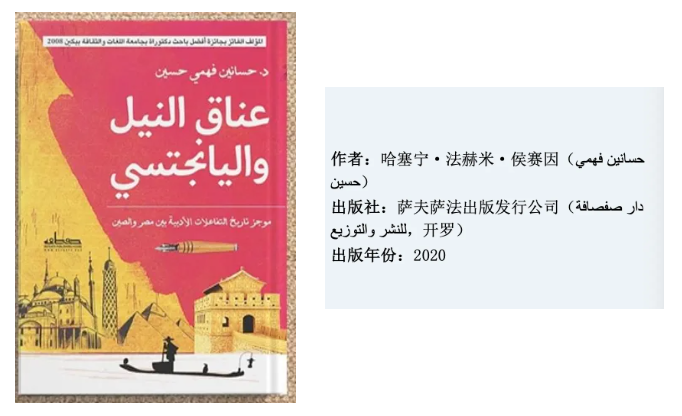
Translation provides Hassanein Fahmy Hussein with a way to trace literary contact between Egypt and China in the modern era. He examines how Egyptian writing was translated, studied and circulated in China, alongside the translation of Chinese literature in Egypt.
Translators, publishers and research institutions all feature in this account of how works reached new readers. Hussein considers which texts were selected, how they were received and how changing political and intellectual settings influenced cultural understanding. His attention to portrayals of Egypt and Egyptians by modern and contemporary Chinese writers adds a further perspective on the images each society forms of the other.
Hussein is an Egyptian sinologist, translator and professor in the Chinese Department at Ain Shams University, specializing in Chinese and comparative literature and literary exchanges between the two countries.
China and the Middle East: A Historical Study of China's Positions on Arab Regional Issues After the Cold War
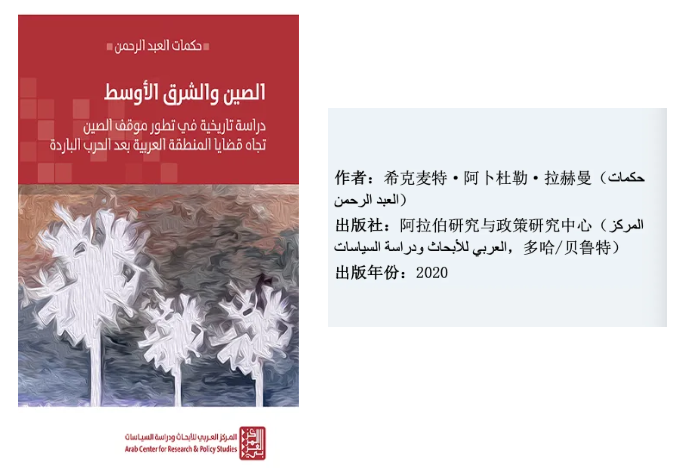
Hikmat al-Abd al-Rahman examines changes in China's approach to major Arab regional questions after the Cold War. He sets those policies within a discussion of China's prospective global role and the place of the Arab world in its diplomacy and international strategy.
The Arab-Israeli conflict, the Gulf War and Gulf security, the Darfur crisis and South Sudan's independence provide case studies. His analysis describes a cautious balance among principles, economic interests and a preference to limit deeper involvement. The book argues that expanding commercial and political influence had yet to produce a comprehensive regional strategy spanning politics, military affairs, security and culture.
A Syrian historian and Damascus University professor, al-Abd al-Rahman earned a doctorate in modern Far Eastern history at Paris VIII University. His research includes China-Arab relations, China's global relationships and international strategy.
China and the World: How China Sees the World and How the World Sees China
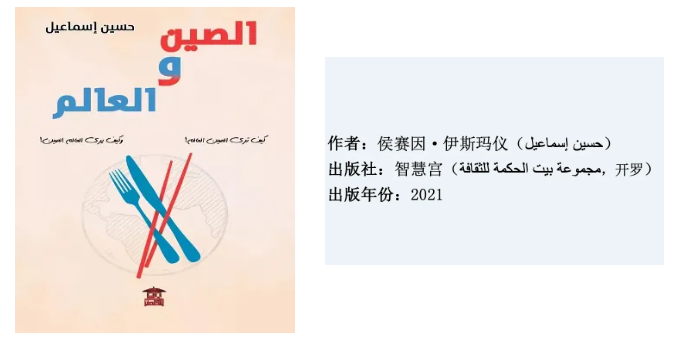
Hussein Ismail examines China's development since the start of the 21st century from two directions: Chinese perceptions of their country's path and future, and the world's responses to China's growing international role.
The discussion links changes in Chinese society and ideas with increasing economic and political weight. Ismail considers how China's expanding capabilities affect the structure of the international system, its major power centers and their relationships. He argues that a more active Chinese role in world affairs has also prompted others to reassess the country's development, culture and place in the world.
An Egyptian China specialist, writer and translator, Ismail graduated from Cairo University's Faculty of Economics and Political Science. He has worked extensively on China-Arab cultural exchange and served as deputy editor-in-chief of the Arabic edition of China Today.
Editor: Wang Xiang
In Case You Missed It...

 Sep 20, 2026