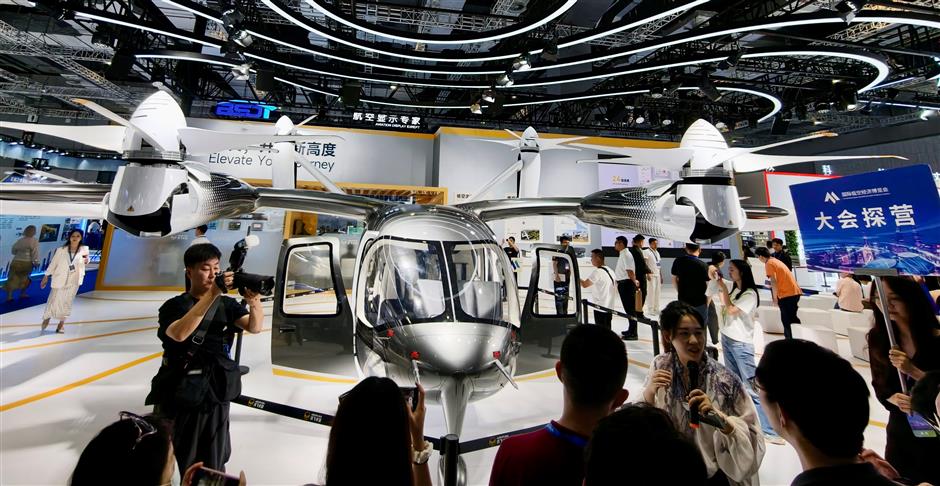
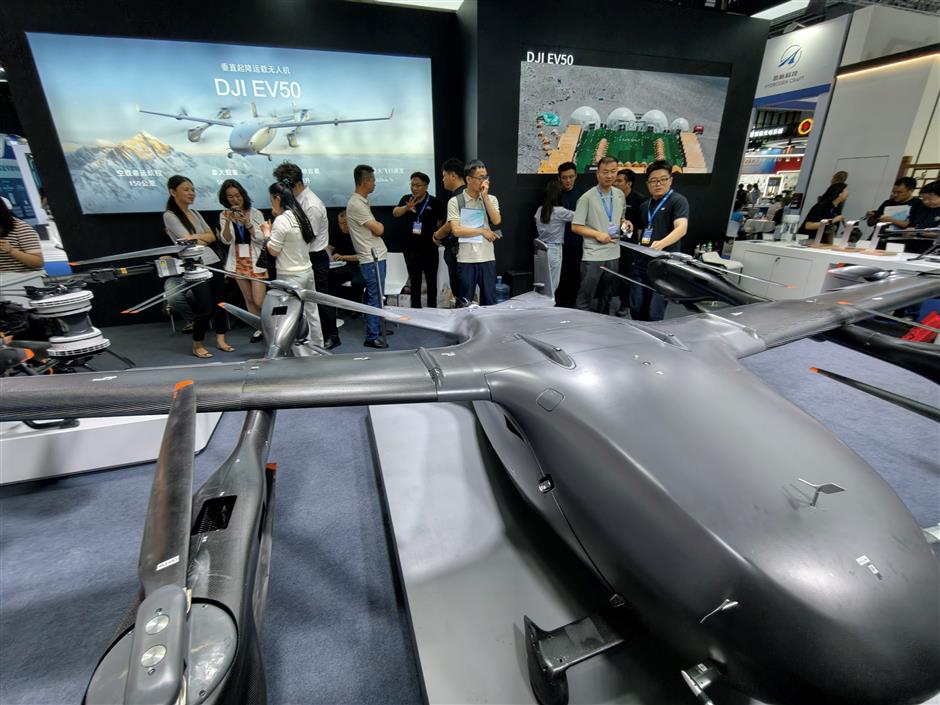
Next-generation aircraft designed for logistics, medical evacuations and amphibious operations stole the spotlight at the 2026 International Low-Altitude Economy Expo, signaling the rapid commercialization and real-world deployment of China's booming low-altitude economy.
Spanning 60,000 square meters, the four-day expo, which closed last Saturday, attracted 452 exhibitors and featured 570 next-generation aircraft and models, including electric vertical takeoff and landing (eVTOL) vehicles, general aviation aircraft and drones.
A total of 23 products made their global debut at the event, which covered the entire industry supply chain, from propulsion and avionics to security, advanced materials and industrial financing.
Aerofugia, backed by Chinese auto giant Geely, showcased its AE200 prototype, specifically optimized for low-altitude tourism and cultural experiences with upgrades to performance, exterior aesthetics, and passenger comfort.
The company, headquartered in Chengdu, Sichuan Province, bolstered its commercial road map by signing a procurement and operations agreement with Shanghai Xiaviation. The partnership will focus on aircraft sales, pilot training and fleet maintenance across the Yangtze River Delta, a region Aerofugia views as a vital testbed for nationwide expansion.
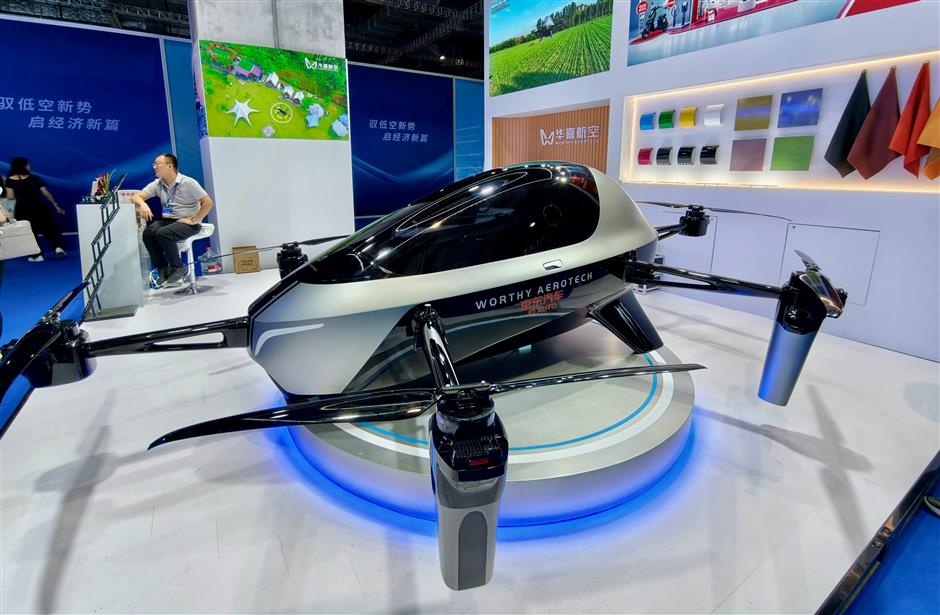
Worthy Aero debuted the WorthyAero R1, an ultra-light amphibious aircraft built for private aviation, regional tourism, urban transfers and emergency rescue. Zhang Xin, founder and CEO of Worthy Aerotech, revealed the company has already secured letter-of-intent orders for nearly 50 units from Hainan and Guangdong provinces, in culture and tourism applications.
The firm is also partnering with JD Auto to enter the low-altitude logistics and transport sectors.
The expo highlighted how low-altitude technology could transform healthcare delivery.
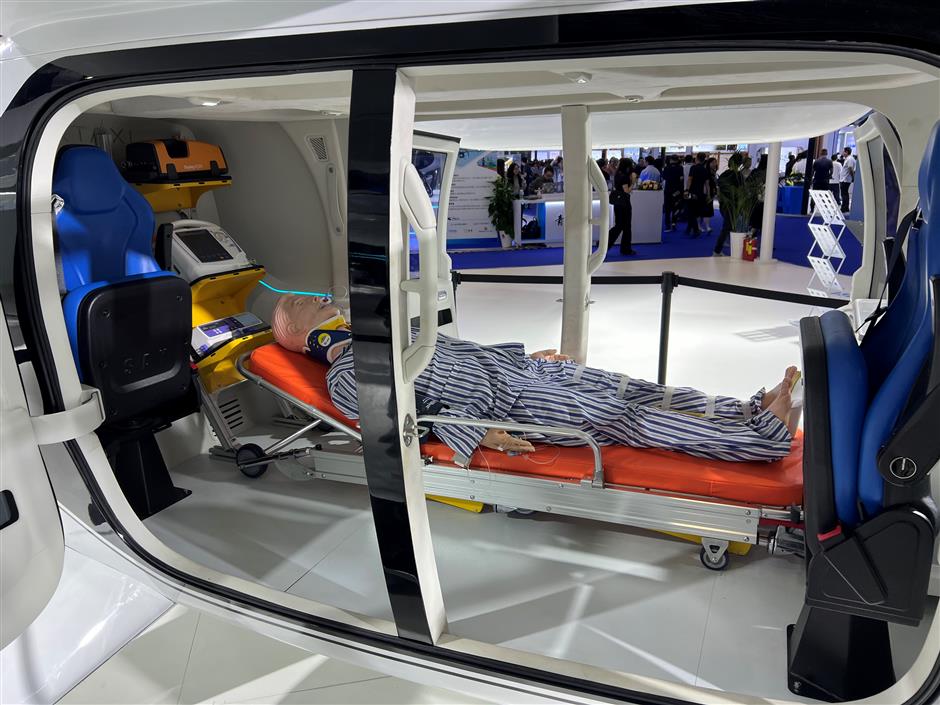
Shanghai-based Vertaxi, in partnership with Ruijin Hospital, unveiled a demo model of its two-metric-ton M1 manned eVTOL aerial medical ambulance. Built specifically for rapid emergency responses, the M1 aims to bypass ground traffic bottlenecks and establish an efficient aerial lifeline for critical patient transport.
It has a cost advantage, as traditional helicopter emergency services typically cost between 30,000 and 70,000 yuan (US$$4,100-9,600) per hour. In contrast, commercialized eVTOL operations are expected to slash hourly transit costs down to just a few thousand yuan, increasing accessibility for hospitals and patients alike.
Editor: Yao Minji
In Case You Missed It...
![[Weather] Strong Winds To Persist In Shanghai As Champi Moves Away](https://obj.shine.cn/files/2026/10/24/598aee9d-a731-4df5-8375-325870810c5c_0.jpg)
 Oct 25, 2026


Popular Reads

China's Heat Pump Exports to Europe Surge on High Energy Costs and Gas-to-Electric Shift
Shanghai Revises Rules for Four Stock Indexes, Caps Individual Stock Weights at 15%

Shanghai Targets Secondhand Smoke at School Gates