49-Million-Trip Shuffle: How Shanghai Is Rerouting Travel for Chinese New Year Rush
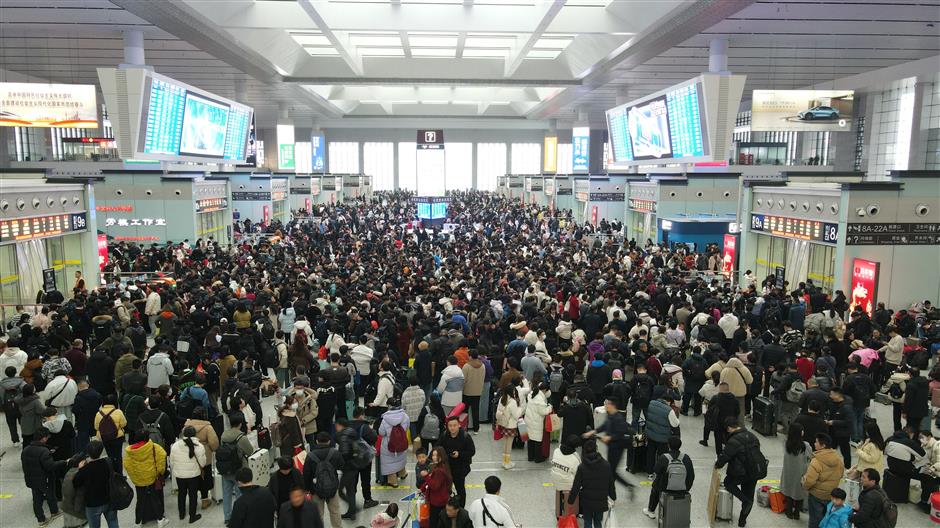
As the Chinese New Year approaches, Shanghai is preparing for the busiest travel period of the year. During the 2026 Spring Festival travel rush from February 2 to March 13, the city expects around 49.15 million intercity passenger trips, up about 5 percent from last year.
Known as chunyun (春运), the Spring Festival travel rush sees millions of people return to their hometowns for the Chinese New Year holiday. The sheer scale of this movement places transport systems under intense pressure.
With the Lunar New Year falling later this year than usual and the public holiday extending to nine days, transport authorities expect heavier and more sustained passenger flows than before.
To cope with the surge, Shanghai has made several adjustments at major transport hubs. Some high-speed rail services have been diverted to Shanghai South Railway Station to ease pressure on Hongqiao, the city's busiest hub, said Xu Wei, director of the Passenger Transport Division of the local transport commission. Even after the shift, Hongqiao is still expected to handle about 46 percent of intercity passenger traffic during the travel rush.
Helping passengers move through stations more smoothly is another key focus this year.
At major hubs such as Hongqiao, special shuttle buses will no longer be labeled simply as "Line 1" or "Line 2." Instead, they will clearly display destinations and major stops, making it easier for travellers – especially those carrying luggage – to quickly find the right bus service.
Digital tools are also playing a bigger role. Shanghai's SH MaaS (随申行) platform, which has already been in place at the Hongqiao Transport Hub, will continue to provide station navigation, real-time transport information, and route planning during the travel rush. The app is available in both Chinese and English.
For university students, who often travel in large groups at similar times, the city has launched customized coach services. These allow them to book point-to-point buses from selected university towns directly to major transport hubs through the SH MaaS app.
Weather conditions will also be closely monitored. Meteorological authorities say average temperatures during the travel rush are expected to be slightly higher than usual, though a strong cold front in early February could bring sharp temperature drops. Travellers are advised to check weather conditions not only in Shanghai but also along their routes and at their destinations.
With travel volumes expected to peak, the city will add more taxis and ride-hailing services during busy period, facilitating passengers' final leg of the journey home.
In Case You Missed It...

 Jul 24, 2026