City Urged to Hasten Development of Overseas Warehouses
Shanghai should accelerate the development of overseas warehouses to strengthen supply chain support for cross-border e-commerce, political advisors have said, as global tariff uncertainties continue to pressure China's foreign trade sector.
A joint proposal submitted by members of one of the non-CPC parties, the Revolutionary Committee of the Chinese Kuomintang Shanghai Committee, argues that overseas warehouses have become a core pillar of cross-border e-commerce, helping companies move supply chains closer to end markets and improve efficiency and stability. However, despite Shanghai's role as a national hub, its overseas warehouse ecosystem still faces structural bottlenecks.

The proposal points out that most overseas warehouses are located in Europe and the United States, while demand is rising in emerging markets such as Southeast Asia and Latin America. Many existing facilities remain small and fragmented, making it difficult for small and medium-sized sellers to access suitable storage resources.
It further highlights Shanghai's shortage of large domestic "front warehouses," namely distribution hubs strategically sited near key demand centers. While major platforms have built such facilities in southern China, high costs have discouraged similar investments in Shanghai's port areas, weakening the city's supply chain flexibility.
In addition, inefficient cargo consolidation operations and complex procedures continue to trigger shipping delays and drive up logistics costs, particularly for small-scale exporters. Cross-border returns pose another major hurdle: customs authorities frequently face difficulties verifying overseas sales data, which complicates formal return workflows.
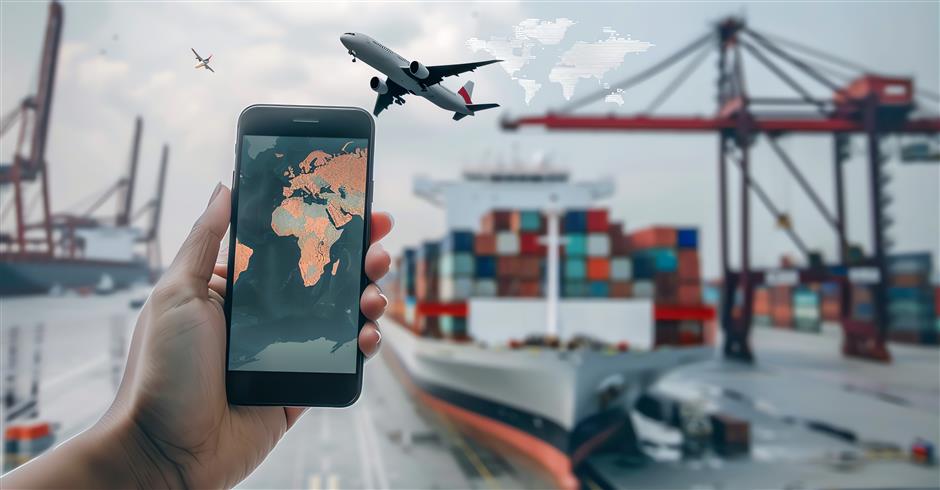
To address these issues, political advisors recommend expanding overseas warehouse networks in non-US markets, building shared public warehouses, and developing digital platforms for easier enterprise access to storage resources.
They also call for policy incentives for bonded zone "front warehouse" development, simplified customs procedures for consolidated shipments, and standardized cross-border return channels.
In Case You Missed It...

 Aug 25, 2026
![[SH Transit] How Shanghai's 'Air Express Lines' Speed Up Domestic Connections](https://obj.shine.cn/files/2026/08/25/ffea2ec9-370c-4bc7-b695-fec99dc0d73d_0.jpg)



![[SH Transit] How Shanghai's 'Air Express Lines' Speed Up Domestic Connections](https://obj.shine.cn/files/2026/08/25/39f368b4-c3fe-4776-853e-4d14e19ca50a_0.jpg)