Donor Urges Glass Casing After Rare Snake Specimen Damaged at Museum
A rare Mangshan pit viper specimen at the National Zoological Museum has been damaged after two children played with snake specimens in its endangered animals exhibition hall, The Paper reported.
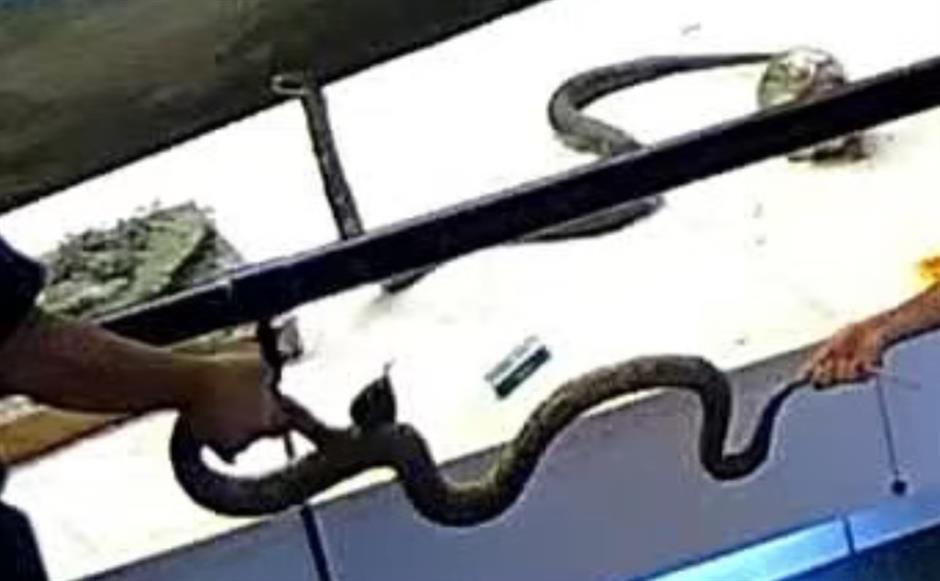
The children were seen grabbing and hitting specimens of a Zhoushan cobra and a Mangshan pit viper. Their father did not stop them and instead picked up the specimens and handed them to the children, according to the report. The Mangshan pit viper specimen was damaged during the incident.
The museum later strongly condemned the behavior.
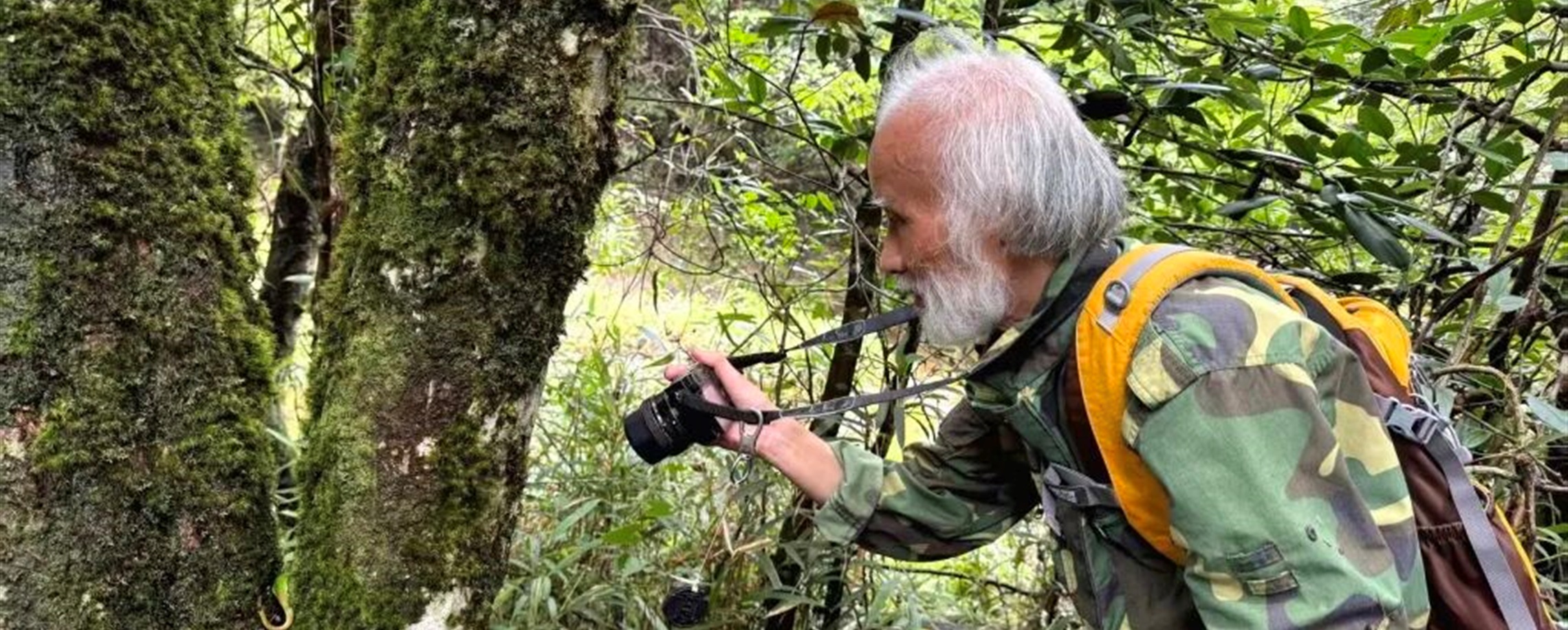
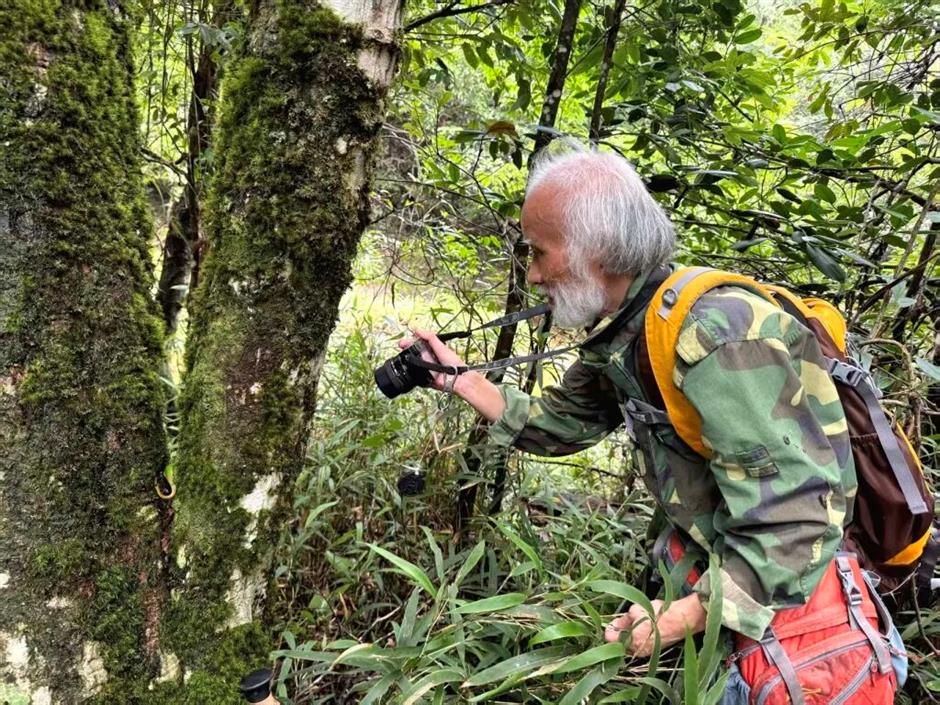
The Paper yesterday spoke with Chen Yuanhui, 77, the donor of the damaged specimen and the former curator of the natural museum at the Mangshan National Nature Reserve. Chen is also known as the discoverer of the Mangshan pit viper.
Q: What was your first reaction when you heard the specimen had been damaged?
A: A friend sent me the news on August 29. I was shocked at first, then felt deep pain after seeing that the specimen had been damaged.
Snake specimens are fragile. To prevent similar incidents, I suggested that valuable specimens should be placed behind glass so visitors cannot touch them at will.
Q: Why did you donate the Mangshan pit viper specimen?
A: The species is rare and has a very narrow distribution. In earlier years, some foreigners even came to China trying to smuggle Mangshan pit vipers for display or breeding overseas. The species has high ecological, research and public value, and the National Zoological Museum did not have such a specimen at the time.
The donated snake had been injured in the wild and was later rescued. After it lost the ability to survive in the wild, it was kept at the natural museum. When it died naturally, I preserved it and sent it to the National Zoological Museum in September 2014.
Q: How many wild Mangshan pit vipers are there in China?
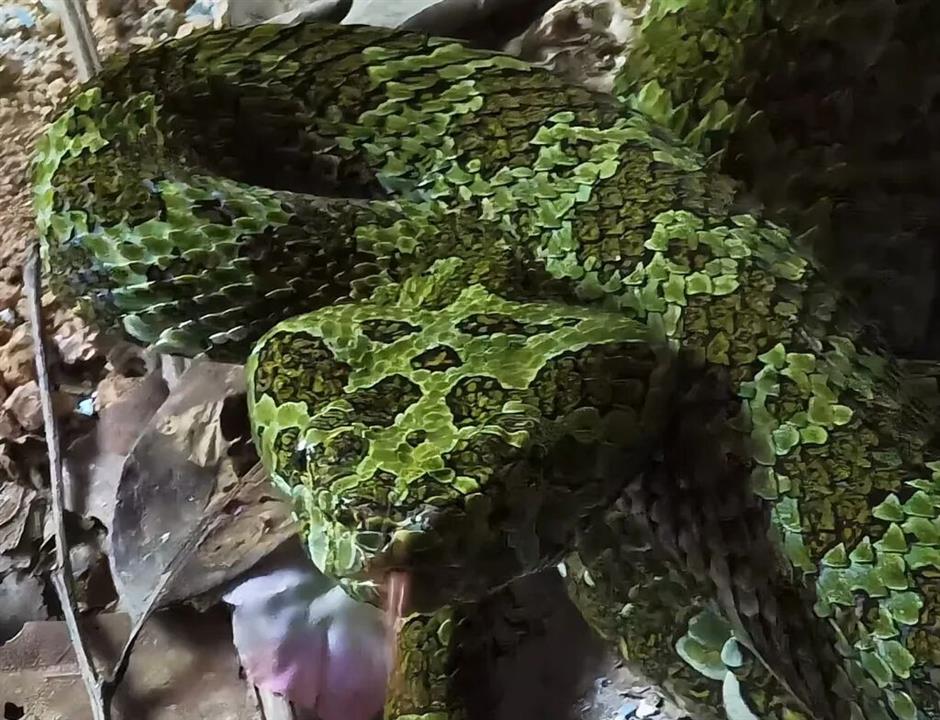
A: The wild population is estimated at about 500, and no more than 600. The number is unlikely to become large because the snake feeds mainly on birds and rats, and its population is limited by ecological balance.
The snake is beautiful and usually sluggish, but capable of striking with extreme speed when prey passes by. A snake of about 3 kilograms is already an adult, while the heaviest one I have handled weighed about 6.5 kilograms.
Q: Have you been bitten while studying snakes?
A: I have been bitten 20 to 30 times by venomous and non-venomous snakes, including bamboo pit vipers, cobras and Mangshan pit vipers. I have been bitten by Mangshan pit vipers nine times. On the ninth occasion, I missed the crucial first 3 minutes for self-rescue because I was taking research material. Two sections of the middle finger on my left hand were amputated.
Field research requires direct contact with snakes, sometimes even catching them barehanded, to obtain first-hand information.
Q: Are you afraid?
A: Fear and respect are necessary, but fear cannot stop the work. Whenever I am in Mangshan, I still go into the mountains every day.
Q: What do you take when entering the mountains?
A: I usually carry a flashlight, camera and other equipment. For trips into uninhabited areas, I bring a tent, spare clothes, dry food, emergency medicine and a power bank. In the past, I also carried a compass, though a phone now usually replaces it.
I began studying the Mangshan pit viper in the 1990s. In the early years, because few people paid attention to the species and there was no proper place to keep it, I kept snakes at home for observation. Years of night-time observation helped me determine that the species is nocturnal, active at night and mostly resting during the day.
Q: What do you think of the nickname "Mangshan Snake Doctor?"
A: It is only a nickname, not an official professional title. I previously joked that if people want to crack down on fake titles, they should start with me.
Q: Why keep working after retirement?
A: Snake research depends heavily on experience, and I believe I may still be the only person who has studied the Mangshan pit viper for such a long time in its native habitat. As long as I can continue, I will.
The work is my way of enjoying life. The species was discovered decades ago but remains relatively new to science, and many questions about its behavior, habitat and response to changing climate still require field research.
Q: Has protection improved?
A: Legal protection has strengthened conservation, and poachers have become more cautious.
Q: How do you view your daughter taking over your work?
A: I am growing older and hope my daughter can gradually gain experience. She was once afraid of snakes and had been bitten once, but after taking over, she has become more committed to the work.
Q: What do you hope for next?
A: I hope the Mangshan pit viper can receive better protection. I want to establish a field research base dedicated to studying its habits and behavior in the wild.
Editor: Wang Qingchu
In Case You Missed It...

 Sep 2, 2026