Men, Older Shoppers Drive Growth of China's Beauty Market: Bluebook
Men and older consumers are becoming the driving force behind China's beauty sector, according to an industry survey released on Friday.
The 2025 Chinese Cosmetics Bluebook, issued during the annual Oriental Beauty Valley International Cosmetics Conference, shows that demand for men's beauty products is significantly increasing, from 29.31 percent in 2022 to a projected 35.74 percent in 2025.
Shoppers aged 45 and up account for 8.3 percent of the market, up from 4.5 percent in 2022, representing an 84.5 percent gain.
According to the report, men and older people show strong long-term promise, while women aged 25 to 35 in large cities continue to be key buyers.
Young people in small towns and cities are also gaining influence. Their share of beauty spending is expected to be 17.32 percent in 2025, down from 27.7 percent in 2019, but growing from 21 percent in 2022.
They prefer livestreaming and social-commerce channels, where interaction and lower prices influence purchasing decisions.
Chinese consumers shop more frequently yet spend less per transaction. According to the survey, approximately 80 percent of buyers place a high value on ingredients and product performance when making purchasing decisions.
Anti-aging, repair, and sensitive-skin products have the greatest growth. Multi-function serums drove this year's Double 11 shopping spree sales, accounting for 44 percent of top goods and 47.1 percent of category revenue.
The research also mentions a shift toward homegrown companies, which is fueled by cultural storytelling and design.
More than 69 percent of customers said Chinese brands excel at incorporating cultural features, while 60 percent said brand stories influence their purchasing decisions.
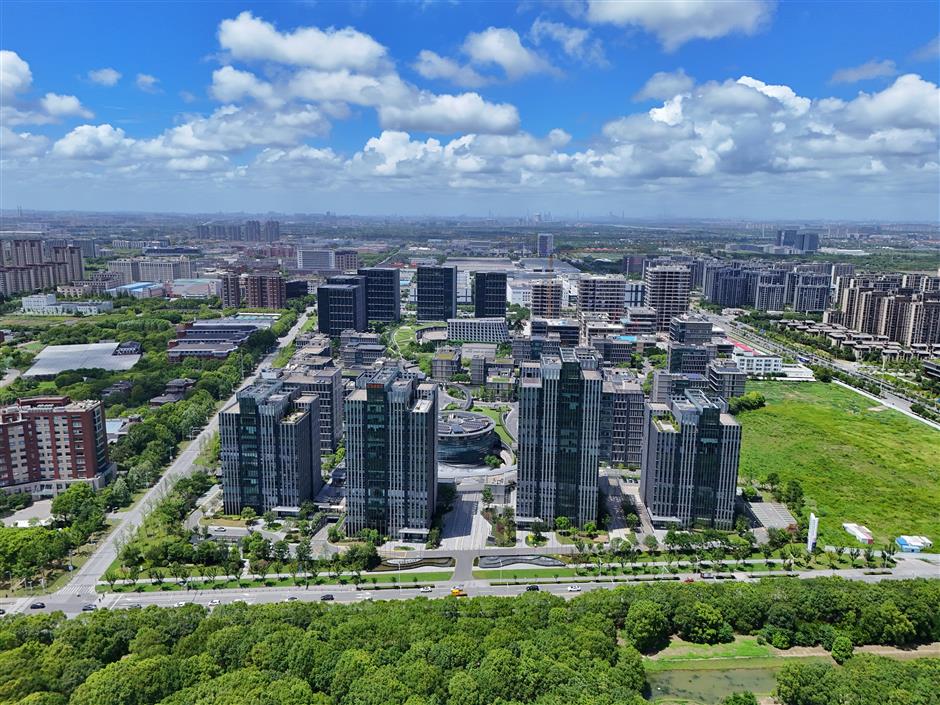
To meet expanding demand, the Oriental Beauty Valley in Shanghai's Fengxian District has become one of China's most concentrated beauty industry communities, according to Fengxian's Party secretary, Liu Ping.
Approximately 30 percent of Shanghai's cosmetics companies are based in the valley. It also produces one out of every four facial masks in China, giving it a sizable portion of the country's manufacturing market, according to Liu.
From January to September, valley enterprises exported 1.2 billion yuan (US$169 million), up 11.7 percent from the previous year.
Editor: Liu Qi
In Case You Missed It...
![[SH Transit] Shanghai Speeds Up Work On Five New High-Speed Rail Stations](https://obj.shine.cn/files/2026/09/18/e4351051-0478-4845-88fe-8ca3b4c41ef7_0.jpg)
 Sep 20, 2026
![[SH Health Guide] Shanghai Xinhua Hospital](https://obj.shine.cn/files/2026/07/28/efb0ca97-6a8f-4c9e-b338-6b7c79c6d1fd_0.jpg)
![[Quick News] Red Alert in Jinshan, Orange in Central Shanghai – Flood Risk Rises](https://obj.shine.cn/files/2026/08/10/05401504-cfd5-48fe-a83e-1810c378373b_0.jpg)