Roche Diagnostics Launches Innovative Gastric Cancer Risk Assessment Assay in China, Enhancing Early Detection with Localized Solutions
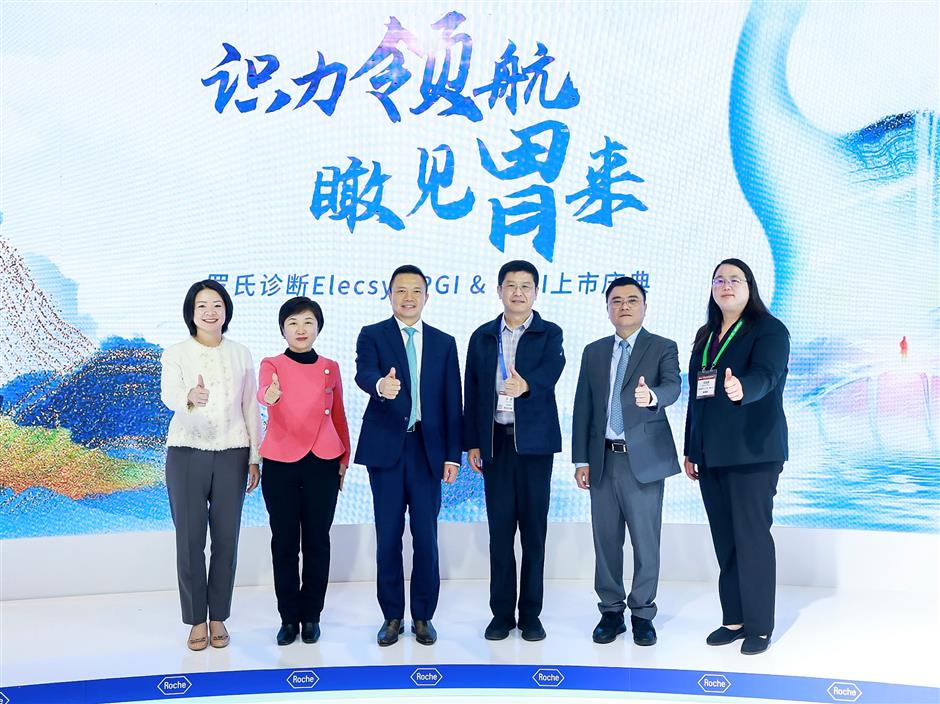
Roche Diagnostics announced today the official launch of its locally made Elecsys® PGI and Elecsys® PGII tests in China. These tests offer a highly accurate and non-invasive method for early screening and risk assessment of gastric cancer and atrophic gastritis. The launch was celebrated during the 19th National Conference of Laboratory Medicine held in Ji'nan on October 31.

With a simple blood test, the new assays make it easy to detect gastric mucosal atrophy, which is an important early sign of gastric cancer, helping to find high-risk people sooner when treatment is more effective.
As another locally developed immunoassay product from Roche Diagnostics China, the Elecsys PGI and PGII tests underscore the company's continued commitment to its "In China, For China" strategy. This milestone reflects Roche's ongoing efforts to accelerate the introduction of innovative diagnostic solutions tailored to the specific needs of Chinese patients.
Heavy Gastric Cancer Burden Calls for Early Intervention
Gastric cancer remains a public health challenge in China. Statistics show that the country reports approximately 359,000 new cases and 260,000 deaths each year, ranking fifth in incidence and third in mortality among all malignancies. Most patients are diagnosed in the middle or advanced stages, when the 5-year survival rate falls below 30 percent. In contrast, early detection and timely intervention can increase the 5-year survival rate to over 90 percent.
Although endoscopy is considered the gold standard for gastric cancer diagnosis, its invasive nature and dependence on operator experience can affect patient compliance. Serum-based pepsinogen (PG) testing offers a non-invasive, accessible, and efficient alternative for early screening and auxiliary diagnosis.
Pepsinogen I (PGI) and Pepsinogen II (PGII) are precursors of pepsin secreted by gastric mucosal cells. Their serum levels serve as a "barometer" of gastric mucosal health. In cases of atrophic gastritis – a precancerous condition – PGI levels and the PGI/PGII ratio (PGR) decrease significantly. Chinese clinical guidelines have widely recommended combined PGI and PGII testing as an effective tool for identifying high-risk populations.
Locally Developed, Patient-Focused: Innovation for Better Outcomes
The Elecsys PGI and PGII tests, developed and produced at Roche Diagnostics Asia Manufacturing and R&D Site in Suzhou, combine global expertise with local insights. Built on Roche's advanced electrochemiluminescence technology platform, the tests deliver outstanding performance in:
- High precision and accuracy for sensitive detection of gastric mucosal changes
- Exceptional specificity, minimizing cross-reactivity between PGI and PGII
- Strong anti-interference capacity across diverse sample matrices
- High-throughput compatibility with cobas e series automated immunoanalyzers
- Minimal sample volume requirements, reducing patient burden
"We are proud to witness the launch of Elecsys PGI and PGII, another milestone in our localized product portfolio," said Jeffrey Chin, Core Lab Vice President of Roche Diagnostics China.
"This not only strengthens our presence in the oncology field but also demonstrates our dedication to addressing the unique needs of Chinese patients. Moving forward, we will continue to deepen our local footprint at 'China speed,' accelerating the development of high-quality diagnostic innovations to support the 'Healthy China 2030' goals."
Editor: Li Qian
In Case You Missed It...
 Sep 21, 2026