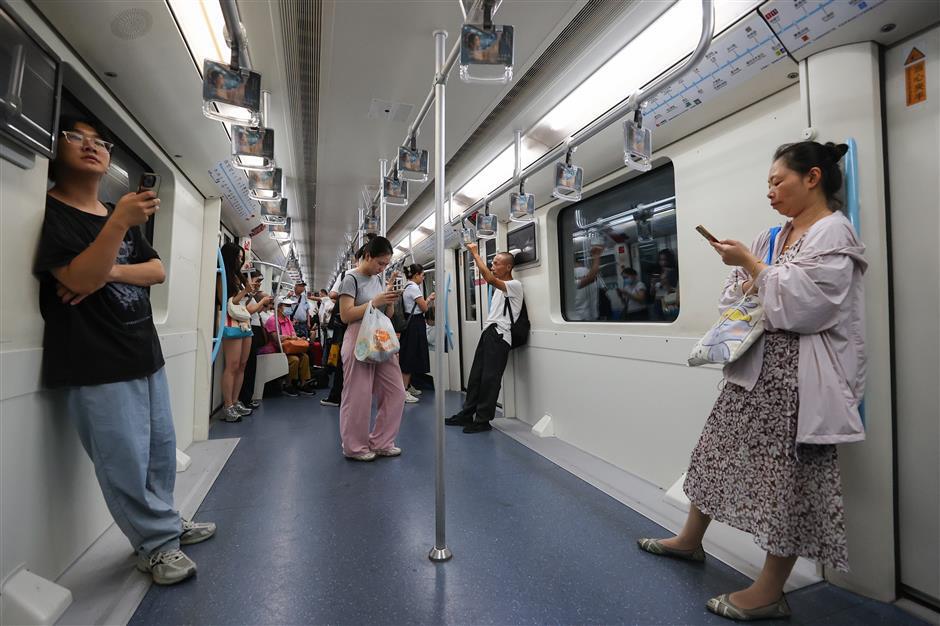
A train on Shanghai Metro Line 9 is now running with fewer seats to make room for more passengers.
The Metro operator has removed a total of four rows of seats at the front and rear of the train on a trial basis in order to increase the capacity by approximately 25 passengers.
Photos of the "seatless carriage" have quickly gone viral online.
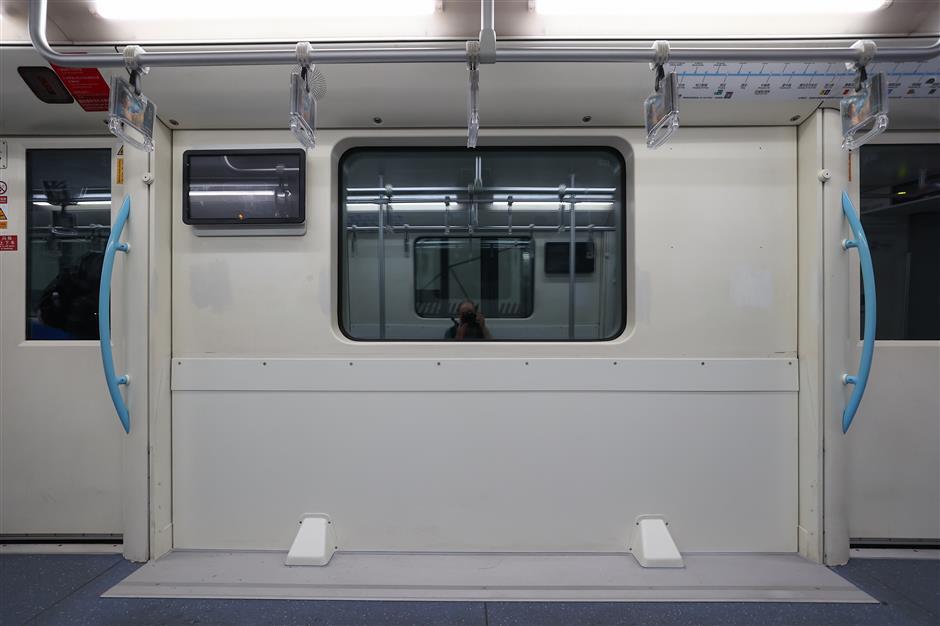
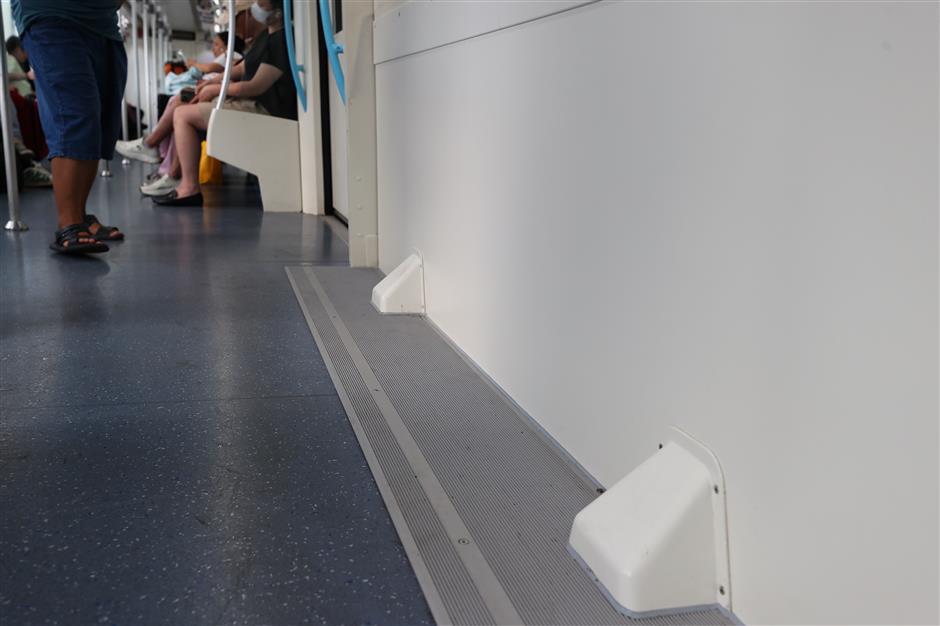
Stretching across the districts of Songjiang, Minhang, Xuhui and Huangpu, as well as the Pudong New Area, Line 9 is one of Shanghai's busiest commuter routes. Trains between Sijing and Caohejing often run at more than 90 percent capacity during rush hours, and Sijing Station has topped the city's morning peak entries for four years in a row.
Metro operator Shentong Group said the change is only a trial on one train, adding that safety standards remain unchanged. Whether it will be expanded depends on passenger feedback and ridership data.
Commuters are split. A regular rider said the extra space "might squeeze in a few more people," but warned that it could make travel harder for the elderly and those with mobility issues.
Another passenger argued that "seats are still needed" and that the move does little to solve the real problem.
A Russian student commuting to the Songjiang University Town welcomed the wider space but suggested "more trains during peak hours would be a better fix."
Transport experts told Shanghai Television that Line 9 is already near its limit: It runs on some of the shortest intervals in the country. Long-term relief, they argue, will depend on faster suburban railway links connecting the outlying districts with downtown.
According to Shentong, during morning rush hours on workdays, the minimum headway for some sections of Line 9 has been shortened to 1 minute and 50 seconds.
This is not the first time Shanghai Metro has taken such measures. In 2015, seats were removed on Line 16 trains to cope with heavy rush-hour crowds, while ensuring safety standards were met.
Editor: Liu Qi
In Case You Missed It...
 Oct 22, 2026
![[Current Trends] What Chinamaxxing Looks Like in Shanghai's Old Town](https://obj.shine.cn/files/2026/10/19/9c9121ba-20b0-4780-9a71-9a9b3566154b_0.jpg)


![[Weather] Shanghai Braces for Heavy Rain As Typhoon Champi Approaches](https://obj.shine.cn/files/2026/10/23/1d3fbf3a-c42e-4589-9a32-772e0a474142_0.jpg)