Sharing-bike Firms Raise Fares in Beijing and Other Cities
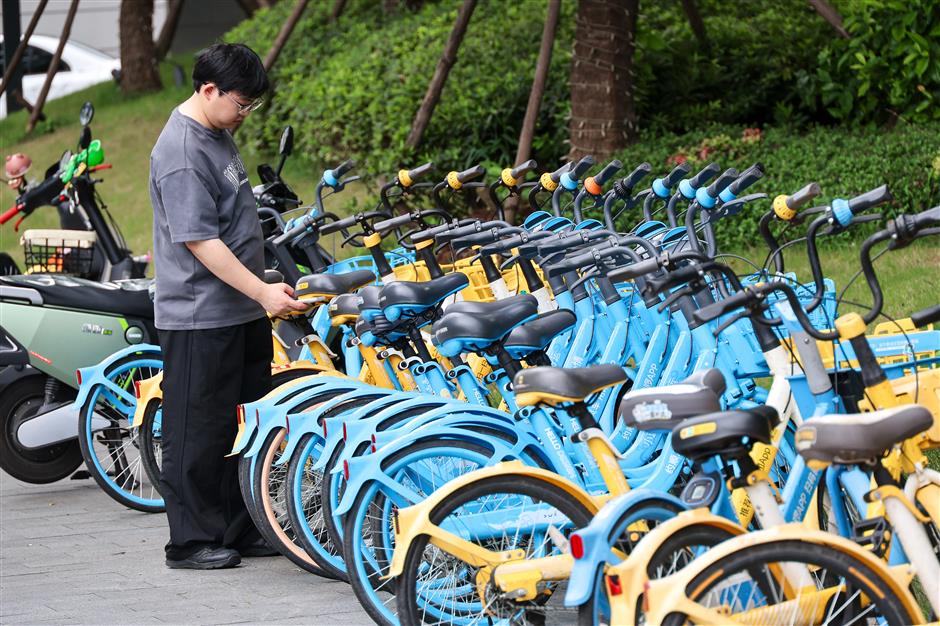
Three leading sharing-bike companies have all raised their fares. Meituan Bike, Didi's Qingju and Hello Bike made the change this month.
Where prices went up
The new fares have appeared in Beijing, Nanjing of Jiangsu Province, Zhengzhou in central Henan Province, Chengdu in southwestern Sichuan Province, and several other mainland cities. Shanghai has not been named so far.
Past price changes have often reached the city later, so riders here may want to check their app for updates.
How the fares changed
The companies made the same basic change. They raised the starting fare and gave riders more free minutes in exchange.
Before, 1.5 yuan (22 US cents) bought 30 minutes. Now the starting fare is 1.88 yuan to 1.99 yuan, and it buys 60 minutes. After the free time runs out, the companies charge 0.1 yuan a minute, the same overtime rate as before.
In Beijing, Meituan Bike charges 1.88 yuan on weekdays, weekends and holidays in the six central districts. Qingju and Hello Bike both charge 1.99 yuan on weekdays.
The change cuts two ways. A ride under 30 minutes now costs 0.38 to 0.49 yuan more than before. A ride of 45 minutes or longer now costs less, because riders no longer pay extra time charges on top of the starting fare.
Most bike-share trips are short. Industry data show the average ride in China covers about 2.7 kilometers, and most trips last 15 to 20 minutes, connecting a subway station to home or the office. Those riders will likely pay more, not less.
Why fares went up
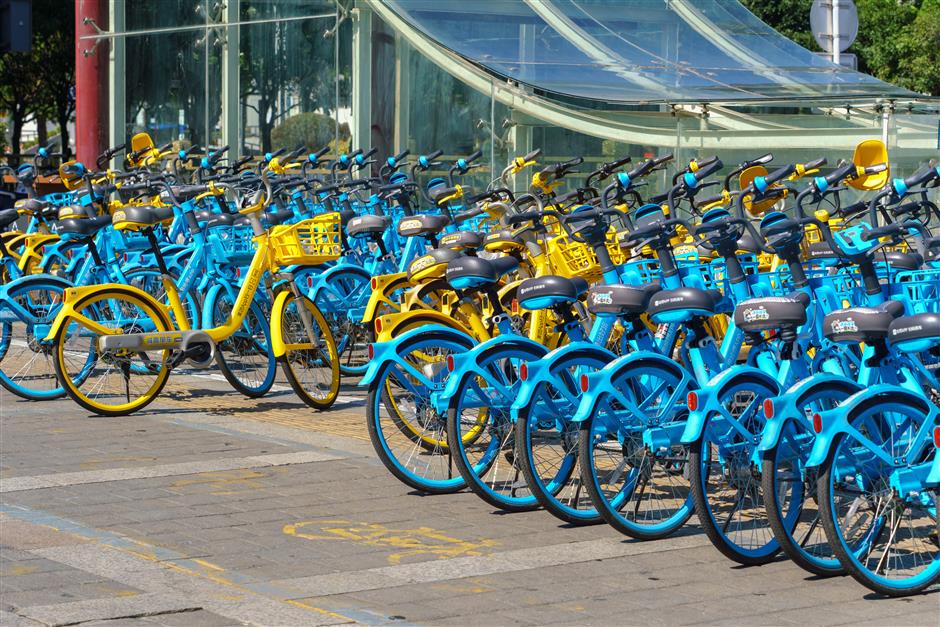
Sharing-bike companies said rising costs are behind the increase. Bikes and smart locks are expensive to buy, and a bike typically lasts only two to three years.
Aluminum, used in bike frames, has also gotten more expensive. So has moving bikes around a city, repairing them and following local parking rules.
One customer service agent said the new fares would help pay for vehicle maintenance and keep more working bikes on the street.
Companies are also selling discount passes to soften the impact for frequent riders. In Beijing, Meituan offers a 90-day unlimited pass for 49 yuan, or about 0.56 yuan a day. Qingju sells a 30-day pass for 18.61 yuan, or 0.62 yuan a day in its first month.
This is not the industry's first price increase. Starting fares rose to 1.5 yuan for 30 minutes in 2019. Ride packages went up again in 2022, by as much as 50 percent.
Between 2024 and 2025, some cities saw the free riding time quietly shrink from 30 minutes to as little as 10 or 15 minutes.
How riders are responding
The reaction has been mixed.
Quan, a resident of Beijing's Changping District, said she noticed the new prices this week. She relies on shared bikes for short errands because local buses do not run often near her home.
"A few short rides in a day and I'm already out more than 10 yuan in a week," Quan said.
Other riders have complained online that a daily commute of 10 or 15 minutes now costs close to a bus fare.
Some said they now compare prices across the three apps before scanning a bike, or have gone back to walking, taking the bus or riding their own bicycles instead.
Editor: Xu Qing
In Case You Missed It...

 Oct 20, 2026
![[Current Trends] What Chinamaxxing Looks Like in Shanghai's Old Town](https://obj.shine.cn/files/2026/10/19/2681c157-f66b-48cf-8891-96182ba42dc0_0.jpg)

![[Big News] CNS Launches Shanghai Health Directory](https://obj.shine.cn/files/2026/10/20/5d3cbb6a-70d4-4f74-b549-b830162d63a5_0.jpg)

![[SH Transit] Shanghai Plans Bigger Airports, Stronger Air and Sea Links](https://obj.shine.cn/files/2026/10/20/cc332098-2356-49f9-878f-86691dd8c989_0.jpg)
