Songjiang Cargo Hub Boosts Efficiency For Cross-border Sellers
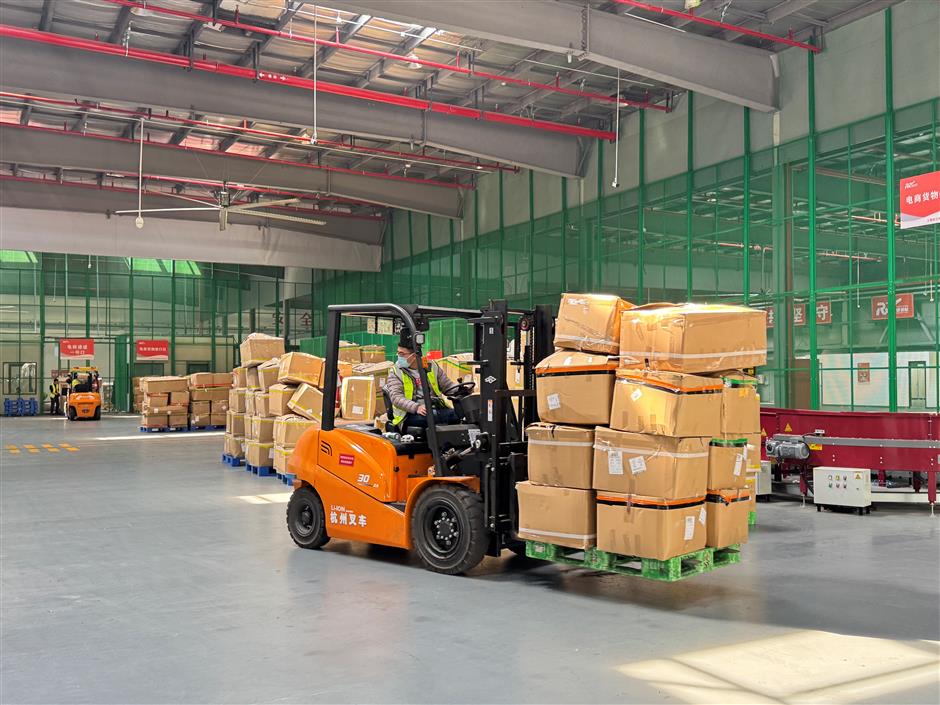
A cargo station in Shanghai's Songjiang District is helping exporters cut logistics costs by about 15 percent. From unloading at the station to final loading at the airport, the process now takes about 4.5 hours, about 30 percent faster than before.
The station has processed 1.02 million cross-border e-commerce parcels worth 101 million yuan (US$14.65 million) since opening on November 13, 2025, according to customs data.
The most significant change for shippers is that cargo no longer needs to be sent to Pudong airport for customs inspection, security screening, and pallet building. Most of those export procedures can now be completed in Songjiang before sending the goods to the airport for loading.
"Cargo no longer has to wait at the airport for another round of checks and can go straight onto the plane," said Cai Jiao, deputy director of the bonded zone's administrative committee.
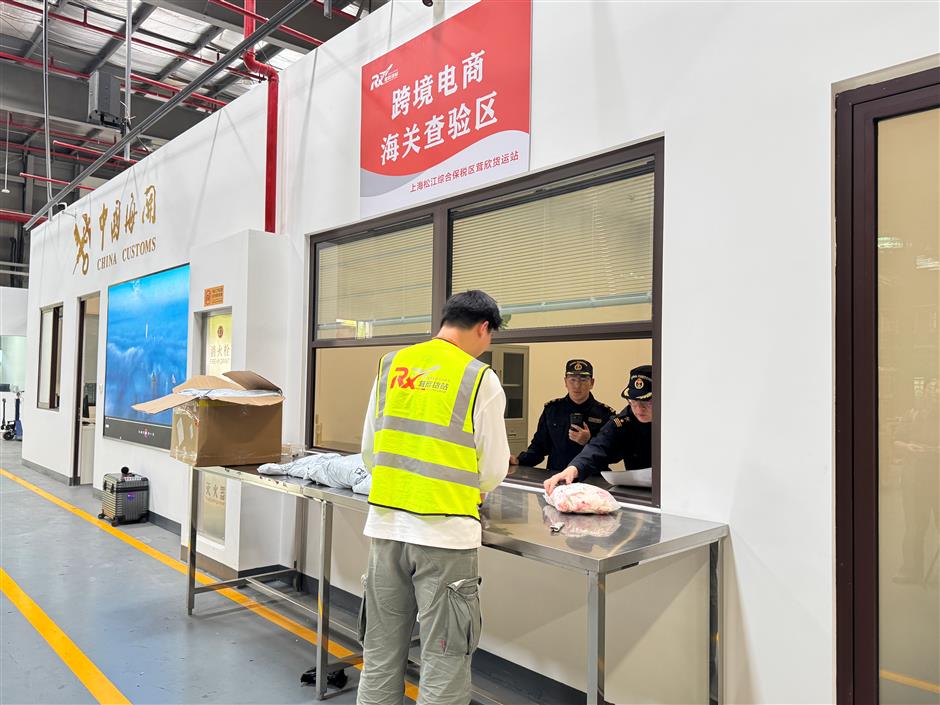
Housed inside the Songjiang Comprehensive Bonded Zone, the facility is Shanghai's first air cargo pre-clearance station. It mainly handles cross-border e-commerce cargo and general freight, with outbound e-commerce shipments making up most of its current business.
The station's clients include major Chinese e-commerce platforms such as Pinduoduo, parent of Temu, ByteDance, owner of TikTok, and Shein, along with more than a dozen smaller shippers. Much of the cargo is bound for the United States and Europe.
For operators, the biggest gain is fewer handoffs. Zhang Liang, deputy marketing director of Rongxin Cargo, said the traditional route often meant unloading cargo at Pudong Airport's express cargo center and sorting part of it for inspection or release.
It then had to be trucked again to another cargo terminal for security checks, and moved once more for pallet building and handover.
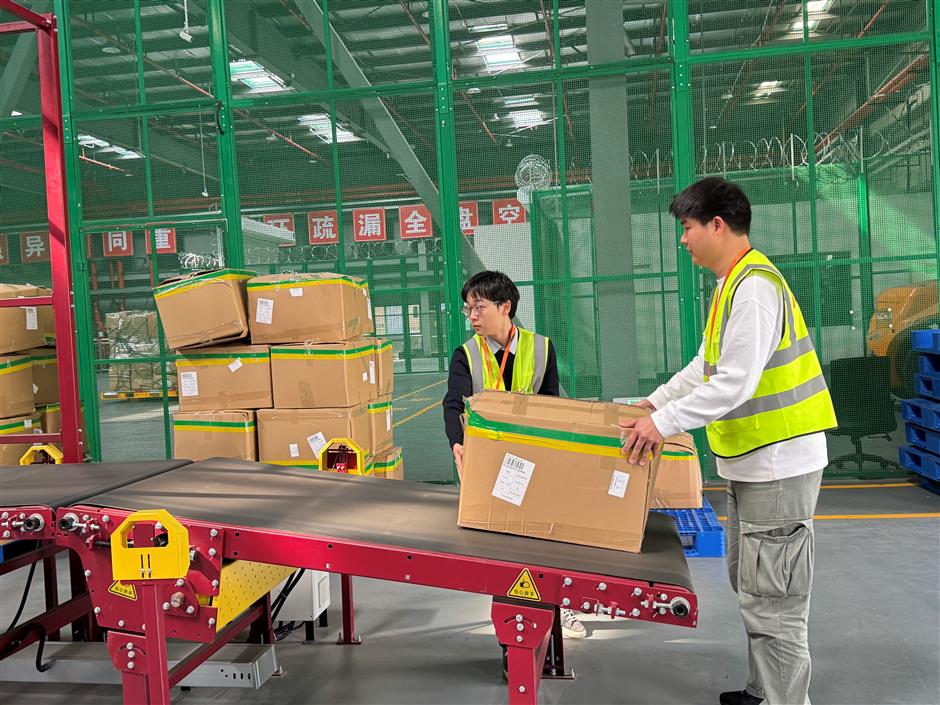
At Songjiang, he said, that chain has been compressed into one site, "cutting out two rounds of loading and unloading." He added that the station can meet clients' 48-hour service requirements.
Easy clearance is changing cargo flows beyond Songjiang. Cai thinks the station can serve Qingpu, Fengxian, and Jinshan manufacturing hubs due to the district's export-oriented economy and manufacturing base.
Zhang said some companies are exploring consolidating goods in Nansha in south China's Guangzhou before routing them through Shanghai to tap the city's stronger air freight capacity and lower operating costs.
The first phase of the project covers about 6,000 square meters. Peak daily throughput can reach 60 tons, and the operator is preparing to raise that to 100 tons a day, with room reserved for further expansion.
Cai stated that the station is seeking an IATA three-letter code to facilitate import business, and is also investigating sea-air intermodal services to expand its reach across the Yangtze River Delta region.
Editor: Yang Meiping
In Case You Missed It...
 Sep 15, 2026
![[SH Health Guide] Shanghai Proton and Heavy Ion Center](https://obj.shine.cn/files/2026/08/12/17506b8f-5d4d-4a5b-9abf-47f86352735e_0.jpg)
![[SH Health Guide] EYE & ENT Hospital of Fudan University](https://obj.shine.cn/files/2026/08/26/b0e8ee2e-dcfd-41d7-8759-8eed0889d64b_0.jpg)
Popular Reads

HYROX Winner Apologizes, Saying She Should Have Stopped After Soiling Herself in Beijing

AI Couture, 500 Brands, Free Entry: World Design Cities Conference Returns To Shanghai This Month
Shanghai Trade Rises 13.1% in August as Exports, Imports Post Double-Digit Gains
![[Community] Say Bye, Say Hi: An Evening of Swapping, Sharing and Connecting](https://obj.shine.cn/files/2026/09/16/699fe833-2ba8-4118-b51a-6cee96e14a30_0.jpg)