Symposium on UN Stresses Multilateralism, Solidarity and Sustainability
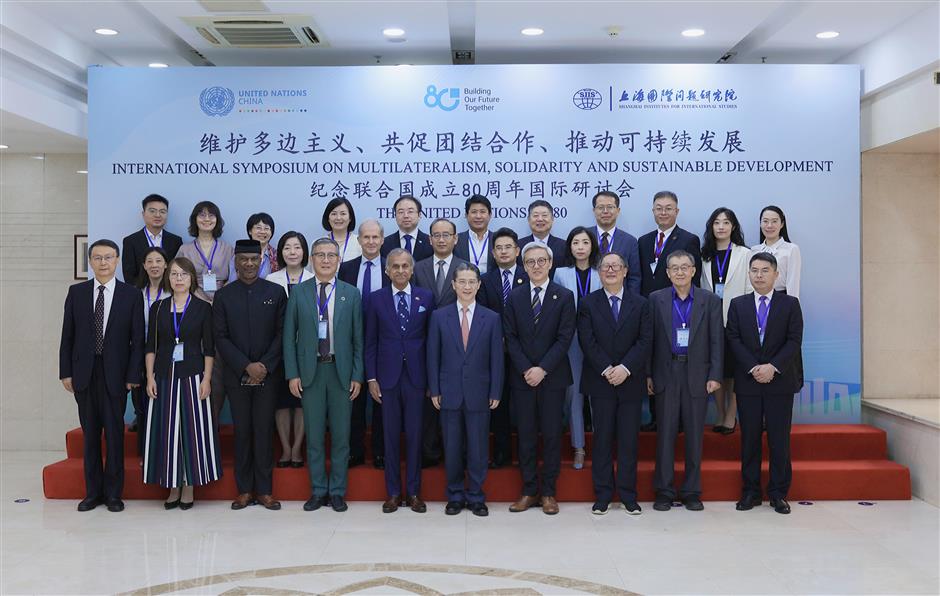
Panelists exchanged and shared views on pressing issues confronting the world at an international symposium in Shanghai marking the United Nations' 80th anniversary.
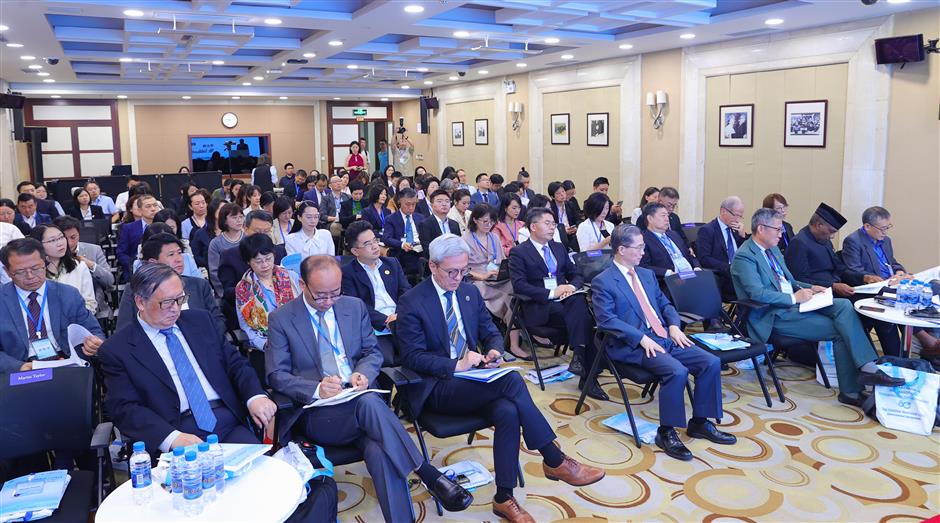
The event, co-hosted by the UN in China and Shanghai Institutes for International Studies (SIIS) on Monday, brought together representatives from the Chinese government, UN institutions at the global, regional and country level, as well as scholars and other stakeholders.
As the UN celebrates its 80th anniversary, the world is entering a new era marked by profound turbulence and challenges, Chen Dongxiao, president of SIIS, said in addressing the symposium.
Among these challenges is how the UN can fulfill its vital mission in facilitating global solidarity and cooperation, safeguarding international peace and security, and advancing sustainable development agenda worldwide, Chen pointed out.
The key to achieving this is upholding fairness and justice.
"We had witnessed a groundswell of voices from many countries, including China and a wide array of global south leaders, calling for renewed commitments to peace and cooperation, willing partnership and collective stewardship of our shared planet," Chen said.
"Despite the effort to foster global unity and development, geopolitical conflicts continue to intensify, as we witness alarming cases of inequality that call into question the efficacy of global governance."
The view was shared by Siddharth Chatterjee, UN Resident Coordinator in China, who started his speech by quoting from UN Secretary-General Antonio Guterres' remarks to the General Assembly on the Informal Plenary Meeting on the 80th Anniversary of the UN Charter.
"Eighty years ago, from the ashes of war, the world planted a seed of hope. One Charter, one vision, one promise: that peace is possible when humanity stands together," quoted Chatterjee.
Since its founding, the UN has contributed significantly to upholding peace, development and human rights, and in driving forward sustainable development goals, proving time and again that the world that acts together can deliver results, said Rosemary DiCarlo, UN Under-Secretary-General for Political Affairs, in a video message.
"The 80th anniversary of the United Nations is the moment for both reflection and action. The world is in transition. Geopolitical tensions are at their highest in decades. Divisions are deepening. Some member states are moving away from multilateralism. Others are testing the boundaries of international law," DiCarlo said.
She added that last year, member states adopted the Pact for the Future, which is a pledge to renew multilateralism and to "make it fit for now and for the future."
"The Pact offers an ambitious vision to reinvigorate international cooperation. We now need to implement it. China can play an important role in doing that. I want to express our deep appreciation to China for its support of the United Nations and of multilateralism."
The importance of multilateralism was further explored by Zhou Hanmin, a standing committee member of the Chinese People's Political Consultative Conference and chairman of the Shanghai Public Diplomacy Association, who pinpointed multilateralism as "the cornerstone of global prosperity and stability."
"Multilateralism is not a slogan. It is a necessity for addressing challenges and sharing opportunities. From fighting pandemics and tackling climate crisis to promoting global trade and investment, multilateral frameworks and rules provide the foundation," Zhou noted.
Unilateralism and protectionism may seem to yield short-term gains, but they undermine the resilience of global supply and value chains, and obstruct common development, Zhou said.
The panel discussions also focused on partnerships and financing for development, heightened global climate action, youth for the future, and artificial intelligence for good, as well as the UN at its next 80th anniversary.
Editor: Zhang Shunyi
In Case You Missed It...
 Sep 20, 2026