Can't Keep Your Eyes Off Your Phone? Some Gadgets Target Addiction
My 17-year-old son used to be riveted to his smartphone, watching videos on Bilibili, talking with friends via WeChat and screen shopping on Alibaba's Taobao. One of the products he bought on the site proved to be a game-changer – at least initially.
It's a device called Keepin Box, designed and produced by a tech firm in the southern city of Shenzhen, where savvy businesses have a nose for trends in consumerism.
Keeping Box is essentially a locker with a timer you put a phone into. Set a time – from five minutes to forever – and the gadget will automatically turn off your phone when the limit is reached. It costs 69 yuan (US$10).
In a world where countries are fretting about how much time teens spend online and what harm it might do them, some companies are beginning to a market in helping people curb phone addition.

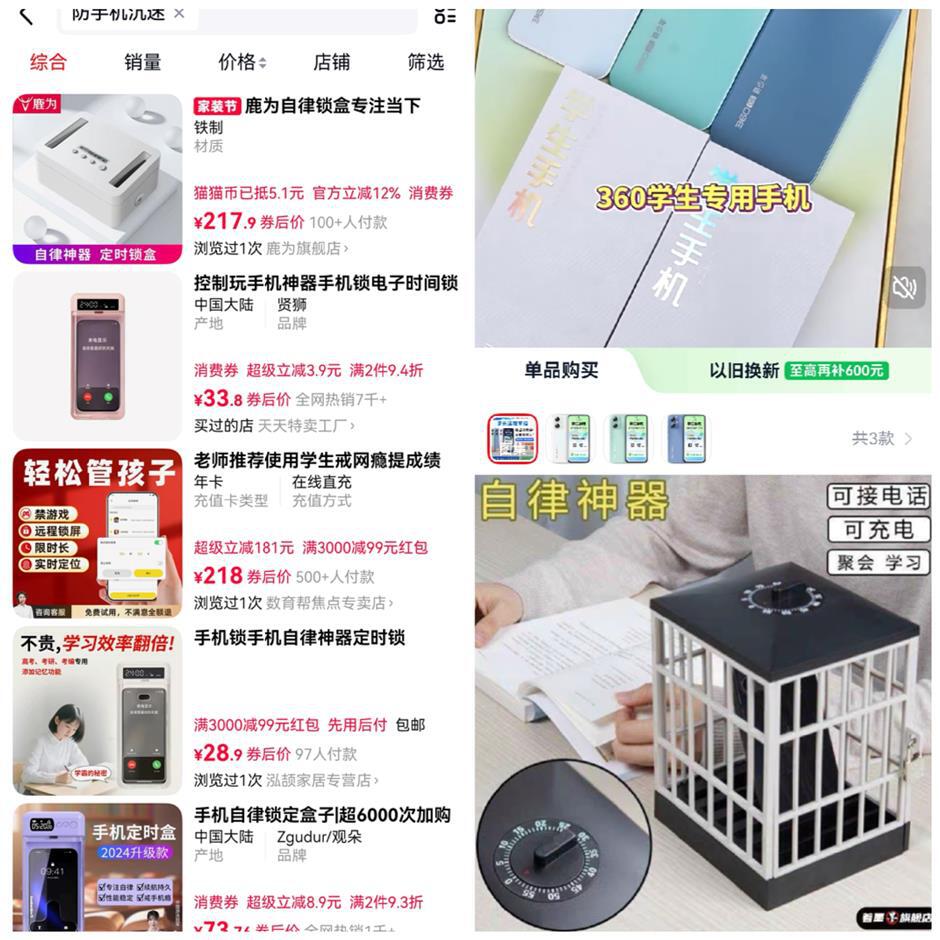
To my surprise, when I scrolled on the prompt "phone addiction-prevention devices" on Taobao, I found a long list and huge variety of gadgets. They include teen-tailored phones costing 1,000-plus yuan, set-in software of 300 yuan that allows parents to manipulate their children's phones and even a "prison" that jails a phone.
All novel, I admit. But they are different in two main aspects from Keepin Box. First, my son's box shows due respect to its users. It leaves the decision of when phone time becomes excessive to users and lets them choose how much their compulsion needs to be curbed. Secondly, it provides an emergency channel for users to tap when their phones are out-of-action and a serious situation arises.
I can't say that I am particularly optimistic about the fate of these addiction killers. They may end up in cupboards, if not dustbins, when young people "fall off the wagon" or rebel against the notion of something or someone controlling their lives.
I do admire my son for trying to untether himself from excessive phone time. He has tried many techniques. He once moved the icons of his favorite Bilibili app into a folder on the last page. He also paid for software to mute all social media when he wants to focus on his studies. And in one extreme case, he deleted the WeChat after getting a poor score on a school exam – but soon installed it.
Parents around the worry about offspring with their eyes constantly glue to digital screens, robbing them of rest and outdoor recreation. Many schools ban smartphones during classroom times. And countries, most notably Australia, have introduced laws banning youngsters under a certain age from accessing social media sites like Facebook, X, Spotify and Instagram. The jury is out on how successful that is.
At the recent annual meetings of China's National People's Congress and its advisory consultative body, several lawmakers proposed banning social media access for teenagers 16 and younger.
Perhaps the best way forward isn't to slap on controls from above but rather find ways to encourage young people to control themselves. Now there's an opening for some innovative businesses! The fact remains that social media isn't bad. It's only addiction that is worrying.
And let's face it, parents don't always set a good example. The obsession with online content extends to all age groups in this tech-dominant world. How to properly position ourselves in it remains the enduring question.
Editor: Liu Qi
In Case You Missed It...

 Oct 22, 2026