Language Learning Increasingly Merged with Relevant University Disciplines
When I went to college more than 40 years ago – in the 1980s – a foreign language degree was a prized pursuit of many students who harbored dreams of becoming a translator, a teacher or a trader.
At first I hoped to major in English and minor in French, but at the last minute my high school head teacher persuaded me to study international journalism, saying I could learn English and journalism at the same time. I took his advice.
After graduation, I did enjoy working as a reporter, because I liked talking with different people and writing various types of articles. It gave me great joy to see my interviews with people from across the country – even the world – going to print.
Still, I admired many of my college alumni who did well as interpreters, translators or traders back then. One alumna, who turned out to be a professional simultaneous interpreter for major conferences, once told me that she was paid handsomely by the hour.
Changing landscape
Times change. A rapid expansion of higher education over the past few decades has somewhat resulted in a redundancy of single-function foreign language departments in the country. Crowds of college graduates with only foreign languages degrees have found it increasingly difficult to find satisfactory jobs now that language proficiency alone is no longer a unique selling point as it once was.
Yicai.com, a leading economic and business news portal in China, published an article last month, in which it cited a report by Mycos, one of the world's major high education consulting firms. The report shows that the average income for 2023 graduates with a bachelor's degree in foreign languages, half a year after graduation, was below the year's national average for undergraduate students.
Given this background, quite a few Chinese universities have decided to shutter or restructure their foreign languages programs, including those related to interpretation or translation.
Worldwide, the rise of artificial intelligence has revolutionized language study and cross-culture interpretation/translation, so much so that machines can assist or even replace humans when it comes to "bridging" the language divide.
Last August, Middlebury College announced it will end all residential graduate programs and certain online degrees at the Middlebury Institute of International Studies (MIIS) in Monterey, California, by 2027, citing under-enrollment and financial deficits. The institute is one of the world's top schools in the fields of interpretation and translation. The American Translators Association explained in an article published last September that the discontinuation will impact the institute's onsite graduate programs such as translation and interpreting.
Neither the college nor the association categorically cited AI as a factor behind the closure of many MIIS programs, but during some seminars held both before and after the August announcement, many panelists were candid about the impact AI may have on the future of translation and interpretation.
For example, at a seminar held in May 2024, which was moderated by professor Laura Burian, then the institute's dean of teaching, learning and faculty development, many panelists noted that it was getting harder for those with mediocre skills because clients would look to AI to save money, although the overall market was expanding and was strong for top translators and interpreters.
In September 2025, scholars, artists, business executives, technologists and community members attended the Clifford Symposium held at Middlebury College to explore AI's impact on learning, labor and life.
"Though we may not all be here for the same reasons, I believe many of us recognize that the proliferation of AI and generative AI technologies presents deep challenges to the core educational mission of schools like Middlebury," said Amy Collier, associate provost for digital learning.
Her view was echoed by Milima, the online name of a renowned educator and writer devoted to knowledge learning and experience sharing.
"Now, AI can replace humans as translators or interpreters for large-scale conferences and many other occasions," Milima wrote in a widely circulated article first published at the end of last month. "In terms of accuracy and real-time capability, AI's performance can be astonishing."
Milima went on to explain that majoring in English offered broad career prospects in the past, as one could work as a translator or an interpreter, a university or high school teacher, or find opportunities in multinational corporations, consulting business or the tourism sector.
"Nowadays, even non-English majors possess strong English proficiency," she noted. "For example, students from prestigious universities like those in the 985 Project write papers, consult literature, and participate in international academic conferences in English. Do you think their English skills are poor?"
The 985 Project, announced in May 1998, hence its name, aims to develop a number of world-class universities to enhance China's global competitiveness.
Milima's words remind me of a decision made by the University of Science and Technology of China in 2023 to discontinue a number of undergraduate programs, including those related to English, communication and archeology.
The decision, aimed at an effective restructuring of certain academic disciplines in response to the accelerated technological revolution and industrial transformation, was wrongly interpreted by some people as a sign of English's diminishing role in China.
As Milima observed, some parents even bought into the idea that "English is useless." In effect, the University of Science and Technology of China simply terminated a liberal arts program that no longer aligned with its core development and had long ceased to enroll students, she explained.
Indeed, even a cursory review of the university's website – presented in both Chinese and English – makes it clear that the university still attaches great importance to English. For example, no one is supposed to skip English study unless he or she meets certain strict requirements, such as having achieved a high TOFEL test score.
And it's not just about English study. Students at the University of Science and Technology of China continue to engage in international communication in many ways.
For example, the Society of Fire Protection Engineers (SFPE), headquartered in both the United States and Belgium, honored the SFPE Hefei Student Chapter, based at the State Key Laboratory of Fire Science, University of Science and Technology of China, with the Gold Award for Chapter Excellence in 2025. It marked the third consecutive year that the SFPE Hefei Student Chapter had received such recognition from the leading global organization in the field of fire protection engineering.
If you browse the graduate school section of the university website, you will find that the SFPE Hefei Student Chapter, established in 2021, has actively engaged in building an academic exchange platform for university students, aiming to connect undergraduates and postgraduates in fire safety science with world-leading engineers and scientists.
Moreover, a total of 16 student representatives have participated in leading conferences over the past three years, including the International Symposium on Fire Safety Science (IAFSS) and the International Seminar on Fire and Explosion Hazards. Chapter members have also attended international summer schools and fire safety programs at the University of Maryland (US), the University of Edinburgh (UK), and in Como, Italy (hosted by Politecnico di Milano), where they engaged in in-depth discussions with scholars and early-career researchers from around the world.
As the SFPE Hefei Student Chapter noted, these experiences have broadened its members' perspectives and strengthened global cooperation and knowledge-sharing in the field of fire safety science.
Browse the university's bilingual website, and you will read more similar cases of global communication, all of which require a high level of foreign language proficiency.
To see how English and many other foreign languages continue to play an important role in China's opening-up drive, one needs to look beyond somehow oversimplified headlines and dive deeper to see what's really going on.
Cross-discipline programs
That a number of universities have discontinued their foreign languages programs does not mean language proficiency is no longer important. Rather, language study is increasingly being merged with relevant disciplines.
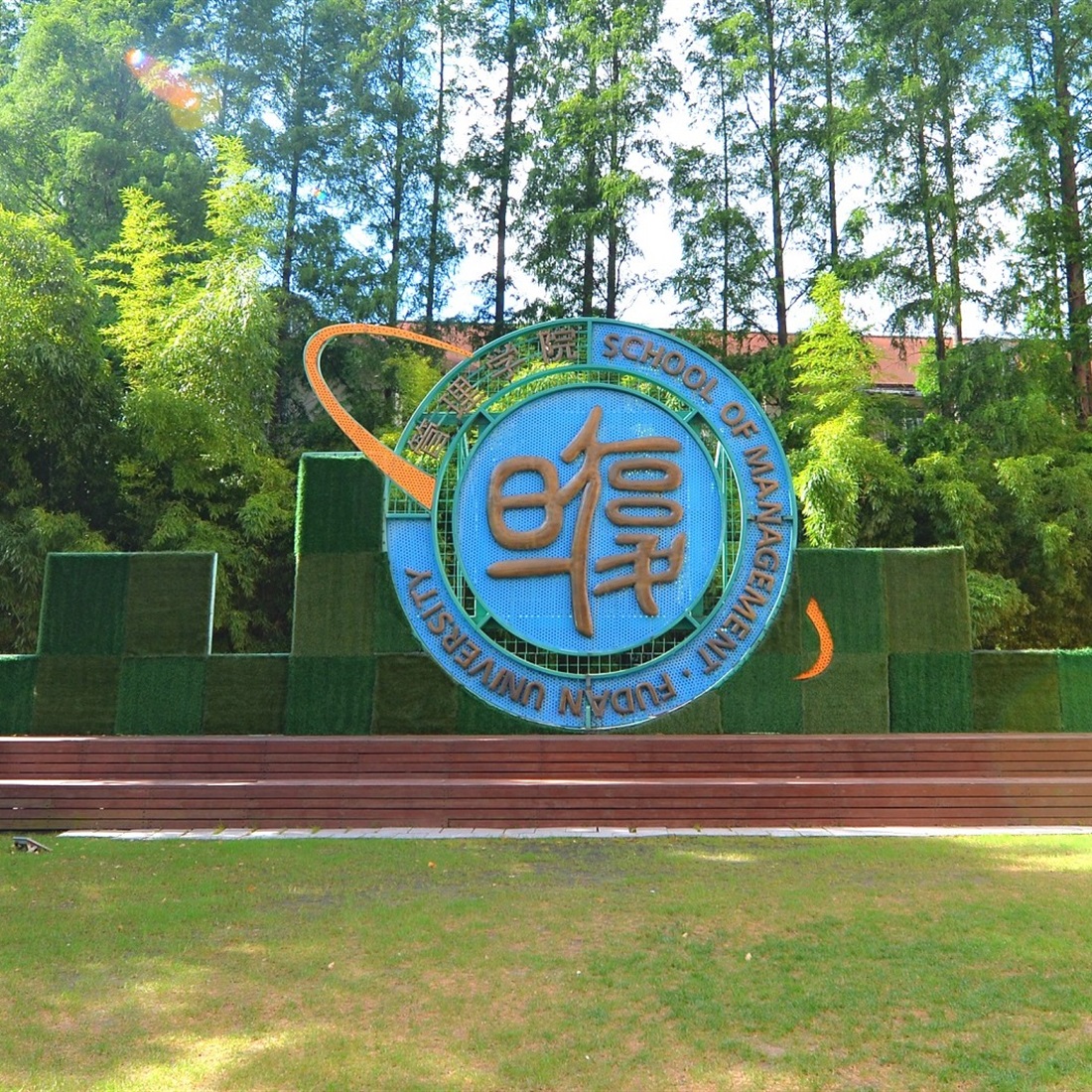
For example, Fudan University got the approval to launch four dual-degree programs last year, which combine the study of French, Japanese, Korean and Spanish, respectively, with the study of computer science and technology. In 2024, Fudan already got the go-ahead to create dual-degree programs that combine English, German, Russian and interpretation/translation, respectively, with the study of computer science and technology.
Such cross-discipline programs serve to broaden the perspectives and career prospects of students by enabling them to excel in both linguistics and computer science and technology. For instance, well-grounded in language and culture, students can further learn how to apply digital tools in natural language processing.
If you dive deeper into reality, you will see that foreign language study is still all the rage across China – from high schools to higher education institutions.
Looking back, I suddenly realize that I already benefited from cross-discipline education in my college years in the 1980s. More than 40 years have passed and I was fortunate to have a chance to teach opinion writing in English for graduate students at the School of Journalism of Fudan University from 2019 to 2024. I didn't teach in an English department, but English was definitely a key element in our writing course.
In the end, Fudan University Press published my book on the subject last year, which was partly based on my five years of fruitful communication with the graduate students.
It's not so much a personal achievement as a testimony to the importance of foreign language study in today's China, as we embark on a path of further opening-up.
In Case You Missed It...

 Oct 13, 2026