China Self-Driving Technology Places a Chinese Soul Inside a Western Shell
A new consensus is quietly emerging in the 2026 global auto market: You might never purchase a Chinese-brand vehicle, but the next car you drive or the robotaxi you take will very likely be powered by a "brain" designed in China.
For the past century, the rules and profits of the global auto industry were dictated by traditional European component suppliers like Bosch, Continental and ZF. They built their empires by selling standardized hardware and closed-off operating systems to automakers around the world.
But the narrative has changed. Today's new top-tier suppliers are no longer judged by how perfectly they can machine a piece of metal, but by how quickly they can update their AI and how efficiently their microchips can process massive amounts of data. From software architecture to the dashboard screens and underlying artificial intelligence, Chinese technology is becoming the invisible engine of the modern automotive world.
The 2026 World Artificial Intelligence Conference that closed in Shanghai today served as a showcase for this transition, revealing breakthrough technologies that are already operating on foreign roads or are on their way overseas.
A major highlight was Nasdaq-listed Chinese autonomous driving company WeRide, which launched its newly developed physical AI foundation model called WITT, which stands for "world intelligence toward truth."
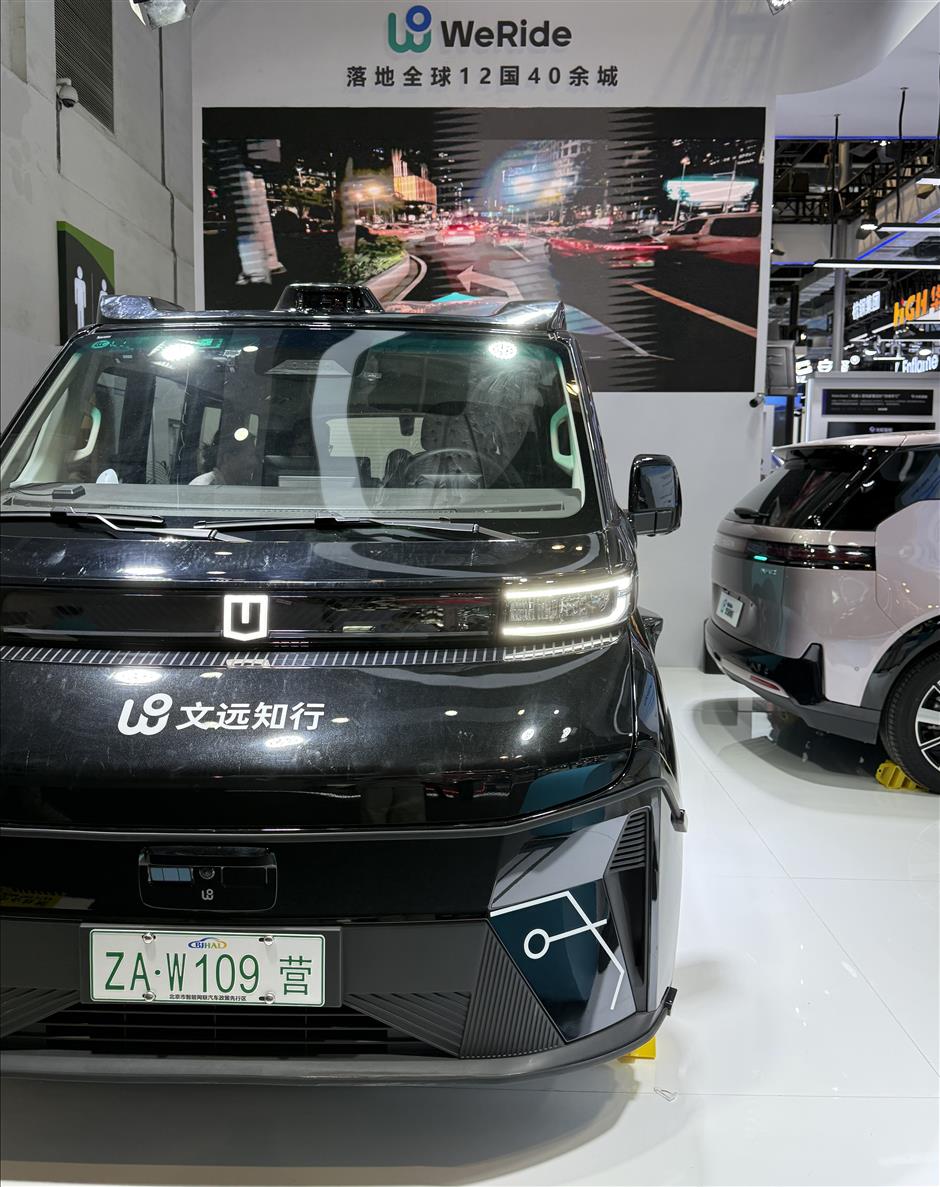
"As self-driving technology finally enters large-scale commercial use, a glaring problem has emerged: Cars are collecting mountains of data, but filtering out the 'good' data that actually helps AI learn is incredibly difficult," said Wang Wei, an official with WeRide. "Furthermore, generic AI models often get confused in complex traffic situations, leading to dangerous misjudgments."
WeRide designed WITT to address those problems. Built on data gathered from the company's massive global operations, the system filters out the noise, ensuring that every mile driven translates into genuine, reliable learning for the car's automated systems.
Today, WeRide operates in 12 countries and over 40 cities, holding self-driving licenses in eight countries. With a global fleet of over 3,000 highly automated vehicles, its driverless taxis are picking up passengers in Riyadh and Singapore, and expanding into Madrid and Zurich.
Just last week, the company revealed that its advanced driver-assistance software is undergoing road testing and localization in Germany, France and Japan. That highlights the penetration of Chinese startup's software into the traditional strongholds of the global auto industry.
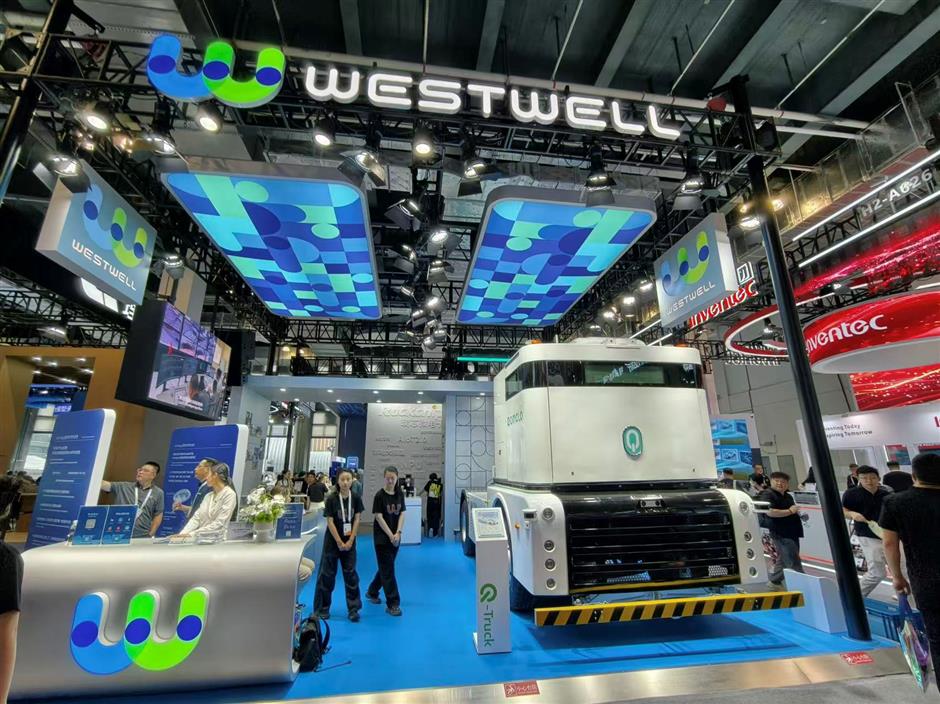
This software revolution is not limited to consumer vehicles. Shanghai-based Westwell showcased its AI fully autonomous electric heavy-duty truck, the Q-Truck, at the conference, featured alongside an advanced operations management platform.
Westwell is already a quiet giant in global logistics. By 2025, 70 percent of the world's top 20 container ports had partnered with the company. Its systems are currently automating seaports in Thailand, the United Arab Emirates, the UK, Egypt, Malaysia and Mexico. Just recently, the UK port of Felixstowe placed its third order for Q-Trucks, expanding its fleet to 100 vehicles and creating one of Europe's largest automated electric truck operations.
Inside vehicle cabins, technology is evolving just as fast. Beijing-based AI startup ModelBest demonstrated its latest smart cabin agent, the SuperMate, at the Shanghai conference. It's already being installed in mass-produced cars like the Changan Mazda EZ-60 and the Geely Galaxy M9.
"In the past, interacting with a car's voice assistant was a clunky process, with users asking a question and then having to wait for an answer," said Lei Shengtao, co-founder of ModelBest. "SuperMate is a game-changer, acting more like Jarvis in the Marvel movie series 'Iron Man.' It can see, hear and speak simultaneously without a lag, turning the car from a passive tool into a proactive, thoughtful assistant."
ModelBest is partnering with chipmakers and auto brands to push the technology to global markets.
According to Lei, China's smart cabin and autonomous driving technologies are currently running about two years ahead of overseas competitors.
This technological lead is precisely why multinational automakers are eagerly adopting Chinese "full-stack" software solutions to speed up their own digital transformations.
Chinese autonomous vehicle company Pony.ai, also listed on the Nasdaq, is moving into large-scale production with Toyota, planning to deploy a fleet of 1,000 robotaxis this year. In Europe, Pony.ai is co-developing fully self-driving vehicles with auto giant Stellantis, integrating Chinese smart software seamlessly into European vehicle chassis.
Meanwhile, software developers like Nullmax are forming alliances with global semiconductor giants like Japan's Renesas, creating highly cost-effective driving systems for manufacturers worldwide.
Ultimately, this surge in technology exports represents a calculated pivot in an era of tightening trade barriers. Faced with strict import tariffs in the US and Europe, Chinese companies have found a second path forward: exporting the architecture, the algorithms and the chips that essentially place a Chinese soul inside a Western shell.
Because modern AI can learn and adapt on the fly, these systems do not need to be entirely rewritten for foreign markets. The same software can quickly adjust to the unrestricted speed limits of German autobahns, the tight, cobblestone roundabouts of European cities or the dense motorcycle traffic of Southeast Asia. It's the dawn of a new era in the global industry for technology born in China.
Editor: Liu Qi
In Case You Missed It...

 Jul 21, 2026

![[Current Trends] World AI Conference: What I Saw This Year Is Shocking](https://obj.shine.cn/files/2026/07/21/6e62b4a0-6e62-49f6-8e2b-3c538f79464a_0.jpg)