The World Has Started Pushing Back Against a 'Phone-Based Childhood'
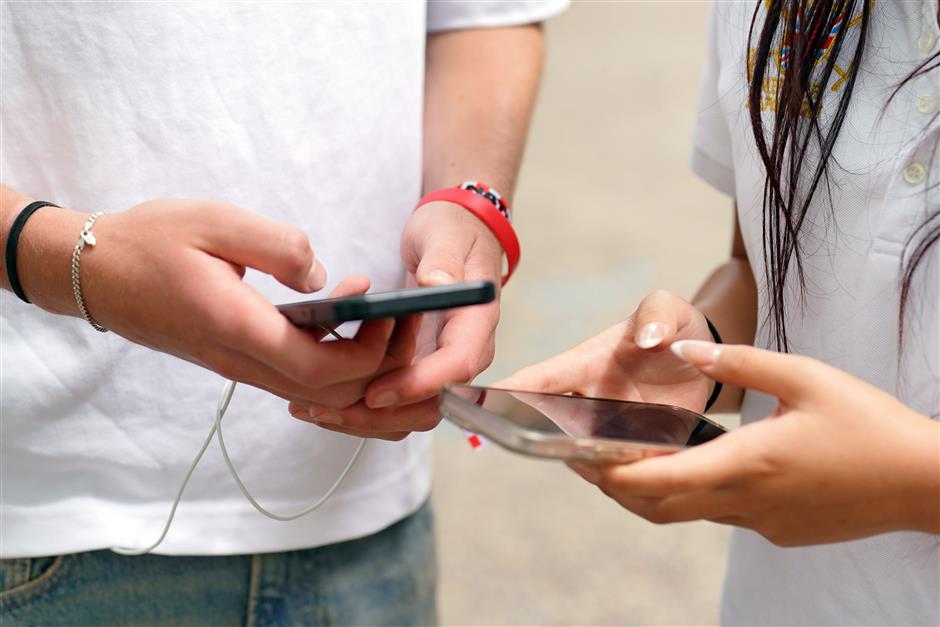
On a podcast aired earlier this week, Internet celebrity Zhang Zetian and actress Carina Lau found common ground. The topic was not fashion, business, or film. It was children's safety online.
Lau brought up the topic after Australia recently banned social media for anyone under 16.
Lau defended the move.
Zhang, wife of JD.com founder Liu Qiangdong and a mother of three, agreed immediately.
"I like it," she said. "But schools and society must work together. If classmates have it, whereas my children do not, that won't work."
The conversation between two prominent Chinese figures reflects a global tipping point. Parents, governments, and experts are declaring war on the "phone-based childhood."
Since December 10, 2025, Australia has enforced a ban on social media accounts for children under 16. The law covers major platforms like TikTok, Facebook, Instagram, Snapchat and X.
The penalties are severe. Tech giants face fines up to AU$50 million (US$32 million) for systemic breaches. The law demands that platforms, not parents, verify age.
It is believed to be the world's strictest social media ban. It has sparked interest globally. Norway is considering a limit at age 15. In the UK, politicians are citing the "Australian model."
The Danish government has pledged 160 million Danish kroner to expand offline spaces and activities for young people.
Malaysia has also barred children under 16 from using social media without parental supervision.
Australian Prime Minister Anthony Albanese called the law necessary. He said social media is "harming our kids."
French President Emmanuel Macron compared social media to driving.
"It is like letting a child drive a Formula 1 car," Macron said. "I don't want him to win the race. I just want him to get out of the car."
Behind the laws are stories of children like 13-year-old British boy Ollie, who committed suicide in January 2024.
Ollie suffered from anorexia nervosa. His mother said social media algorithms bombarded him with content about body image and diet control. He also faced online bullying.
Then there was Dolly, a 14-year-old Australian girl. She took her own life in 2018 after relentless cyberbullying. She left a drawing before she died. It read: "Speak even if your voice shakes."
Her death was the catalyst for Australia's crackdown.
A survey of over 3,000 Australian youths showed that 69 percent experienced cyberbullying in the past year.
Globally, youth mental health deteriorated between 2010 and 2015. This period coincides exactly with the mass adoption of smartphones.

Great rewiring
Jonathan Haidt, a social psychologist at New York University, describes a "Great Rewiring" of childhood in his 2024 book, "The Anxious Generation."
Haidt argues that society moved children from a "play-based childhood" to a "phone-based childhood."
"We overprotect children in the real world and under-protect them online," Haidt writes.
He identifies four main harms: social deprivation, sleep deprivation, fragmented attention and addiction.
The science backs him up. The human brain's prefrontal cortex controls impulse and judgment. It does not fully develop until age 25.
Social media apps use "intermittent variable rewards." This is the same psychological mechanism found in slot machines.
A child scrolls, hoping for a "win" – a like, a comment, or a funny video. The brain releases dopamine. The child keeps scrolling.
"You think the child is playing with the phone," an expert noted. "Actually, the phone is playing with the child."
China has long experimented with strict regulations.
China introduced "anti-addiction" rules for video games years ago. The hit game "Honor of Kings" limits playtime for minors. Players under 18 cannot play between 10pm and 8am.
Douyin, the Chinese version of TikTok, has a "youth mode." It limits use to 40 minutes a day for users under 14. It also filters content.
Recently, children's smartwatch brands have faced widespread online backlash for evolving their products into de facto social media platforms. Some kids now spend nearly 10 hours a day chasing likes, with "like counts" and "account levels" even becoming a measure of social status among peers.
These devices, once hailed as "child safety tools," have morphed into smartphone equivalents loaded with social features – from "tap-to-add-friends" to point-earning tasks and rare digital card collections – that fuel obsession and comparison.
Parents and experts are urging manufacturers to uphold social responsibility: to abandon such addiction-inducing functions, align with the spirit of the Minor Protection Law, and return smartwatches to their core mission of safety and communication.
Enforcement remains a challenge.
Roasted whole sheep
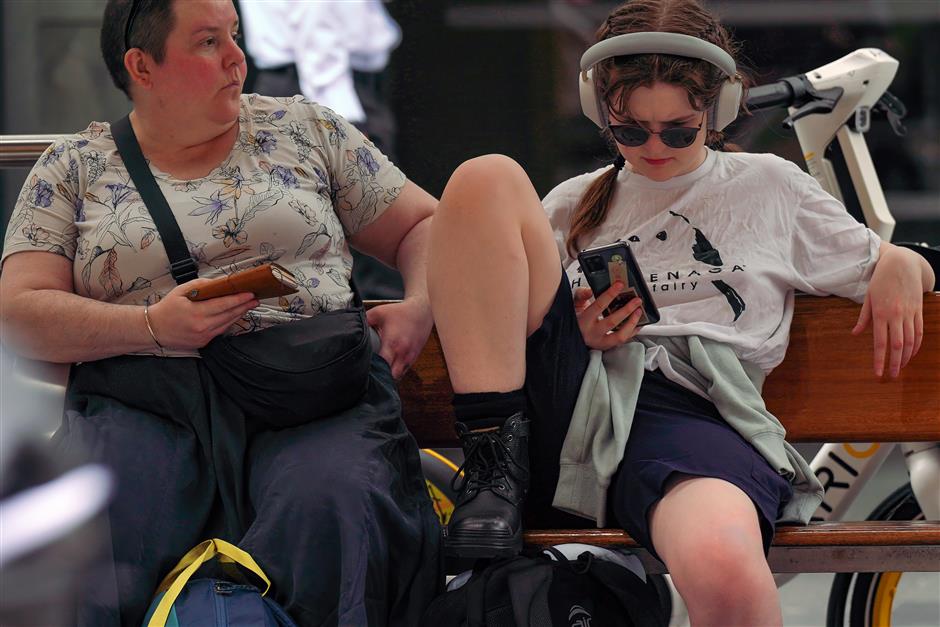
Yang Yun, a Shanghai mother of two, is locked in a daily struggle with her 5-year-old son, who refuses to brush his teeth, get out of bed, or sit down for meals unless he is holding a phone.
His fixation is a Douyin video about a "roasted whole sheep." The clip shows a host slaughtering and roasting a lamb – graphic material far removed from children's programming.
"He happily mimics the process," Yang told Shanghai Daily. "He pretends a pillow is the sheep and then 'serves' it to the family."
She has watched her son lose interest in English lessons and drawing. Almost everything else has faded behind the glow of that single video. Yet banning screens outright feels risky.
"I worry he cannot adapt to primary school," she said. "But if I stop it completely, I fear he will have no common language with his classmates and will be isolated."
Singaporean data echoes this struggle. A survey showed only 37 percent of parents feel confident in guiding their children's digital habits. The remaining 63 percent feel powerless.
The algorithms are powerful. They are designed to capture attention. A tired parent cannot compete with a supercomputer.
The resistance is growing. In the UK, a grassroots movement called "Smartphone Free Childhood" is gaining traction. More than 100,000 parents signed a pact. They agree not to buy smartphones for their children until age 14. They agree to ban social media until 16.
Cultural products reflect this anxiety. The British drama Adolescence depicts the dark side of digital life. It explores how hidden online bullying and "incel" culture affect seemingly normal teenagers.
British Prime Minister Keir Starmer watched the show with his own teenage children. He said it deeply moved him.
#Seeyouwhenim16
Not everyone agrees with the bans. Critics argue that bans isolate vulnerable youths. For some marginalized teenagers, the Internet is the only place they find community.
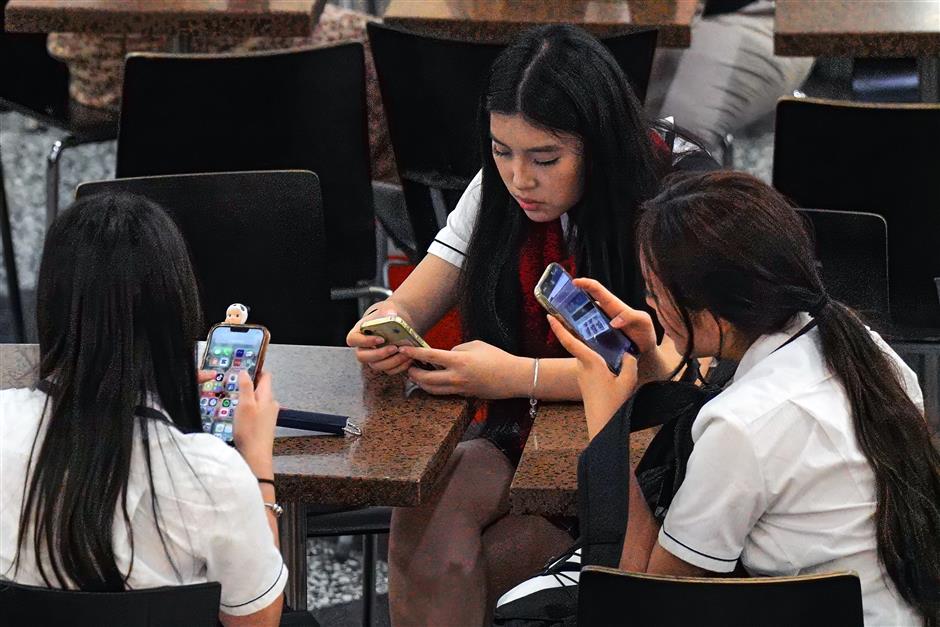
On TikTok, thousands of Australian teens posted emotional farewell videos under the hashtag #seeyouwhenim16.
"It is pointless," said 14-year-old Claire. "We are just going to create new ways to get on these platforms."
Luna Dizon, 15, fears the "culture shock" of losing her online presence and falling out of step with friends.
Some teens welcome tougher rules. In Bonn, Germany, 15-year-old Arian Klaar said the risks of social media are already clear to his generation.
"Social media is highly addictive," Klaar said. "I think the disadvantages are much worse than the advantages."
Tech companies also fought back. TikTok called the Australian law "rushed." They warned it could push young users to "darker corners of the Internet."
Hu Yong, a professor at Peking University's School of Journalism and Communication, views the Australian law as a milestone. He notes it shifts responsibility from parents to platforms.
However, a ban is only a first step.
"The goal is not just to turn off the phone," said Hu. "It is to give children a better real world."
Professor Peter Gray, a psychologist, notes that "childhood disappeared first, and phones just filled the void."
Children now have less time to play in parks and are burdened with more homework and tutoring. As a result, the digital world has become their primary playground, while the physical world continues to shrink.
The world is watching Australia. If the ban works, the "phone-based childhood" may become a thing of the past. For now, parents are simply trying to reclaim their children's attention, one hour at a time.
In Case You Missed It...
 Jan 17, 2026



![[China Tech] FDA Clears Gene-Editing Trial for Corneal Dystrophy at Fudan University Hospital](https://obj.shine.cn/files/2026/01/19/a89feb4b-baec-499e-a03b-7d44042cb364_0.jpg)
