Not All Proteins Are Created Equal. Chinese Biosynthesis Aims at the Best
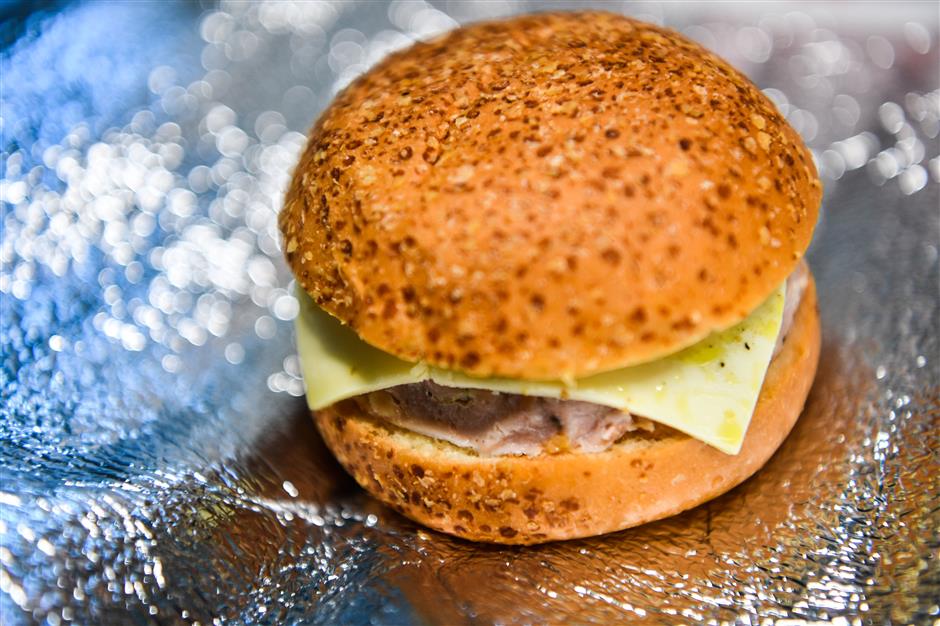
Imagine your next protein shake didn't come from a cow or a soybean, but rather from a tank bubbling with microbes.
In high-tech fermentation chambers across the world, fungi, yeast and bacteria are quietly manufacturing high-purity protein with extraordinary efficiency. Long relegated to the fringes of biotech, microbial protein is now moving to center stage, not just as a climate-friendly meat alternative, but as a nutritional and medical avenue reshaping what we eat and how we heal.
Nowhere is that shift more pronounced than in China. In startup labs tucked inside industrial technology parks, Chinese scientists are cultivating yeast strains with names few consumers recognize or can even pronounce. Their aim is to rewrite the market for protein products, grain by grain.
"We don't depend on nature's generosity; we design proteins from scratch," says Luo Bin, a former scientific researcher turned biotech entrepreneur in Shanghai.
Luo runs Changing Bio, a company working with yeast-based protein. Unlike many players focused on meat alternatives, he's less interested in replicating burgers or milk, and more focused on what he calls the "invisible gap" in the Chinese diet: protein-poor staples like steamed buns, noodles and rice.
"Why can't our main staples carry better protein?" he asks.
His lab uses Kluyveromyces marxianus, a strain of yeast with a long record in food fermentation, to produce microbial protein powder that can be added to everyday products without altering flavor or texture. The company has received early-stage regulatory approval overseas and is awaiting final clearance in China.
To Luo, microbial protein isn't just a meat substitute; it's a production method.
"The substance doesn't change," he says. "Only the pathway does."
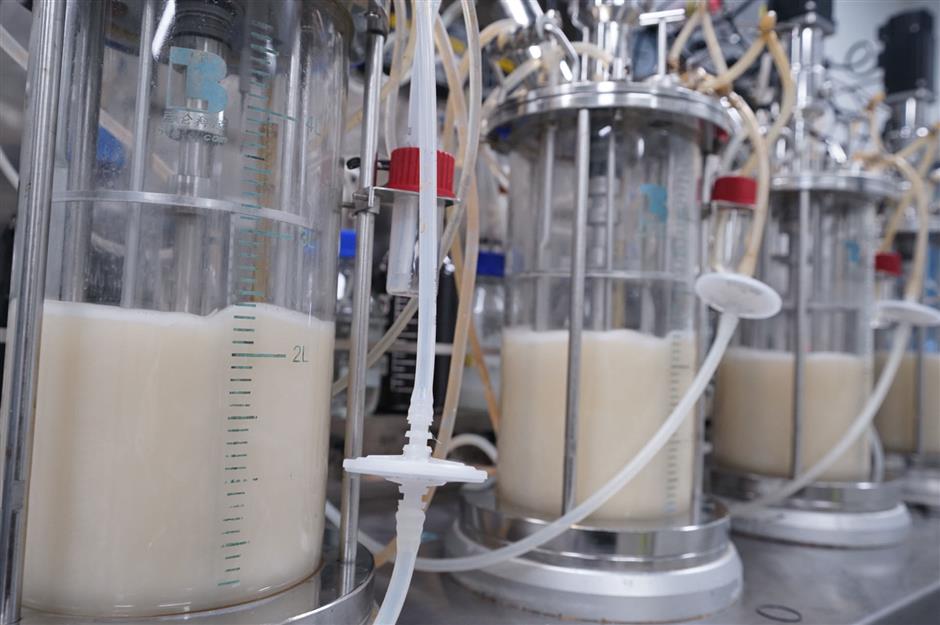
In this microbial realm, glucose is feedstock, fermentation tanks are farms and yeast cells are tireless livestock, converting sugar into protein with stunning efficiency.
In the company's rows of steel fermentation tanks, a kilo of glucose yields up to 300 grams of protein, a ratio unmatched in nature. By comparison, the most efficient traditional source, chicken, produces just 40-50 grams of protein per kilo of feed. Beef? Closer to 5. Even wild yeast, before engineering, tops out at 150 grams.
Right now, microbial protein costs are roughly on par with those of chicken, but long-term ambitions hope to exceed that.
"In theory, it can become cheaper than even traditional plant proteins," says Luo. "But only if we hit large production scale and get energy costs down."
This new protein industry has been gaining traction in China, a country that relies heavily on imports of soybeans as a major protein source.
According to a 2023 joint report by Boston Consulting Group and Blue Horizon, China's alternative-protein market could reach up to 120 billion yuan (US$16.5 billion) by 2035, providing 5-8 percent of the nation's total protein intake.
Precision fermentation, the method behind microbial protein, is projected to account for a growing slice of that market, according to Grand View Research, with analysts expecting it to hit US$1.9 billion in China alone by 2030.
The drive is on to participate in what is seen as a lucrative emerging market. In Beijing, a fermentation-focused innovation hub is under construction, designed to fast-track microbial meat and dairy alternatives from lab to supermarket. Synthetic biology parks in the cities of Shanghai and Shenzhen, and in Jiangsu Province are expanding infrastructure for fermentation tanks and downstream processing.
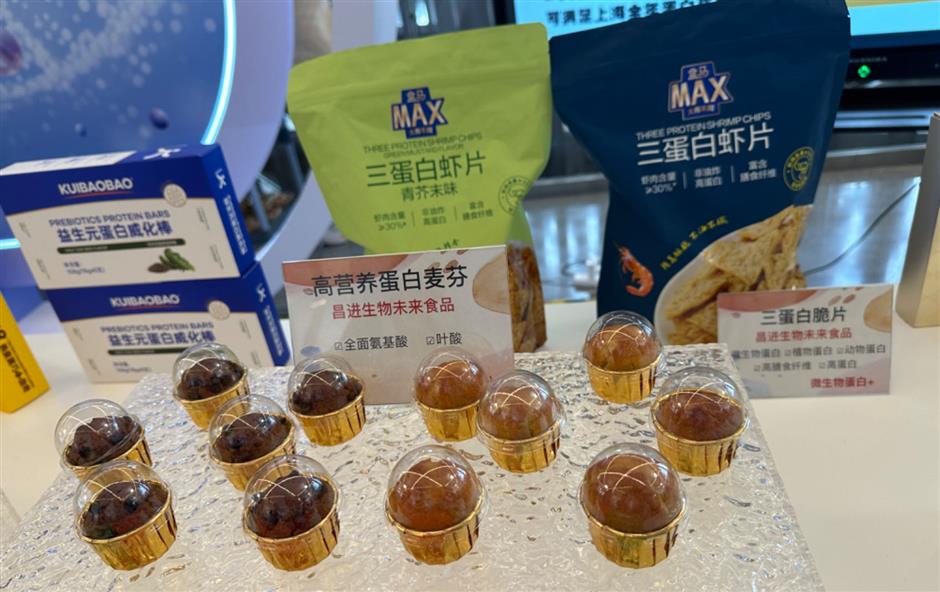
Unlike the trendy "plant-based burger" wave that has defined Western efforts to move away from animal proteins, China's bet on microbes is deeply embedded in national policy goals related to food security, carbon neutrality and biotech innovation.
Fermentation tanks are one way to reduce reliance on soybean imports, address scarcity of land for animal husbandry and mitigate volatile livestock prices.
In the West, alternative proteins often come wrapped in the language of climate, ethics and activism. But in China, nutrition is the watchword. Over 70 percent of Chinese consumers in a 2023 Ipos survey said they were open to trying alternative-protein products – not to save the planet, but to create a healthier diet.
China's per-capita intake of protein may be among the highest in the world but the quality of that protein is wanting. Not all proteins are created equal. They are categorized in three tiers.
Top-grade sources, like whey, egg whites and microbial protein, deliver complete amino acids and score near-perfect on digestibility indexes. Mid-grade proteins include meat and dairy products. The lowest tier, including peas, rice and wheat proteins, lacks key amino acids.
Most of China's diet still relies on the lower two grades.
"We don't need more protein," says Luo. "We need better protein, and we're putting it directly into everyday staples like rice and steamed buns."
Perhaps Chinese consumer acceptance of fermented protein is based on the nation's historical food culture. Fermentation has long been a part of daily diets, from yoghurt and soy sauce to stinky tofu.
But no matter how willing the public appetite, none of it lands on shelves without a green light from regulators.
While yeast-based proteins are already permitted in China, Changing Bio's another business line – synthetic dairy proteins produced via precision fermentation – is navigating a tougher path.
These proteins, such as β-lactoglobulin, are created by genetically modified microorganisms, offering an animal-free alternative to dairy products. The process is a bit like brewing. Microbes are given DNA instructions, then ferment sugars in tanks to produce the desired, high-value protein at scale.
But because the process involves gene-edited or engineered strains, it falls under stricter government scrutiny.
Surveys show that framing these proteins as "coded with DNA from milk or eggs" can sharply reduce consumer appeal. That makes naming and messaging a delicate balancing act as regulatory doors begin to crack open.
"The review standards here are much higher than in the US or EU," says Luo. "We're confident in the technology, but approval will take time."
Beyond innovation, Luo also sees it as a matter of equitability.
"Some rare bioactives in milk are worth hundreds of dollars per gram," he said. "If we keep extracting just those and selling the rest of the milk cheaply, we're creating nutritional unfairness. With biosynthesis, we can give everyone access to the best parts of food, fairly and affordably."
In Case You Missed It...

 Mar 3, 2026