A Bowl of Wontons, and the Many Ways to Name It
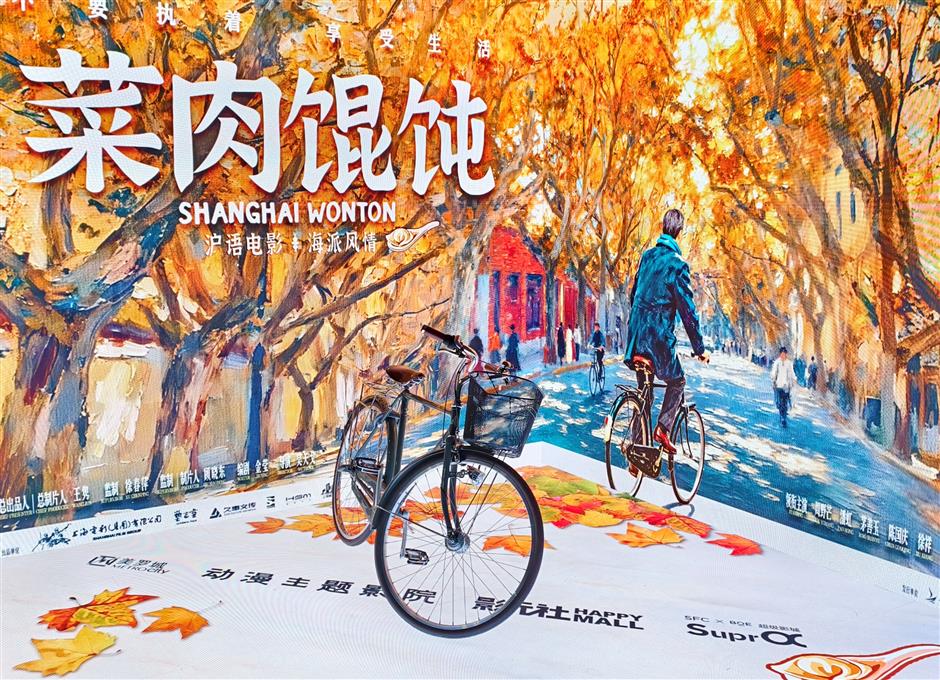
A Shanghainese-language film with an unassuming title – "Cairou Huntun" (菜肉馄饨), literally "vegetable-and-meat wonton" – quietly became a sleeper hit in China this month.
The story centers on Lao Wang (literally "Old Wang"), a retired factory worker who drifts into a tangle of late-life emotions while trying to honor his late wife's wish to find a partner for their grown son at Shanghai's famous matchmaking corner in People's Park.
A bowl of humble wontons becomes the emotional pivot for two generations, lending the film a warmth that slips in beneath the humor.
As a Taiwan-born son-in-law of Shanghai, I have a lingering affection for any film that captures the city's alleyway intimacies and its distinct dialect. My own Shanghainese is a patched-together pidgin version, so a new dialect film promised both linguistic correction and cultural delight.
"Cairou Huntun" delivers both. Sitting in the theater, surrounded by the cadences of the dialect and the sensory shorthand of local food, I found myself laughing, tearing up and, above all, feeling the familiar – Shanghai's smoky, street-level vitality and the unfussy wisdom of its older citizens.
What caught my academic eye, however, was the film's English title: Shanghai Wonton.
The art – and politics – of naming a dish
Instead of the literalism favored by filmmakers like Ang Lee, whose "Crouching Tiger, Hidden Dragon" still stands as a rare success in directly translated Chinese titles, the distributors opted for a strategy increasingly common in China's international releases: highlight the central theme, make the film instantly legible to outsiders, and present the selling point through the wording of the translated title.
"Shanghai Wonton" does precisely that. The title invites global audiences into the story through Shanghai's most approachable cultural doorway: its cuisine.
But once I started contemplating the translation of the dish, rather than the film, my lexicographer's instincts took over. How should one translate cai-rou huntun?
My mind quickly answered: pork and vegetable wonton.
In Shanghai, the "vegetable" is most often shepherd's purse, though bok choy or mixed greens are also common. Naming a specific vegetable in English creates false precision, so "vegetable" is better. The meat is always pork; using the generic "meat" is inaccurate and potentially misleading.
And in English, "pork and vegetable" sounds more natural than "vegetable and pork" – English prefers to put the shorter, lighter item first. The Chinese order, "vegetable first, meat second," produces a subtly heavier, less idiomatic English phrase.
As for the final word, huntun, English typically uses wonton, borrowed historically from Cantonese – a reminder that global English, even in gastronomy, carries the archeology of migration and trade.
When a scholar consults the AI
But introspection alone is never quite enough for someone in my profession. I scoured my Chinese-English dictionaries. Only one listed the phrase explicitly, translating it as wonton with meat and vegetable stuffing – accurate, but verbose.
In the age of large language models, I also asked three of them. Two agreed with me: pork and vegetable wonton. The third preferred vegetable and pork wonton, though it politely noted that my word order "may sound more natural to native speakers."
Then I checked usage patterns. Google returned roughly 14,500 hits for "vegetable and pork wonton," nearly double the 7,960 for "pork and vegetable wonton." Sketch Engine, a major linguistic corpus, showed a similar ratio. The evidence forced me to reconsider my instinctive preference.
In the end, both versions are defensible. If you want to echo the logic of the Chinese name, "vegetable and pork wonton" is faithful. If you want to align with English rhythm, "pork and vegetable wonton" works gracefully.
The dumpling problem
Many Chinese-English dictionaries also offer alternatives like dumpling soup, and some even list huntun in pinyin. But dumpling is the most unruly of English culinary categories – so wide that it encompasses everything from Italian gnocchi to Polish pierogi to half the starch-based comfort foods of East Asia.
In China alone, the term might be stretched to cover jiaozi, potstickers, wonton, tangyuan, zongzi, xiaolongbao, soup dumplings, and shaomai. Precision dissolves very quickly.
This semantic overreach deserves its essay.
Should "wonton" become "huntun?"
There is also a more ideological question lurking beneath the surface. If global English once adopted the Cantonese-derived wonton, should it now adopt the Mandarin-based huntun – the standard term in China? If so, should tofu (which entered English through Japanese) become doufu? Should regional names like chaoshou (Sichuan-style wonton) or bianshi (Minnan-style wonton) also be standardized, and in which dialect?
Every choice carries cultural weight. Food names are rarely neutral; they encode history, migration, hierarchy and soft power.
The larger lesson
Language and translation rarely offer a single "correct" answer. Their standards shift as the world shifts. What seems fixed today may soften tomorrow. What feels natural in one culture may land awkwardly in another.
Perhaps the most important lesson is to hold our terminology lightly – to accept that naming a dish, like preparing it, involves taste, context, and the willingness to allow multiple flavors to coexist.
And occasionally, the smallest bowl of wontons can open up the largest questions.
(The author, who earned a PhD in linguistics at the University of Illinois Urbana-Champaign, is a professor of English and college dean at Sanda University in Shanghai.)
Editor: Liu Qi
In Case You Missed It...

 Apr 1, 2026