Beijing Auto Show a Backdrop for New Assault by Industry Also-Rans
The 2026 Beijing Auto China, largest in the world, has become a critical battleground for foreign bands and joint ventures seeking to stage a comeback.
The hoped-for resurrection in the world's largest auto market comes amid stark figures. According to first-quarter data from the China Passenger Car Association, six of 10 car buyers in China now choose domestic brands, while only three opt for German or Japanese vehicles. In the green energy sector, the dominance is even more pronounced, with nine of 10 buyers opting for Chinese brands.
Against this backdrop, Auto China, which ends on Sunday, features a massive lineup of over 2,000 exhibitors from around the world, showcasing 1,451 vehicles. Breaking previous records in both volume and technological depth, the show hosts 181 global premieres and 71 concept cars.
Foreign automakers have arrived with formidable lineups, rolling out core technologies centered on electrification, intelligence and deep localization to rebuild their competitive edge in China.
The German luxury trio, BMW, Mercedes-Benz and Audi, lead the vanguard. In 2025, all three suffered declines in China, with combined sales dropping by nearly 260,000 vehicles from a year earlier in declines ranging from 5 percent to nearly 20 percent.
Previously criticized by the Chinese consumers for slow charging and short ranges in electric vehicles, and outdated platforms, the German trio has noticeably dropped the arrogance of their past market dominance and are now actively addressing technological blind spots, joining a fierce domestic war based on advanced specifications.
Mercedes-Benz hosted the global premiere of its pure electric GLC SUV, a long-wheelbase luxury model tailored with optimized configurations for the Chinese market. It boasts a range of over 700 kilometers and can charge from 10 to 80 percent in just 22 minutes. BMW brought its new-generation iX3 and i3 long-wheelbase versions, featuring an 800-volt architecture that pushes the range from 900 kilometers to over 1,000 kilometers.
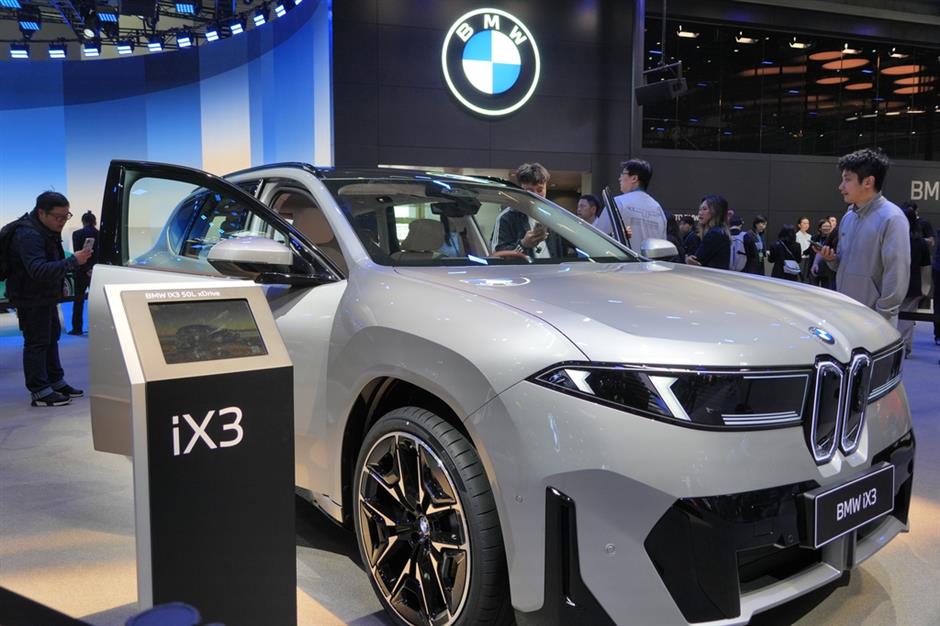
"Chinese customers want the latest technology. They want the best cars," said Oliver Zipse, chairman of the board of management of BMW Group. "This is a completely new design for BMW. Very modern. Very new. It's the first extended version because a lot of people ride in the backseat."
Deep localization has become a primary selling point. The new-generation Mercedes-Benz S-Class places a heavier emphasis on AI, partnering with Tsinghua University and Zhipu to develop a multimodal large language model for its rear entertainment system. This move signals that overseas automakers recognize China's leadership in smart cabins and are integrating local supply chains to shorten research and development cycles.
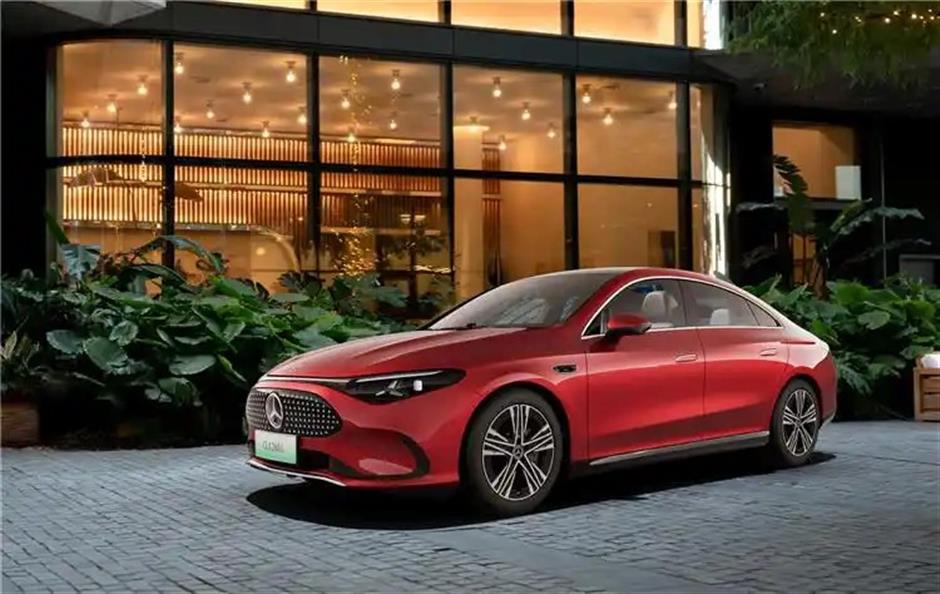
"The all-new GLC L combines leading AI on the Mercedes-Benz operating systems, top-notch drivability, modernistic design, segment-best efficiency and uncompromising safety all in one car," said Oliver Thöne, member of the board of management at Mercedes-Benz Group. "It's living proof of co-creation with our Chinese customers, based on Mercedes Benz standards. With this iconic milestone in the world's best-selling midsize luxury SUVs, we will continue to delight every Chinese customer who chooses to shape the future with us."
Furthermore, the traditional definition of "luxury" is being aggressively defended.
The Audi E7X highlights its "28 precision processes," ranging from triple-tanned Napa leather to double anti-static treatment for door flocking, applying rigorous traditional manufacturing standards to create a "mobile living room."
BMW's 7 Series now offers over 500 exterior paint options, pushing beyond industrial mass production into the realm of ultra-luxury bespoke services.
Beyond the German giants, the return of French and South Korean brands is also evident at the auto show. Dongfeng Peugeot Citroën has officially returned after a three-year absence, and Hyundai has also returned after a two-year hiatus.
While neither brand officially announced a departure from China, declining sales, shrinking production and strategic missteps had left them effectively marginalized.
Relying on the momentum of its 2015 peak when it sold 710,000 vehicles, Dongfeng Peugeot Citroën ignored the rapid evolution of the Chinese market, only to find its sales plummeting to just 51,500 vehicles, leaving it with a market share of less than 0.2 percent.
Similarly, Hyundai, which sold 1.1 million vehicles in China in 2016, saw its 2025 sales fall to 230,000 vehicles, with new electric vehicles accounting for less than 5 percent of that total.
At this year's show, Dongfeng Peugeot Citroën is exhibiting jointly under its dual brands, launching two pure electric concept cars and kicking off a three-year revival plan. The core strategy is "made in China, sold globally," transforming China into a production hub for French electric vehicles in both domestic and international markets.
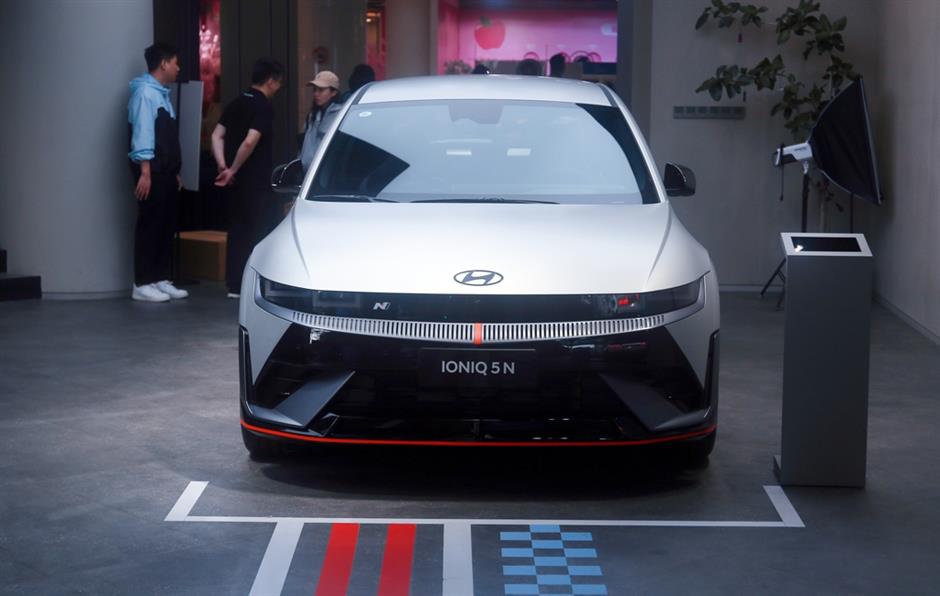
Hyundai is centering its comeback on the Ioniq pure electric brand, hosting the global premiere of the Ioniq V mid-size electric sedan. Partnering with China's Contemporary Ampere Technology (CATL) for batteries and Momenta for smart driving, Hyundai is committing to a heavy investment in China. The goal is to reach combined domestic and export scale of 500,000 units, with new electric vehicles comprising over 60 percent.
The strategic shifts within the Japanese camp are equally profound. Nissan Chief Executive Ivan Espinosa outlined a "from China to the world" strategy. For new energy models designed specifically for China, like the N7 and NX8, the development cycle has been slashed to two years. Nissan said it aims not only to export cost-effective electric vehicles from China but also to export Chinese AI technology to the global market.
Toyota, is exhibiting alongside FAW Toyota, GAC Toyota, and Lexus under the theme "To You." It has adopted what it calls a "with China, for China" strategy, building on its global localization strategy.
"What truly moves users are products and experiences that resonate at specific moments," Ma Li, executive vice president of Toyota Motor China Investment, said at Auto China. "The 'To You' theme a modern continuation of the brand's original commitment to creating for the individual."
But can joint ventures and foreign brands truly turn the tide?
Their greatest crisis lies in the shifting mindset of consumers. The younger generation of premium buyers in China increasingly equates luxury with cutting-edge technology, advanced computing power and ecosystem connectivity.
Although a shift toward the bias has been made by traditional giants like the German trio, the arena is a crowded one.
South Korean brands face similar hurdles. While Hyundai is relying on the Ioniq brand for its electric transition, Chinese electric-vehicle makers have moved into a phase of "homogenized" competition, where gaps in range, smart driving and cabin technologies are rapidly closing. To break through, Hyundai must find a distinct competitive advantage, while battling low brand recognition compared with heavyweights like Tesla, BYD and high-end domestic startups.
The future of joint venture brands in China's new automotive era remains a story still being written.
Editor: Yao Minji
In Case You Missed It...
 Sep 21, 2026

![[Current Trend] Inbound Tourism Booms in China, But Overseas Spending Lags](https://obj.shine.cn/files/2026/09/17/451f067c-84eb-4593-8b87-0c982bdbba77_0.jpg)