China Automakers Parlay Smart Car Technologies to Humanoid Robots
Reading into China's 15th Five-Year Plan
China's 15th Five-Year Plan (2026-2030) will be adopted at the ongoing Two Sessions. The plan outlines how the nation will move to achieve basic modernization by 2035, amidst a more disquieting global environment as well as China's efforts to become more self-reliant in technology and improving living standards. This series provides insights into the nation's vision in various sectors.

Just think about it. A smart electric vehicle is, fundamentally, a robot on four wheels. So it should come as little surprise that a Chinese automotive industry suffering from hyper-competition and shrinking margins is expanding its expertise into development of robots, hoping the pivot will be a springboard for a more profitable future.
Comments from carmaking executives at the current session of the National People's Congress and its advisory consultative body attest to a dramatic shift underway from traditional factory floors.
GAC Group Chairman Feng Xingya, a National People's Congress delegate, said his company is actively integrating smart vehicles and humanoid robotics in its corporate strategy.
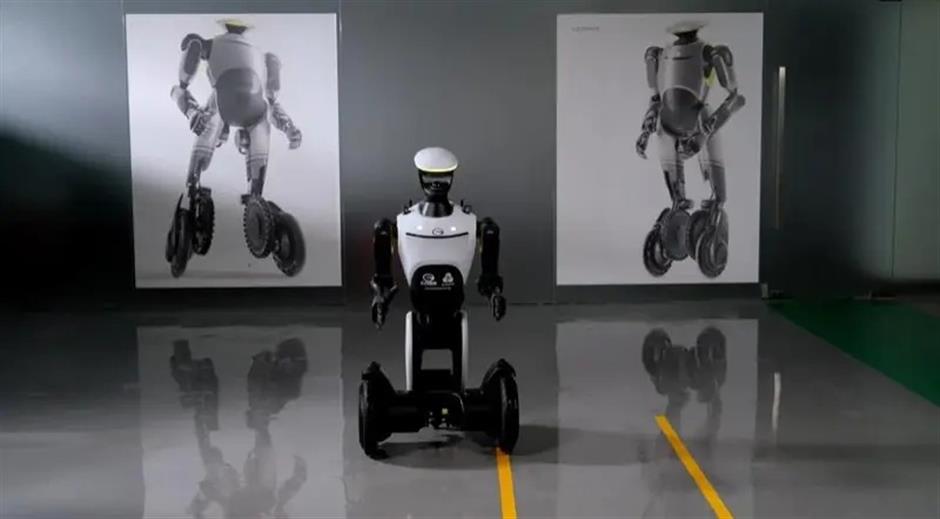
The company's fourth-generation robot, the GoMate Mini, features a variable wheel-leg design aimed at early marketing for use in security and inspections. The group plans a small rollout of the robot this month, targeting mass production in 2027.
"GAC is slashing costs by repurposing automotive components like chips and remote sensing," said Feng. "For robot-specific hardware, we rely entirely on in-house development, achieving 100 percent localization of core parts. This dual strategy significantly lowers production costs while advancing domestic supply chains."
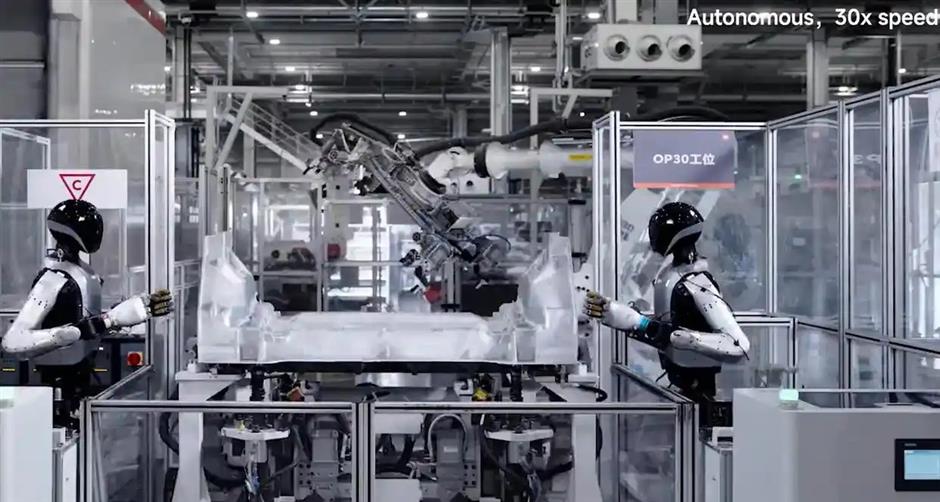
Echoing this pragmatic shift, Lei Jun, founder and chief executive of Xiaomi and also a congress deputy, said that robots have already begun "interning" at company auto factories.
"Robots have completed continuous three-hour autonomous operational tests in our factory," said Lei. "This deployment is a starting point to drive embodied AI into the broader smart manufacturing."
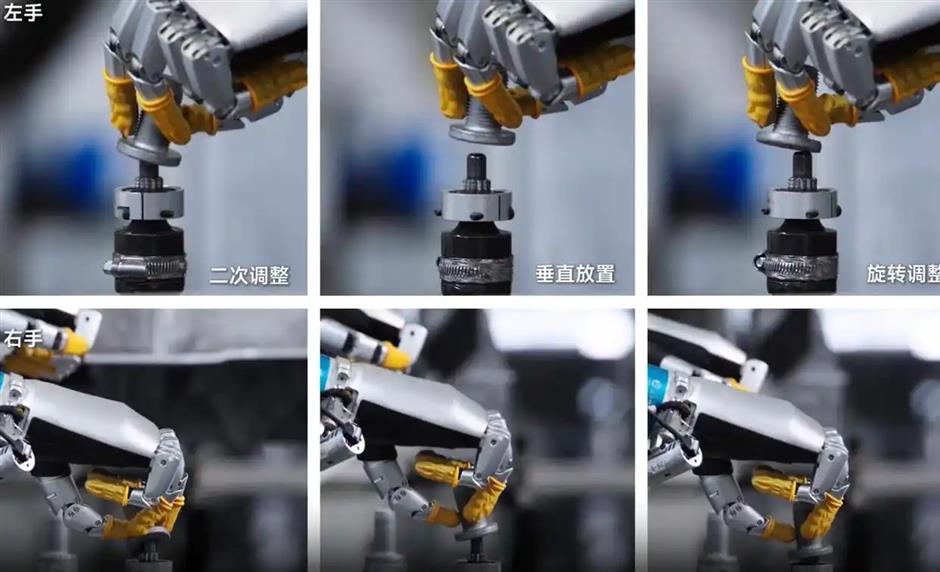
Similarly, Xpeng Motors has signaled 2026 will be a watershed year for the mass production of embodied AI. The company plans to initiate mass production of its new-generation Iron humanoid robot by the end of the year.
Traditional carmaking giants like BYD and Changan are also entering robotics. BYD is targeting internal deployment of 20,000 humanoid robots this year, and Changan is aiming for full-scale mass production by 2028.
This big shift in corporate strategy aligns with broad national directives outlined during the ongoing legislative sessions. The 15th Five-Year Plan (2026-30) proposes to strengthen original innovation and tackle bottlenecks in core technologies.
For automakers evolving into robotics powerhouses, this supportive policy environment provides both the structural foundation and the clear imperative to lead the global embodied AI revolution.
So why carmakers?
The core driver of this trend is "technology spillover." The "brain" of an autonomous vehicle – comprising perception, decision-making, and planning algorithms – can be directly applied to a humanoid robot.
Furthermore, the "limbs" of a robot share deep synergies with electric car powertrains. Automakers are highly proficient in batteries, micro-motors, thermal management, and drive-by-wire chassis technologies, all of which are directly applicable to robotic joint actions. By leveraging these mass production capabilities, carmakers can drive down cost of materials.
For the moment, the spillover of smart automaking technologies to robots is confined to the manufacturing facilities of car makers, where assembly lines can be used as testing grounds. Robots like Xpeng's Iron are deployed to handle non-structured tasks that traditional robotic arms cannot manage, such as cross-zone material transport, flexible sorting and precision assembly. They can replace humans in factory-floor operations that are dangerous, tediously repetitive or highly demanding stations.
However, this transition is fraught with immense capital commitments and engineering challenges on the long road to profitability.
The cash burn rate required to develop embodied AI foundation models and the manufacture a high-degree-of freedom robots remains too high to justify replacement of a skilled factory worker or a traditional, specialized robotic arm.
Xiaomi, as one example, said it will double its five-year research and development spending to 200 billion yuan (US$29 billion) from the last five years' capital outlay.
Not all carmakers have the resources for similar commitments. Xpeng Motors' cash reserves far short of many its competitors, typically hovering around 40 billion yuan to 50 billion yuan. Although its string of losses has narrowed, the company was still in the red to the tune of 380 million yuan in the third quarter of 2025. This year, Xpeng said it plans to invest about 3.5 billion yuan in general AI.
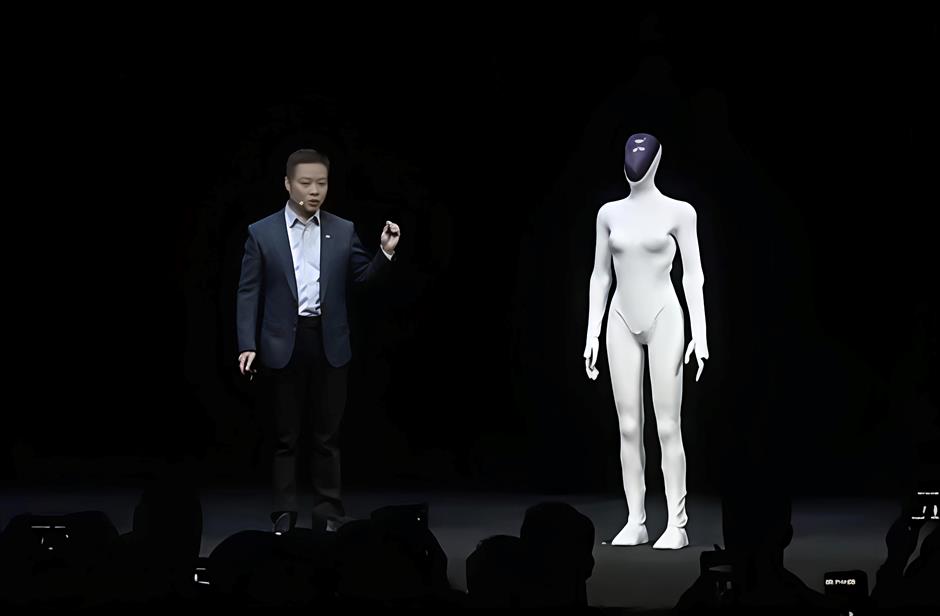
For many carmakers, it's a do-or-die situation.
"Operating a traditional automotive enterprise is inherently painful," said He Xiaopeng, president of Xiaopeng Motors. "Being an automaker is painful. Sales volumes fluctuate and gross margins are just too low."
This is a capital-intensive industrial marathon, not a sprint. Significant profitability from robotics divisions is likely years, if not a full decade, away. The winners in this race will be those who can successfully endure the prolonged cash burn, continuously drive down component costs through supply chain improvements and seamlessly transition their AI capabilities from the predictability of the highway to the complexities of the human form.
Editor: Liu Qi