Global Auto Giants Face Crunch Time, China a Pivotal Focus
Multinational auto giants across Europe, Japan and the United States, once the kings of the global industry, have been taking something of a bruising this year, with their markets on the Chinese mainland hemorrhaging.
European giants are caught in a profit squeeze driven by cutthroat price wars in China and a slowdown in home-market demand for electric vehicles. Japanese automakers have seen a massive surge in paper profits riding the tailwinds of a depreciating yen and robust demand for hybrid vehicles in the US.
Yet, beneath top-line figures, a common thread emerges: Operations in China are undergoing severe growing pains. The Chinese auto market, largest in the world, is no longer the "cash cow" it once was, evolving rather into an ultimate testing ground of resilience in face of changing consumer trends and stiff domestic competition.
Mid-year reports from European automakers show a deep chill. Volkswagen Group, for example, said first-half deliveries fell 6 percent to 4.1 million units. Operating profit dropped 12 percent in the second half from the prior quarter to 5.9 billion euros.
The profit contribution from VW joint ventures in China plummeted from 506 million euros in the first half of 2025 to just 184 million euros in the same period this year.
Luxury brands are facing the same situation. In its mid-year report, Mercedes-Benz took an 844 million euro impairment charge on its Chinese joint venture assets.
The core driver behind the poorer performance by European automakers is the extremely fierce competition from Chinese brands in mainstream segments, placing foreign brands in a position where even drastic price cuts cannot protect their market share.
At the meantime, growth in demand for pure electric vehicles in Europe has stagnated, leading to underutilization of capacity at local European factories, where high fixed costs are further erode profit margins.
In contrast to their European peers, Japanese giants posted eye-catching results for the first half of 2026. Toyota Motor, for instance, reported its net profit leapt to 1.48 trillion yen (US$9.4 billion), far exceeding the 841 billion yen recorded in the same period last year. Sales also grew by 10 percent to 13.5 trillion yen.
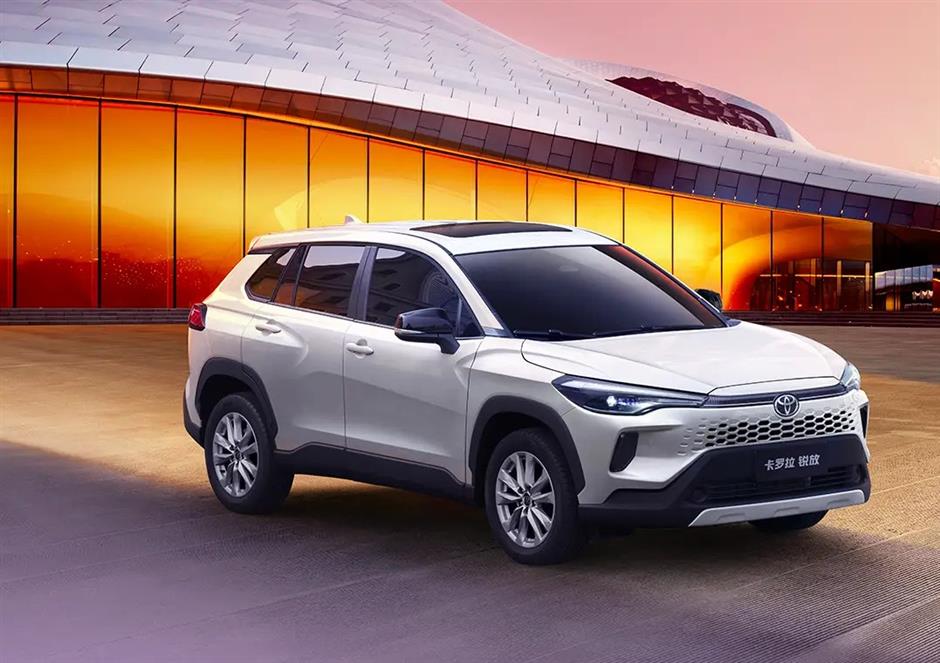
However, the engine behind this growth was primarily the depreciation in the yen, which makes exports cheaper. As the exchange rate shifted from around 145 to near 160 yen against the US dollar, Toyota's massive overseas profits translated into a book-value surge.
Furthermore, Toyota's strategic bets on hybrid models in the US successfully captured consumers retreating from pure electric vehicles. But if the currency windfall and the strong North American market are excluded, Toyota's operating profit in the Asian region, which is centered on China, actually declined by 11.2 billion yen.
Honda and Nissan are similarly grappling with downward sales trajectories in China. Nissan barely managed to maintain a positive net profit of 3.8 billion yen through extreme cost-cutting measures, while its sales in China still fell by 15 percent year-over-year.
American automakers present a slightly different picture, characterized by traditional combustion engine vehicles providing a financial floor while new energy businesses continue to bleed cash.
Ford's electric-vehicle division continued to endure heavy losses in the first half of 2026. General Motors achieved slight overall profit growth supported by the resilience of high-margin pickups and large SUVs in its home market, but its joint venture earnings in China saw a sharp year-on-year decline.
Whether it is the profit slide of European giants or the shrinking market share of Japanese and American brands in China, one reality is clear: The era when multinational automakers could reap excess profits in the Chinese market solely through brand premium and traditional combustion engine technology is over.
Western and Japanese automakers are now rethinking their "one-size-fits-all" global strategies. Instead, they are implementing a "dual-track" survival strategy, with localized production in China and a separate defensive playbook for the rest of the world.
For their China-related operations, multinational giants are shifting from simply "manufacturing in China" to "deeply integrating into the Chinese ecosystem." Companies like Volkswagen and Toyota are handing over the research and development reins for new energy and smart-connected vehicles to local Chinese teams. By tapping into China's mature supply chains, they are slashing new car development cycles from 48 months to under 24 months, directly cutting development costs by more than 30 percent.
Concurrently, partnerships such as Volkswagen with XPeng, Stellantis with Leapmotor, and Audi with SAIC, have fully materialized in 2026. European giants are utilizing reverse technology licensing to acquire China's smart cockpit and electronic architectures. They are also using these joint ventures as export springboards, shipping highly cost-effective electric vehicles to Southeast Asia, Latin America and even back to Europe to circumvent trade protectionism.
Meanwhile, on the global front outside of China, these automakers are aggressively streamlining operations and fortifying their foundational businesses. Mercedes, Volvo and Ford, for example, have recalibrated their previously aggressive targets for pure electric vehicles, reinvesting heavily in plug-in hybrids, extended-range electric vehicles and highly efficient internal combustion engines to align with the demands of consumers in Europe and the US.
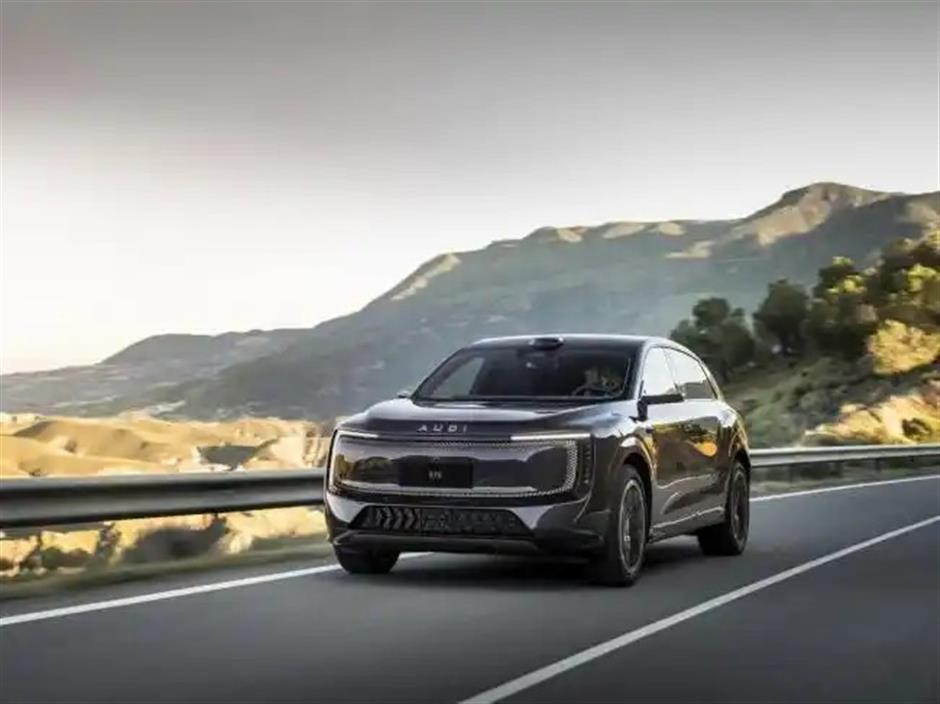
To hedge against the risk of slowing global auto growth, Volkswagen has even begun evaluating the closure of factories in its home base Germany, while major suppliers like Bosch and ZF plan to cut tens of thousands of jobs across Europe.
Furthermore, multinational giants are redirecting capital expenditure toward the US, India and the Middle East. They are leveraging domestic subsidies, such as the US Inflation Reduction Act, to consolidate their highly profitable pickup and SUV bases, while laying groundwork in emerging markets to dilute their reliance on any single region.
The 2026 mid-year reports signal a profound reshaping of the global automotive industrial order. The future success and survival of the once-untouchable multinational giants now depend on their ability to balance a two-front war, which is borrowing the speed and supply chain of the Chinese market to drive down costs, while relying on hybrid technology, traditional internal combustion engines and currency advantages to maintain cash flow overseas.
Editor: Liu Qi
In Case You Missed It...
 Aug 13, 2026



![[SH Transit] China Eastern Adds Flights On World's Longest Air Route](https://obj.shine.cn/files/2026/08/28/4a8a5cbe-893f-424c-b58c-aaee72c66015_0.jpg)
![[Weather] Typhoon Saudel Makes Two Landfalls in Zhejiang](https://obj.shine.cn/files/2026/08/28/eff9c2d3-5f3a-4ba1-be2f-d33ee430c832_0.jpg)