AI-Driven Drug Research Hastens Discovery, But Can It Lead to Clinical Success?
As the 2026 World Artificial Intelligence Conference is under way in Shanghai, it isn't only large language models, robots and self-driving technologies in the spotlight. The deployment of AI in biopharma is also drawing attention, posing a big question.
Can AI use, which accelerates drug research, produce drugs that can actually succeed in clinical trials and, ultimately, reach patient care?
Insilico Medicine recently moved one of its AI-enabled drug candidates into Phase III clinical testing, marking a new stage for an industry that has spent years promising to make drug discovery faster and cheaper.
The milestone comes as AI drug developers face the harder issue of translating faster target discovery and molecule design into better clinical outcomes.
Until now, much of the industry's progress has been measured by how quickly companies can identify targets, generate compounds and advance candidates toward the clinical trials. Those gains matter, but they don't necessarily demonstrate whether AI can improve clinical outcomes.
That is beginning to change how the sector is judged. Pharmaceutical companies and investors are looking beyond algorithms and development speed toward clinical evidence, repeatable pipelines and commercial value.
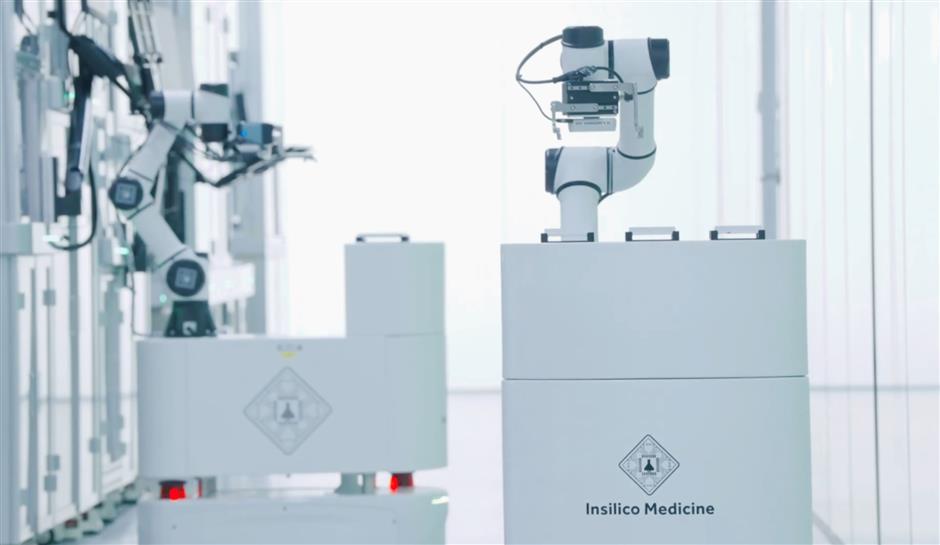
"When a pharmaceutical company evaluates a pipeline deal, it is looking primarily at the product data and its strategic market position," said Wang Jue, global head of business development at Insilico Medicine. "It is not particularly concerned about whether the drug was generated by AI because what it is buying is the pipeline."
For AI companies, she added, such deals provide a different kind of validation.
"If the molecule is not good enough or sufficiently differentiated, partners will not spend real money to acquire the asset," Wang explained.
AI may have shortened parts of the journey from lab to clinic, helping establish itself as a useful drug-discovery tool. But that progress has not yet shown whether AI can improve clinical success rates or reduce the cost of developing a medicine from discovery through approval stages.
Insilico founder Alex Zhavoronkov said at WAIC that moving a drug candidate from discovery to development typically takes about four and a half years. Conducting research in China can shorten that timeline by roughly two years because of its talent pool and research infrastructure, while combining those advantages with AI can compress the process to as little as nine to 12 months.
"Drug development ultimately comes back to clinical outcomes," said Wu Xiaoying, China consulting leader at Ernst & Young. "Early-stage speed cannot automatically translate into higher clinical success rates."
Wu noted that AI has already demonstrated value in accelerating screening and molecular design. But the industry was now being subjected to a more practical test.
"The next two to three years will be a critical validation window," she said. "Companies able to move candidates repeatedly into clinical trials and show differentiated safety or efficacy will receive greater recognition from drugmakers and investors. Market patience will decline for those that remain focused only on discovery efficiency."
As more AI-derived candidates enter human trials, the benchmark is shifting. Drugmakers are increasingly judging platforms by the quality of the assets they produce, the strength of their clinical data and whether the process can be repeated across multiple programs.
That shift is also reshaping how pharmaceutical companies work with AI developers.
Isomorphic Labs, the drug-discovery company spun off of Google DeepMind, has signed research collaborations with Eli Lilly and Novartis to use its AI drug-design platform to discover small-molecule candidates against selected targets. The agreements include upfront payments and potentially billions of dollars in milestone payments, tying the value of the technology to whether it can produce assets that move through development.
The structure shows that pharmaceutical companies may begin by testing an AI platform, but the larger payments are increasingly attached to drug candidates, development milestones and commercial rights.
"Pharmaceutical companies will not pay simply for the capability of a model," Wu said. "They want to see whether the platform has real project experience and can produce assets capable of advancing into clinical development."
Drugmakers are willing to pay for higher-quality candidates, faster experimental validation and research results that can become co-development projects or licensed assets, she added.
"The commercial value of AI drug discovery ultimately has to be reflected in project progress, data quality and pipeline value."
For AI developers, that raises the bar. A model may generate thousands of possible molecules, but commercial validation comes only when a partner is prepared to fund one through laboratory work, clinical trials and regulatory review.
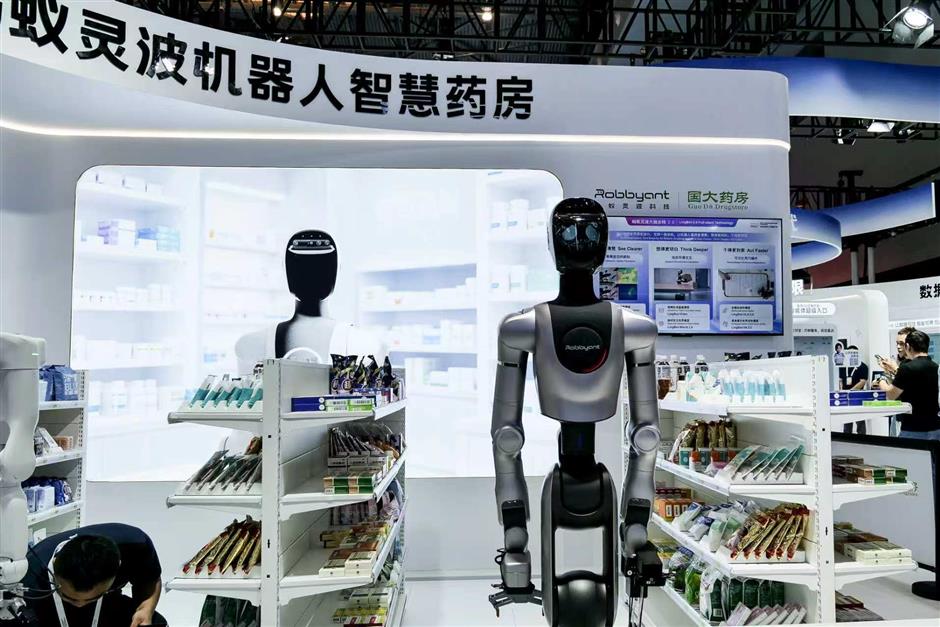
Producing a promising molecule, however, requires more than algorithms.
China's XtalPi has built much of its drug-discovery business around the combination of AI models and automated laboratories. Its systems are designed to move candidates through a faster cycle of prediction, synthesis, testing and data feedback, addressing a bottleneck that computations alone cannot remove.
The company's model reflects a wider shift across the sector. As molecule generation becomes faster, the ability to validate those predictions experimentally and generate proprietary data from the results is becoming more critical.
"The most difficult part of AI drug discovery is whether a prediction can be repeatedly validated in experiments and eventually move into the clinic," Wu said. "Long-term competitiveness will be stronger for companies that can link algorithms, data, experiments and pipelines into a closed loop."
The same logic is pushing AI beyond small-molecule discovery. Companies are applying foundation models to proteins, antibodies and other biologics, where the design space is larger and the experimental burden remains high.
Japan's Takeda last year expanded its partnership with US biotech Nabla Bio to design protein therapeutics for difficult drug targets. The agreement included upfront and research payments, with more than US$1 billion tied to future milestones, again linking the value of the AI platform to the progress of the resulting drug candidates.
Yet even strong partnerships and faster experiments do not settle the central question. The industry still has limited evidence that AI can raise clinical success rates or reduce the total cost of bringing a drug to market.
For now, the strongest evidence for AI in drug development remains concentrated in the early stages of research. Companies have shown that algorithms can narrow target lists, generate molecules more quickly and reduce the number of compounds that must be synthesized and tested.
What remains unproven is whether those gains can materially improve the probability of clinical success, shorten the full development cycle or lower the total cost of bringing a medicine to market.
Wu said the market has placed excessive expectations on AI's ability to raise drug-development success rates.
"An improvement in early discovery speed is not the same as an improvement in clinical success," she said. "AI does not yet have enough long-term results to prove that it can systematically increase the probability of success."
Once a candidate enters human trials, it faces the same biological uncertainty, safety requirements and regulatory scrutiny as conventionally developed drugs.
For AI drug developers, the next phase will be defined less by how many molecules their models can generate and more by how many candidates can survive clinical development, attract sustained investment and ultimately become patient therapies.
Editor: Liu Qi
In Case You Missed It...
 Oct 22, 2026
![[ChinaMaxxing] The Weather We're Having Now Is Called Frost's Descent](https://xinyue-v30o.yueliu.cloud/coverImg/project/video/b3e3e7d6d0b7639e124b5afac673c983-6a71592b4ddfdfa1ae3f820011b45db8/j40ec09d6cde611f19d9279b2794f0402_0.jpg)


![[Weather] Typhoon Champi Closes Shanghai Attractions, Disrupts Weekend Events](https://obj.shine.cn/files/2026/10/23/f76ff132-9477-4587-8eed-3b9812ed7f4f_0.jpg)