Shanghai Announces Space-Based AI Computing Network Upgrades
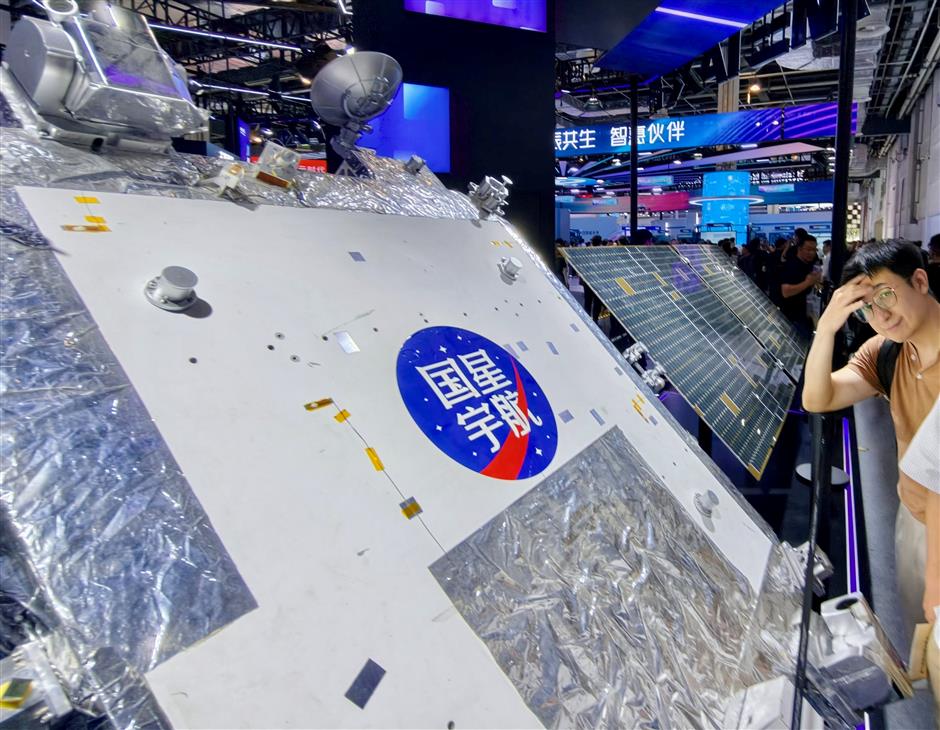
Shanghai has unveiled a series of major space-based artificial intelligence computing upgrades at the ongoing World Artificial Intelligence Conference 2026. The announcements mark a new scientific frontier that merges orbital satellite networks with advanced AI workloads.
During the conference, Shanghai officially debuted its space-based digital infrastructure project, the Star Hub Initiative. As the city's flagship space computing constellation, the project will launch two primary computing satellites and 12 edge-computing satellites in its initial phase. The initiative plans to scale up to 50 computing and 100 edge satellites during its commercial deployment phase, eventually reaching a massive constellation of 1,000 satellites.
Space-based AI computing fundamentally flips the script on traditional data management by shifting data centers directly into Earth's orbit. This paradigm shift has emerged as a key battleground in the geopolitical tech race between China and the United States, especially following Elon Musk's SpaceX, which recently completed a record-breaking 75 billion dollar initial public offering.

The conference also saw major commercial partnerships take flight. At a SenseTime forum, the AI pioneer signed a strategic cooperation agreement with Chengdu Adaspace Technology. The two companies will jointly construct the SenseTime Space Computing Power Constellation.
With initial launches and network formation slated for later this year, the partnership aims to deploy thousands of computing satellites by 2030. The completed network is projected to exceed a staggering 10,000 Petaflops of total computing power, establishing a global, space-based intelligent computing network.
Elsewhere on the WAIC exhibition floor, signs of deep industry integration were on full display. Chip firm MetaX showcased a physical model of an Adaspace satellite at its booth, while UCloud debuted a beta version of its space AI computing center, co-developed alongside the University of Shanghai for Science and Technology.
Operating high-performance hardware in the vacuum of space requires cutting-edge engineering. The core control modules of these new orbital servers are equipped with high-end GPUs capable of running large AI models and processing remote sensing and mapping data in real time. To survive the orbital environment, the servers feature an innovative, full-liquid-cooling design. This system overcomes the critical heat dissipation challenges of space, where traditional air cooling fails due to the lack of an atmosphere, according to UCloud.
The surge in space-tech innovation aligns with explosive market forecasts. According to research firm TrendForce, the global satellite industry is projected to reach a market value of US$447 billion by 2027, maintaining annual growth rate of 14 percent.

Editor: Yao Minji
In Case You Missed It...

 Oct 20, 2026
![[Weather] Typhoon Champi Could Bring Heavy Rain, Strong Winds to Shanghai](https://obj.shine.cn/files/2026/10/20/e8cc26f0-0a5f-4183-899a-89970ae61587_0.jpg)

![[Big News] CNS Launches Shanghai Health Directory](https://obj.shine.cn/files/2026/10/20/5d3cbb6a-70d4-4f74-b549-b830162d63a5_0.jpg)


![[SH Transit] Shanghai Plans Bigger Airports, Stronger Air and Sea Links](https://obj.shine.cn/files/2026/10/20/cc332098-2356-49f9-878f-86691dd8c989_0.jpg)
