Aye for an Eye: the Race Is on in China to Market Drugs to Slow Myopia

A prescription eye drop used to slow childhood myopia is becoming one of China's most closely watched pediatric healthcare markets, as drugmakers, eye hospitals and online health platforms move to capture demand from parents worried about their children's worsening nearsightedness.
The latest signal came from Shenyang-based Sinqi Pharmaceutical, whose 2025 results, released late last month, showed how quickly low-dose atropine has moved from a specialist eye-care product into a commercial growth engine. The company reported revenue of 2.47 billion yuan (US$362 million), up 27 percent, while net profit more than doubled to 696 million yuan. Eye-drop products, including atropine sulfate and cyclosporine eye drops, accounted for nearly 79 percent of its sales.
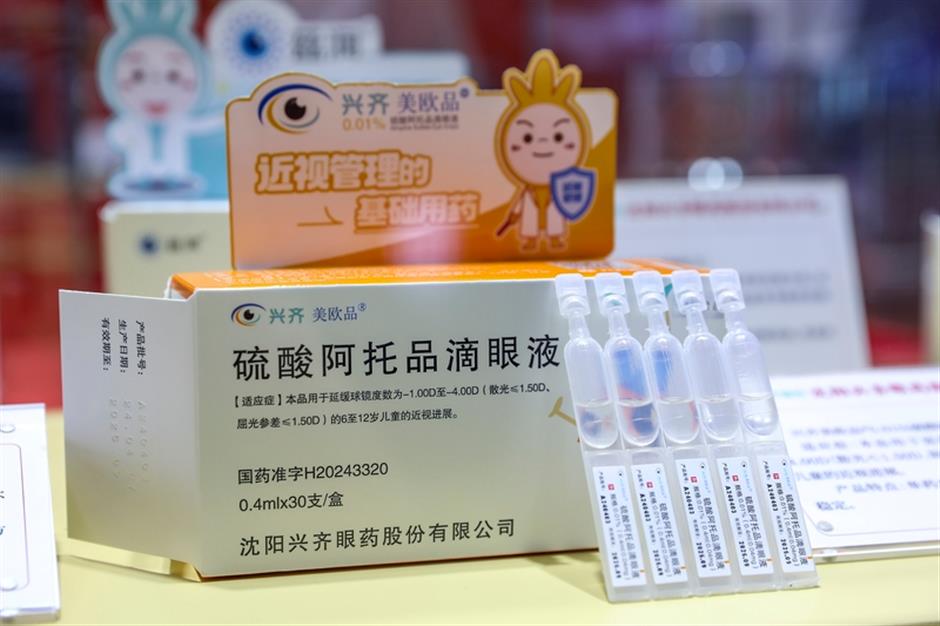
Sinqi remains the first company in China with an approved low-dose atropine product for slowing myopia progression in children. Before that approval in 2024, access was limited mainly to hospital-made preparations or unapproved products bought through informal overseas purchasing channels.
But atropine's strong results also highlight a broader shift. A market once shaped by limited supply and hospital-based preparations is entering a more competitive phase, with domestic drugmakers and overseas-linked products moving toward approval.
"Atropine has a sizable potential market, so it was foreseeable that sales would ramp up quickly after the product was launched," said Du Xiangyang, an analyst at Southwest Securities.
Sinqi's results, he said, suggest that low-dose atropine has moved beyond a niche clinical product and entered a commercially validated stage in China.
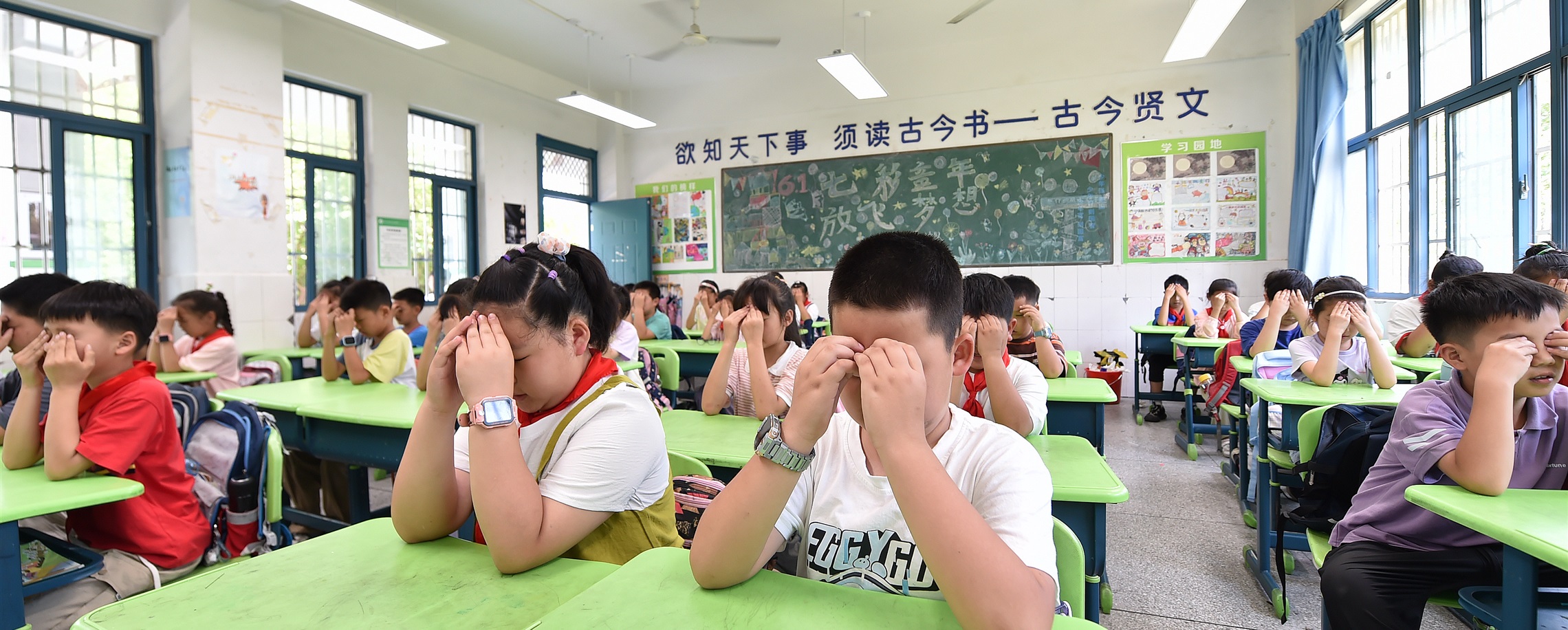
China has one of the world's largest populations of children with myopia, with government estimates of an incidence rate among children and adolescents at above 50 percent. That rate is above the world average of 38 percent, according to a 2023 study published in the British Journal of Ophthalmology. It has been blamed, in part, on China's rigorous education system, forcing children to spend too many hours studying, which prompted the government to issue guidelines for more outdoor exercise time during school hours and lighter homework loads.
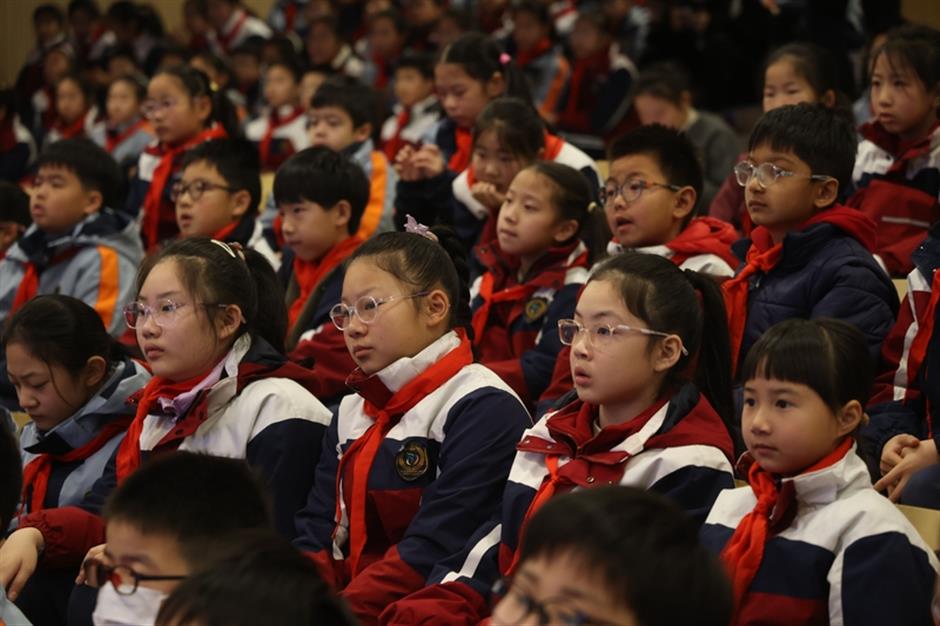
The commercial appeal of atropine is not based on a cure. Low-dose atropine does not reverse nearsightedness. It is used as a long-term management tool, often alongside glasses, orthokeratology lenses (specially designed and fitted contact lenses), defocus lenses or regular ophthalmology checkups.
That makes the product category different from ordinary eye drops. A child may use atropine for years, with follow-up visits, prescription renewals and possible dose adjustments. For drugmakers and healthcare platforms, that creates the possibility of recurring demand in a pediatric market where parents are often willing to pay out of pocket.
"I wanted to slow the progression of her myopia," said Chen Jie, a Shanghai editor, said of her daughter, who used atropine before switching to orthokeratology lenses. "I am highly myopic myself, so I was worried that my child would also become highly myopic before adulthood."
Chen said her daughter, now 15, used atropine for about one to two years as part of long-term myopia management. The treatment was first recommended by a doctor in 2019, when low-dose atropine was still mainly available through certain hospitals. Her daughter later switched to orthokeratology lenses, which cost between 8,000 yuan and 10,000 yuan.
"At that time, the atropine eye drops were prepared by the hospital and were covered by medical insurance, so it was very cheap," Chen said.
The market began to change after regulatory approval. In March 2024, China's National Medical Products Administration approved Sinqi's 0.01 percent atropine sulfate eye drops, making it the first low-dose atropine product formally approved in the nation for slowing childhood myopia progression. In January 2026, Sinqi received approvals for 0.02 percent and 0.04 percent versions, creating a three-dose portfolio.
Formal approval moved low-dose atropine beyond hospital-made preparations and specialist channels, allowing wider distribution through medical and retail networks.
"We estimate the conservative market size for atropine at about 5.3 billion yuan, with an optimistic scenario at about 20.4 billion yuan," Du said. "With Sinqi's atropine product approved in 2024, the company is expected to benefit from limited competition in the short term."
The approval also changed commercial logistics. It turned a fragmented, institution-based supply model into a formal prescription-drug market, where companies can compete on manufacturing quality, physician education, retail access and repeat refills.
Online healthcare platforms are also becoming part of the distribution system. Sinqi's newer atropine products have appeared on major digital platforms, including Alibaba Health and JD Health, supported by online consultation and prescription-refill services.
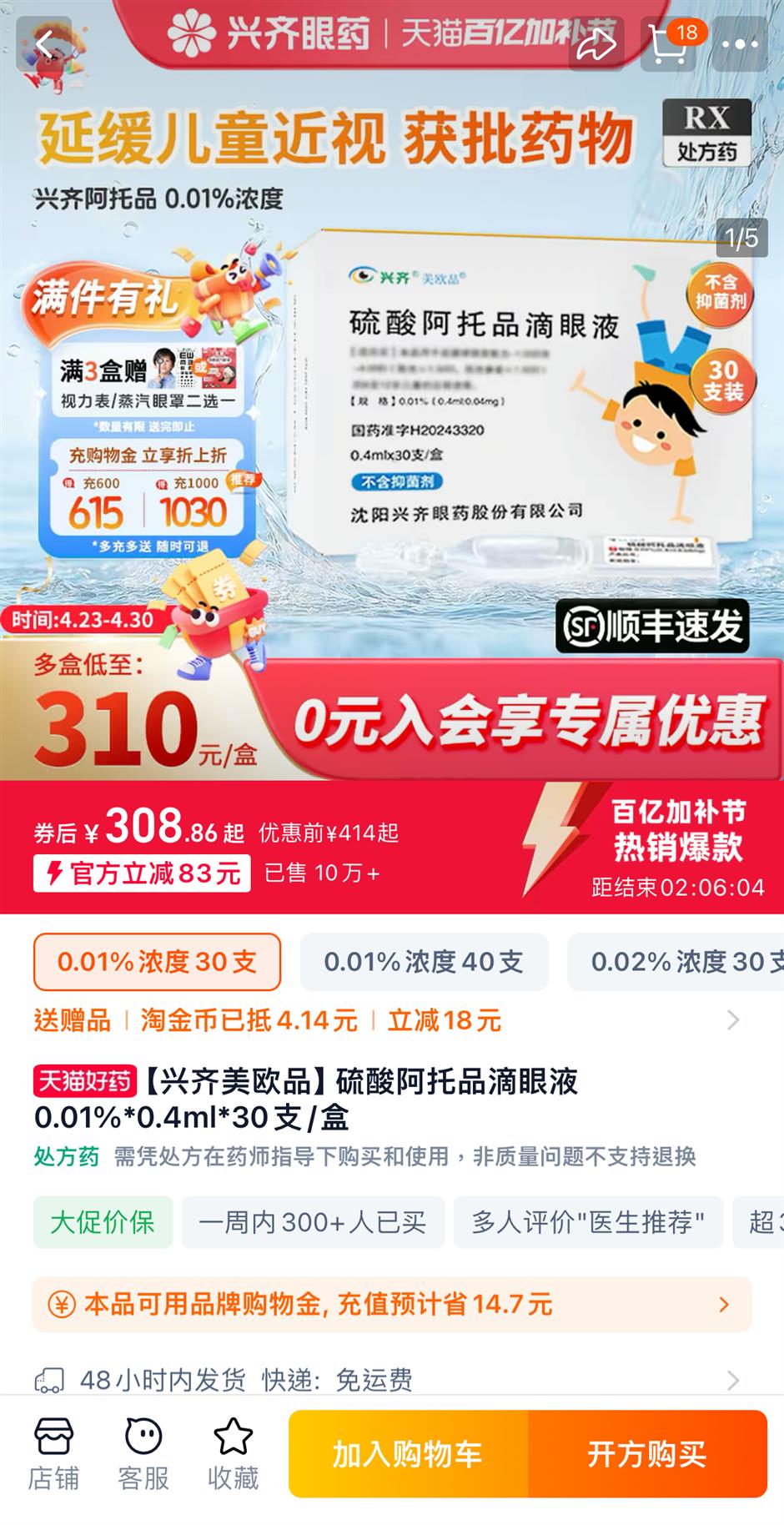
The product remains prescription-only, but its demand is shaped by consumer behavior. Parents search for information online, compare options, consult doctors and look for convenient channels for repeat purchases. On major online drug platforms, Xingqi's 0.01 percent atropine sulfate eye drops have been sold at between 277 yuan and 312 yuan per box of 30 single-use doses.
That price point places the product within the household budgets of many urban families, especially compared with orthokeratology lenses and other myopia-control devices that can cost several thousand yuan a year.
That affordability is one reason the category has attracted more drugmakers. As demand becomes clearer and formal distribution expands, competition is now becoming the main issue for the market.
Hengrui Medicine has emerged as an important potential challenger. In February 2025, its subsidiary Chengdu Suncadia Medicine submitted a drug application for HR19034 eye drops, designed to slow myopia progression in children aged 6 to 12. Hengrui said the product is preservative-free and uses single-dose packaging.
Its entry matters because Hengrui brings with it a much larger commercial organization than most ophthalmology specialists. If its application is approved, the company could put pressure on existing pricing.
Other competitors are also moving forward. OcuMension Therapeutics' OT-101 has completed two years of testing and is expected to deliver Phase III trial data this year. Qilu Pharmaceutical, Shapuaisi and other domestic companies have also advanced low-dose atropine programs into late-stage development.
Zhaoke Ophthalmology is another player to watch. Through its partnership with US-based Vyluma, Zhaoke holds rights to NVK002 in China, South Korea and Southeast Asia. The product's application is under regulatory review in China, adding an overseas-linked candidate to the domestic competitive field.
The global market offers a mixed reference. In Europe, Japan's Santen Pharmaceutical's Ryjunea, a low-dose atropine product licensed from Sydnexis, received European Commission approval in 2025 for slowing pediatric myopia progression. The product was later approved in the UK.
In the US, however, regulatory progress has been more difficult. In 2025, California-based Sydnexis received a "complete response" letter from the Food and Drug Administration, which indicates that an application can't be approved in its present form and more questions must be answered. US ophthalmic technology company Eyenovia discontinued a late-stage study of its low-dose atropine product in 2024 after an independent review found it did not significantly slow myopia progression compared with a placebo.
Those setbacks show that regulatory standards differ sharply across regions, but they haven't negated commercial opportunities. For Chinese companies, the overseas picture is a warning that the category remains commercially attractive but not risk-free.
"The industry has entered a new stage," Du said. "With multiple companies advancing atropine eye-drop products through late-stage development and regulatory review, the pipeline is expected to become more diversified."
Editor: Yao Minji