China's Listed Drugmakers Show Bottom-Line Profit: One-Off or Durable?

Profit has finally hit the bottom lines of a growing group of China's listed innovative drugmakers, but beneath the stronger earnings lies a sharp divide on how that money is made.
At one end is Sino-US BeOne Medicines. It earned 3.27 billion yuan (US$455 million) in the first half, with drug-product sales contributing 21.8 billion yuan, or 98 percent of revenue. Sino Biopharmaceutical presented a more blended model: Drug sales reached about 7.8 billion yuan, while overseas licensing payments added 980 million yuan, equivalent to 5 percent of revenue. At CSPC Pharmaceutical Group, the balance tilted further toward licensing deals, with payments of 5.9 billion yuan accounting for nearly a third of revenue.
Then there is RemeGen. The company turned to a 4.7-billion-yuan profit in first-half from a loss a year earlier, after recognizing about 4.5 billion yuan in technology-licensing income from its agreement with AbbVie. That income accounted for more than three-quarters of its revenue for the period.
The results capture a shift in China's pharmaceutical industry.
For years, investors asked when it's the nation's drugmakers would become profitable. Now they are asking what lies behind the profit. Repeat prescriptions to patients? Licensing fee supported by a continuing pipeline of drug candidates? One large transaction that may not recur the following year?
"Upfront payments from licensing deals are mostly one-off cash inflows," said Jiang Dong, an analyst with Xiangcai Securities. "Ultimately, the market prices companies on recurring cash flow and their ability to reinvest."
None of the models is inherently better.
Selling drugs allows a company to retain more of the future value of its medicines, but requires years of spending on trials, manufacturing and commercial teams. Licensing brings cash forward and transfers much of the cost and risk to a partner, but can make one reporting period look far stronger than the underlying business. As China's licensing boom reaches company accounts, the source and repeatability of earnings are becoming as important as the profit itself.
The clearest sales-led model is BeOne. The company, founded in 2010 as BeiGene and initially operating mostly in China, specializes in cancer drugs and has headquarters in Beijing and Cambridge, Massachusetts. The company is listed in Hong Kong and on the Nasdaq in New York. Its first-half product revenue rose to 3.3 billion yuan from 450 million yuan a year earlier. Its Brukinsa blood-cancer drug and main global product, generated 16.1 billion yuan – almost three-quarters of all product sales.
Hengrui Pharma, based in Jiangsu Province, is making a transition inside an older generic-drug business. Innovative-drug sales rose 16 percent in the first half to 8.8 billion yuan and contributed 63 percent of pharmaceutical sales. Generic-drug revenue fell 16 percent to 5 billion yuan, while licensing added 1.4 billion yuan. Total revenue slipped 1.9 percent and net profit was almost flat at 4.5 billion yuan.
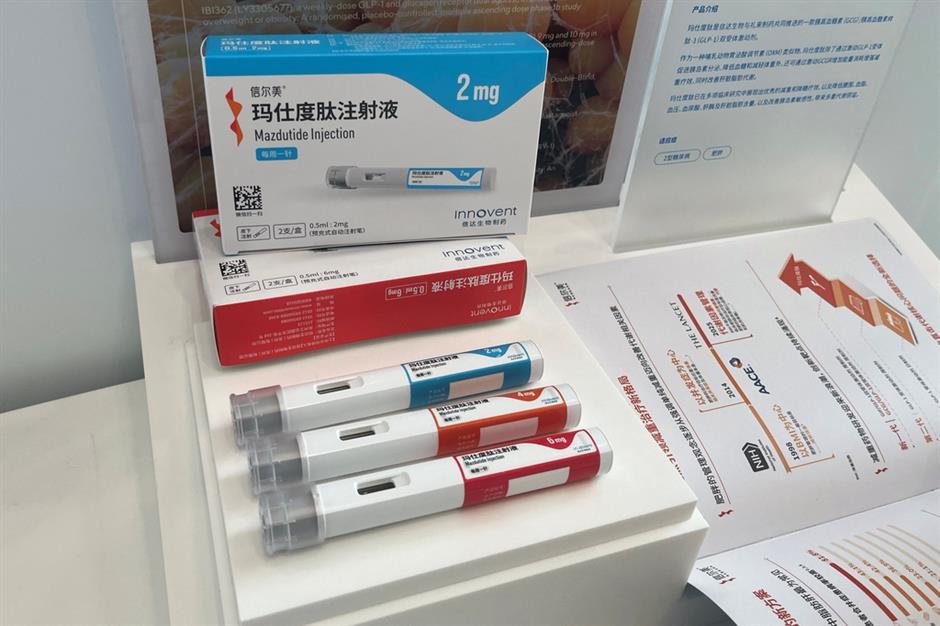
Suzhou-based Innovent Biologics has added a new growth engine, and it is starting to look materially different from the oncology-focused biotech company of only a few years ago. First-half product revenue jumped 57 percent to 8.2 billion yuan, roughly matching its full-year level earnings in 2024. The increase came from its established cancer-drug portfolio and newer non-oncology products led by mazdutide, an obesity drug launched in China last year. Net profit rose 50 percent to 1.25 billion yuan.
These companies offer the most visible form of recurring revenue: medicines sold across successive quarters. But the figures also show reflect years of commercial spending, exposure to price cuts and, in BeOne's case, Xiangcai Securities' Jiang cited BeOne as a different model – one that retains global commercial rights and thus a larger share of the drug's future sales. The company has borne the cost of overseas expansion.
Licensing produced a faster change at CSPC. First-half revenue rose 40 percent to 18.6 billion yuan and net profit attributable to shareholders climbed 139 percent. Licensing fees surged more than fivefold to 5.9 billion yuan, contributing 32 percent of revenue. Excluding those fees, finished-drug sales rose 10.8 percent to 10.2 billion yuan.
Sino Biopharmaceutical used deals as a smaller second growth engine. Its licensing income rose from 40 million yuan a year earlier to 980 million yuan, or 5 percent of revenue. The increase followed its March agreement granting Sanofi global rights to rovadicitinib, a treatment being developed for autoimmune diseases. Sanofi agreed to pay US$135 million upfront and as much as US$1.5 billion when milestone payments are included.
The effect was most pronounced at RemeGen. First-half revenue rose more than fivefold to 5.9 billion yuan, while net profit attributable to shareholders reached 4.7 billion yuan, swinging from a 450-million-yuan loss a year earlier. Technology-licensing income contributed about 4.5 billion yuan, or 76 percent of revenue, while product sales added a further 1.4 billion yuan.
AbbVie acquired rights to RemeGen's RC148 outside China in January, paying US$650 million upfront and offering as much as US$4.95 billion in milestone payments. RemeGen retained responsibility for the drug's development and commercialization in China, while AbbVie took responsibility elsewhere.
Upfront payments are fixed. Downstream potential payments are not. They depend on a drug meeting clinical, regulatory and sales targets over years, if it reaches them at all.
"Signing the contract and receiving the upfront payment are only the first step in an international partnership," said Wang Weidong, RemeGen's chairman and executive director. "The next task is to deliver the milestones."
InnoCare Pharma shows how product sales and licensing can work side by side. First-half drug sales rose 43 percent to 918 million yuan, accounting for 81 percent of its 1.1 billion yuan in revenue. Collaboration income added 213 million yuan, mainly from milestone payments under its agreement with Zenas BioPharma.
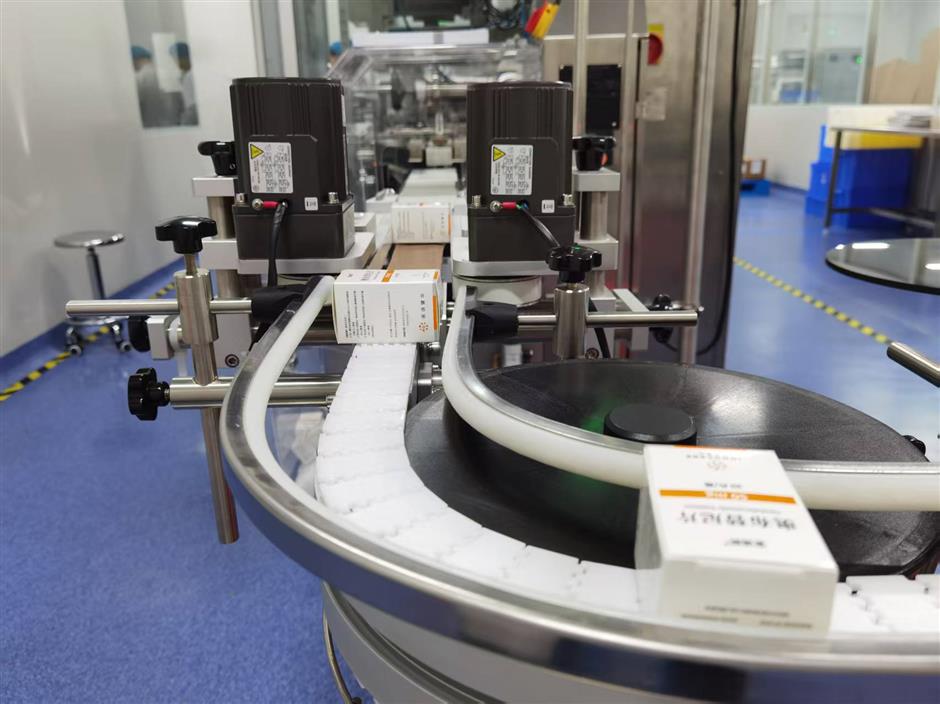
"Drug sales remain our primary revenue source," InnoCare told China Biz Buzz, adding that business development is "an important supplementary source of revenue and profit."
The company earned 240 million yuan in the first six months, compared with a 36-million-yuan loss a year earlier, while operating cash flow turned positive at 81 million yuan. Sales growth was driven by orelabrutinib, including broader reimbursement coverage for its first-line CLL/SLL indication, and the launches of tafasitamab and zurletrectinib. The company said it expects further product growth and additional milestone income to keep it profitable for the full year.
That combination may become more common. Chinese developers signed 81 overseas licensing agreements with a potential value of US$110 billion in the first half, according to the National Medical Products Administration. As the payments enter financial statements, companies will need to show what remains when a deal-heavy period ends: product sales, further milestones or another drug ready for licensing.
A drug can lift earnings once when its rights are sold. A durable business must find a way to be paid again.
Editor: Liu Qi
In Case You Missed It...

 Sep 4, 2026