Chinese Drug Developers Attract Interest at Global Cancer Meeting
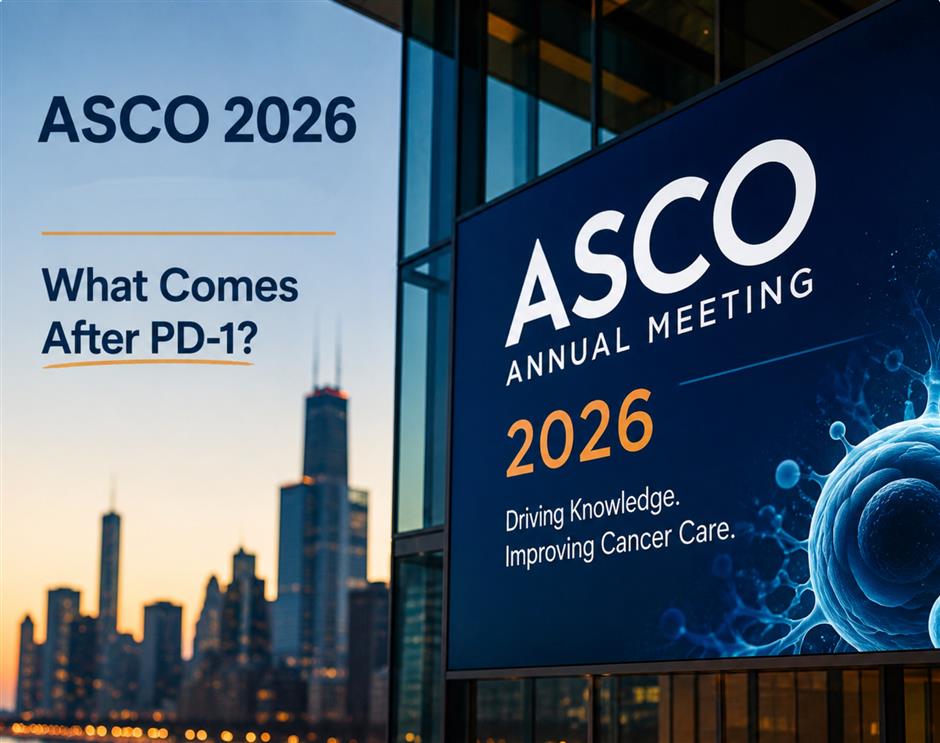
Global cancer research has spent more than a decade orbiting around one idea: helping the immune system recognize and attack tumors. That idea has turned PD-1 inhibitor drugs such as Merck's Keytruda into some of the most commercially successful therapies in the world.
But at last week's annual meeting of the American Society of Clinical Oncology in Chicago, Chinese biotech companies arrived with a different focus. Instead of simply proving they could make competitive PD-1 drugs, several presented therapies designed to move beyond them.
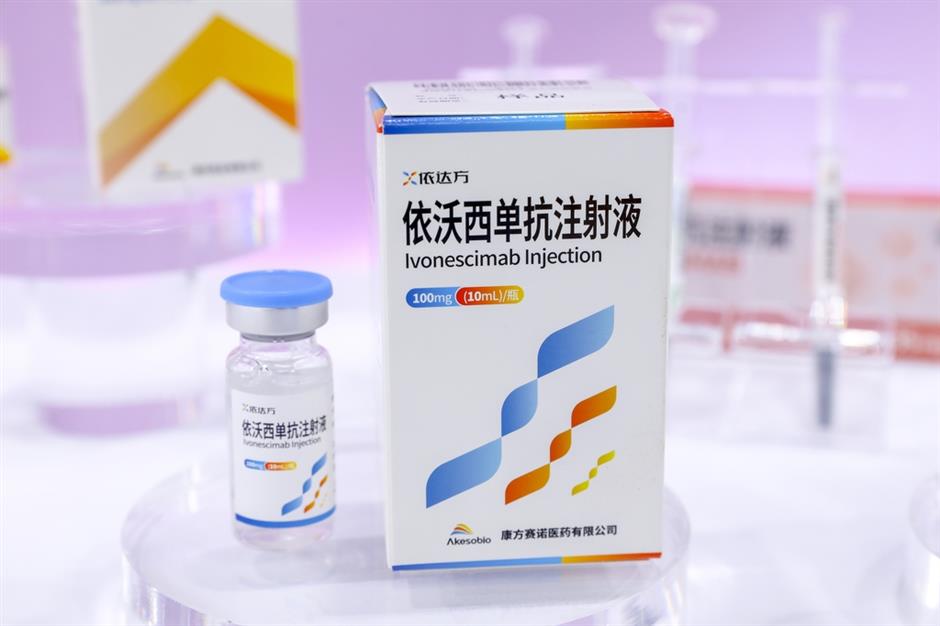
Guangdong-based Akeso drew the brightest spotlight. Its ivonescimab, a PD-1/VEGF bispecific antibody that pairs an established immune-therapy mechanism with another designed to disrupt a tumor's blood supply, was the first China-originated cancer drug selected for plenary discussion. The Phase III lung cancer study showed a statistically significant overall survival benefits.
But the broader story was not one company or one drug.
Across the meeting, Chinese companies presented therapies spanning some of oncology's most closely watched technologies. Innovent Biologics showed data on IBI363, a PD-1/IL-2 fusion protein designed to activate immune cells through a different pathway. Antibody-drug conjugate developers, including Baili Pharm and Kelun-Biotech, showcased drugs that combine tumor-targeting antibodies with potent cancer-killing payloads, an approach many investors and drugmakers view as one of the industry's most promising frontiers.
Chinese researchers contributed 94 oral presentations at the Chicago meeting. The scale was notable, but industry observers said the more important change was where the data appeared and how it was being judged.
"This year, Chinese companies are no longer treating the meeting as an international showcase," said Wu Xiaoying, co-leader of Ernst & Young's Health Science and Wellness Sector. "They are beginning to turn it into a venue for global competition and global validation."
Has the post-PD-1 era arrived? The answer is probably not yet clear. But the meeting showed that Chinese companies are increasingly competing in the search for it.
For years, much of China's oncology innovation was measured by speed – how quickly companies could follow validated targets, move into clinical trials and build domestic alternatives to established drugs. That model helped the industry build scale. But it is no longer enough.
This year, the attention has shifted to a debate about whether Chinese companies can produce differentiated drugs that stand up to global scrutiny.
"Chinese biotech is entering a stage where differentiated innovation is starting to be globally validated," Wu said. "The standard is no longer simply whether a target is hot, but whether the clinical value is clear."
That shift was most visible in two areas: antibody-drug conjugates and bispecific or multi-specific antibodies.
Antibody-drug conjugates are often described as guided missiles for cancer treatment. They use antibodies to find tumor cells and deliver toxic payloads more precisely than traditional chemotherapy.
"The conversation has moved beyond whether Chinese companies have built a platform or gained exposure to popular targets," Wu said. "The real focus now is whether target selection, the therapeutic window and indication strategy are differentiated."
Bispecific and multispecific antibodies represent another route. These drugs are designed to hit more than one target simultaneously, potentially combining immune activation with other anti-cancer mechanisms. Akeso's ivonescimab and Innovent's IBI363 are examples of Chinese-developed therapies trying to push cancer immunotherapy beyond conventional PD-1 drugs.
"The market is now more concerned with whether bispecific and multispecific antibodies can truly expand the boundaries of cancer immunotherapy," Wu said.
A bigger stage, however, also brings a tougher test.
For Chinese biotech companies, strong data is no longer enough to carry the story on its own. The next questions are more practical: Can a drug move into global Phase III trials? Can it win approval from regulators outside China? Can it attract a multinational partner willing to share the cost and risk? And, eventually, can it be prescribed, reimbursed and sold in markets far beyond China?
Those questions are already changing how investors and partners read new drug data.
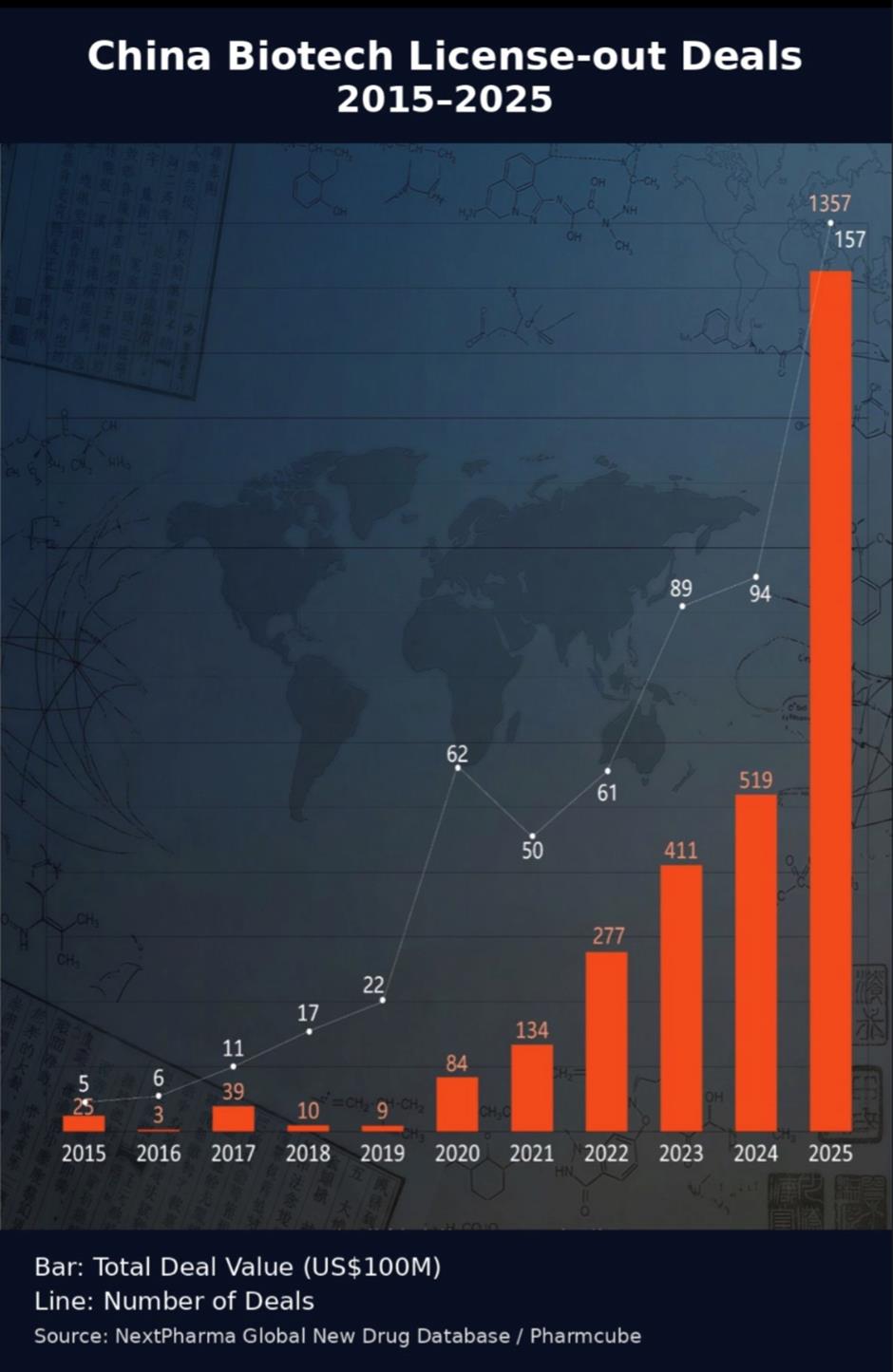
Five years ago, one of the clearest signs of global recognition for a Chinese drug candidate was a license deal with a foreign partner. If a multinational drugmaker was willing to pay for overseas rights, it suggested that the therapy had passed an important external test.
Today, that is only the beginning.
"Investors are now asking whether that asset can truly enter the global development system, continue to generate data in international multi-center trials, and ultimately become a global product," Wu said.
For some industry dealmakers, global scrutiny of Chinese drugs is in itself a sign of progress.
"It is a maturity signal, not a negative," said Paolo Negrini, director of business development and pharma partnering at Roche, in a LinkedIn comment. "When an asset gets dissected on trial design, patient population and regulatory path rather than novelty, it has stopped being a curiosity and started being evaluated as a real partnering candidate."
The shift should not be overstated. China's biotech industry has not suddenly overtaken the global pharmaceutical giants that dominate late-stage development, international regulatory filings and worldwide commercialization.
"If we look at the industry as a whole, Chinese companies are still catching up with global leaders," Wu said. "But in certain technology areas, they are beginning to participate in defining the next generation of treatment."
Editor: Liu Qi
Popular Reads
Shanghai's Position as Global Financial Hub Gets Fresh Stimulus: Lujiazui Forum
Food-Delivery Price War That Served Up One-Yuan Coffee Faces New Curbs in China
Ride-Hailing Driver Permanently Banned After Dozing Off Six Times While Relying on Assisted Driving