US Cell Scientist Highlights Pharma's 'Two-tier System'
Every day, the cells that die inside the human body add up, in Vishva Dixit's analogy, to roughly two boiled eggs.
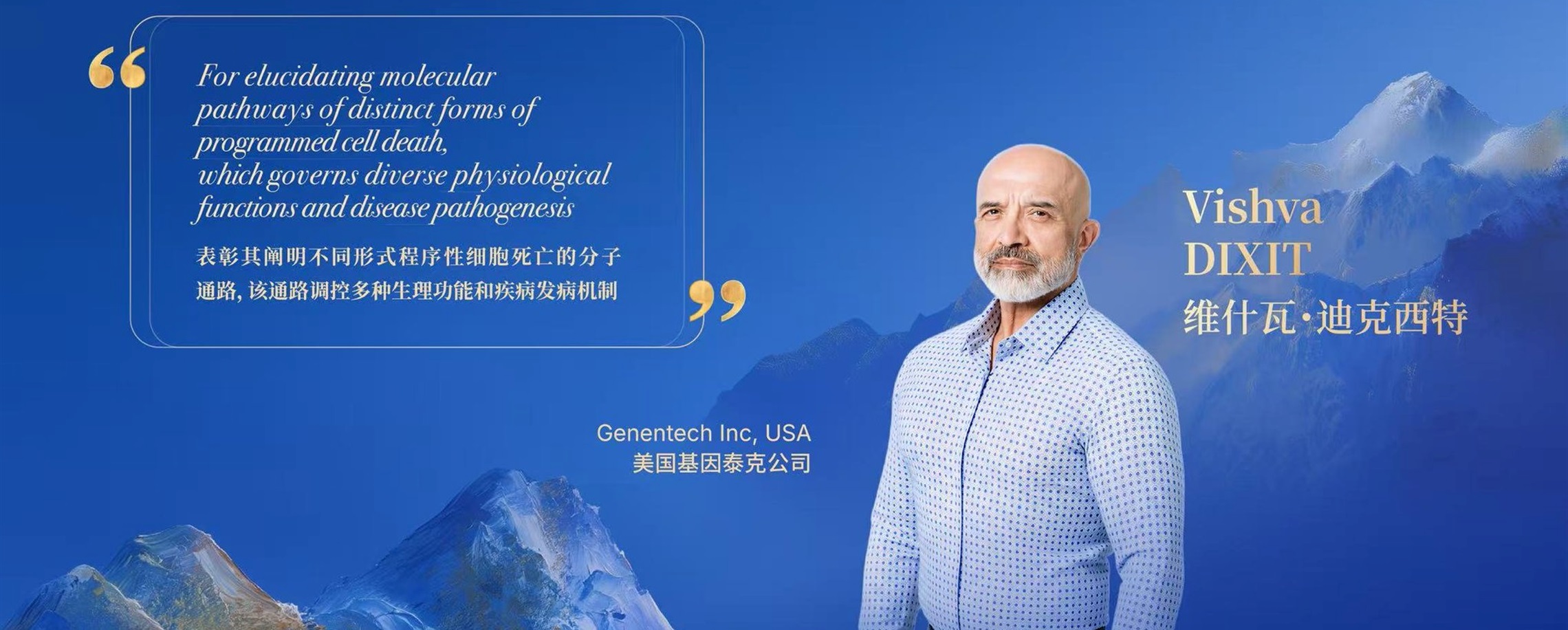
"Too little death, cancer; too much death, degeneration," said Dixit, a veteran Genentech scientist whose work helped uncover the molecular machinery that determines how cells die. He is one of four laureates of the 2026 WLF (World Laureates Forum) Prize in Life Science or Medicine.
For decades, Dixit has studied the intricate system that tells damaged, old or abnormal cells when to die – and how that process can go wrong. His work helped establish caspases, a family of enzymes he likens to "molecular scissors," as key executioners of programmed cell death, while later research helped illuminate other forms of cell death and inflammation.
Those discoveries helped turn cell death from a basic biological process into something drug developers could potentially manipulate.
But knowing how to intervene is one thing; turning that biology into a medicine is another.
Many promising drug candidates never make it through development. Some work in animal models but prove too toxic in people. Others fail because the biology does not translate as expected, or because the drug is tested in the wrong disease.
"Most of the valley of death is safety signals," Dixit noted.
He has watched that gap between elegant science and a viable medicine up close during nearly three decades at Genentech, an American biotech company. It also informs how he sees the drug industry changing: as development timelines tighten and pressure for returns grows, more early exploratory work is moving to smaller biotechs, while larger pharmaceutical companies increasingly step in later through licensing, partnerships and acquisitions.
"There's a lot of pressure on pharma to bring medicines and profitability on a shorter and shorter timeline," Dixit said.
The result, he added, is a "two-tier system": smaller biotechs take on more of the early scientific risk, while larger drugmakers focus on development, clinical trials and commercialization.
The model also lowers the risk for Big Pharma. Rather than carrying an uncertain idea from basic research through years of experiments, large drugmakers can wait until a biotech has generated enough evidence to make an asset worth licensing or acquiring.
That is where China enters the picture.
Its rapidly expanding biotech sector has become an increasingly important source of drug candidates for multinational pharmaceutical companies. Dixit described China as having a "flourishing productive sector of biotechs" that has made the country "very attractive" to global drugmakers seeking external innovation.
The numbers bear that out. Chinese drugmakers had signed overseas licensing deals worth US$139.4 billion by October 8 this year, already surpassing the US$138.8-billion recorded for all of 2025, according to PharmCube data cited by Reuters. Upfront payments reached US$8 billion in the first three quarters, exceeding last year's full-year total of US$7.2 billion.
The deals are also becoming broader. In May, Bristol Myers Squibb struck a partnership with Hengrui Pharma covering 13 early-stage programs across oncology, hematology and immunology. The American drugmaker agreed to pay US$600 million upfront, with the potential value of the deal reaching about US$15.2 billion. Hengrui will lead early clinical development of the programs – a division of labor that closely mirrors the model Dixit described.
The appetite has extended beyond cancer. Earlier this month, Switzerland's Novartis agreed to pay Chinese biotech Abogen US$575 million upfront for rights to an experimental mRNA therapy for autoimmune diseases, in a deal that could ultimately be worth about US$7.8 billion.
But licensing cannot replace the science that creates those assets in the first place.
Many of medicine's biggest advances were built on discoveries made years or even decades before they produced a commercial drug. The foundations for hepatitis C treatments, cancer checkpoint inhibitors, CAR-T therapies and GLP-1 medicines all predated their eventual clinical success by a wide margin.
"Companies often don't have that patience," Dixit explained.
That is why universities, research institutes and government-funded science remain a critical part of the drug-development ecosystem. Large drugmakers may be increasingly willing to pick up promising assets once they have matured, but the earliest breakthroughs often emerge long before there is a clear business case.
Genentech itself has long been known for combining basic research with drug development. But companies operate under changing priorities and shareholder demands, while the timeline of science can be much harder to compress.
Dixit's own field offers a reminder of what can happen when that patience pays off. Venetoclax, a BCL2 inhibitor developed through a collaboration involving Genentech and AbbVie, turns the biology of cell death into a cancer treatment by blocking a protein that helps malignant cells survive. The drug is now used to treat chronic lymphocytic leukemia and other blood cancers.
And the field is still expanding. Dixit pointed to NLRP3 inhibitors being studied for cardiovascular disease, where inflammation can leave some patients at elevated risk even after cholesterol is brought under control. Early clinical research has raised hopes that targeting inflammatory pathways could eventually add another tool to the treatment of heart disease.
For all the changes in where drugs are discovered and who develops them, Dixit argued that national boundaries should not dictate scientific collaboration. Patients, he pointed out, care about whether a medicine works, not where it was discovered.
"Sickness transcends any national boundary," Dixit said.
Editor: Yao Minji
In Case You Missed It...
 Oct 11, 2026