Weekend Buzz: 25-26 April 2026
Top News
Beijing Auto Show Kicks Off in Global Gala Event
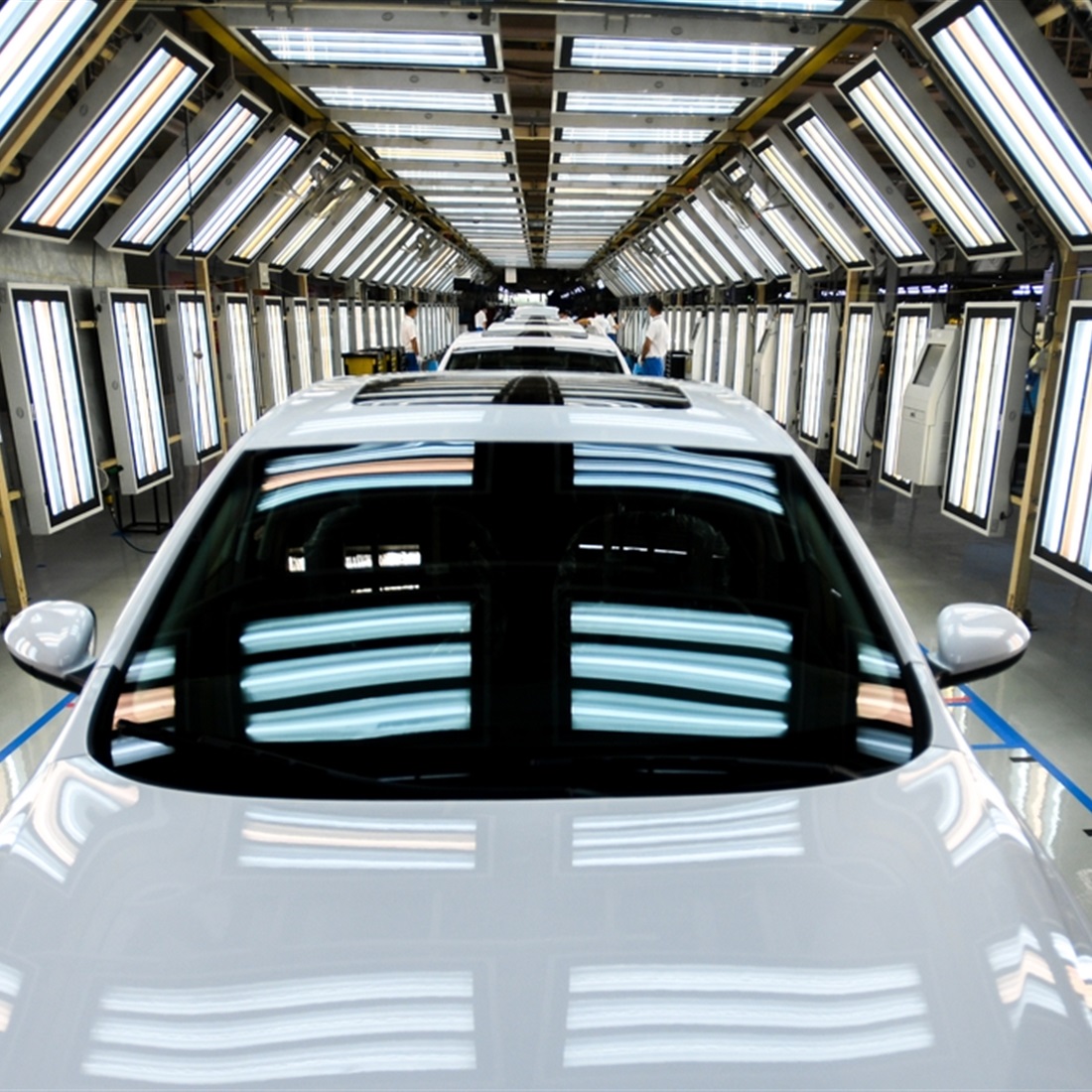
The 19th Beijing Auto Show, the world's biggest car exhibition, is underway, with 1,450 vehicles on display from two dozen countries. The show, spread over an area the size of 50 football fields, will showcase 181 world premieres and more than 70 concept cars from domestic and foreign vehicle makers. Car executives, industry analysts, automotive suppliers and technology companies are expected to attend the 10-day event, alongside hundreds of thousands of consumers. Much attention is likely to be focused on electric vehicles, smart driving technologies and autonomous vehicle development – the fastest growing segments in the industry. SUVs are expected to be a dominant feature of new models.
The auto show comes against a global background of the Ukraine and Iran wars that have disrupted oil-supply chains, trade tensions that have, for example, barred Chinese cars from the US market, and some Western automakers walking away from heavy investment plans in electric cars that failed to gain traction in competition with Chinese brands that dominate the market. Stefan Hartung, chairman of German auto-supplier Bosch, told a press briefing in Beijing that "global prices in the automotive industry are increasingly based on just one standard, and that's China's."
US Envoys, Iran Foreign Minister Poised for Talks in Pakistan
US President Donald Trump sent envoys Steve Witkoff and Jared Kushner to Pakistan to meet with Iran's foreign minister in Pakistan, the White House confirmed. Vice President JD Vance, who led the first round of negotiations that failed two weeks ago, remains "on standby" in Washington, awaiting the outcome of peace feelers. Iran's foreign ministry said there will be no "direct" talks with the US.
The two sticking points in negotiations remain the future control of the Strait of Hormuz and Iran's stockpile of highly enriched uranium. Some media have reported that Tehran may be willing to divide its 400-kilogram stockpile into parcels and sequentially dilute enrichment of each parcel as US sanctions against the country are lifted. Benchmark Brent crude futures closed about US$100 in New York, ending at US$105.33 a barrel.
Hezbollah, Iran's ally in Lebanon, called the three-week extension of an Israeli-Lebanese ceasefire "meaningless" as Israel said it killed six Hezbollah fighters in the south of the country. Israel, in defiance of the US-imposed ceasefire, said it reserves the right to attack Hezbollah to defend its territory. Iran has said Israeli attacks must stop as a condition of peace talks with Washington.
The Trump administration is stepping up threats of retribution against NATO allies who refused to join the US in offensive operations against Iraq. Leaked Pentagon documents suggested the US may withdraw its recognition of British sovereignty over the Falkland Islands and may seek to oust Spain from NATO – both suggestions drawing sharp rebukes in Europe.
Top Business
DeepSeek Previews Highly Anticipated New AI Model
AI startup DeepSeek released a preview of its long-awaited new open-source V4 large language model, allowing users to test its features and capability. The new model is tailored toward the chip technology of China's Huawei, a rival of Nvidia. It is the first time DeepSeek has officially included Huawei Ascend chips alongside Nvidia's in the hardware validation list within its formal documentation. Hangzhou-based DeepSeek company says the V4 achieves strong performance against domestic competitors, particularly in agent-based tasks, knowledge processing and inference. It has been optimized for use with popular agent tools such as Anthropic's Claude and OpenClaw. The model is available in both "pro" and "flash" versions, depending on size. Hugging Face, a popular developer forum for sharing and running machine-learning models, said the V4 is the fastest model trending to the top spot of its platform.
The new model comes about 16 months after DeepSeek, then a little-known company, stunned the technology world with the release of reasoning model RI that was much cheaper to develop and operate than dominant global large language models whose performance it matched. DeepSeek was founded in 2023 by entrepreneur and Chief Executive Liang Wenfeng, funded solely by his hedge fund High Flyer. But facing mounting competition and development costs, the company is now seeking its first outside investment, which could push its valuation to US$20 million, making it one of the world's largest AI startups. Alibaba and Tencent are reportedly among those in the line seeking to invest.
Citic Securities Post Higher Profit on Market Activity
Citic Securities, a leading Chinese brokerage house, reported a 54.6 percent year-on-year surge in first-quarter net profit to 10.2 billion yuan (US$1.41 billion), driven by a strong performance across its operations. Operating revenue for the quarter jumped 40.9 percent to 23.1 billion yuan. The brokerage giant attributed the robust earnings to robust capital markets and sustained high trading activity during the first three months of the year. The brokerage achieved positive growth across all its major business lines, encompassing wealth management, investment banking, asset management and securities investments.
Great Wall Motor Net Profit Plunges 46 Percent
Great Wall Motor reported first-quarter profit plunged 46 percent from a year earlier to 946 million yuan (US$130.3 million), despite a 13 percent increase in operating revenue to 45 billion yuan. The
automaker said the profit decline reflected substantial foreign-exchange-gains in the year earlier period that swelled the comparative base. Revenue rose on higher vehicle sales, particularly overseas. The company noted its shift toward international markets improved gross margins and revenue per vehicle. Operating cash flow also increased, boosted by higher spot exchange collections from growing overseas sales.
Sugon Q1 Net Surges on AI Computing Demand
Beijing-based supercomputer maker Sugon, officially known as Dawning Information Industry, posted nearly a 22 percent year-on-year increase in first-quarter net profit to 228 million yuan (US$31.5 million), propelled by continuous expansion in core business operations. The software and information technology services provider reported operating revenue of about 3.2 billion yuan for the quarter, up almost 24 percent. To meet growing AI computing demand, Sugon said research and development expenses surged 52 percent to 592 million yuan, or 18.5 percent of total operating revenue. Fueled by the boom in large artificial intelligence models, the demand for computing power in China is steadily increasing. Sugon's aggressive research and development spending is aimed at trying to stay ahead of the competition.
Huawei to Spend Billions to Upgrade Self-Driving Technology
Shenzhen-based Huawei Technologies said it will invest up to 80 billion yuan (US$12 billion) in the next five years on expanding its Qiankun autopilot system used in autonomous driving technology. The planned upgrades will increase computing power needed for data collecting during training and testing next-generation cars. The company has partnerships with 25 car brands, with its Qiankun autopilot deployed on 50 models. Huawei's partnership with automaker Seres has produced the Aito series of electric cars, now best-sellers in the premium segment of the market.
Economy & Markets
China Adds EU Firms to Export Controls
China's Ministry of Commerce said on Friday it has placed seven EU entities on its export-control list, banning shipments of dual-use items or services that can be used for both civilian and military uses. The move requires Chinese exporters to halt all ongoing shipments and activities related to the entities, which include defense and aerospace-related firms such as Belgium-based FN Herstal and Germany's Hensoldt, as well as several Czech companies. Separately, China canceled sanctions against Lithuanian's Urbo Bankas and Mano Bankas after the EU lifted sanctions against two Chinese financial institutions.
Direct Foreign Investment in China Drops
Foreign direct investment in China declined in the first quarter, even as the number of newly established foreign-invested firms increased. Total direct investment fell 7.3 percent from a year earlier to 249.6 billion yuan (US$36.5 billion), according to the Ministry of Commerce. However, 13,987 new foreign-invested enterprises were set up during the period, an 11 percent increase. By sector, manufacturing attracted 71.5 billion yuan in investment, while services drew 174.6 billion yuan. High-tech industries remained a bright spot, with investment rising 31 percent to 102.7 billion yuan.
China Opens Treasury Futures to Foreigners
China began allowing qualified foreign investors to trade in treasury futures for hedging purposes, a move aimed at wider opening of capital markets and stronger appeal of yuan-denominated assets. Under the new rules, participation in treasury futures trading will be limited to risk-hedging activities. Regulators said the move expands the investment scope for foreign institutional investors and provides additional tools to manage interest rate risks. The China Securities Regulatory Commission said the policy is intended to enhance the attractiveness of China's bond market and support the high-quality development of both spot and derivatives markets.
US Justice Department Drops Probe of Fed Chief
The US Department of Justice dropped its criminal investigation of Federal Reserve Chair Jerome Powell, which has proven a stumbling block in Senate approval of Trump appointee Kevin Warsh to succeed him. The probe was related to allegations of cost overruns in the multibillion-dollar renovation of the Fed headquarters in Washington. Powell's term at the helm of the central bank is set to expire on May 15, though his term on the bank's board of governors doesn't end until 2028. President Donald Trump has threatened to fire him if he chooses to remain on the board. Trump has been at loggerheads with Powell over the Fed's slow pace of interest-rate reductions.
Accountancy PwC Fined Over China Evergrande Fraud
The Hong Kong subsidiary of global accountancy giant PricewaterhouseCoopers (PwC) was ordered by Hong Kong regulators to pay HK$1.3 billion (US$190.2 million) in fines and compensation over its auditing role in financial fraud related to Chinese mainland property developer China Evergrande. Most of the money will go to compensate minority shareholders of Evergrande. Two partners at the firm were fined. The case involved false and misleading financial results that misstated asset values in 2019-20, the Hong Kong Securities and Futures Commission said in announcing the penalties. In 2024, China's finance ministry levied an administrative penalty of 116 million yuan (US$15 million) against the accountancy firm for violations related to a 2018 audit of Evergrande.
Japan Inflation Picks Up Pace
Japanese core inflation rate, which excludes fresh food prices, hit 1.8 percent in March, accelerating for the first time in five months, on higher energy prices linked to the Iran war. Headline consumer prices rose 1.5 percent in the month from a gain of 1.3 percent in February. Rice prices, which doubled last year, were up 6.8 percent, their slowest pace since January 2024. Japan isn't the only economy feeling the pinch of rising oil prices. The UK a day earlier reported that inflation jumped to 3.3 percent in March on the biggest increase in fuel prices in three years.
Deep Dive
China Overhauls Drug-Pricing System to Allow Wider Market-Driven Forces
A patient searching for the same drug in China might find three different prices: one at a public hospital, another at a neighborhood pharmacy and a third on an e-commerce platform. That discrepancy is no longer just a quirk of China's fragmented healthcare system. It is becoming part of a broader policy shift.
Broken Links in Overseas Sales, Servicing Undermine Chinese Auto Exporters
China's car exports are rapidly increasing, exposing flaws that bedevil buyers around the world.
Corporate
ZTE Q1 Profit Drops 46.6 Percent on Exchange-Rate Losses
Shenzhen-based communication service provider ZTE reported a 46.6 percent year-on-year decline in first-quarter net profit to 1.3 billion yuan (US$180.7 million), heavily impacted by unfavorable currency fluctuations. Despite the sharp drop in profit, the telecommunications provider posted a 6.1 percent increase in operating revenue, reaching about 35 billion yuan for the quarter. The company attributed the earnings downturn primarily to exchange-rate losses that starkly contrasted with the exchange gains recorded during the same period last year. A decrease in net interest income and a drop in other income tied to daily operations further squeezed the bottom line.
ZTE maintains a massive global footprint. Its overseas business, which primarily focuses on carrier network operations, spans more than 160 countries.
Dajin Heavy Secures US$591 Million in Shipbuilding Contracts
Dajin Heavy Industry said it received US$591 million in orders for eight 210,000 deadweight tonnage bulk carriers from Norway and Greece, marking its entry into Europe's ocean shipbuilding market. Deliveries are scheduled between 2028 and 2029. The Norwegian client operates new vessels, second-hand ship trading and long-term leasing, while the Greek client runs a modern large container fleet under long-term charter. In the past, Dajin Heavy's manufacturing for overseas was largely focused on offshore wind power equipment.
SAIC Said to Be Planning Factory in Spain
Shanghai-based automaker SAIC's MG unit plans to set up a plant in Spain to manufacture electric versions of the brand, Bloomberg News. Domestic carmakers have been expanding production in Europe to circumvent import tariffs. China's Chery is already assembling cars in Europe through a joint venture in a former Nissan plant in Spain.
WeChat Pay Adds More Countries to QR Payment System
Chinese digital payment platform WeChat Pay extended its QR code payments system abroad, announcing that users can now make payments in South Korea, Sri Lanka, Thailand, Malaysia and Singapore by scanning local QR codes. The service now covers 78 countries, supporting 36 currencies. Rising outbound and inbound tourism has heightened demand for cross-border payments. China has also eased inbound payments by allowing overseas bank cards to be linked to Alipay or WeChat Pay for spending at domestic merchants. Last year, more than 10 million tourists in China used such services.
Editor: Lu Feiran
In Case You Missed It...

 Aug 8, 2026