In a World of Turmoil, China Emerges as a Haven for Business Stability
The war in the Middle East is disrupting supply chains, threatening economies and rejigging political alliances. And in all the upheaval, China is emerging as a winner where certainty is concerned.
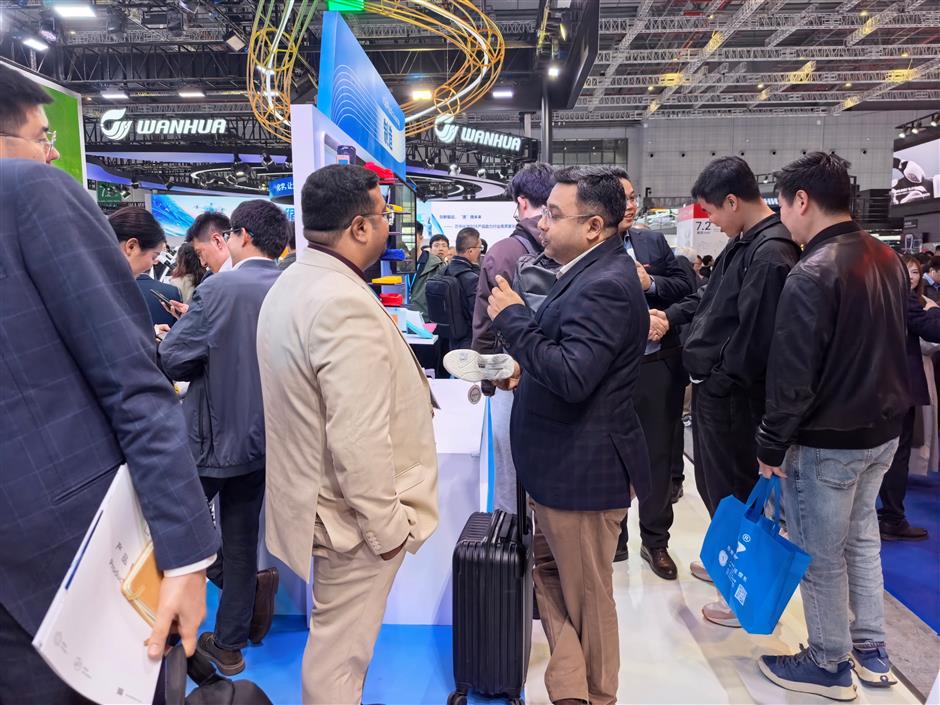
Chinaplas, an international exhibition dedicated to the plastics and rubber trade held in Shanghai in late April, is a case in point. The 40-year-old fair attracted a record 350,189 visitors, including a record 86,440 foreign participants. Orders placed at the exhibition showed that overseas buyers are anxious to do deals with a country where they can be certain of deliveries and good quality.
"Despite the ongoing war, we have received an exceptionally large volume of orders, which far exceeded our expectations," said Guan Xunning, chief marketing officer at Shanghai-listed Kingfa Science & Technology, which specializes in high-performance new materials.
The orders for modified plastic, a crude-oil derivative that is one of Kingfa's key products, are expected to show double-digit growth for the first quarter, compared with a year earlier, according to Guan, and the driving factor is not price, but rather "the stability and certainty" of deliveries.
"Many clients now have a focus on availability, which is more important than affordability at the moment," said Guan. "Companies that have a strong and steady supply chain will certainly stand out in a market affected by constant changes caused by the war."
When and how global oil supplies will return to normal has become a question with no immediate answer. What matters is that crude oil is critical for industrial production, which can be refined into six major petrochemicals – ethylene, propylene, butylene, benzene, toluene and xylene. That industrial use flows down to the consumer level, with oil derivatives used in a vast array of products, ranging from clothing, cosmetics, soft-lens contacts, insect repellent, luggage, umbrellas and even condoms.
"That's not to say China is immune to oil price fluctuations, but thanks to the better supply chains developed inside and outside the country, companies in China can provide more certainty," said Xing Ziqiang, chief China economist at Morgan Stanley.
Will China's assets and investments become more attractive? The answer appears to be yes.
Earlier this month, China raised 15.5 billion yuan (US$2.3 billion) from a sovereign bond sale in Hong Kong, the largest issue of its kind since 2023. The sale received active participation of global investors seeking refuge in Chinese assets amid the US-Iran war.
"No doubt that China has become a haven for domestic as well as global assets sensitive to shortage of supply," Xing said. "It also seems China's former headache of overcapacity has turned into an advantage at the moment. However, China must be careful how it handles its overcapacity."
He said Chinese companies should continue their "going global" plans even though domestic demand is currently capable of consuming most of the supply.
"Other countries will also get focused on improving supply chains to cope with risks, and China needs to maintain its global status," Xing said.
In fact, many companies have announced expansion in global ambitions and the formation of foreign partnerships.
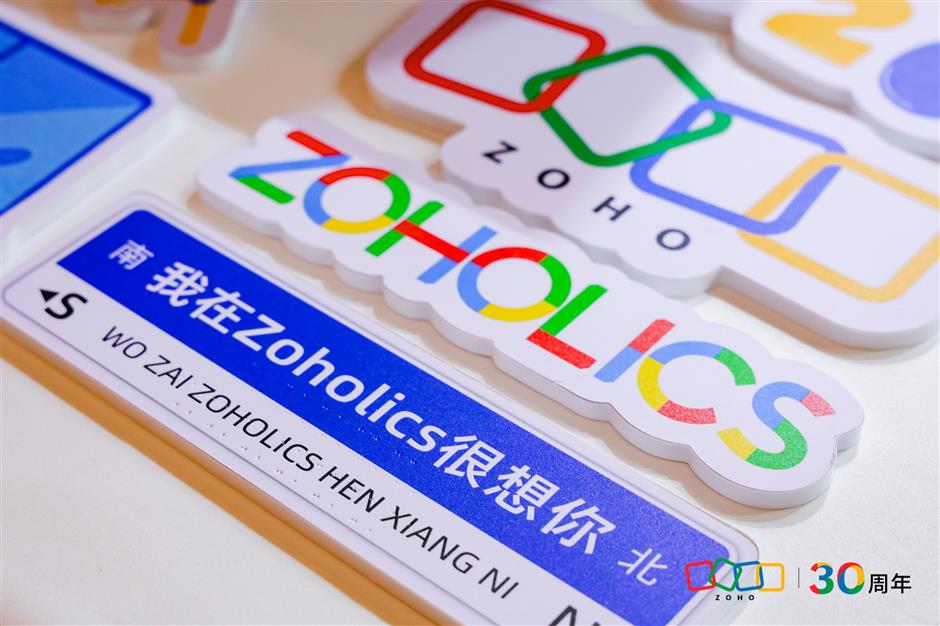
Zoho, a leading IT management solutions provider specialized in Software as a Service (SaaS), has just announced that it will invest 350 million yuan (US$51 million) in its China arm to support data-center expansion. The goal is to better serve surging demand of Chinese companies, particularly those eager to explore overseas markets.
Zoho entered China in 2002 and now has a presence in more than 150 countries and regions.
"We have developed global operations with multi-scenario adaptability, and we hope to gain more growth traction amid China's 'going global' wave," said Hou Kangning, CEO of Zoho China, adding that the company's clientele has been increasing an average 60 percent a year in recent years.
Another example is London-based PPRO, a fintech firm connecting foreign business with local payment platforms. In April, it released its first-ever Chinese edition of the PPRO Almanac to help Chinese businesses better understand how local payments work in emerging markets.
"As Chinese businesses expand into increasingly complex international markets, providing localized payment experiences is critical," said Eelco Dettingmeijer, chief commercial officer at PPRO. "By combining global payment infrastructure with deep local expertise, and enabling access to multiple local payment methods through integrated services, we can help merchants operate like local players."
During the past decade, PPRO has built a strong presence in China, with a 49 percent annual increases in payments volume and a 50 percent annual increase in processed transactions.
At the national policy level, China is stepping up efforts to encourage cross-border capital flows and expand global use of the yuan. The People's Bank of China and the State Administration of Foreign Exchange in April raised the leverage ratio for overseas lending to 1.5 from 0.5 for foreign-owned and joint-venture banks, including branches of foreign lenders. The relaxed rules will allow lenders to significantly increase their offshore loan portfolios, taking advantage of the yuan's growing appeal as a low-cost financing currency.
For its part, Guangzhou-based Kingfa remains keen on overseas expansion.
"Whether it be trade friction or the war in the Middle East, we will stick to our 'going global' plan," Guan said.
At present, the company has established seven overseas production bases, and new factories in Mexico and Poland due to start operations this year.
"Our overseas business growth has outpaced our domestic growth in recent years," Guan said. "We have one goal: to locate our facilities where are clients."
Editor: Yao Minji


![[Hai Guide] Your Fun & Food Guide to the Longines Global Champions Tour Shanghai](https://obj.shine.cn/files/2026/04/30/a759d72c-ce68-484c-a126-b0e5257fc396_0.jpg)