15th Five-Year Plan: How Will China's Low-Altitude Economy Take Flight?
Reading into China's 15th Five-Year Plan
China's 15th Five-Year Plan (2026-2030) outlines how the nation will move to achieve basic modernization by 2035, amidst a more disquieting global environment as well as China's efforts to become more self-reliant in technology and improving living standards. This series provides insights into the nation's vision in various sectors.
New industrial concepts are constantly emerging in China, but only a few manage to generate excitement in both policy circles and capital markets simultaneously. The "low-altitude economy" is one of those. From drone logistics to industrial inspection, flying cars and urban air mobility, this sector – sometimes described by investors as the "electric vehicle industry of the skies" – is increasingly portrayed as the next trillion-yuan market.
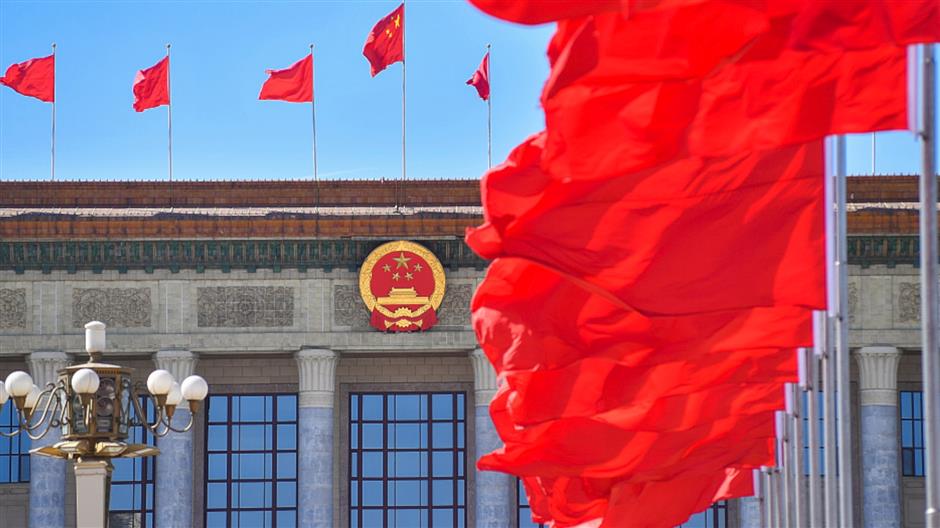
In China's15th Five-Year Plan, adopted yesterday at the national Two Sessions, authorities propose to "promote the healthy and orderly development of the low-altitude economy," while encouraging exploration of applications in areas such as delivery logistics, emergency response, urban governance and cultural tourism.
In recent years, central government agencies have also released a series of policy documents, including statistical classifications and technical guidelines for the low-altitude economy, seeking to establish regulatory frameworks and technical standards for this still nascent sector.
In a sense, the government is attempting to create an "industrial order" for the low-altitude economy, encouraging more companies to participate while maintaining safety and regulatory control.
However, any vision of flying taxis speeding through cities still seems difficult to imagine anytime soon. If this truly is a trillion-yuan market, where will it take off first? And what form will its development ultimately take?
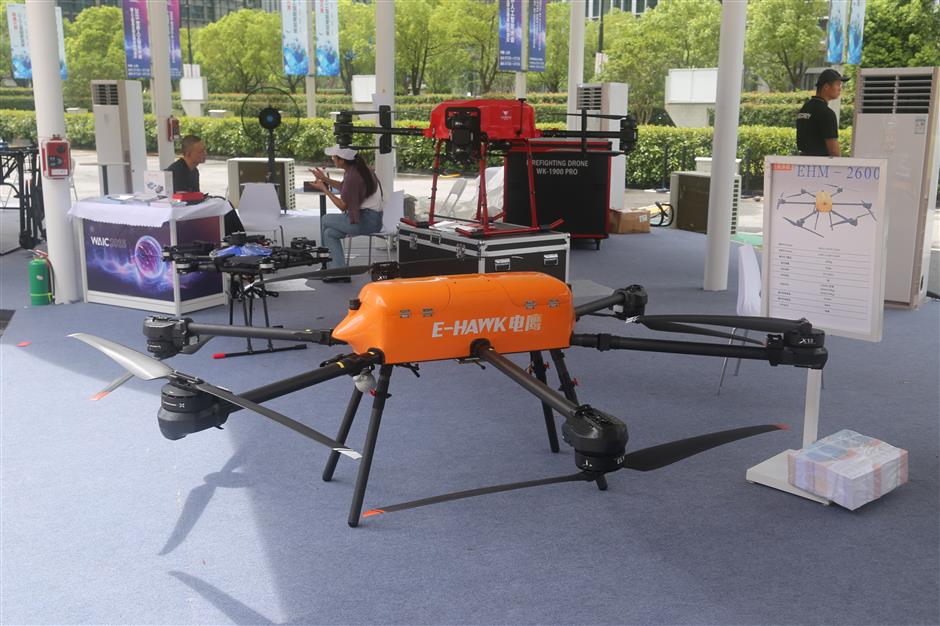
Capital market reaction reflects these uncertainties to some extent. Shares of companies focused on unmanned aerial vehicles and urban air mobility have retreated in recent years after an initial wave of enthusiasm. For example, EHang Holdings (EH.US) – a company developing autonomous passenger drones – once attracted strong investor interest after gaining an airworthiness certification for its unmanned aircraft. But the stock later pulled back. This suggests investors are beginning to realize that commercialization of the low-altitude economy may take longer than originally expected.
The first challenge is airspace management. In China, low-altitude airspace has long been subject to relatively strict regulation. A new airspace management system will be needed for large-scale low-altitude flight operations to become routine, including designated air routes, flight approval mechanisms, and low-altitude traffic management systems. The repeated emphasis on airspace management and standardization frameworks in policy documents is intended precisely to address this issue.
Another challenge is infrastructure. Even if airspace restrictions are gradually eased, low-altitude flights will struggle to scale without supporting infrastructure such as takeoff and landing sites, communication and navigation systems, and regulatory platforms.
Cities may need to establish large numbers of vertiports and digital monitoring systems in the future – similar to road networks and traffic signal systems in ground transportation. Such infrastructure will form the operational foundation of the low-altitude economy.
Starting from the ground
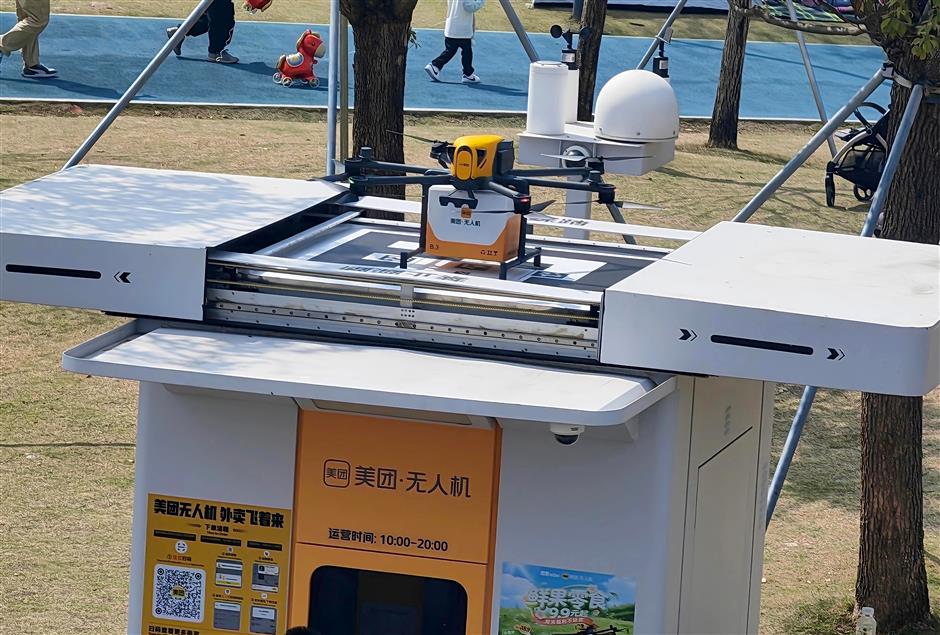
Based on recent pilot programs, the first commercial applications in the low-altitude economy are unlikely to be flying taxis, but rather simpler, more practical use cases. In Shenzhen, for example, drone deliveries have already begun operating on a routine basis. Meituan (3690.HK) and SF Express (6936.HK; 002352.SZ) – through its Fengyi Technology drone subsidiary – have launched low-altitude delivery routes in certain areas, allowing takeout meals or medical supplies to be delivered within just over 10 minutes.
These delivery routes typically cover short distances with fixed flight paths, making regulatory oversight and safety management easier. As a result, they are considered among the earliest commercial applications of the low-altitude economy in China.
Beyond deliveries, energy and infrastructure inspection is another important application for low-altitude flight. Drones are gradually replacing manual inspections across China's extensive networks of power transmission lines and oil and gas pipelines.
State Grid and China Southern Power Grid have increasingly deployed drones to inspect transmission lines in recent years, reducing the risks associated with high-altitude work for people while improving efficiency. In the mining and surveying sectors, drones are also being used to monitor open-pit mines and conduct geographic mapping.
Low-altitude technologies are also beginning to play a role in public safety. Some cities have tested firefighting drones for tasks such as reconnaissance in high-rise fires or for monitoring wildfires. In agriculture, crop-protection drones are widely used for seeding and pesticide spraying, with companies such as XAG currently leading China's agricultural drone market.
At the same time, several companies are pushing forward with passenger aviation applications. EHang is exploring urban air mobility and low-altitude tourism routes, while XPeng (9868.HK; XPEV.US) – through its flying car subsidiary XPeng AeroHT – is developing a flying vehicle that it plans to bring into mass production in the coming years.
Meanwhile, aerospace equipment manufacturers such as AVIC Aerospace (2357.HK) and drone maker Aerospace CH UAV (002389.SZ) are also widely viewed as companies that could benefit from the development of the low-altitude economy.
Beyond aircraft manufacturers, the industry's potential supply chain also includes makers of navigation and communication systems, flight-control software, sensors, power semiconductors, and data dispatch platforms.
As low-altitude flight activity increases, air traffic management systems and cloud-based operational platforms will become increasingly important. In many ways, the low-altitude economy concept seeks to integrate these previously fragmented application scenarios into a unified industrial framework while also promoting new business models such as urban logistics and aerial transportation.
From an industry development perspective, commercialization of the low-altitude economy will likely unfold in stages. In the near term, applications such as delivery logistics, industrial inspection, and public services may generate the most stable initial demand. In the medium term, sectors such as tourism and short-distance passenger aviation may begin to emerge. Large-scale urban flying taxis, meanwhile, will likely require much longer to materialize.
The low-altitude economy may indeed become a new trillion-yuan industry one day. But its development path will likely be more complex than investors initially imagined. Before low-altitude aircraft can truly fill city skies, this highly anticipated sector still needs time to evolve from a concept into a fully developed industry.
(The author is an editor at Bamboo Works, a news platform that provides in-depth coverage to drive informed decision-making for investors.)
Editor: Liu Qi
In Case You Missed It...

 Sep 30, 2026