[China's Next Order] China Wins the Order. Who Else Gets Paid?
Editor's note:
This series, "China's Next Order," focuses on Chinese buyers and what they need. Reporting from the ground in Shanghai, including the China International Import Expo, reporters and expert columnists follow purchasing decisions. From households to manufacturers selling abroad, we try to understand where foreign businesses win orders, what keeps them competitive and what puts that business at risk.
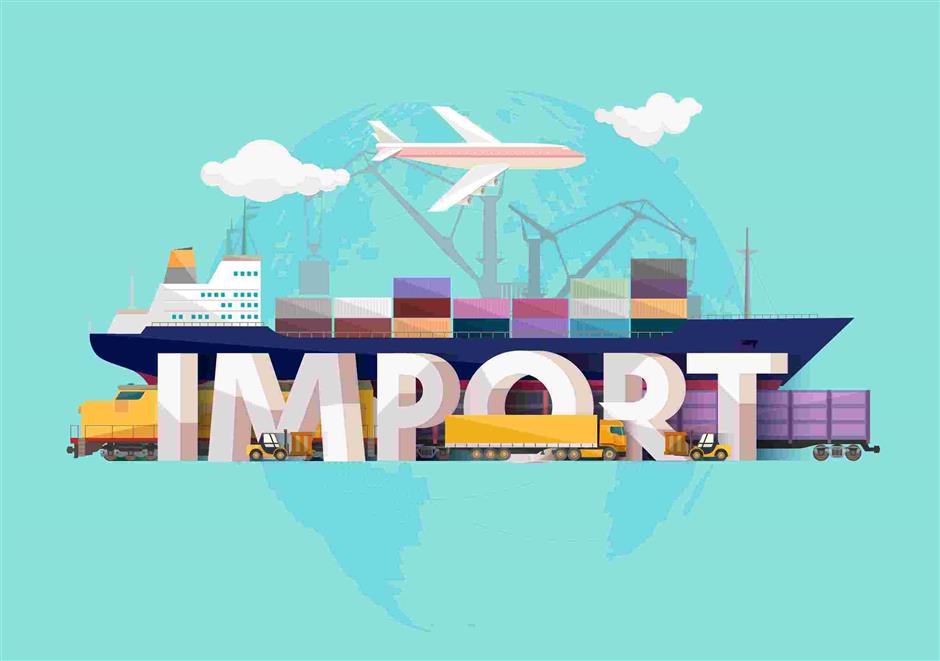
For a foreign supplier, an order from a Chinese customer may have repercussions far beyond China. A Chinese carmaker selling in Europe may buy tires from a foreign supplier and pay a logistics company to support its overseas operations. The final consumer is abroad, but the manufacturer is also a buyer.
Such purchases offer a route into China-related demand that goes beyond selling to households or shipping goods into Chinese ports. As trade disputes reshape the conditions for doing business, foreign suppliers need to understand what Chinese exporters buy, why they choose particular partners and how those needs may change.
Foreign businesses can face Chinese competition in one market while finding customers among Chinese manufacturers elsewhere in the value chain. Understanding that overlap helps identify opportunities that a simple comparison of national export totals would miss.
In June, South Korea's Nexen Tire announced that it is supplying tires for two BYD models, including the European-market Dolphin Surf. Nexen said the tires selected for that model combined low rolling resistance with wet-weather performance.
The commercial opportunity lies in meeting a manufacturer's product requirements. A foreign supplier needs to demonstrate how its component performs, whether it can deliver consistently and whether its price makes sense for the buyer. Winning business requires an advantage that survives comparison with other suppliers, including Chinese ones.
A supplier also needs to know where purchasing decisions are made. A contract for components installed in China is different from one serving an overseas factory. Delivery schedules, technical support and the ability to supply across locations can affect whether a competitive product becomes a workable offer.
An established supplier may benefit from the testing and validation involved in approving a replacement. But the relationship still depends on continued performance. For a newcomer, the task is to identify a specific need in the Chinese customer's product or production process and show that it can meet it competitively.
Chinese companies also purchase services to reach and support customers abroad. In June, France-based CEVA Logistics announced a three-year preliminary agreement to expand cooperation with BYD. CEVA described existing work, including finished-vehicle logistics, overseas distribution, aftersales support and logistics for manufacturing operations.
The agreement concerns future collaboration, while the existing services demonstrate an established commercial relationship. Here, the foreign company's offering is its ability to help a Chinese customer operate across markets. Vehicles must reach dealers reliably, and spare parts need to be available when repairs are required.
The value of a local network becomes apparent when something goes wrong. A manufacturer can lose customer confidence if a small spare part cannot reach a repair workshop. Reliable service can therefore be part of the product's commercial appeal.
CEVA says its support has expanded as BYD develops a broader manufacturing network. This illustrates how the work available to a supplier can change with the customer's operations. Overseas production may reduce demand for some long-distance transport of finished cars while creating requirements for factory supply and regional distribution.
A service provider that can adjust its network has a way to follow that demand. The Chinese group may remain the customer even as delivery locations and service requirements change. Suppliers, therefore, need to understand the customer's overseas plans, alongside the market for the final product.

Trade disputes can affect both the scale of these purchases and how they are organized. Higher costs may put pressure on the manufacturer's prices and margins, affecting what it can spend on suppliers. Changes in production location can also alter where components are delivered and which services are needed.
Some barriers allow specific commercial adjustments. In February, the European Commission accepted a price undertaking for Volkswagen Anhui's China-built Cupra Tavascan. Qualifying exports were exempted from countervailing duties under commitments that included a minimum import price, import-volume limits and investment in the EU.
For suppliers, the implication is that continued access to a market can come with conditions affecting the volume and terms of future business. A partnership needs to remain commercially viable under those conditions; the manufacturer's overseas ambitions alone cannot guarantee orders.
Other rules impose harder limits. The connected-vehicle rule in the US restricts specific China-linked technologies and certain sales by Chinese manufacturers, with software and manufacturer-related bans beginning with model year 2027. Some restrictions apply even to vehicles made in the US. Local production or a foreign partner cannot, by itself, resolve every market-access problem.
A supplier must also consider how its role may change as a customer gains experience. In October 2024, BYD completed the purchase of Hedin Mobility's German distribution subsidiary. Hedin's announcement said it would retain certain German retail operations and continue its distribution and retail partnership in Sweden.
The case shows how cooperation can be reorganized as a manufacturer takes some activities in-house. Retail and servicing income is also distinct from direct procurement by the manufacturer; it may come from local customers. Identifying who orders and pays for each product or service is essential to understanding the opportunity.
These relationships do not establish how much profit foreign partners earn, or whether their gains outweigh losses to competing carmakers. Nor should all revenue received by foreign firms be counted as Chinese imports. Some products are manufactured in China, while services may be supplied entirely overseas.
For an overseas supplier, it's vital to assess the specific purchasing relationship. Expected volumes, payment terms and the cost of supporting new locations matter. So does the ability to remain useful as the customer expands, changes its production network or brings more work in-house.
China's next order may be placed by a company seeking customers abroad. Foreign businesses can compete for it by understanding that company as a buyer and supplying something it has a continuing reason to purchase.
(The author is a research fellow at the Institute of Urban and Demographic Studies, Shanghai Academy of Social Sciences.)
Editor: Yao Minji
In Case You Missed It...
 Nov 5, 2026