[China's Next Order] China's Manufacturers Fuel Demand for Foreign Goods
Editor's note:
This series, "China's Next Order," focuses on Chinese buyers and what they need. Reporting from the ground in Shanghai, including the China International Import Expo, reporters and expert columnists follow purchasing decisions. From households to manufacturers selling abroad, we try to understand where foreign businesses win orders, what keeps them competitive and what puts that business at risk.
China's manufacturers are not only competing for global customers; they are also major buyers of foreign equipment, components, raw materials, and services to support domestic operations and overseas expansion.
For foreign businesses, the opportunity lies not just in Chinese consumer spending but also in what companies need to produce, grow, and operate abroad.
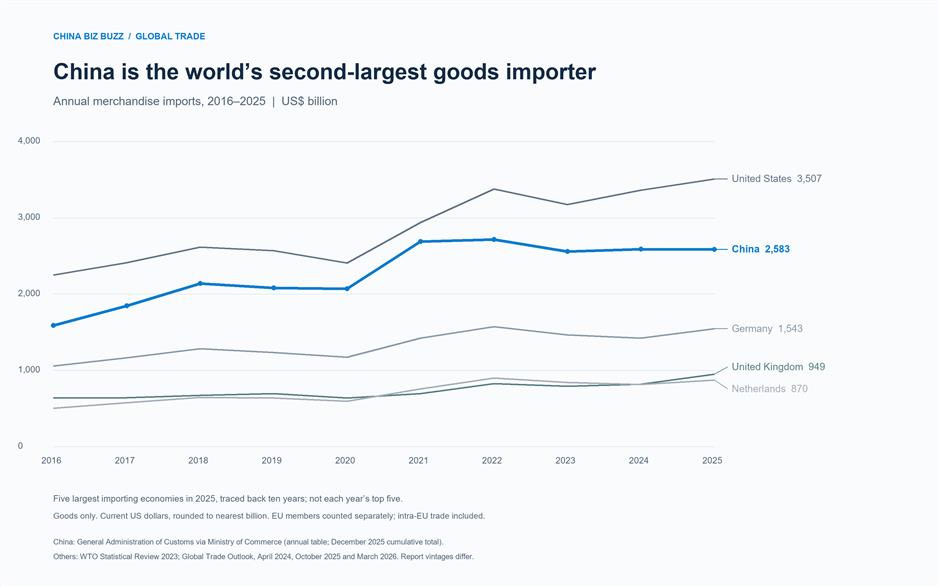
China has been the world's second-largest goods importer for 17 consecutive years, with its share of global imports rising from 7.9 percent to roughly 10 percent.
In the first nine months of 2026, imports reached 16.74 trillion yuan (US$2.51 trillion), up 22.3 percent year on year and growing 5.9 percentage points faster than exports.
While China remains a key global supplier, its demand for foreign goods deserves closer attention.
Those purchases do not always arrive at a Chinese port. Siemens Energy is supplying gas and steam turbines for a 2.6-gigawatt power plant in Abu Dhabi, where a China Energy Engineering consortium is responsible for engineering, procurement and construction. The equipment serves an overseas project; the Chinese contractor is part of the purchasing chain.
Other foreign businesses serve Chinese demand by producing inside the country. Louis Dreyfus has opened a production line for specialty feed protein in Tianjin, while Sanofi has committed about 1 billion euro (US$1.12 billion) to a new insulin production base in Beijing.
These investments are different from imports, but they underline the same commercial point: selling to Chinese customers can involve supplying factories, building local capacity or following Chinese companies abroad.
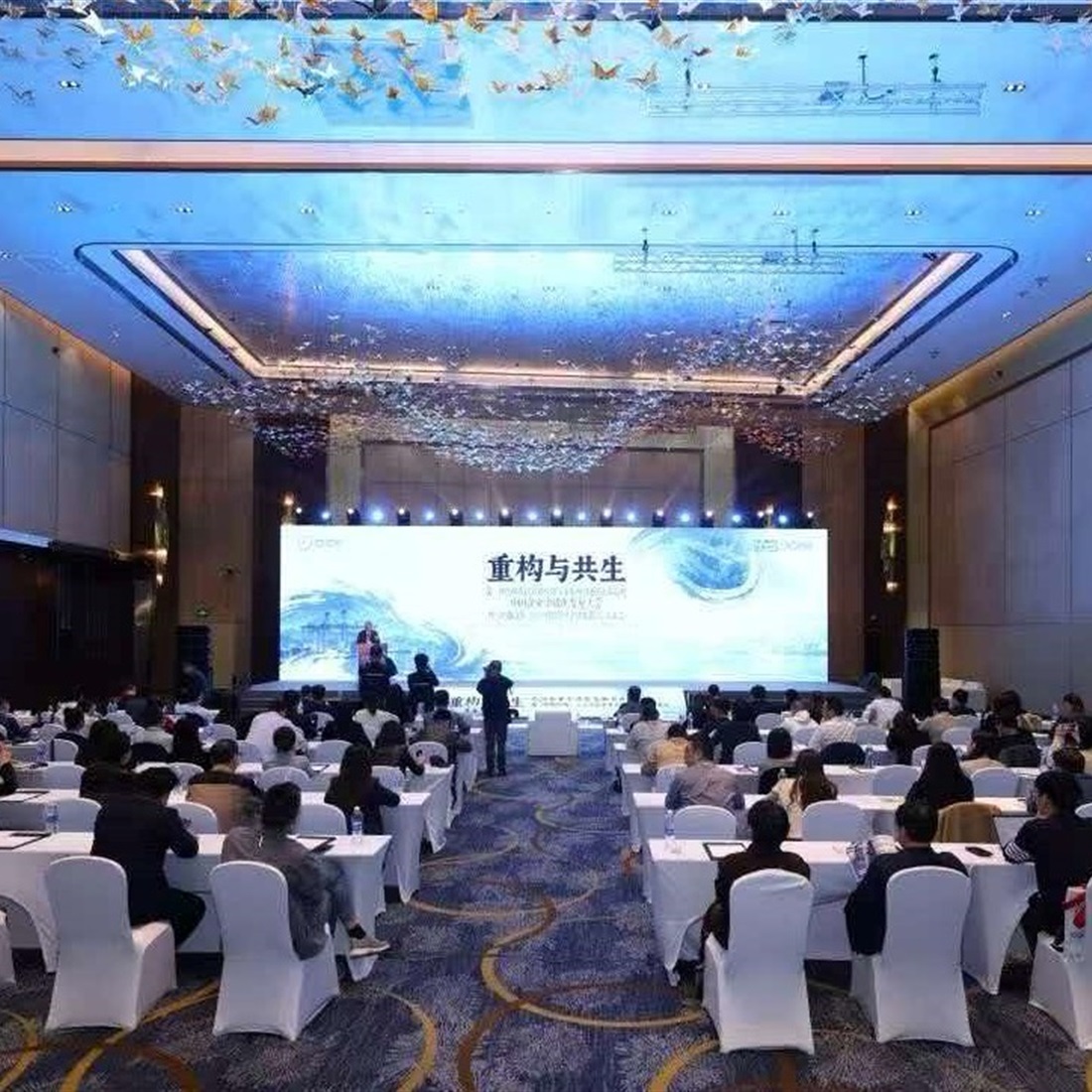
The China International Import Expo, which ended Tuesday in Shanghai, combined those opportunities. Over 300 Fortune Global 500 companies and industry leaders attended, along with 4,142 companies from 148 countries and regions.
It raises the question of what happens after the exhibition: which products sell, which orders repeat, and which suppliers remain competitive.
Some exporters benefit from tariff changes. Since December 2024, China has given least-developed countries with diplomatic relations zero-tariff treatment on all tariff lines, subject to quotas.
In May 2026, it gave all 53 African diplomatic partners zero-tariff status. Access creates an opening; finding customers and fulfilling their requirements determines whether it becomes business.
Shanghai offers a window into how that trade moves. Its ports and airports handled 4.43 trillion yuan of imports in the first nine months of 2026, up 34.1 percent, over a quarter of China's total.
The city's importance extends beyond its own consumers and factories: it is a gateway serving businesses across the country.
Air transport is playing a growing role. Goods worth 4.86 trillion yuan moved through Shanghai's air gateways in the same period, up 51.5 percent.
That figure covers both imports and exports, accounting for 47 percent of the city's gateway trade and nearly four-fifths of its growth. For high-value products such as integrated circuits, connections through airports are an important part of the buying system.
Beyond the booth
This year, nearly half the exhibitors, over 2,000 companies, are first-timers, Ralph Lauren and Arc'teryx among them. For an established brand, a first booth costs less than a store roll-out, which is why the consumer halls fill first. A debut is not a first entry, though.
Returning exhibitors display different behaviors compared to first-time participants. More than 40 companies secured 30,000 square meters of space when recruitment began in July 2025. This year, US exhibitors occupied over 50,000 square meters, an increase of 1,500 square meters from the previous year.
Meanwhile, the pavilions from Canada and Sri Lanka focus on attracting buyers for distributor agreements, initial shipments, and repeat orders in the food sector.
The distance between a booth and a commitment is measured in things that outlast six days. Sanofi announced its insulin active-ingredient plant in Beijing in December 2024, with an estimated investment of about 1 billion euros.
The plant was officially launched in October 2025 and received planning approval that December. Construction has been ongoing since early 2026. Each milestone achieved reduces the likelihood of withdrawal from the project.
Samyang Foods took a booth in 2020, set up its China headquarters in Hongqiao a year later, reached 2.6 billion yuan in China sales by 2024, and is building its first overseas plant in Jiaxing for about 1 billion yuan. IFBH signed on the opening day of the 2025 expo and plans to establish its China headquarters in Shanghai's Hongqiao district. A factory capacity and a headquarters add commitment.
This leaves a short question for any exhibitor: when does it ship, what does it make, who buys it, and what can the China unit decide without asking head office?
Louis Dreyfus provides a clear division of its operations by location. In Tianjin, the company produces specialty feed protein and lecithin tailored for Chinese livestock. Meanwhile, its Shanghai facility has a global research mandate focused on food and feed ingredients. This structure allows the company to pursue dual objectives: one division caters specifically to the Chinese market, while the other addresses global demands.
China Energy Engineering shows the reverse. It signed an equipment agreement with Siemens Energy at the 2024 expo and a supply contract in June for a 2.6-gigawatt plant in Abu Dhabi. The turbines go abroad. The order is still Chinese, and it decides which equipment a third country ends up using.
Six days, and the other 359
A fair lasts six days. What catches it is permanent. Hongqiao's year-round platform carries 6,000 brands and 90,000 products from 120 countries through 57 sub-centers, and about 40 billion yuan of trade this year against 36 billion in 2025, with the 2026 figure being the operator's forecast. In September, the first 19.6 tons of Peruvian bananas arrived by sea from Chancay; on October 21, another 1.2 tons flew into Pudong and went on show. One was a commercial import, the other an exhibit.
At the other end of the chain, the city added 514 stores in the first half of 2026, 38 percent of which were international brands. It hosts 1,120 regional headquarters and 675 foreign-funded R&D centers and drew US$11.59 billion in foreign investment from January to August, up 6.9 percent, while the national figure fell 4.3 percent in the first three quarters. The two are reported in different currencies, so compare direction rather than amounts.
What the numbers will not say
None of these factors indicate a booming fair. The number of exhibitors increased from 4,108 to 4,142, reflecting a modest rise of 0.8 percent, which suggests a platform rather than a significant surge. Over nine editions, while floor space expanded by 46.7 percent, the number of exhibitors grew by only 15.1 percent; this trend indicates that existing companies are occupying more space instead of new companies entering the market.
The 34.1 percent increase at the port is influenced by both pricing factors and the re-routing of supply chains through a single hub, so this growth rate should not be used for extrapolation.
Shanghai is where the purchases transform into headquarters, laboratories, and flagship stores. The next order will likely be sourced from a broader range of suppliers than the previous one, and likely placed in Shanghai.
(Chen Zhijun is a professor at the Department of Business Administration of School of Management,Fudan University.Zhang Xupin is an assistant professor of Information Management at School of Economics and Management of East China Normal University.)
Editor: Yao Minji
In Case You Missed It...
 Nov 11, 2026