[China's Next Order] How Foreign Exporters Need to Position Themselves to Succeed in China Market
Editor's note:
This series, "China's Next Order," focuses on Chinese buyers and what they need. Reporting from the ground in Shanghai, including the China International Import Expo, reporters and expert columnists follow purchasing decisions. From households to manufacturers selling abroad, we try to understand where foreign businesses win orders, what keeps them competitive and what puts that business at risk.
Assessing China's import market is not simply a matter of looking at whether it's getting larger or smaller. The change is in what China buys, who buys it and why. For overseas businesses, that shift matters enormously. China's next wave of import demand will come less from traditional industries and more from advanced technology, changing consumer demand and the needs of Chinese manufacturers.
Start with what is growing. Two categories stand out: high-tech products, and agricultural and food products. On the flip side, one category under real pressure is imported manufactured goods, particularly automobiles.
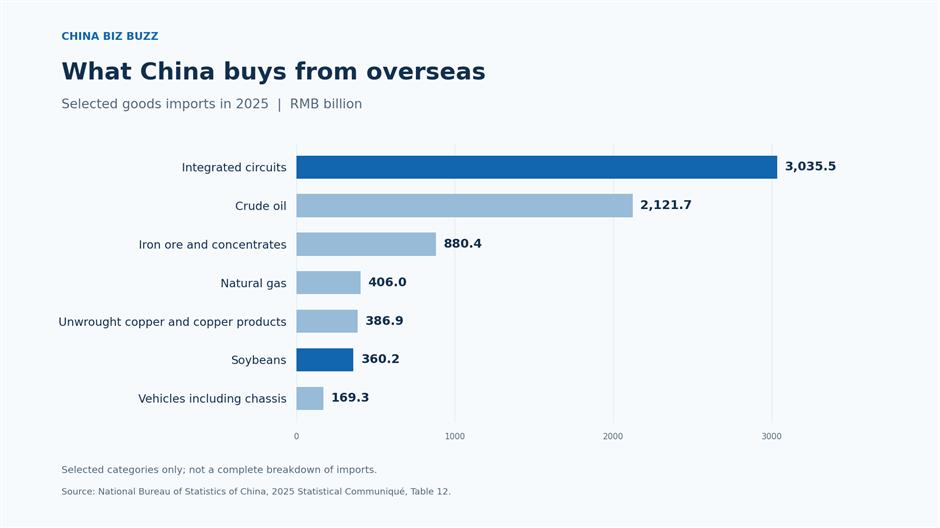
China continues to import large amounts of high-tech products, especially semiconductors. In 2025, China imported around 5.9 trillion integrated circuits, an increase of about 8 percent in volume. In the first eight months of 2026, the value of chip imports rose by about 62 percent compared with the same period last year. The reason is straightforward: China is investing heavily in artificial intelligence, electric vehicles, robotics and advanced manufacturing – all industries that need chips and other sophisticated components.
There is an interesting point here. China's push to become more technologically advanced does not necessarily mean it will import less technology. In fact, as Chinese companies develop new products and expand production, they may need even more specialized equipment, materials and components from overseas.
Agriculture tells a different part of the same story. Take soybeans: China imported about 112 million metric tons in 2025, up 6.5 percent, which reflects the sheer size of China's food market and its demand for animal feed and food products. There are also openings in seafood, fruit and other goods that offer something different from domestic alternatives. As Chinese consumers become more selective, quality, safety and variety matter increasingly.

Automobiles move in the opposite direction. China's vehicle imports last year fell by more than 32 percent in volume. This is not simply because Chinese consumers no longer want cars, but rather that Chinese carmakers have become much more competitive, producing many models at attractive prices and increasingly advanced technology.
So the lesson is clear. China's import market as a whole is a poor indicator. Some opportunities are expanding, while others are disappearing because Chinese companies have become stronger competitors.
But the mix of goods is only half the picture. The harder question, and perhaps the most important one for overseas suppliers, is who is actually placing these orders. When we talk about Chinese imports, we often picture Chinese consumers buying foreign products. That is only part of the story. It helps to distinguish three sources of demand: Chinese households, Chinese companies investing in production and Chinese factories making products for export. In my view, the second and third groups matter most.
Take one concrete example. Imagine a European company selling advanced computer chips or precision components. Its customers in China may be manufacturers of smartphones, computers or electric vehicles. Those Chinese manufacturers buy foreign components, use them to make finished products and then sell those products around the world. In other words, demand for imported components does not necessarily come from Chinese consumers. It may come from American or European consumers who eventually buy products made in China.
That distinction matters because it changes how overseas suppliers should think about the Chinese market. If you look only at Chinese household consumption, you may underestimate the market. You also need to look at the business performance of Chinese manufacturers, their investment plans and their exports. Domestic investment matters, too. China is upgrading its factories and building new industries, which creates demand for foreign machinery, industrial equipment, advanced materials and specialized technologies.
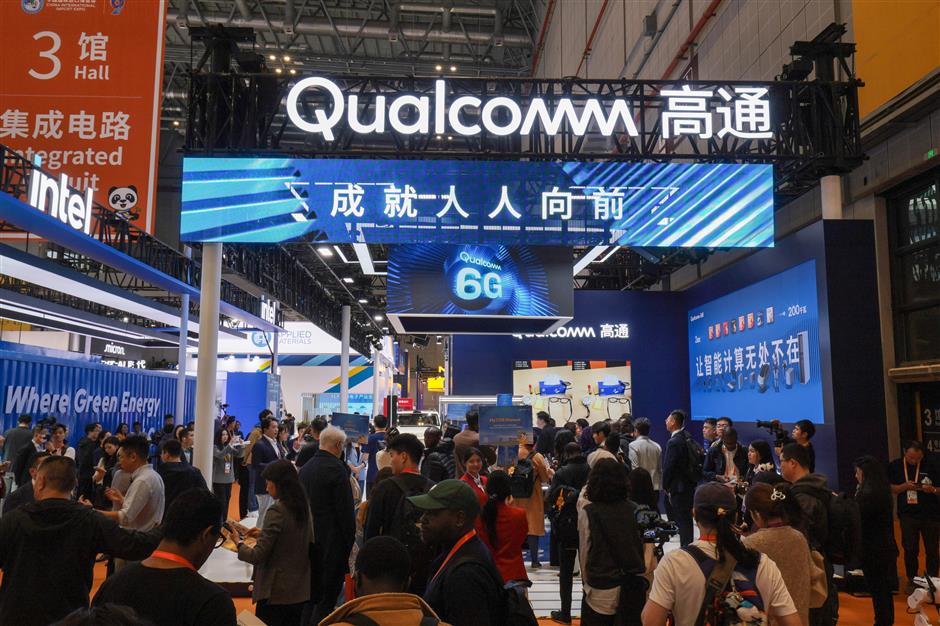
Once you see where the demand originates, the next question follows naturally: Who is best placed to capture it? Three groups of overseas businesses look particularly well positioned.
The first group supplies advanced technology and specialized equipment for semiconductor equipment, industrial robots, precision instruments, advanced materials and components used in artificial intelligence and electric vehicles. The reason is simple. Chinese companies are becoming more capable, but they still need foreign products and technologies in areas where domestic alternatives are not yet good enough.
Alongside them are companies from countries that can provide reliable and competitive supplies. Trade tensions between China and the US have encouraged Chinese businesses to look for more diversified sources of supply, and that may create opportunities for companies in Europe, Japan, South Korea, Southeast Asia and elsewhere.
The third group sells high-quality, differentiated consumer products. China remains a huge consumer market, with openings in premium food, cosmetics, healthcare-related products, among other goods that offer distinctive quality or value. But foreign brands cannot rely on their international reputation alone. They need to understand Chinese consumers, develop local distribution channels and offer products tuned to local tastes.
More broadly, three factors will determine whether a foreign company can turn an initial order into long-term business.
The first is whether its products are difficult to replace. If a foreign company offers something Chinese producers cannot easily make themselves, it holds a stronger competitive position.
The second is whether it can build long-term relationships with Chinese customers. Selling a product once is relatively easy. Becoming a trusted long-term supplier is much harder. Companies need to provide good service, understand their customers and adapt to the Chinese market.
The third is whether it can provide a stable supply despite geopolitical uncertainty. Chinese businesses increasingly care about whether suppliers can keep delivering when trade policies change.
Taken together, these threads point to one conclusion. China's import market is undergoing an important structural transformation. China will probably import fewer products that its own companies can now produce competitively. But it will continue to need foreign technology, specialized components, high-quality agricultural products and differentiated consumer goods. And it is worth remembering that Chinese imports are not driven only by Chinese consumers. They are also driven by Chinese factories producing goods for the rest of the world.
For overseas businesses, the biggest opportunity is therefore not simply to sell more products to China. It is to become part of China's next stage of industrial development. Companies that understand what China needs, offer products that are difficult to replace and build reliable long-term relationships will be best positioned to win China's next order.
(The author is assistant professor with the Department of Applied Economics of Fudan's University's School of Management.)
Editor: Yao Minji
In Case You Missed It...

 Nov 7, 2026