Trial by Fire: Iran War Accelerates Maturity of China's Green Industries
SinoArk
This column intends to take deep dives into how today's industrial change is being woven by China – its factories, markets, and clusters that provide the threads. Each story will follow a cast of people and companies – engineers and founders, suppliers and shop-floor managers – whose daily choices animate China's innovation engine. We tell their stories closely, in human scale, and then pull back to read the larger weave: How domestic design, scale and supply-chain craft ripple outward and reshape industries across continents.
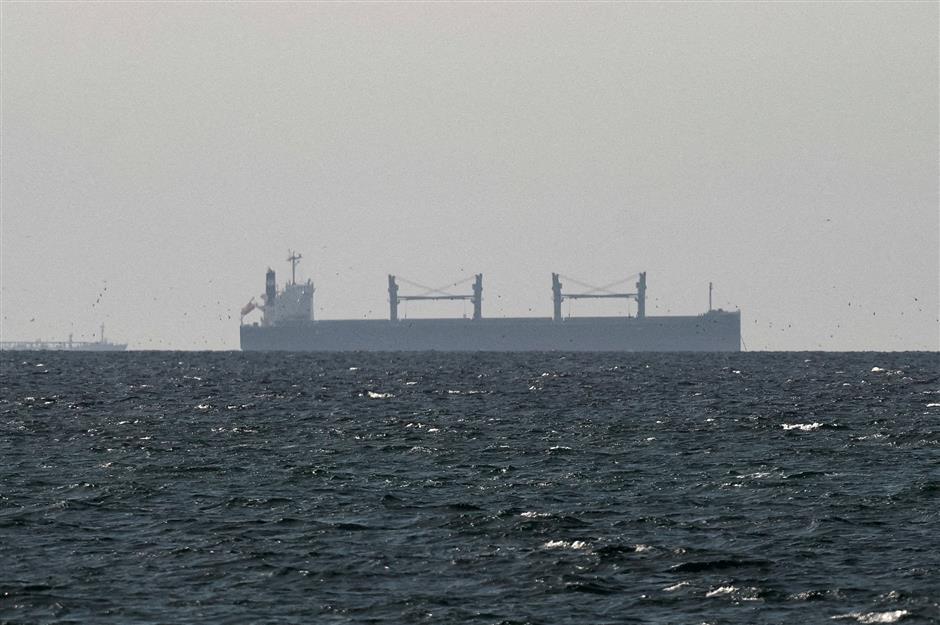
For decades, a crisis in the Persian Gulf has been viewed almost exclusively through the lens of petroleum prices and geopolitical maneuvering. However, during the ongoing conflict in Iran and the escalating struggle over control of the Strait of Hormuz, the stakes have fundamentally shifted. For Chinese renewable energy giants that have spent years embedding themselves in the Middle Eastern deserts, this crisis has become a definitive trial by fire.
While the immediate landscape is defined by logistical and operational friction, the medium-term outlook reveals a structural shift in how global markets value Chinese green technology.
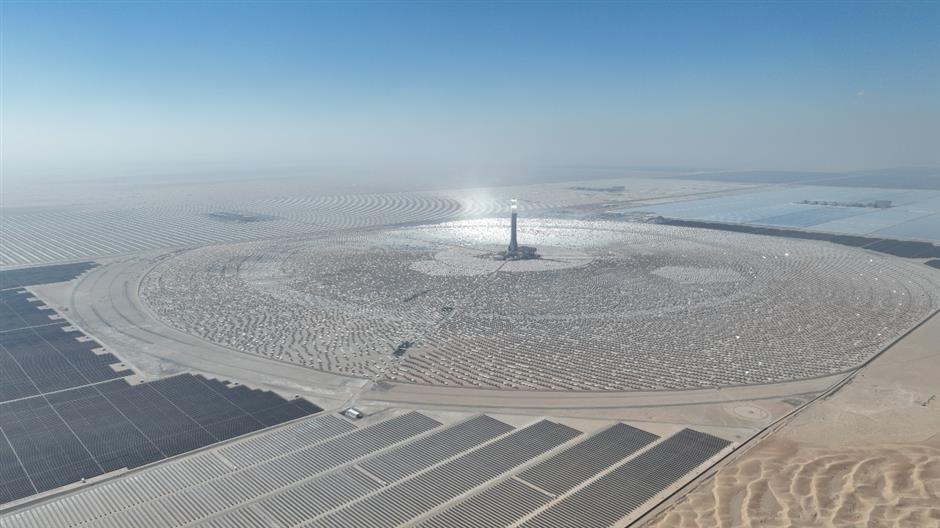
To be sure, the current conflict has impacted Chinese renewable projects in the region. As of March, 19.5 gigawatts of new-energy capacity face the risk of indefinite suspension. This includes flagship installations such as the RTC solar energy storage project in the United Arab Emirates and the Haden solar project in Saudi Arabia.
These massive undertakings represent the scale of Chinese integration.
PowerChina alone manages 40 percent of RTC construction. Core suppliers – including Jinko Solar, JA Solar and battery maker CATL – now have to navigate the fallout of suspended deliveries and canceled orders as regional contractors pause operations to reassess safety and financial liabilities. This has trapped industry leaders between the twin pressures of idle production capacity at home and frozen orders abroad.
Suspended operations, higher costs
Suspended operations and higher costs across many industries have become commonplace now across the region. Shipping lines have slapped war-risk surcharges of US$1,500 to US$3,000 per container, driving total sea freight costs up as much as 50 percent over prewar levels and stretching delivery timelines by at least 14 days. Zou Tao, head of a regional logistics firm, noted that the cost of a standard container surged from under 2,000 yuan (US$289) in January to 6,000 yuan by March, with routes in highest-risk zones exceeding 8,000 yuan. These spikes, combined with a lack of transparency in inland transport pricing due to damaged infrastructure, are aggressively hollowing out the profit margins of Chinese exporters.
Upstream supply chains are reeling from energy price volatility. With international oil prices hovering higher than US$100 a barrel, raw material costs have climbed in tandem. Iran, the world's second-largest methanol producer, has seen production halts that triggered a 30 percent surge in methanol prices. Methanol is a critical component in photovoltaic glass production, accounting for up to 15 percent of costs.
The situation has created a sharp divide in corporate strategy. Some firms have initiated emergency evacuations and invoked force majeur; others are attempting to leverage regional economic resilience to find alternative growth paths.
The war has also catalyzed a systemic shock across the lithium-ion battery supply chain. Soaring crude prices have inflated the production costs of petrochemical products like electrolyte solvents and needle coke for anodes. Simultaneously, regional disruptions have driven up the price of sulfur and phosphoric acid, squeezing the margins of lithium iron phosphate battery manufacturers.
Compounding these pressures, the lithium carbonate market has suffered a dramatic price resurgence as Australian mining operations face potential shutdowns due to war-related diesel shortages.
On the plus side
The war clouds, however, have a silver lining. The importance of renewable energy is commanding new prominence in governments' priorities, turning solar and energy storage from an aspirational goal into a necessity for national energy security and true energy independence.
Orders for Chinese solar equipment and storage systems from the Middle East jumped in the first quarter of this year as nations look beyond the current crisis. Most are long-term orders of three years or more.
Interestingly, this crisis has highlighted a divergence in global logistics. Stung last year by attacks on Red Sea shipping by Yemen's Houthi rebels, Chinese shipments to Europe had already largely pivoted to a route around the Cape of Good Hope. Consequently, the current hostilities in the Persian Gulf have had a negligible impact on Chinese energy storage deliveries to the European market.
The surge in European demand, driven by its own energy security concerns, offers a roadmap for the Middle East's future. Companies such as Dajin Heavy Industry and Tianshun Wind Power have seen their European order books swell, with customer decision cycles shrinking from six months to just one or two.
The long-term lesson for Chinese industry is clear: The era of "box-moving" is over. True energy security for a host nation now mandates the localization of the entire value chain.
For years, localization in regions like Saudi Arabia has been largely a "box-ticking" exercise. While governments might stipulate local content of between 20 percent and 50 percent, many Chinese firms have simply shipped finished products and performed rudimentary assembly on-site. The ongoing crisis has exposed the fundamental fragility of that model. If a supply chain is severed by regional conflict, a "local" project that relies entirely on foreign-made modules remains, in effect, a foreign project.
Growing competition
Middle Eastern markets are rapidly becoming a crowded arena of global competition. Japanese firms, such as Nippon Energy, are planning module production lines in Dubai. Toyo Solar is establishing cell projects in Ethiopia. In the first half of 2025 alone, non-Chinese companies expanded production capacity across the Middle East and Africa by 52 gigawatts. Simultaneously, India is accelerating its own domestic solar industry, with a planned capacity of 141.9 gigawatts, spanning the full value chain from wafers to modules.
The future demands that Chinese companies transform themselves into "local co-builders" rather than "foreign suppliers." This evolution requires moving research and development, advanced manufacturing and maintenance into host countries. This transition is already being catalyzed by European policy. The REPowerEU strategy, for instance, targets a 45 percent renewable energy share by 2030.
As natural gas supplies remain precarious, the EU is doubling down on domestic renewable power manufacturing. Chinese firms that successfully embed themselves in ecosystems will be the ones to survive the next geopolitical cycle. Cao Zhigang, president of Goldwind, a leading Chinese global manufacturer of wind turbines, aptly observed that if first half of global expansion was about building trust, the second half is about "value coexistence."
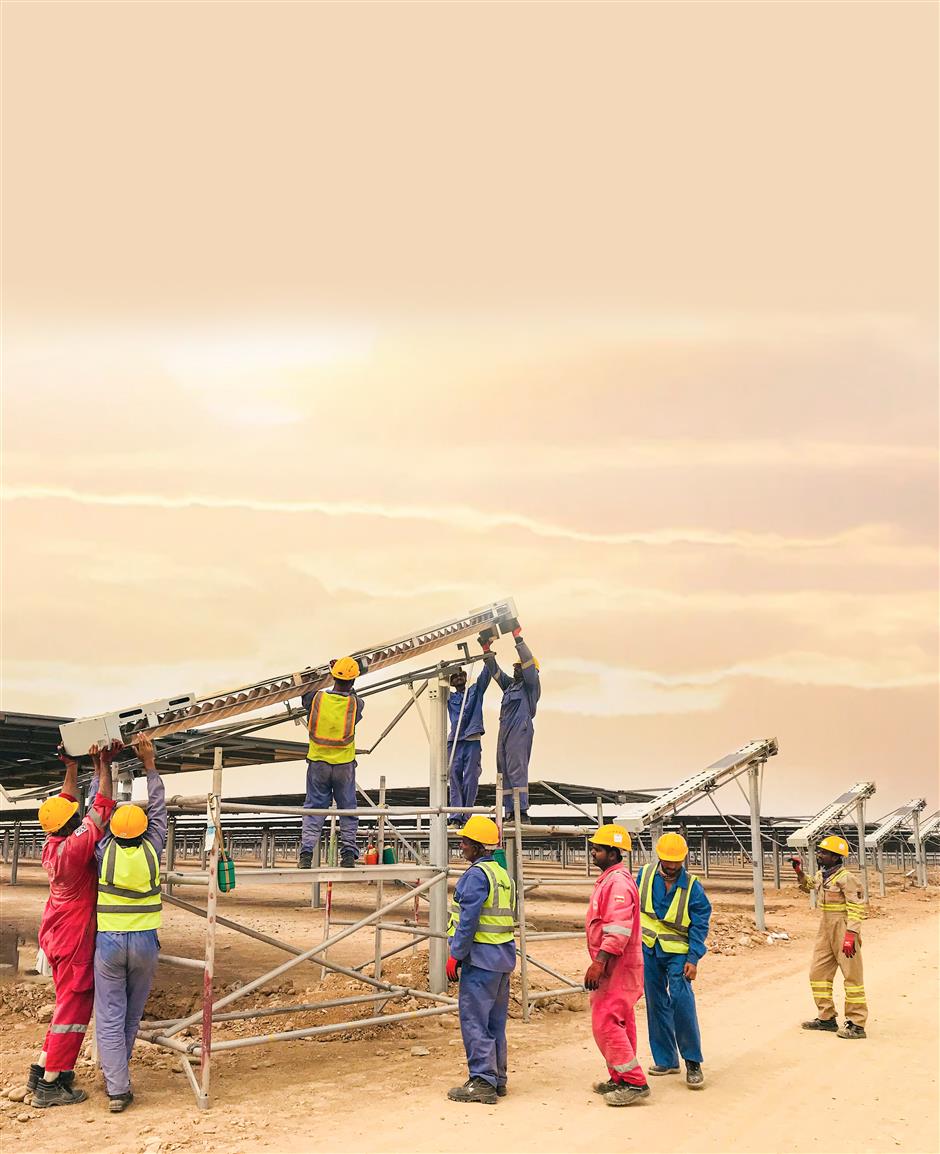
Leading companies in the solar industry are moving with remarkable speed. Over the past two years, more than 20 prominent Chinese photovoltaic firms have committed over 50 billion yuan to establishing manufacturing bases across the Middle East. This migration encompasses the entire value chain, including polysilicon, wafers, cells, modules, solar glass and tracking brackets, with Saudi Arabia, the UAE, Oman and Egypt emerging as the primary investment hubs.
The scale is unprecedented: GCL is developing a polysilicon research and production base in the UAE, while TCL Zhonghuan has signed up for a 20 gigawatt crystal wafer project in Saudi Arabia. Jinko Solar is advancing a 10 gigawatt cell and module layout, and Arctech has achieved mass production at its 3 gigawatt solar tracker facility in Saudi Arabia. This push for localization extends into energy storage. Sungrow is planning a 10 gigawatt storage plant in Egypt.
Embedding in national infrastructures
These investments reflect a fundamental shift toward securing the "hard tech" components of the energy transition. This comprehensive industrial footprint allows the sector to move beyond simple product sales, embedding Chinese manufacturing standards directly into host nations' energy infrastructure.
While industrial giants build the foundation, specialized firms like Solar-Lit demonstrate even greater agility. Holding a leading regional market share, Solar-Lit addressed the specific challenge of desert sand accumulation, which can reduce efficiency by over 35 percent, by using waterless, automated cleaning robots.
The company's solar robotics joint venture in Saudi Arabia has built a 76,000-square-meter facility that now serves flagship projects like Neom and PIF 6. This localized production allowed the company to bypass the maritime logistics crisis that have crippled its competitors. Beyond technology, the company has focused on cultural integration by hiring Saudi women in engineering roles.
When a company trains a local workforce and operates a factory that provides both jobs and energy security, it ceases to be an "outsider" easily discarded during a political spat. It becomes an integral part of the national infrastructure – the ultimate hedge against geopolitical risk.
The current Middle East crisis has been a brutal crucible, but for the Chinese renewable energy sector, it has served as a catalyst to maturity. It has forced the industry to move away from a "growth at all costs" mentality toward a model defined by quality and depth. Ultimately, this crisis is serving as a filter, separating companies focused on mere volume from those committed to value.
(The author specializes in the international expansion of Chinese tech companies in the advanced hardware and energy sectors. He also serves as a geo-economic expert for several think tanks in Beijing.)
Editor: Liu Qi
In Case You Missed It...

 Oct 20, 2026

![[Big News] CNS Launches Shanghai Health Directory](https://obj.shine.cn/files/2026/10/20/5d3cbb6a-70d4-4f74-b549-b830162d63a5_0.jpg)

![[SH Transit] Shanghai Plans Bigger Airports, Stronger Air and Sea Links](https://obj.shine.cn/files/2026/10/20/cc332098-2356-49f9-878f-86691dd8c989_0.jpg)