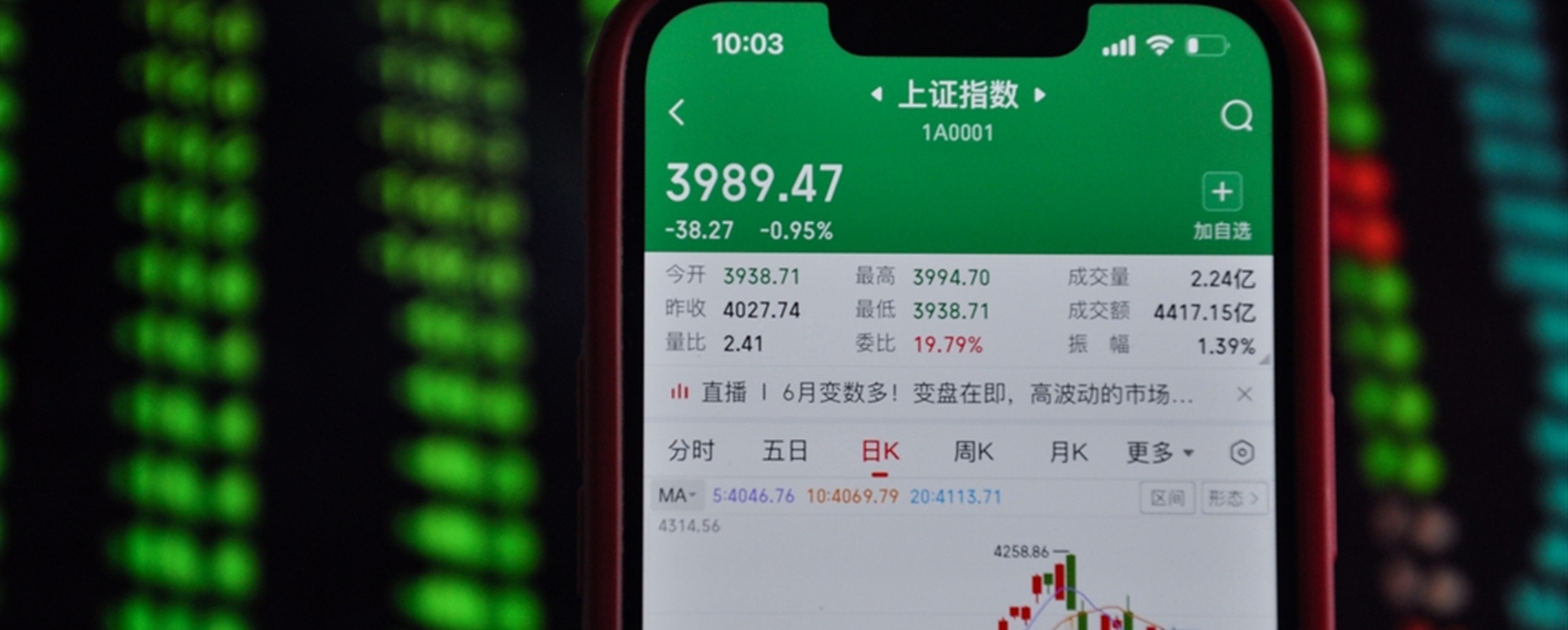
Asian Stock Markets Trade Midday in a Sea of Red After Wall Street Losses
Asian stock markets sold off on Monday morning, led by AI-linked shares after US chipmaker Broadcom-triggered panic with a disappointing outlook for semiconductor sales, sending Wall Street plunging on Friday.
South Korea's chip-heavy Kospi index plunged as much as 7 percent when the market opened but pared losses to a 4.8 percent decline by midday. Samsung Electronics fell 6 percent, and SK Hynix shed 2 percent. Japan's Nikkei lost 3.6 percent.
In the Chinese mainland, the benchmark Shanghai Composite Index slipped below 4,000 points after losing 1.26 percent. The tech-focused Shanghai STAR Market 50 index lost 3.63 percent by noon. Leading chipmaker Cambricon was off 3 percent. In Shenzhen, the main index tumbled 2.47 percent, and the tech-heavy ChiNext gave up 2.83 percent.
Hong Kong's Hang Seng Index retreated 1.23 percent, with its tech board slumping 2.43 percent. Chinese tech startup MiniMax lost up to 8 percent, Alibaba fell 3 percent, and Semiconductor Manufacturing International Corp, the mainland's largest chipmaker, gave up 3.6 percent.
"Such a sharp decline is quite unexpected … but it's more likely a short-term adjustment after such longtime discussions over tech bubbles," said Deng Yichao, an analyst with Chinalin Securities.
All eyes will be on Wall Street when it reopens tonight. Nasdaq and S&P 500 futures were pointing to a higher open at midday, Asian time.
Adding to concerns in the technology realm today in Asia was a focus on escalating attacks in the Middle East war, despite ceasefires. Iran attacked northern Israel after Israel struck Hezbollah strongholds in Beirut, just days the US brokered a ceasefire to spare the Lebanese capital from assaults. Iran and the US also traded attacks near the Strait of Hormuz, testing a separate, fragile truce.
Global Brent crude futures rose to US$96.36 in midday Asian trading. High oil prices have stoked inflation across Asia and beyond.
Editor: Yao Minji