China Aerospace Shares Surge on Rocket Recovery, Tech Stocks Weak
China's first successful sea-based recovery of a rocket sent Chinese mainland aerospace stocks surging on Friday, but the rally wasn't strong enough to offset general weakness in tech shares. Investors remain wary about the stability of the "AI boom."
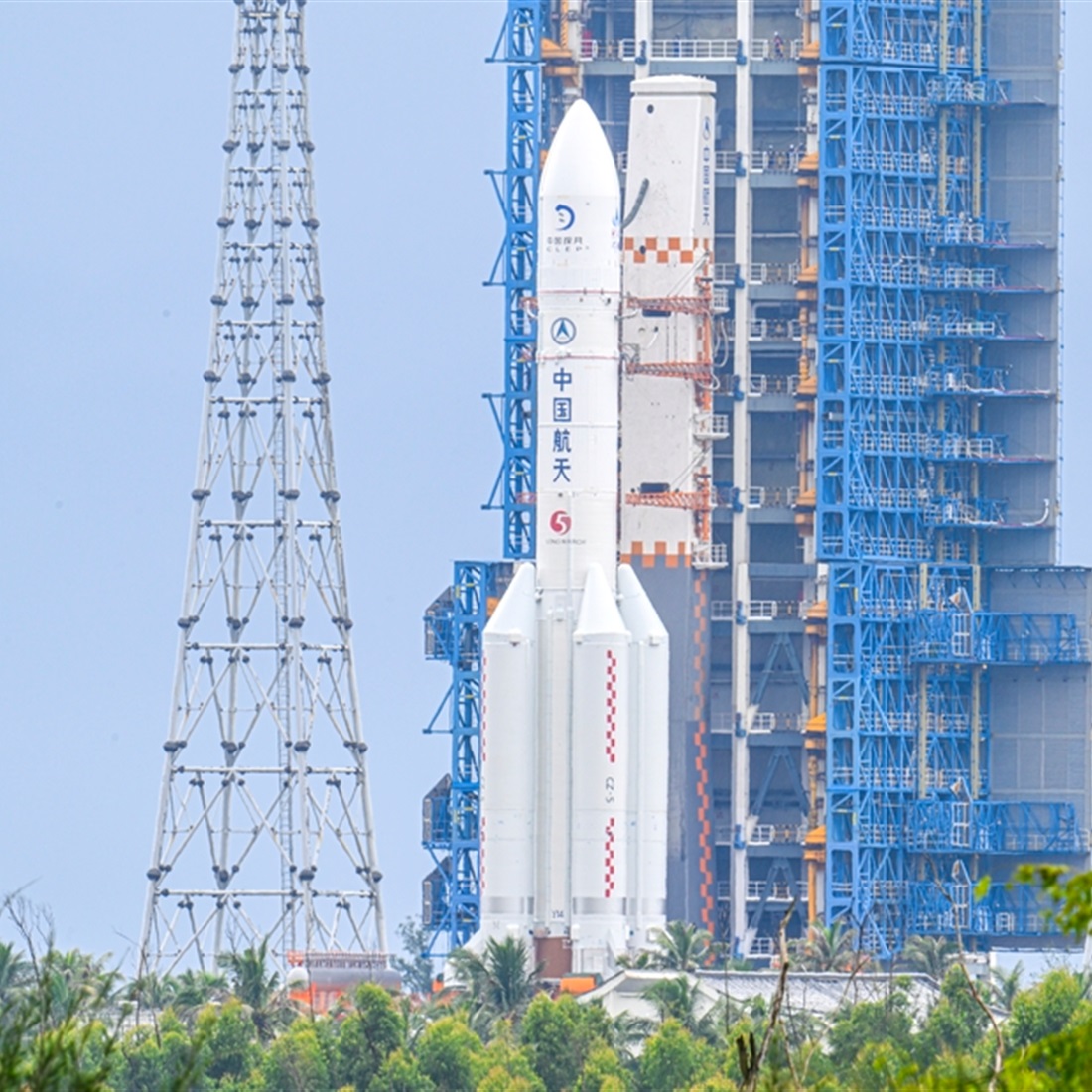
Midday on Friday, the first stage of the Long March 10B carrier rocket was reported to have been successfully recovered on an offshore platform, marking China's first successful controlled recovery of the first stage of a carrier rocket. By the close of trading, 40 plus aerospace-related shares surged by the daily trading limit, led by Aerospace Huanyu, Highlander, Tianwei Electronics and China Satellite.
However, the benchmark Shanghai Composite Index still declined 1 percent on Friday, while the Shenzhen Component Index lost 2.3 percent – largely due to profit-taking in tech shares. Shanghai's tech-focused STAR Market 50 index slumped 5.5 percent, while the tech-heavy ChiNext in Shenzhen shed 4.4 percent on weakness in semiconductor and AI-related stocks.
"The global selloff of tech shares continues to impact the Chinese mainland investors," said Liu Chenmin, an analyst with GF Securities. "And ahead of corporate first-half results, investors will have to consider which shares to buy, sell or retain."
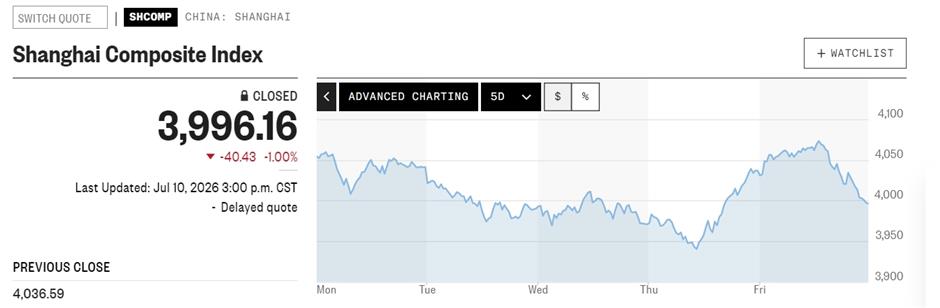
For the week, the Shanghai benchmark index lost 1.2 percent, while its smaller Shenzhen counterpart slid 3.5 percent. In the coming week, Hefei-based chipmaker CXMT is poised make its share debut on Shanghai's STAR Market in a 29.5 billion yuan (US$4.4 billion) IPO that will be the market's biggest share offering in four years.
In contrast to Chinese mainland markets, Hong Kong's Hang Seng Index jumped 3.5 percent in the past five trading days, graced by a series of tech IPOs attracting investor interest. The Hang Seng Index rose 0.6 percent on Friday, but its tech subindex slipped 0.2 percent. Pharmaceutical stocks WuXi AppTec, Innovent Biologics and CSPC Pharmaceutical all rose, along with tech-related shares in Alibaba, Lenovo, Xiaomi, JD.com and Kuaishou. But Tencent and NetEase dropped. AI startup MiniMax plummeted almost 10 percent after announcing plans to raise HK$16.04 billion via a share sale and a bond issue to fund its AI ambitions.
Across Asia, Japan's Nikkei lost 1.7 percent this week, and South Korea's Kospi dived 7.6 percent, with Samsung Electronics tumbling 8 percent despite reporting a 19-fold increase in second-quarter operating profit. The news for South Korean chipmakers was more upbeat in the US, where shares in Samsung's rival SK Hynix surged 13 percent in their trading debut on the Nasdaq after the biggest-ever foreign initial public offering in New York. The company, second largest in South Korea after Samsung, raised US$26.5 billion in the IPO.
Wall Street markets rose this week despite US President Donald Trump's announcement that the ceasefire with Iran is over. The broad S&P 500 and the tech-heavy Nasdaq each ended about 1 percent higher. In Europe, the pan-European Stoxx600 index ended flat on Friday.
Editor: Yao Minji
In Case You Missed It...
 Aug 24, 2026

![[Feel Shanghai] Your Ultimate FAQs and City Guide 2026](https://obj.shine.cn/files/2026/08/20/877c357c-8de1-4d00-aa64-2fa44b857386_0.jpg)


![[Weather] Typhoon Saudel to Affect Shanghai From Thursday, Landfall Expected Friday](https://obj.shine.cn/files/2026/08/26/d9ea1fdd-07df-49e1-9dcb-19a2976c1bec_0.jpg)