Global AI Regulatory Framework, Human Oversight Urged Amid Tech Boom: Lujiazui Forum
As the global demand for computing power experiences exponential growth, the financial industry's stance toward artificial intelligence has become increasingly ambivalent. On one side is a wave of massive capital investments and a celebration of surging efficiency; on the other is an anxiety over "black box" algorithms spinning out of control and a potential collapse of systemic trust.
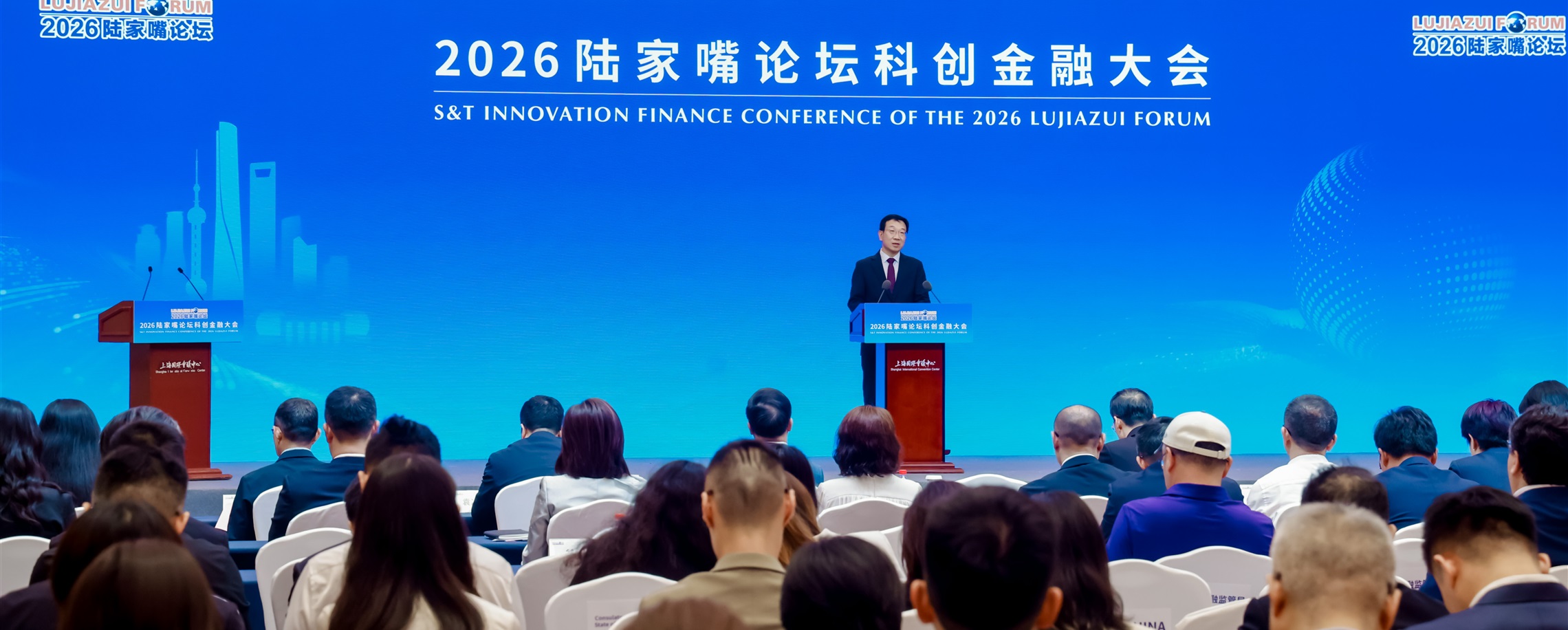
During a session themed "Tech innovation empowering high-quality financial development" at the 2026 Lujiazui Forum in Shanghai today, top executives from banks, insurance companies, and asset management firms reached a consensus that the financial sector should treat "safety baselines" and "human intervention" as non-negotiable red lines when it comes to AI.
Gu Shu, chairman of Agricultural Bank of China, said that current large models face three critical risks in financial applications.
"It may happen that ocean-like parameters reaching hundreds of billions or even trillions make decision-making mechanisms opaque and the results difficult to explain," he noted. "Besides, large models are fundamentally based on probability and statistics rather than strict logical reasoning, making them highly prone to generating self-consistent false information when data is insufficient."
To combat technological risks, the bank praises the idea of "using AI to fight AI." Gu said that the bank matches differentiated technological paths to various scenarios.
"In highly regulated areas like credit decision-making, knowledge distillation techniques are used to transfer the capabilities of large models into interpretable smaller models," he explained. "At the same time, we have established a deep defense system, utilizing AI techniques to actively discover and patch vulnerabilities within AI applications."
Zhu Ning, a professor at Shanghai Jiao Tong University, said that trust is the core of finance. While traditional financial institutions have clear accountability tied to physical operations, the absence of a responsible entity when AI decisions fail could severely shake industry trust.
"Furthermore, if market participants simultaneously rely on the same AI model for decision-making, it can easily trigger a 'fallacy of composition', much like everyone relying on the same traffic route to avoid congestion, which ultimately leads to severe gridlock, thereby causing systemic shocks in the macro market," he pointed out.
Faced with a safety baseline that allows no margin for error, both Chinese and foreign financial institutions have independently adopted a strategy of "human decision-making as primary, machine assistance as secondary".
Experts note that the borderless nature of technology dictates that regulatory frameworks for financial AI cannot be fragmented. For global asset management giants, regulatory fragmentation itself constitutes a major risk.
Christian Stracke, president of PIMCO, said that establishing a globally coordinated, principles-based regulatory framework for AI is vital.
"We cannot have a situation where one jurisdiction supports AI for a specific business activity while another views the exact same behavior as risky," Stracke added.
He urged global regulators to set clear risk boundaries. For instance, high-risk activities, such as utilizing client data for autonomous decision-making without human checks and balances, must be strictly regulated or entirely banned. Conversely, low-risk areas like data search and summarization should be given ample room for innovation and experimentation.
Editor: Liu Qi

![[Hai Guide] The Inner Ring Road Is Getting Repaired – Here's Where You'll Feel It](https://obj.shine.cn/files/2026/06/18/e218b933-1d0c-41a9-990e-ff9215f35807_0.jpg)
