Expat Families Get a Taste of Chinese New Year at Huacao Carnival
Chinese New Year is yet to arrive, but the festive mood was already unmistakable inside the Huacao International Community Center. Red lanterns glowed softly, children moved from table to table with curious excitement, and the scent of sweet-and-sour pork drifted through the air.
Over the weekend, expat families and local residents gathered for the Huacao Spring Festival Carnival in Huacao Town, Shanghai's Minhang District, an early celebration designed to ease newcomers into one of China's most important traditions.
Rather than a single performance or ceremony, the afternoon unfolded as a series of hands-on cultural experiences, inviting participants to explore a lesser-known side of China through the lens of southwestern Fujian Province. Clear activity boards guided visitors through the space, introducing workshops on architecture, cuisine and traditional craftsmanship. For many expats, it was a first encounter with these regional traditions.
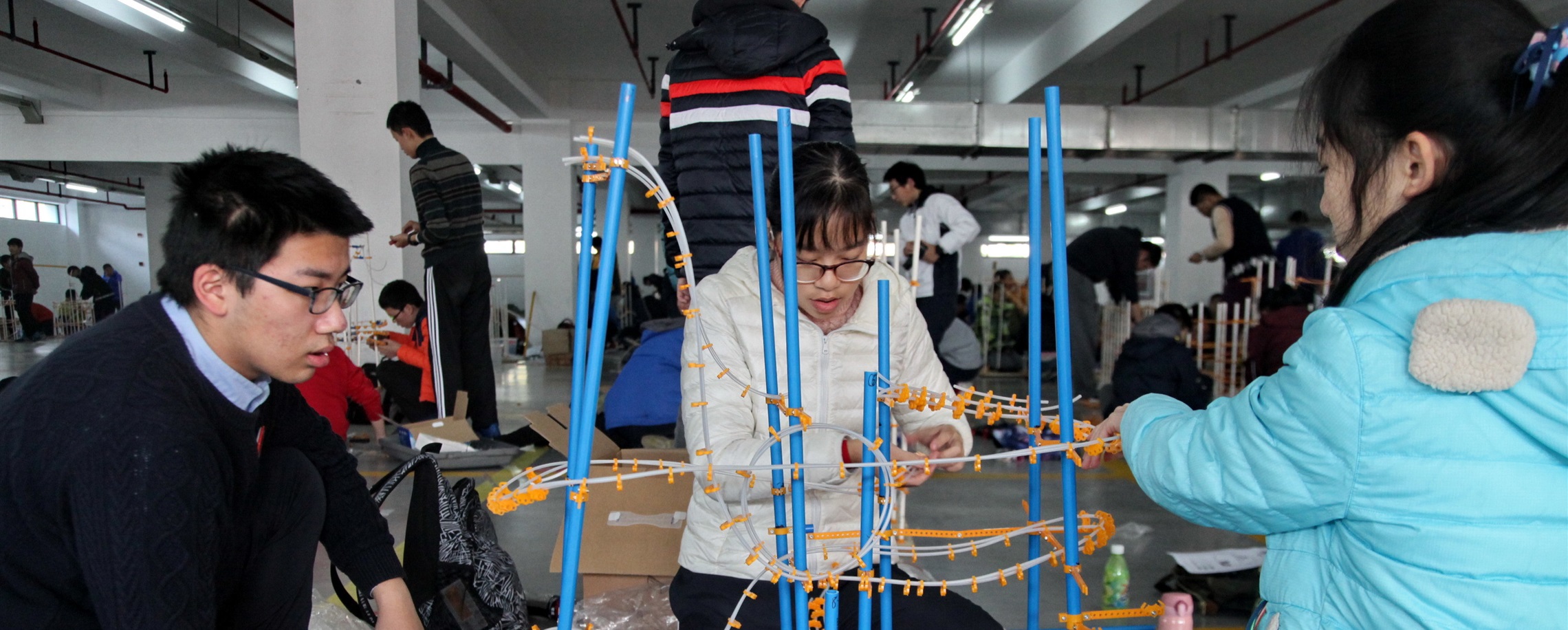
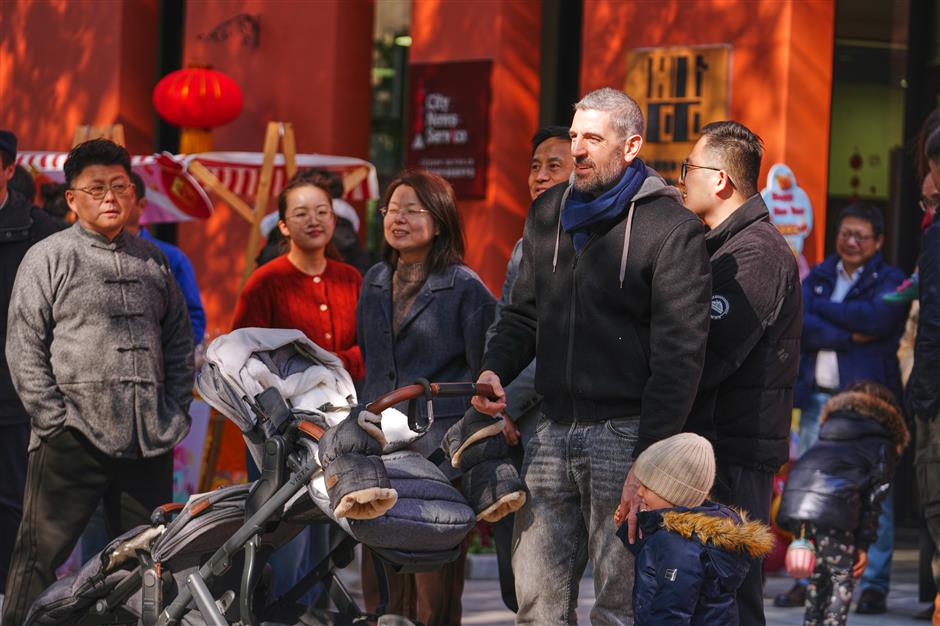
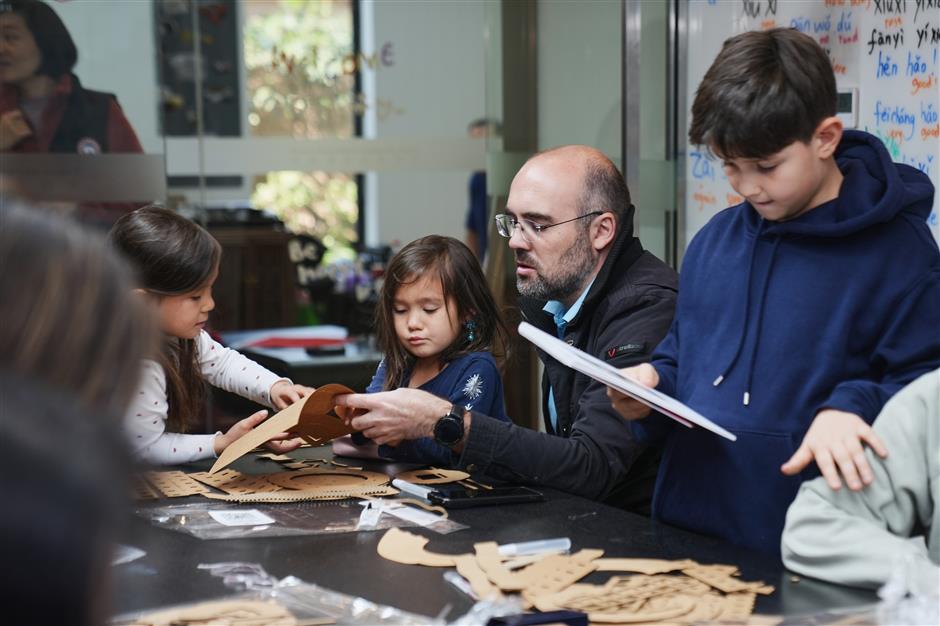
The afternoon began with Fujian tulou (earthen houses) model building. Around long tables, parents and children worked together to assemble miniature versions of the iconic round earthen buildings that once housed entire clans. The task required patience and cooperation, which was exactly what appealed to Nick Trümmel, a father from Germany attending with his son and daughters.
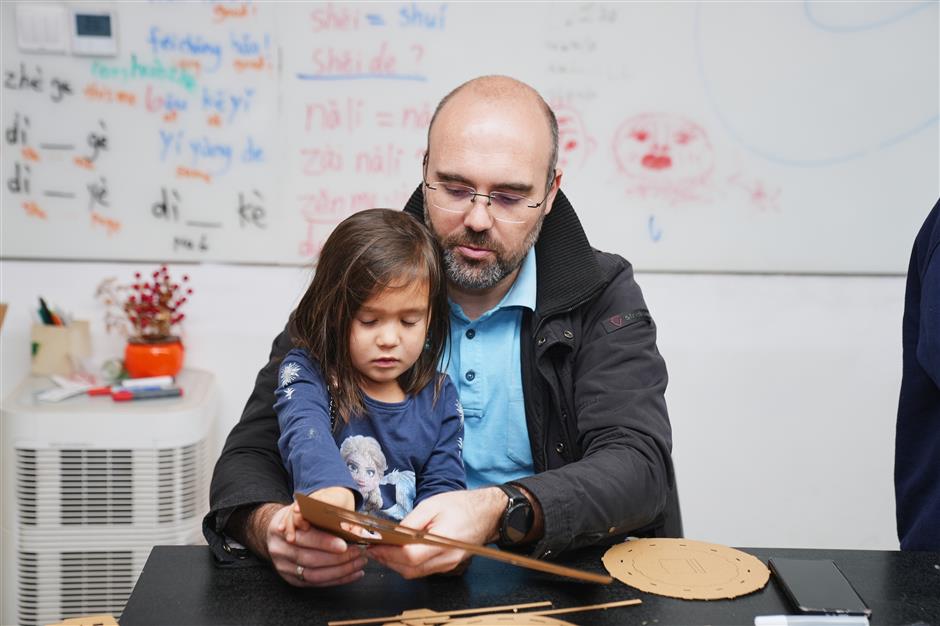
"We've never done anything like this before," he said. "It's more challenging than it looks, but that's what makes it good for kids. It really trains their hands and their patience."
Neither of them had visited Fujian, but the activity sparked curiosity. "Now my kids want to see the real buildings one day," he added.
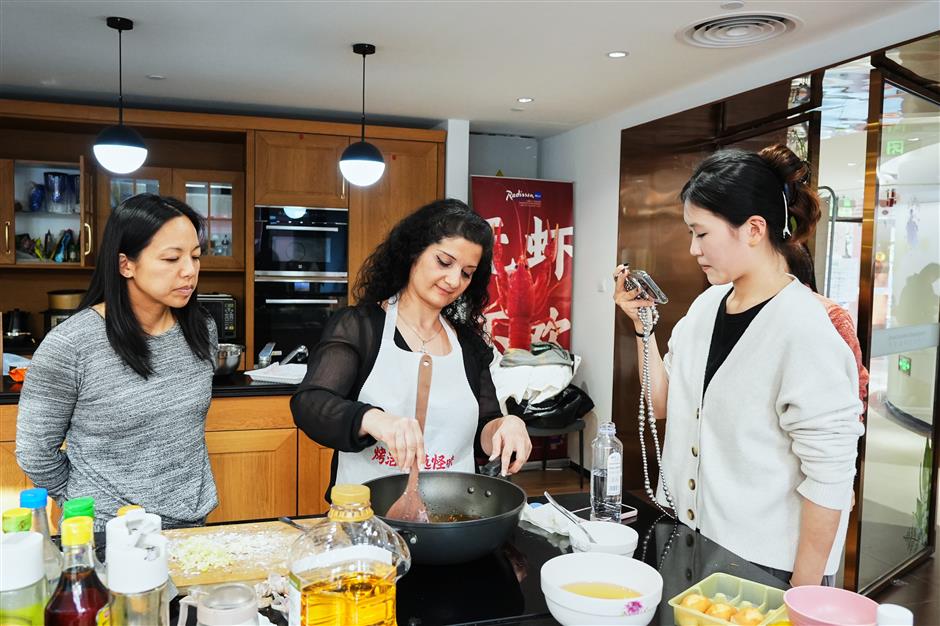
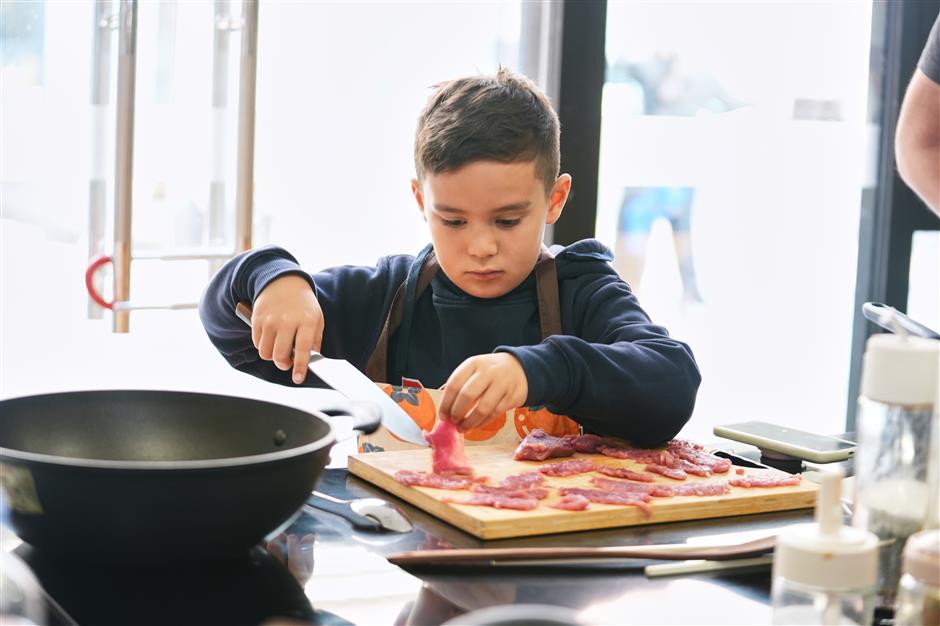
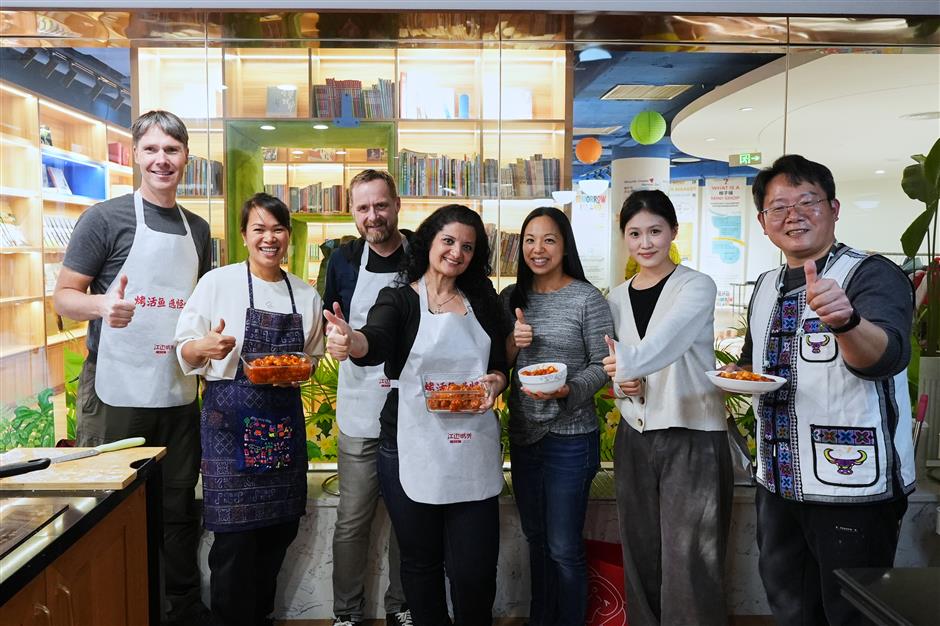
Just steps away, the cooking class quickly became one of the liveliest corners of the carnival. Participants learned to make "lychee pork," a classic Fujian dish known for its sweet-and-sour flavor and its playful resemblance to the fruit it's named after.
"I always thought Chinese cooking was too complicated to try at home," said Dollina Bozambalidis, a Lebanese-born German who moved to Shanghai only six months ago. "But when you watch how it's done step by step, it's actually very doable. I think I could try this myself."
For Dollina, it was also her first taste of Fujian cuisine. "I don't really know Fujian at all," she noted. "So being able to learn about it through food, right here in the community, feels very special."
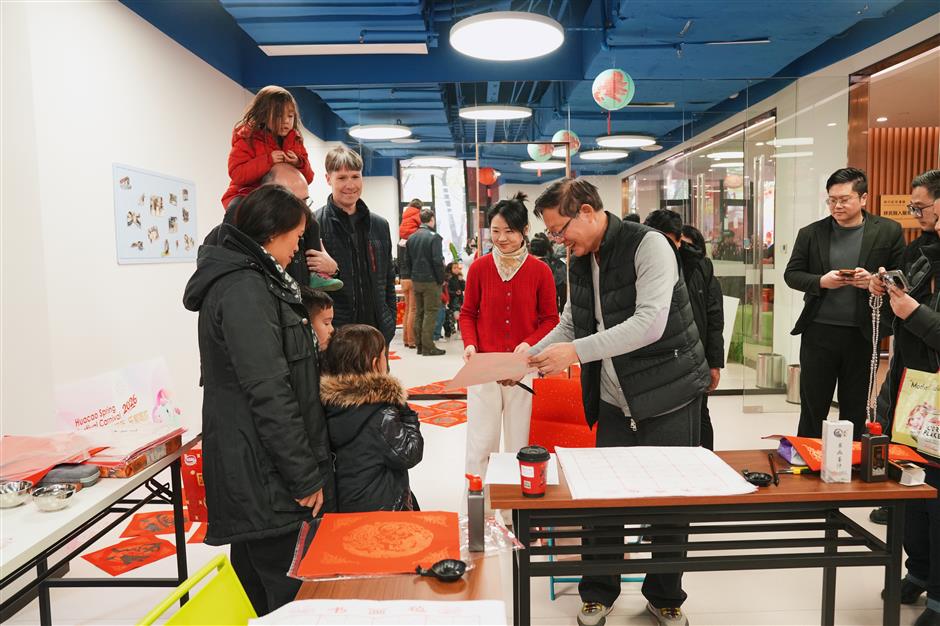
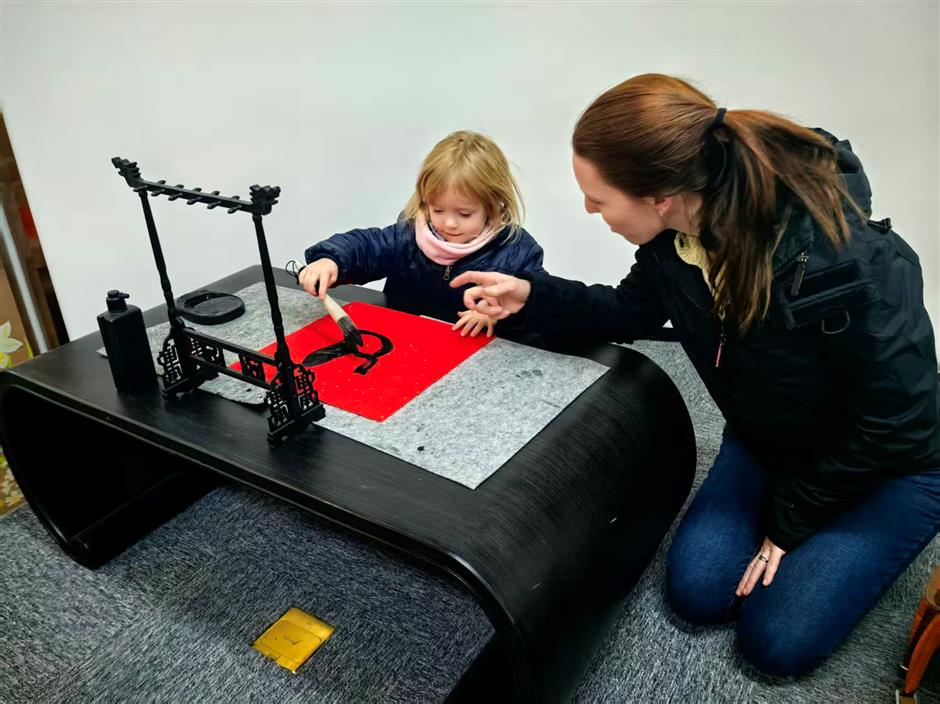
As the afternoon continued, the atmosphere shifted into a calmer rhythm at the calligraphy zone. Here, expat parents and children sat side by side, holding hands as they wrote the character "fu" (福), meaning fortune, and traced red Spring Festival couplets.
Guided by instructors, each brushstroke became an expression of hope for the year ahead. For many families, it was their first attempt at Chinese calligraphy, and the experience offered a quiet, reflective counterpoint to the buzz of the surrounding activities.
Families also gathered for the hairpin flower crafting workshop, an intangible cultural heritage experience from Fujian. Using wire and silk thread, participants shaped delicate floral hairpins while following step-by-step instructions displayed on screen. The room grew noticeably quieter as parents and children focused on fine details together.
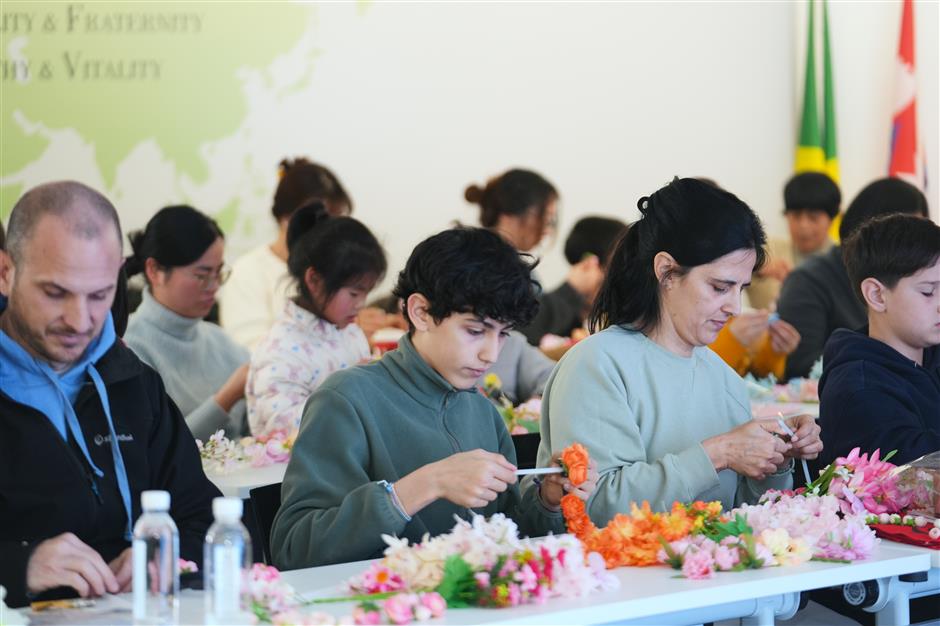
Dana Wolf from Austria, who attended with her daughter, appreciated the change of pace. "It's just spending time together and doing something we've never done before," Dana observed. "She (her daughter) loves arts and crafts, and this was completely new for both of us."
The process required patience, but that was part of the appeal. "You really need to slow down. It doesn't have to be perfect. It's about being present," she added.
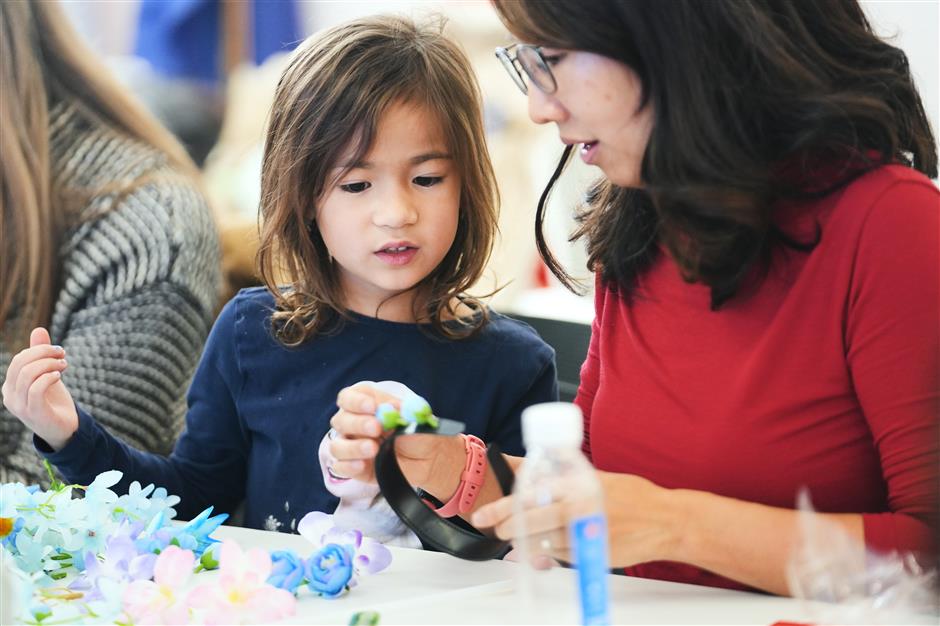
For Itske Nijenhuis from the Netherlands, who arrived in Shanghai last September and gave only her maiden name, the workshop was also her first real introduction to Fujian culture. "Before today, I didn't know anything about Fujian," she said. "I've never seen or made anything like this before, so I really enjoyed trying it."
She noted that events like this have helped her settle into life in Shanghai. "It's very nice that the community organizes these kinds of traditional Chinese cultural activities. You learn about different regions and cultures, and it helps you feel more connected."
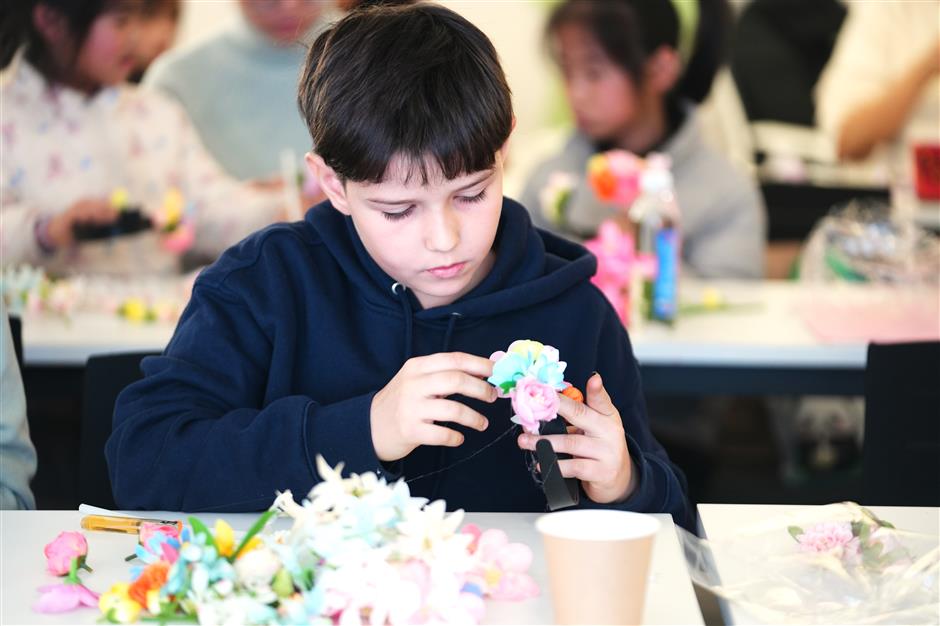
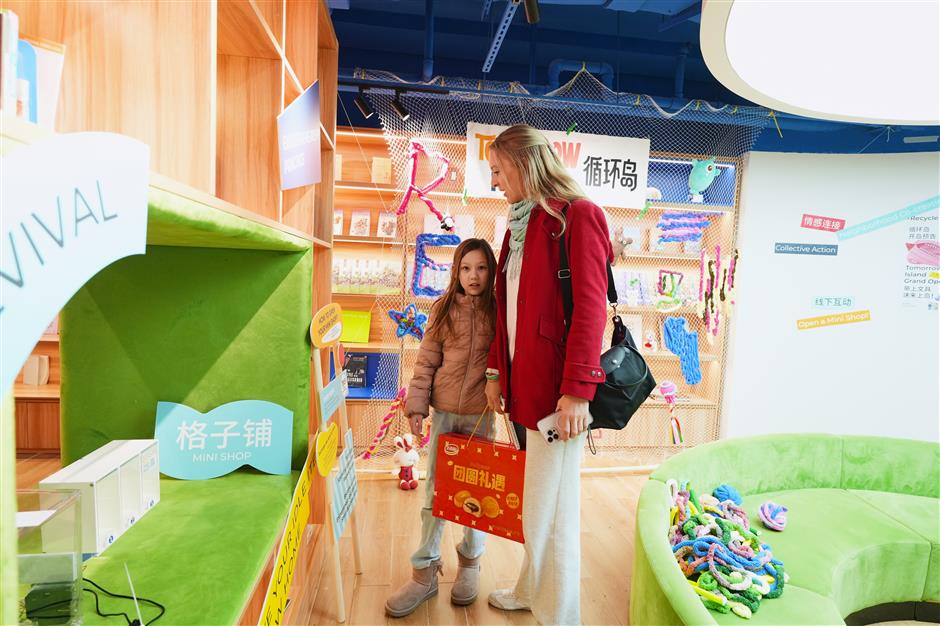
The launch of Tomorrow Island added a fresh and forward-looking dimension to the carnival. Designed as a youth project centered on recycling and creativity, Tomorrow Island invited children to swap pre-loved toys, collaborate on handmade crafts, and run small pop-up shops of their own.
As kids negotiated trades, braided ropes, and proudly displayed their creations, friendships formed naturally across languages and cultures. The initiative aims to give young people a space to learn, create, and connect, while encouraging sustainable habits and a sense of shared responsibility within the community.
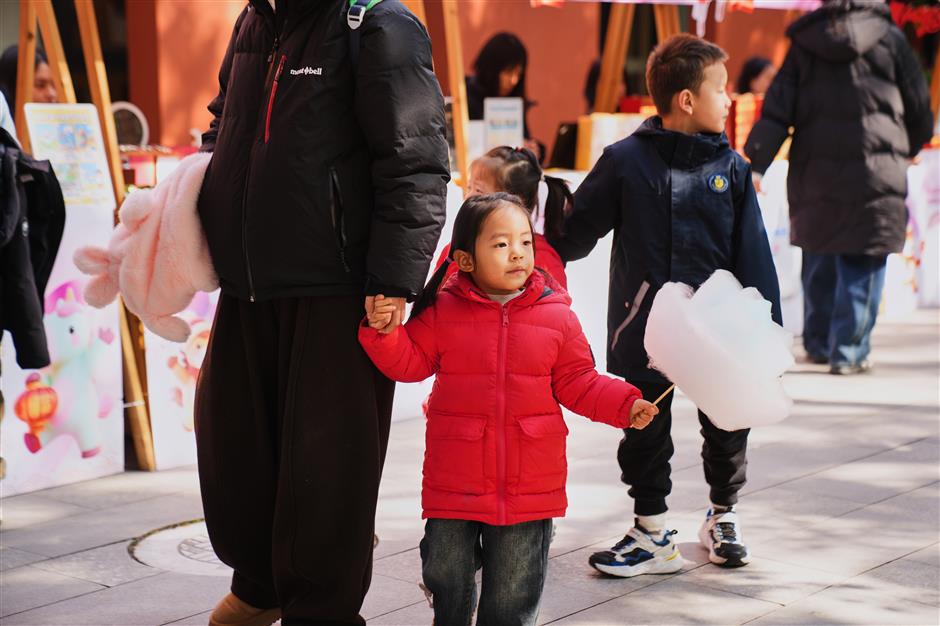
From the moment families stepped outside, the courtyard welcomed them with the cheerful buzz of a Chinese New Year Bazaar.
More than 30 stalls offered festive snacks, cultural crafts, and interactive games, turning the space into a joyful playground for all ages. Children lined up for candyfloss and robot games, while parents explored Chinese knot decorations and creative New Year gifts. At the Year of the Horse-themed photo wall, families paused to capture smiling moments, while nearby a Wishing Tree stood covered in bilingual Chinese-English wish cards, each one carrying hopes for happiness, health, and new beginnings.
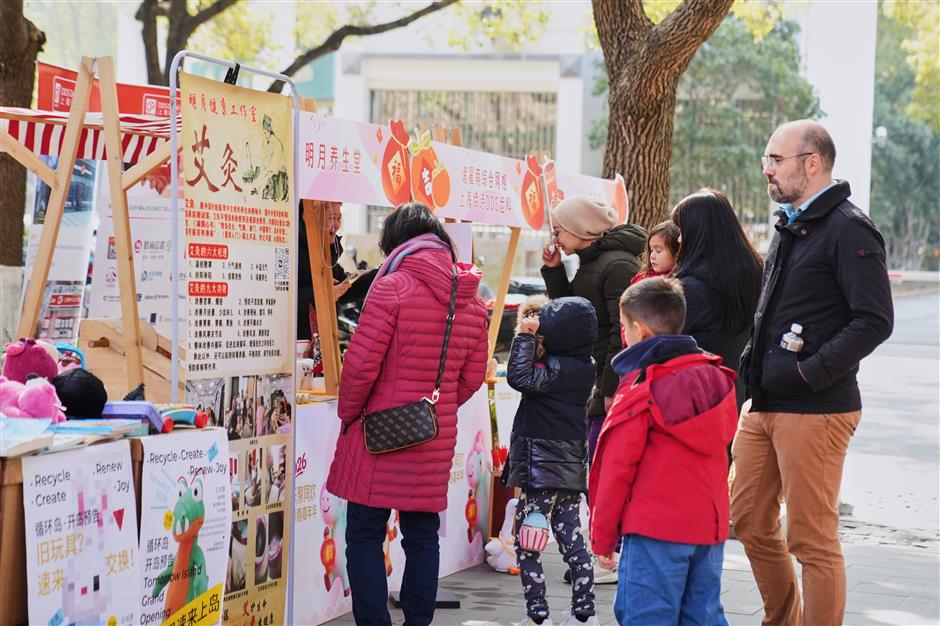
Throughout the afternoon, the carnival felt less like a formal event and more like a shared living space. Children drifted between activities, parents exchanged tips about schools and neighborhoods, and newcomers quietly gained confidence navigating Chinese New Year traditions ahead of the holiday itself.
As families packed up tulou models, shared the last bites of "lychee pork," and carried home their handmade hairpins and calligraphy, a quiet sense of connection lingered. Even before the holiday arrives, the spirit of Chinese New Year was already taking root.
By offering an early, hands-on introduction to Chinese New Year traditions, the Huacao Spring Festival Carnival turned cultural learning into something personal and approachable. For families building new lives in Shanghai, it was a reminder that sometimes, feeling at home begins with shared food, shared hands-on moments, and the willingness to try something unfamiliar together.
Editor: Shi Jingyun
In Case You Missed It...

 Jul 27, 2026
![[Only In SH] Seven Things That Made a Day in Old Shanghai](https://obj.shine.cn/files/2026/06/17/ff8520d3-b01d-4d5e-8fb5-4198c6dd3408_0.jpg)