Shanghai Students Urged to See 'Both Sides' of the World
Shanghai students are being encouraged to look at the "other side of the moon" to become true global citizens.
Professor Tong Shijun, chancellor of NYU Shanghai, launched the "Link·SH" lecture series this week to bridge the gap between Chinese traditions and international perspectives.
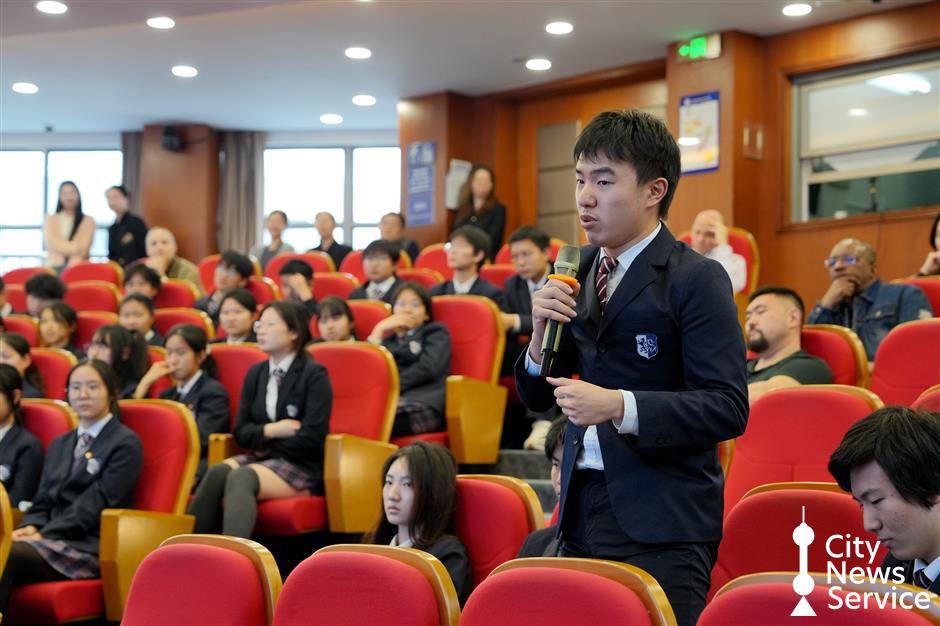
The inaugural event was held on Tuesday at Shanghai United International School Wanyuan in Minhang District. Nearly 200 students and teachers attended the first talk of the series. The program aims to bring scholars into K12 schools to share stories that connect Shanghai to the rest of the world.
"Speaking a language is experiencing a way of thinking," Tong told the crowd. He argued that bilingualism is more than a tool for talk. It is a key to training both logic and social sensitivity.
The "Link·SH" project, created by the Shanghai Federation of Social Science Associations, uses experts to help local and expat students navigate different cultural values.
For many students, the lecture was a call to follow their passions.
Jimmy Wei, an 11th-grade student, said the talk helped him resolve a personal struggle. He is interested in history and social studies but felt pressured to choose a more "practical" career.
"I actually doubted my own interests because of the Chinese social norm that social studies cannot make a great life," Wei said. "The lecture inspires me to reconsider my major and try to embrace more possibilities instead of focusing on one field."
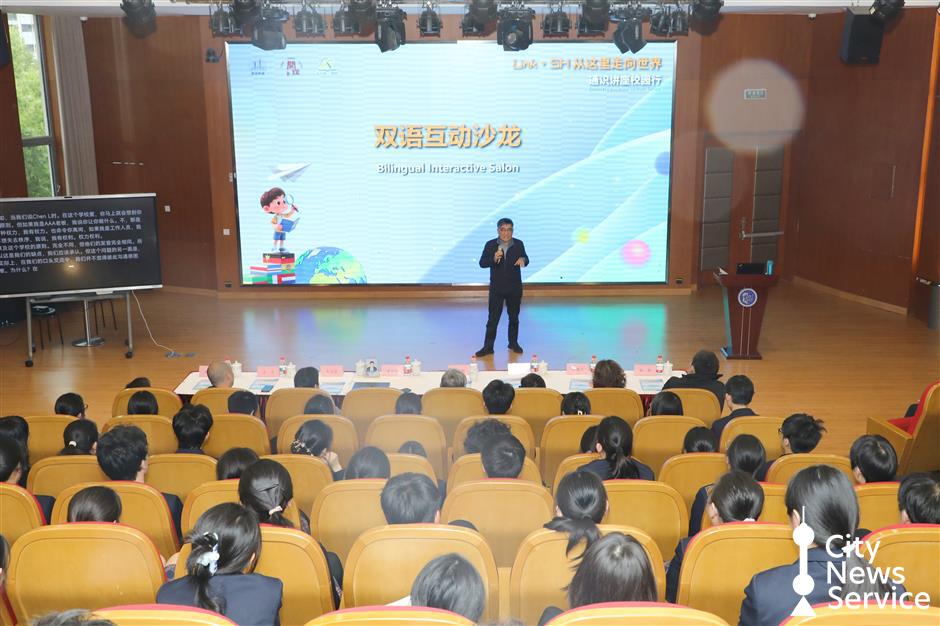
Tong used the metaphor of the "Golden and Silver Shield" to explain that understanding two sides of an issue is better than staying stuck on one. He also pointed to China's Chang'e 6 mission to the far side of the moon as a symbol of breaking through cognitive blind spots.
The professor explained that Chinese and English train the brain differently. He described Chinese as a "left-branching" language and English as "right-branching", noting that English is often better for expressing complex, technical ideas because of its grammar.
However, he noted that Chinese speakers are often more sensitive to social context. This "contextual sensitivity" is a core part of being a reasonable person.
Teachers at the school said this philosophy fits their mission of "East meets West".
"Our students are exposed to both sides coming together," said teacher Cearon Cuff, a mother of three who has educated her children in Shanghai. "Those virtues will then be able to create an effective leader."
According to Sarah Cimgn Erigeni, an American teacher who has lived in Shanghai for 17 years, learning a language is the best way to understand a different culture.
"China is a very safe, developed, and very open country," she said. "I have always been happy living here and I am grateful for the opportunities it gives."
The "Link·SH" program will continue to bring scholars and overseas experts to bilingual and international schools across the city. The goal is to build a foundation for a new generation that has both a "Chinese heart" and a "global vision", according to the organizer.
Teacher Christelle Delport noted that the students were eager to challenge the professor's ideas. "I like that they also questioned him a little bit," she observed. "It makes them international citizens, taking ideas from all around the world to strive for the perfect system."
Editor: Yang Meiping
In Case You Missed It...
 Sep 13, 2026

![[Weekend Escape] Yellow Mountain & Its Surrounding Villages](https://obj.shine.cn/files/2026/09/11/a43116a9-f87d-405f-a1b7-5fc3d3a3aa1a_0.jpg)