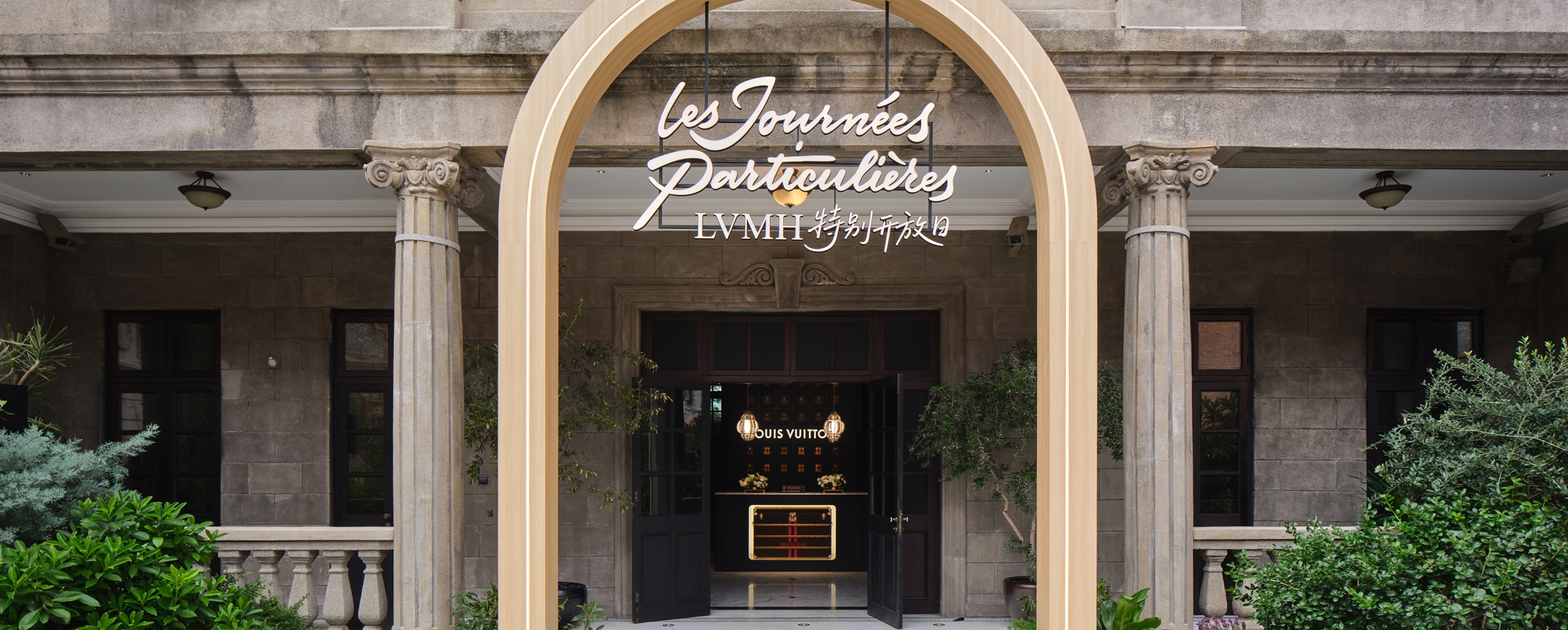
The Bund's First Note Sounds Again: Gutzlaff Signal Tower Reopens to the Public
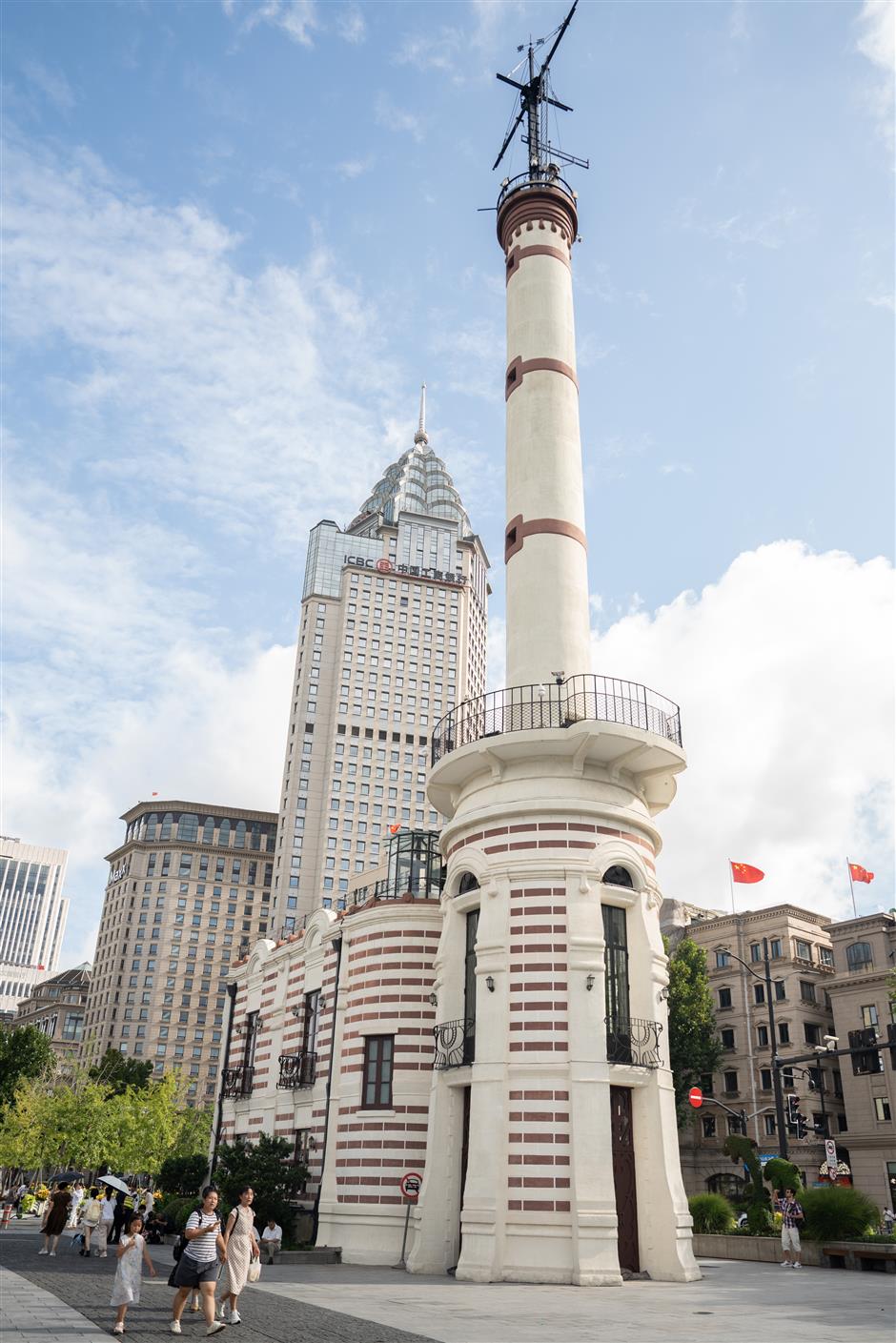
"The Gutzlaff Signal Tower is like the first note of the Bund symphony," says Wu Jiang, a professor at Tongji University.
The Gutzlaff Signal Tower, named after German surveyor and missionary Karl Friedrich August Gutzlaff (1803–1851), has witnessed nearly 150 years of the Bund's evolution. It reopened recently.
Built in 1884 in the former French Bund area, it was used to broadcast weather forecasts from the Xujiahui Observatory.
The observatory, established by the French in 1872, was one of the most well-known observatories in the Far East and remains operational today.
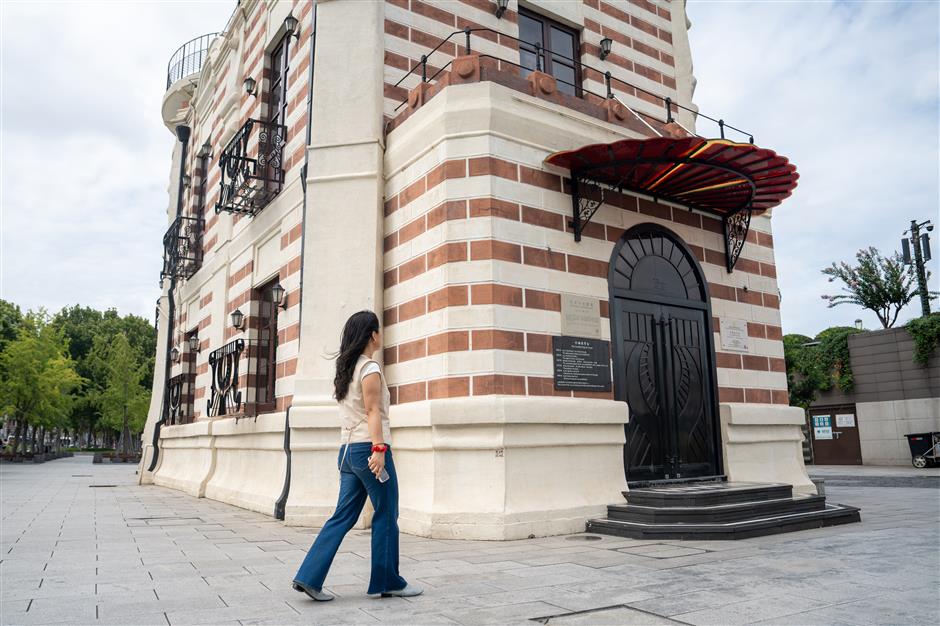
The tower, located at the intersection of the Bund and Yang Ching Bang 洋泾浜 (now Yan'an Road E.), served a dual purpose: it was a timekeeper as well.
It switched to flash signals at 9pm in 1909 after reporting time daily at noon. After 1914, it adopted a new method for reporting the time.
In Chen Boxi's 1924 book "A Comprehensive View of Shanghai Anecdotes," the big iron ball was lifted to half the pole's height at 11:45am, peaked at 11:50am, and fell at 11:55am. It was raised again and fell at noon.
This system allowed sailors to prepare and adjust their navigation clocks accurately.
London's Greenwich Observatory first employed this advanced method in 1833, followed by Japan's Yokohama, Kobe, and other port cities.
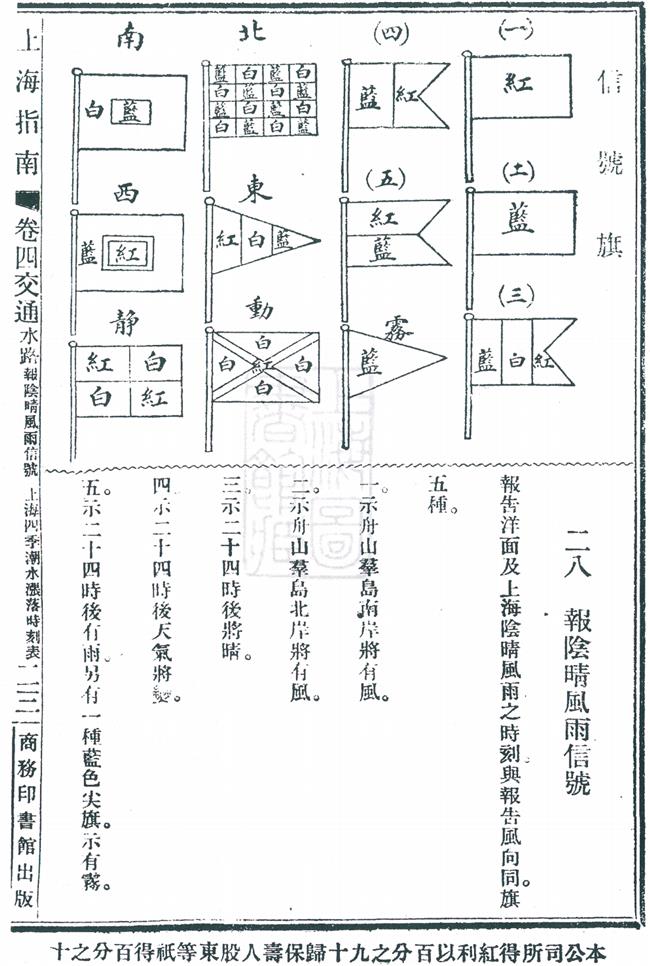
The tower also used meteorological flags to indicate wind speed and direction. The 1908 edition of the "Shanghai Guide" included a complete set of meteorological flags in all shapes and colors, along with their implications.
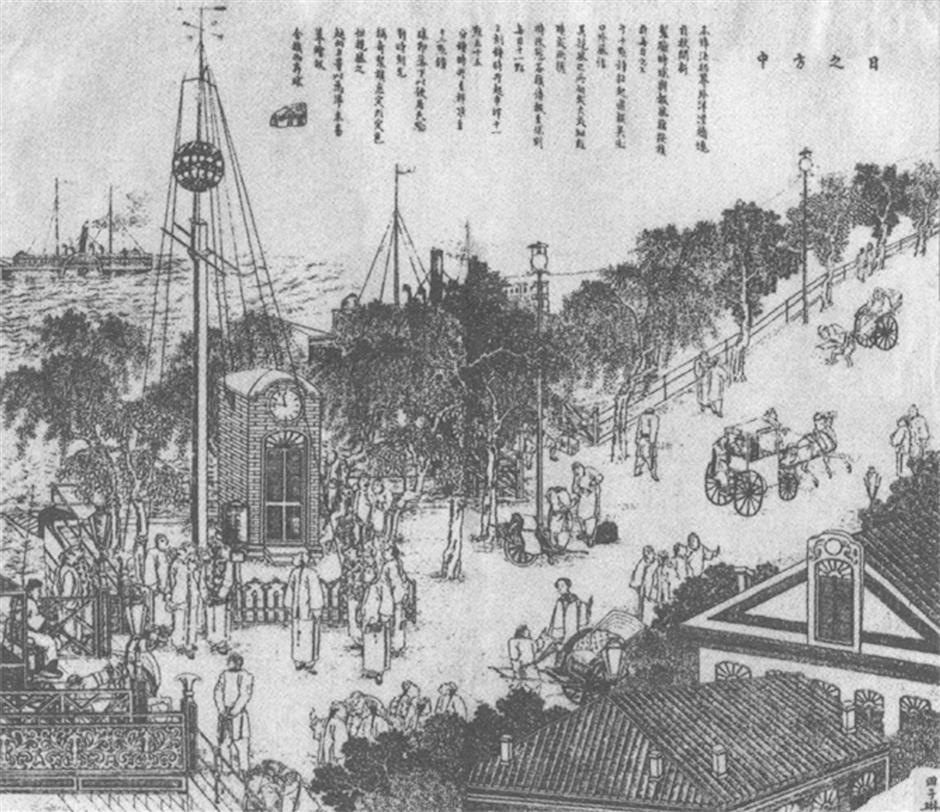
Historian Wangqian Guozhong admires the tower's scientific, direct weather and time information. Due to its height, it was easily visible to most downtown residents in Shanghai.
A powerful typhoon struck in the summer of 1906, damaging the pole of the old wooden tower. The Xujiahui Observatory undertook repairs using bricks and concrete.
A year later, the tower was rebuilt as a 50-meter structure made of concrete and steel.
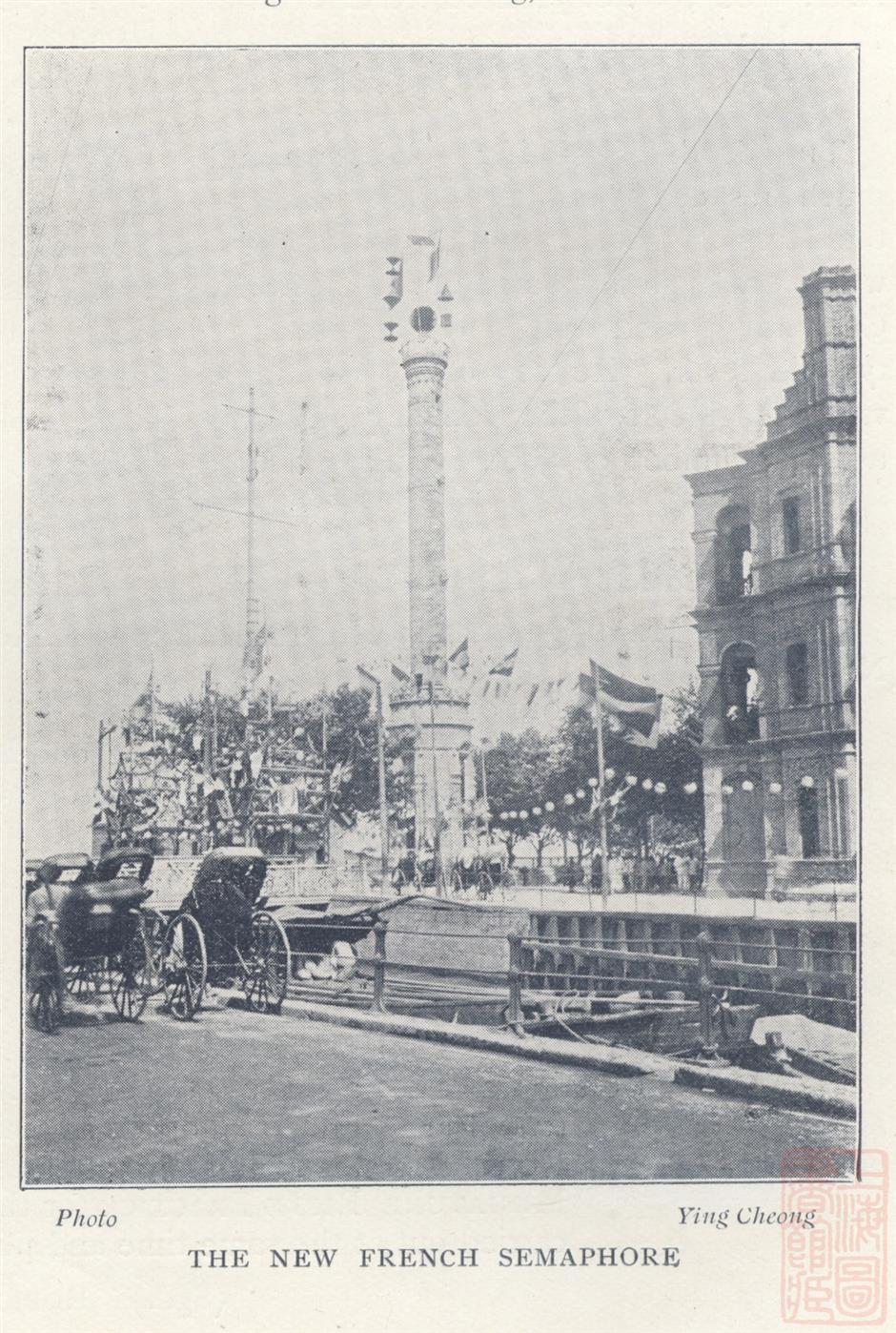
A podium was added to the tower in 1927. Until then, the tower looked almost the same.
The signal tower was moved 20 meters southeast when the Bund was renovated in 1993.
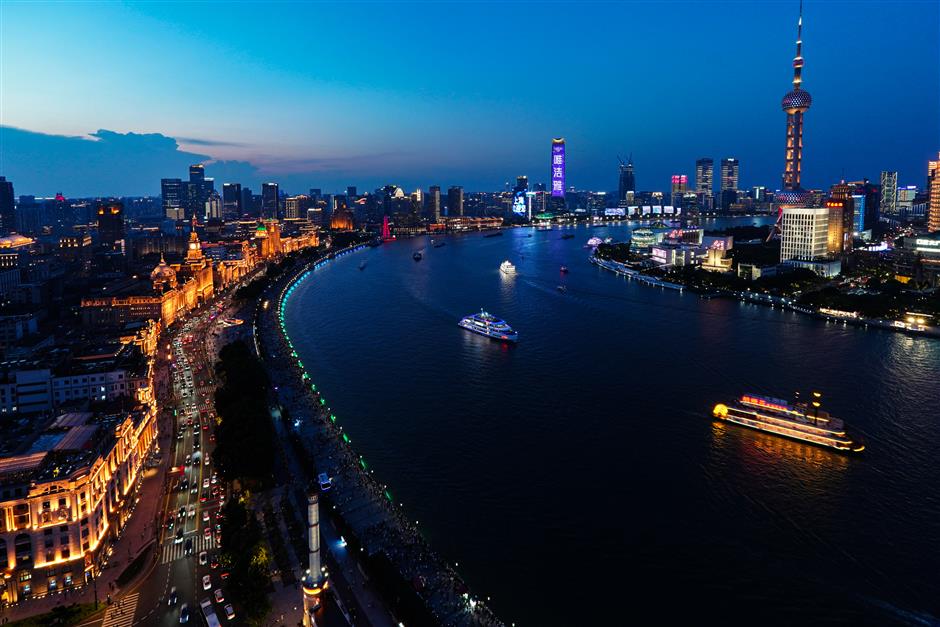
Professor Wu says the perfect silhouette of the 1.5-kilometer-long Bund is like a beautiful symphony, with the former HSBC Building (No. 12) and the Customs House (No. 13) as the first climax and the Fairmont Peace Hotel (No. 20) and the Bank of China (No. 23) as the second.
"The nice ending is Broadway Mansion fronting the Huangpu River," he adds.
Well, all starts from the first note.
If you go:
Address: 1A Zhongshan Road E2
Venue: Ground and first floors open to the public as tourism and cultural-creative spaces
Transport: Take Metro 10 or 14 to Yuyuan Garden Station, then walk to the Bund after exiting the station.
Tips: From the signal tower, look across the river at Lujiazui's futuristic skyscrapers. Set the other bookend at the Waibaidu Bridge and start or end your Bund walk at the Gutzlaff Signal Tower. Over a dozen historic buildings, including the elevated viewing platform, line the Bund promenade between these two landmarks.
Enjoy a leisurely walk with photo stops in between.
Editor: Shi Jingyun
In Case You Missed It...

 Oct 17, 2026