[Weather] Cute Name, Fierce Bite: Shanghai Braces for Dolphin Impact
![[Weather] Cute Name, Fierce Bite: Shanghai Braces for Dolphin Impact](https://obj.shine.cn/files/2026/08/07/2af37943-27c3-4df8-bfa4-3f36ecf9dec7_0.jpg)
Get ready for a rough weekend. Shanghai will see wind strong enough to snap tree branches and heavy rain building from Saturday, as Typhoon Dolphin closes in on the East China coast.
Forecasters expect it to make landfall somewhere between neighboring Zhejiang and northern Fujian provinces between Sunday afternoon and Monday morning, at typhoon or severe typhoon strength, with winds of 35 to 42 meters per second, strong enough to uproot trees and rip roofing off buildings.
How Dolphin will impact Shanghai
Wind will pick up in Shanghai from late Friday, with land gusts reaching force 8 to 9 on the Beaufort scale – strong enough to snap branches – and even stronger near the Yangtze River estuary, the coast and Yangshan Port.
Rain sets in from Saturday to Monday, with totals that could top 100 millimeters. Shanghai's run of hot weather will break as highs fall to 30-35 degrees Celsius starting on Saturday, according to the Shanghai Meteorological Bureau.
The National Meteorological Center renewed its yellow typhoon alert on Friday morning, warning that winds near Dolphin's core are strong enough to flatten weak structures.
The 13th typhoon of the year was centered about 900 kilometers east of Wenzhou, Zhejiang, at 5am on Friday, with sustained winds of 42 meters per second near its core – strong enough to be rated a severe typhoon.
The storm was moving west at 15 to 20 kilometers per hour, with little change in strength expected. It is due to cross the Ryukyu Islands later on Friday, then slow down as it enters the East China Sea and pushes closer to China's coast.
![[Weather] Cute Name, Fierce Bite: Shanghai Braces for Dolphin Impact](https://obj.shine.cn/files/2026/08/07/0e3fd919-5f0e-47bf-ac76-7c900794a312_0.jpg)
Could this storm beat Typhoon Bavi?
Forecasters in Ningbo said Dolphin's wind and rain could be stronger than Typhoon Bavi, which struck Zhejiang last month.
Warm water in the East China Sea and low wind shear are letting the storm hold or even gain strength on approach, a meteorologist said.
Weakening high pressure to the storm's north is allowing its cloud bands to expand, while a steady flow of moisture from the southwest keeps feeding it.
How hard Shanghai gets hit depends on exactly where Dolphin comes ashore, forecasters noted.
A landfall further north and later would keep the storm closer to the city and bring stronger wind and rain; a landfall further south, near northern Fujian, would leave Shanghai with a lighter touch.
After landfall, the storm could loop briefly over central Jiangnan before affecting Hubei and Hunan provinces, or turn northwest toward Jiangsu, Anhui, Shandong, and Henan provinces as well as the Beijing-Tianjin-Hebei region – a choice that will also decide whether the north sees extreme rainfall.
Transportation and safety
Shanghai Passenger Ship Co said all its ferry routes, except the Changheng cross-river line, were suspending sailings one by one starting on Friday morning, with no restart date given. The Huangpu River ferry services have not been affected yet.
Passengers can call the hotline at 6969 3666 to check whether a specific sailing is running before heading to the dock.
Shanghai's four coastal and riverside districts – Jinshan, Pudong, Chongming and Fengxian – issued blue typhoon alerts on Friday morning, warning residents that gusts of force 8 or higher would arrive from late on Friday into Saturday.
![[Weather] Cute Name, Fierce Bite: Shanghai Braces for Dolphin Impact](https://obj.shine.cn/files/2026/08/07/1ddad728-64fc-489a-a49b-f95c91326b74_0.jpg)
![[Weather] Cute Name, Fierce Bite: Shanghai Braces for Dolphin Impact](https://obj.shine.cn/files/2026/08/07/663757e7-668f-4e29-9932-ea76b2ff84be_0.png)
Fun facts
🐬 Why would anyone name a storm after a cute dolphin?
The name Dolphin was contributed by Hong Kong. It refers to the Chinese white dolphin (白海豚 Sousa chinensis) that lives in local waters – a beloved city mascot and a protected species often called the "giant panda of the sea."
Here's a fun twist: "Dolphin" is actually a replacement name. Hong Kong's original pick was "Hin-hin" (欣欣), but it was dropped for lacking local character. "Dolphin" stepped in and now cycles through the official list for good.
The Chinese white dolphin isn't white at all – it's pink. These whales turn rosy as they get older, thanks to blood vessels near the skin. So a storm named after a pink, smiling dolphin peaked at a ferocious 65m/s – super-typhoon strength – even though it's now a 42m/s severe typhoon as it closes in.
⚠️ Don't be fooled by the cute name. Typhoon names are just labels – often animals or flowers – and have nothing to do with how dangerous the storm is. Dolphin exploded from a tropical storm into a super typhoon within 24 hours. Always check the live alert, not the name.
🗺️ Farthest east ever?
Dolphin was named on July 27 about 4,480 km east-southeast of Tokyo, practically on the International Date Line. China's National Meteorological Center expects it to become the farthest-east-forming typhoon to ever make landfall in China since 1951 – breaking the record held by 2018's Typhoon Mangkhut.
🏃 The typhoon that ran a marathon
Since July 27, Dolphin has crawled west at a steady 15-20 km/h and traveled over 5,000km – roughly the length of China's longest highway, or farther than Harbin, northeastern Heilongjiang Province, is from Sanya, southern Hainan Province. Chinese media call it the "marathon runner" of typhoons.
And it's been busy. The storm rebuilt its eye five times – meteorologists compare it to a crab shedding its shell – which made its strength rise and fall along the way. It also ballooned into a giant: its clouds once stretched more than 1,000km wide, wide enough to cover all three northeastern provinces.
Dolphin wasn't supposed to come anywhere near us. Early forecasts had it hitting Japan or curving north into the open ocean. Then it sharply turned west and aimed at East China instead. The Zhejiang meteorological service even made an explainer on "why storm tracks change their minds." That plot twist is a big reason people are watching.
🌧️ The 'AC effect'
The "air-conditioner" effect: Before the rain hits, Dolphin's outer dry air blows hot wind down onto East China, like an AC unit's exhaust. So Shanghai actually feels more sticky and hot first – then cools into the low-to-mid 30s°C once the storm's rain bands arrive. Hot now, relief later.
![[Weather] Cute Name, Fierce Bite: Shanghai Braces for Dolphin Impact](https://obj.shine.cn/files/2026/08/07/d08b83a6-cf61-4814-9f11-0a191c840561_0.jpg)
Editor: Xu Qing
In Case You Missed It...

 Sep 23, 2026
![[Inside China] Did You Know Xuhui Has a Center to Help Foreign Businesses?](https://obj.shine.cn/files/2026/09/20/e7485259-6a51-478d-93dd-13a6c1691cb9_0.jpg)

Popular Reads

Xi Arrives in Washington for State Visit, Greeted by Trump at Airport
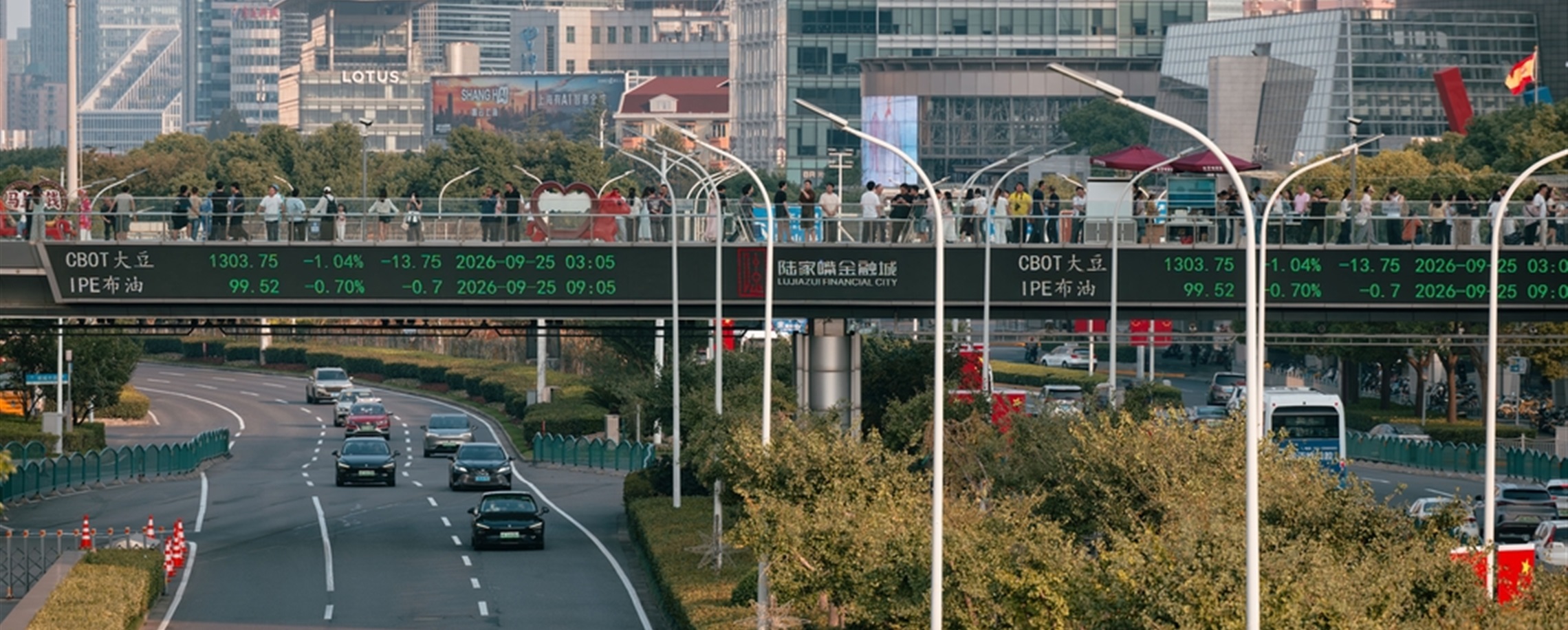
Chinese Stock Markets Slip as Investors Holiday-Proof Their Investments

WorldSkills Competition Raises the Visibility and Value of Vocational Skills, Benefiting Students, Industries