Shanghai Launches Anti-mosquito Campaign
The Chinese mainland has seen a doubling of dengue fever cases as of April 23, with the vast majority of infections being imported, predominantly from the Western Pacific region and Southeast Asia.
Guangdong, Zhejiang, Sichuan, Jiangsu, and Fujian provinces have the most cases, Shanghai health officials said on Wednesday. A citywide mosquito-control campaign has been launched to prevent mosquito-borne diseases.
Shanghai confirmed 10 dengue cases on Tuesday, up 7.14 percent year-over-year. Shanghai Center for Disease Control and Prevention officials said all cases came from Indonesia, Malaysia, the Maldives, Sri Lanka, the Philippines, and Vietnam.
The city confirmed two cases of chikungunya fever from Seychelles and Indonesia.
The World Health Organization has flagged four major mosquito-borne diseases that require heightened vigilance: dengue, chikungunya, yellow fever, and Zika. Since 2025, dengue prevalence has remained high worldwide, according to Liu Hongxia, director of vector control at the Shanghai CDC. Major outbreaks in Southeast and South Asia this year have hampered China's disease control efforts.
Shanghai entered spring earlier than usual this year. Average temperatures in April and May are higher than the annual norm, and rainfall in May is also projected to be above average, creating optimal breeding conditions for mosquitoes.
Peng Li, vice director of the Shanghai Climate Center
Shanghai mosquito-borne infections are increasing due to global disease prevalence and rising temperatures.
"Shanghai entered spring earlier than usual this year. Average temperatures in April and May are higher than the annual norm, and rainfall in May is also projected to be above average – creating optimal breeding conditions for mosquitoes," explained Peng Li, vice director of the Shanghai Climate Center.
The mid-May to November municipal mosquito control initiative will target medical facilities, residential communities, schools, nursing homes, transportation hubs, sports venues, and public green spaces.
Gao Jingrong of the Shanghai Health Promotion Center advised residents to clean up stagnant water at home and help with mosquito control and disinfection. Travelers returning from epidemic-hit areas who develop symptoms such as fever, rashes, or joint pain are advised to seek medical attention promptly and proactively disclose their recent travel histories to medical staff.
Officials stated that health authorities will organize a series of health education activities to disseminate professional knowledge and standardized mosquito-control prevention measures.
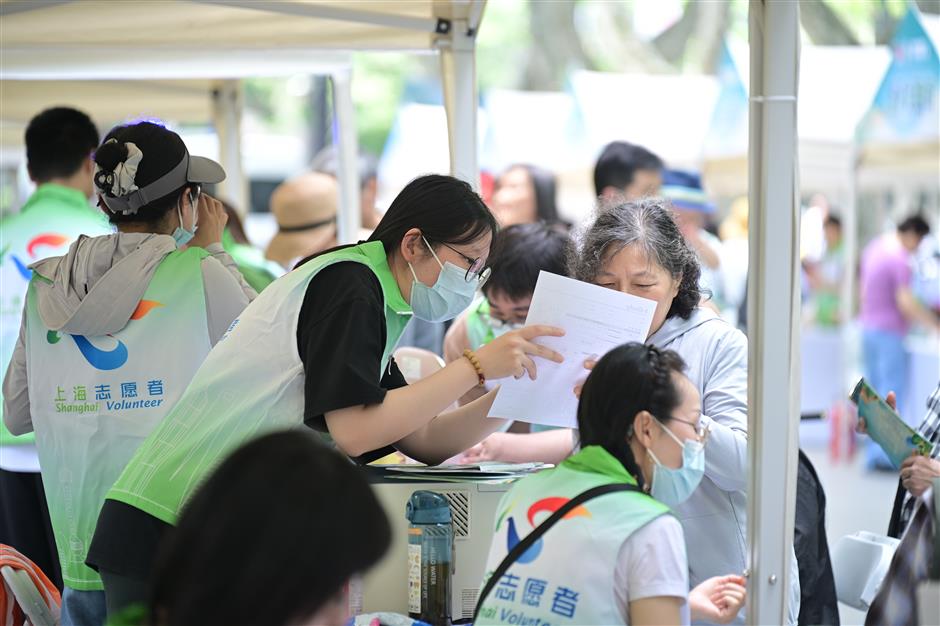
At a recent public health event held in Xiangyang Park, health officials and volunteers educated residents on healthy lifestyles, proper hygiene practices, vector control, and chronic disease management. Participants gained practical health knowledge through interactive games and themed activities.
Editor: Fu Rong