Daily Buzz: 25 March 2026
Top News
Iran War Continues Amid Confusing Rhetoric About Ending It
President Donald Trump said Iran is "talking sense" in backdoor negotiations and has agreed to renounce development of nuclear weapons. The New York Times reported that Washington has sent Iran a 15-point plan to end the war through Pakistan, but no details were revealed and it's unclear whether Israel is on board. Pakistan has offered to host formal peace talks even as the nation itself is engaged in a cross-border conflict with neighbor Afghanistan.
Trump meanwhile declared "we've won this war," before dispatching more than 1,000 soldiers from an airborne assault unit to the Gulf region. Iran vowed to fight on until "complete victory" after calling claims of talks underway as "fake news." An Israeli official told CNN that a deal with Iran "does not appear to be tangible right now." German President Frank-Walter Steinmeier called the war a "disastrous mistake" in a blunt rebuke of Trump, and China said the US was the one that started the war, so it's up to Washington to end what it called a "vicious cycle triggered by use of force. Qatar, which suffered major damage at its sprawling natural gas processing hub from Iranian strikes last week, called for a diplomatic end to the war and said total annihilation of Iran is not an option.
Israel continued heavy attacks on Iran and its ally Hezbollah in Lebanon, blowing up bridges in southern Lebanon amid plans to seize large swathes of territory for a security buffer zone. Iran retaliated with missile attacks across Israel, damaging buildings in Tel Aviv.
With such confusion afoot, investors chose to watch what countries are doing on the ground instead of what they are saying. Benchmark Brent crude oil, which has risen 45 percent since the start of the war, climbed 1 percent in New York trading to sit above US$100 again, and major US stock indexes fell.
Russia Launches Biggest 24-Hour Drone Attack on Ukraine
Russia launched the largest aerial attack on Ukraine over a 24-hour period since the war began, hitting cities across the country with 948 drones, the BBC reported. Five people were killed and dozens injured. Unusually, the barrage included daytime strikes, involving 556 drones. A 16th century, UN-listed cultural heritage monastery in the western city of Lviv was damaged, and a maternity hospital in the neighboring Ivano-Frankivsk region was also hit. Ukrainian President Volodymyr Zelensky said the scale of the attacks "clearly shows that Russia has no intention of really ending this war." The war in Ukraine has been largely pre-empted in global headlines by the war in the Middle East.
Italian Voters Reject Judiciary Reforms
Italian voters handed right-wing Prime Minister Giorgia Meloni a crushing defeat, with 54 percent rejecting her judicial reforms in a referendum. Her overhaul of the judiciary was aimed at eliminating what she called its left-wing bias. Pundits said the vote shows that Meloni is more politically vulnerable than believed ahead of general elections next year.
Top Business
Xiaomi Profit Falls 27 Percent on Smartphone Sales Decline
Xiaomi, an electric car and smartphone maker, reported profit for the fourth quarter fell 27 percent to 6.5 billion yuan (US$940 million) to the lowest quarterly figure in a year. Revenue rose 7.3 percent to a record 116.9 billion yuan. Revenue from smartphones, which remains its biggest business segment, decreased 13.6 percent to 44.3 billion yuan, reflecting an industry bitten by rising prices for memory chips. The Beijing-based company, sometimes called the "Apple of China," remained the world's third-largest global phone vendor after Apple and Samsung. Smartphone shipments decreased 11.6 percent to 37.7 million, and the average phone price slipped 2.2 percent. The car segment was the star engine in earnings, but growth in vehicle shipments slowed at the end of the year amid a highly competitive Chinese mainland market and a slowdown in industry-wide sales. Revenue surged 122 percent to 36.3 billion yuan on a doubling of deliveries to 145,115 vehicles. However, shipment growth cooled from a high of 300 percent last April. The company's star performer was the SU7 model SUV, which was upgraded this year. For the full year, the company reported revenue rose 25 percent to 457.3 billion yuan and profit surged 76 percent to 41.3 billion yuan. The company delivered 411,082 vehicles last year. It has been aggressively expanding into AI, with three MiMo large-language models and its new MiClaw smartphone. Xiaomi said research and development spending in 2025 rose 3.8 percent 33.1 billion yuan. It earlier announced plans to spend more than 60 billion yuan on artificial intelligence over the coming three years. Xiaomi shares have dropped nearly 19 percent this year.
SenseTime Narrows Loss, Beating Estimates
SenseTime, a Chinese AI software company involved in facial recognition, medical image and voice analysis, autonomous driving technology and remote sensing, narrowed its loss in 2025 by 59 percent from a year earlier to 1.8 billion yuan (US$245 million), with revenue surging 33 percent to 5 billion yuan. The earnings beat analysts' forecasts. The "generative AI" segment now accounts for nearly 80 percent of revenue, effectively replacing "smart city" and "visual AI" as the core business. The company said earnings before interest, taxes, depreciation and amortization (EBITA) in the second half of the year turned positive for the first time since the company was listed in Hong Kong in 2021. EBITA is often used as a measure of core profitability by tech companies with high researching and development costs. SenseTime said it will launch a new model based on the second-generation NEO framework, with much greater efficiency, in the second quarter this year. SenseTime has said it is aligning its business strategy with the central government's "AI Plus" initiative, which aims for adoption of AI devices to reach 90 percent by 2030.
Mixue Profit Jumps, Tea Sales Bubble
Mixue, China's largest bubble tea chain, reported 2025 profit jumped 33 percent to 5.9 billion yuan (US$859 million) on a 35 percent gain in revenue to 32.7 billion yuan. The company, founded in 1997, has built a multinational network based on low prices for milk tea, fruit drinks and ice cream. At the end of the year, it had 60,000 outlets in China and overseas, including the first US shops, opened in New York and Hollywood. Nearly all its shops run on a franchise basis, with Mixue's revenue largely coming from supplying ingredients, equipment and packaging to franchisees. Mixue raised HK$3.5 billion (US$444 million) in an initial public offering in Hong Kong last year.
Alibaba Introduces New AI Chip
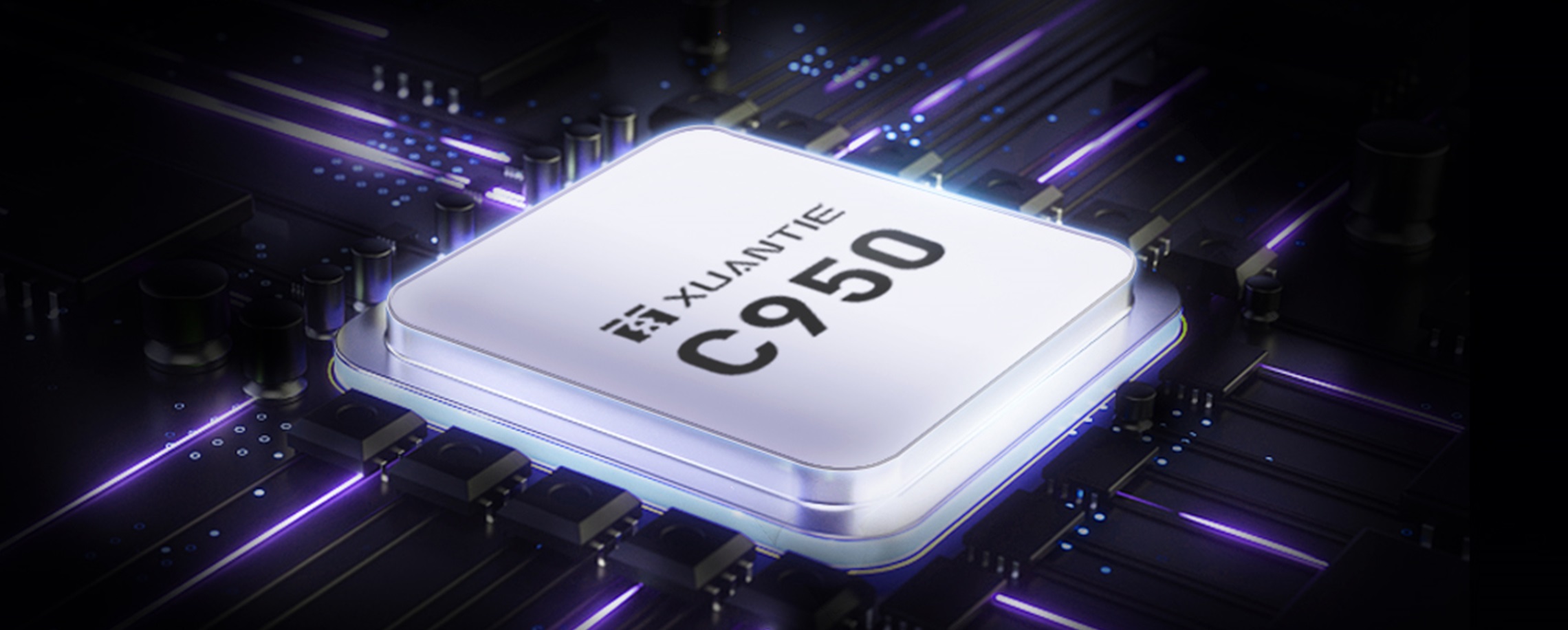
Alibaba Group is launching a new central processing unit chip, the XuanTie C950, for AI agent and inference computing, as part of its drive into artificial intelligence. The Hangzhou-based company released the new 5-nanometer process at an internal meeting on Tuesday, according to local media. The new chip, built on RISC-V chip architecture and designed to allow customers to tailor specific inferencing in cloud computing, was hailed by the company as the "highest performing RISC-V CPU in the world." Last week, Chief Executive Officer Eddie Wu said the company is aiming at becoming an all-stack AI technology provider, including hardware. The company's ambitions dovetail with China's national drive to become self-sufficient in advanced technology.
Economy & Markets
China's Currency Strengthens This Week
The Chinese yuan has strengthened this week, trading below the level of 7 yuan to the US dollar. The government sets a daily 2 percent trading range for the currency, which was trading at 6.9041 against the dollar on Monday and 6.8927 on Tuesday. Zhu Min, former deputy governor of the People's Bank of China and former deputy managing director of the International Monetary Fund, said a stronger domestic economy requires a stronger yuan as China seeks to increase its international use. He told the China Development Forum this week that global use of the currency is still relatively low and doesn't match China's position as the world's second-largest economy. The IMF said last month that the yuan is undervalued, and investment bank Barclays said it doesn't expect the People's Bank of China to step in just now to stem its appreciation.
China Auto Dealers Surpass 50 Percent Mark in Losses
More than half of auto dealers in China ended in the red last year as intense competition in the domestic market lowered prices and consumer spending weakened, Yicai reported, citing a survey by the China Automotive Dealers Association. Fifty-six percent of car dealers reported losses, about 24 percent said they ended in the black and 21 percent said they broke even. As new car sales slowed, after-sales services formed an increasing driver of earnings.
China Curbs Gasoline, Diesel Prices
China imposed temporary controls on retail prices of gasoline and diesel after global oil prices rose on the Middle East war. While prices were set to rise by over 2,100 yuan (US$304) per ton, actual increases will be capped at about 1,160 yuan for gasoline and 1,115 yuan for diesel, saving drivers around up to 50 yuan per tank.
Apollo Private Equity Fund Limits Redemptions
US asset manager Apollo's flagship private credit fund, Apollo Debt Solutions, has advised investors that it will limit withdrawals this quarter to about 45 percent of requests, the latest sign of stress in the private equity market, CNBC reported. In a filing with the Securities and Exchange Commission, Apollo Debt Solutions said that it received redemption requests equaling 11.2 percent of shares outstanding in the first quarter, exceeding the 5 percent quarterly cap the fund allows. The fund had net asset value of US$15.1 billion at the February. Concerns about the private equity sector have largely revolved around loans to software firms. About 12 percent of Apollo Debt's loans are in that sector.
Japan's Inflation Eases on Food, Energy Price Declines
Japan's headline inflation in February abated for a fourth straight month to 1.3 percent as food and energy prices eased. The rate cooled from 1.5 percent in January and was the lowest reading since March 2022. Energy prices plunged 9.1 percent after the government initiated subsidies on electricity and removed the gasoline tax surcharge. Excluding the price of volatile items like fresh vegetables, food inflation slowed to 5.7 percent from 6.2 percent in January. A separate index stripping away fresh food and fuel prices, which is closely watched by the central bank, rose 2.5 percent in February.
Corporate
China Telecom Ekes Out Profit on Flat Revenue
China Telecom, the Chinese mainland's second largest mobile carrier, said 2025 operating profit edged up 0.5 percent from a year earlier to 33.2 billion yuan (US$4.8 billion) on flat revenue of 529.6 billion yuan, signaling near saturation in the market. The company said mobile subscribers totaled 439 million, and 5G network subscriber penetration rate was 69 percent. Revenue from mobile communications rose 1 percent, revenue from wireline and its smart family service edged up 0.2 percent, and revenue from industrial digitalization services rose 0.5 percent. China Telecom said it is escalating the position as a leading AI service provider and taking token services as the main line of business. In one sign of that, the company said it has leveraged its cloud system to achieve one-click, rapid deployment of the OpenClaw AI agent app this month. The company also noted that the value-added tax on its handset data, SMS, multimedia messaging and internet broadband access services has gone up to 9 percent from 6 percent, effective January 1.
Haidilao Posts Lower Profit as Costs Rise
Haidilao International, China's largest hot pot restaurant chain, said 2025 profit fell 14 percent to 4 billion yuan (US$586 million) on rising costs, and revenue crept up 1 percent to 43.3 billion yuan. At the end of the year, the company had about 1,135 restaurants in the Chinese mainland, Hong Kong and Macau, in addition to 248 overseas outlets. In recent years, the company has streamlined operations with automated kitchens and robotic chefs. Last year, Haidilao suffered negative press after a video of two drunken teenagers urinating in broth at one of its Shanghai branches went viral. Investors will be watching to see the company's growth plans after founder Zhang Yong returned to the company as chief executive in in January.
Nongfu Spring Reports Record Yearly Revenue
Nongfu Spring, China's largest packaged water company, reported 2025 revenue increased 22.5 percent from a year earlier to a record 52.5 billion yuan (US$7.6 billion) despite slower consumer spending on the mainland. Profit jumped 31 percent to 15.8 billion yuan. The company is also a top producer of bottled tea, juices and sports drinks.
ByteDance Reported Near to Selling Game Unit Moonton
Chinese tech giant ByteDance, operator of TikTok, is in the process of selling its game developer Moonton Technology to Saudi Arabia's Savvy Games Group, Yicai reported. Shanghai-based Moonton, the studio behind "Mobile Legends: Bang Bang," hasn't yet confirmed the deal publicly. However, an internal letter dated March 20 says completion of the transactions is expected soon. No financial details have been disclosed, but Chinese media say it could exceed US$6 billion. ByteDance acquired Moonton in 2021 for a reported US$4 billion.
Zhongxi Liangshan Mine Raises Rare Earth Reserves
The Maoniuping mine in Sichuan Province, operated by Zhongxi Liangshan Rare Earths, has increased its proven rare earth reserves to 9.68 million tons after recent explorations. It now ranks as the world's second-largest holder of rare earth minerals after the Inner Mongolian Bayon Obo mine, according to China's Ministry of Natural Resources. Maoniuping first began operations in the 1980s. Zhongxi is a subsidiary of the China Rare Earths Group.
Editor: Yao Minji
In Case You Missed It...
 Mar 24, 2026


![[Quick News] Join Us for the Opening of Qingpu CNS Community Hub](https://obj.shine.cn/files/2026/03/24/dcdb2733-42e0-4c87-8a9d-4c22ff5edf87_0.jpg)
![[China Tech] Rare Endometriosis on Fingers Treated with Western and TCM Therapy](https://obj.shine.cn/files/2026/03/23/d76e3c6a-aa7a-4b53-aece-0b0d6c38141c_0.jpg)