[Current Trends] What the New York Times Sees in Shanghai – and What It Doesn't
![[Current Trends] What the New York Times Sees in Shanghai – and What It Doesn't](https://obj.shine.cn/files/2026/03/31/0b76f3d6-1612-4cd8-ab50-b703a287e49b_0.png)
A good many of you by now have seen the New York Times' 36 Hours in Shanghai article. It tickles a bit, not so unlike when you see a dear friend get attention that they certainly deserve.
What moved me, however, was a strange sense of nostalgic familiarity. We've seen something like this before, haven't we? I've been in Shanghai close to 20 years now, and the nostalgia hit me in the same way it did when the NYT did a 36-hour rundown of Shanghai, not once, but twice before, in 2013 and 2017.
I went back and read the two earlier iterations, both written by Justin Bergman who, for a long spell, was Monocle's only China correspondent. Decent fellow as I've heard. And what I saw were time capsules across 16 years, 1,900-word (give or take) snapshots of the city and its utterly inevitable and rapid transformation.
Let's talk about how the outside world has gotten to see Shanghai over the years in one of the world's most preeminent newspapers. Those of you who have been here during this time might as well grab a cup of tea for a trip down memory lane.
![[Current Trends] What the New York Times Sees in Shanghai – and What It Doesn't](https://obj.shine.cn/files/2026/03/31/33e71945-53f2-4c4d-b85a-8c23ab225e21_0.png)
In 2013… Shanghai is a construction site with ambition
Within the opening paragraph of the 2013 NYT piece, you are immediately transported to what life was like back then. At 32 years old, I just started a managing director role. Unusual for a millennial at that age, but Shanghai was a career accelerator for many expats. It was around this time that going to work was exciting, despite the hangovers, and the only things that really ever made you curse life were the incessant drilling that started at 8am on any given morning (INCLUDING weekends by jove!). The air was dusty, and if you lived on higher floors, you could see a skyline was riddled with construction cranes.
Back then, you never really imagined what the 2013 article describes as: Shanghai is remaking itself to become a "City of the Future."
Before Shanghai was the City of the Future, it was the City of Late Nights and Constant Drilling
There was a momentum though that kept people here. Astonishing career growth, a burgeoning dining scene (Mr Bergman was right to mention Paul Pairet's Mr. & Mrs. Bund), and my goodness the NIGHTLIFE. Ohhhhh Shanghai, you had such a wild side, didn't you! How different those party days were. Heaven forbid I get into detail, but one wry interjection I can offer is a small detail that caught my eye in the 2013 piece: ( "...many local restaurants are now taking a healthier approach to cooking, such as Jian Guo 328... (The Taiwan owner also bans smoking)."
That parenthetical hit a note of nostalgia of when most of Shanghai's establishments were "lit up" in a haze that stuck to your clothes until you next washed them. Which didn't make too much of a difference, because back then, unless you used a very fragrant fabric softener, your clothes would end up smelling like "the smoky version" of Shanghai we all once knew, back when the pollution would reach well into the 300s and 400s on local air quality indexes. Shanghai "banned" smoking in 2010 in certain areas, but it took some time before that really seeped in. It wasn't until 2016 that smoking everywhere indoors was completely banned, and as a result, Shanghai's smoking rate has since fallen to an all-time low.
People arriving in Shanghai now are bedazzled by eight-floor club complexes. Meanwhile, back then we were getting our night started at Mr. & Mrs. Bund's late-night 200-yuan (US$29) menus (bring those back!), heading upstairs to Bar Rouge, then ending up at The Apartment or Shelter for a bit, and finally landing at Amber Lounge, which played absolutely sick Slavic deep house that left you as surprised as a vampire when you finally decided to leave and were nearly blinded by the 11am brunch sunlight.
Then you'd start the next day of your weekend at ol' Yongkang Road. The 2013 piece landed this street in the NYT:
"For a night spot with more bounce, pull up a stool outside one of the shoe-box bars on Yongkang Road – a former vegetable market that has become a raucous bar street popular with the fixed-gear-bike-riding expat community."
In my 30s, I couldn't understand why Yongkang Road had to transform into the sanitized and tame version it is today. In my 40s, however, I empathize with those poor upstairs neighbors who just wanted a good night's sleep.
Oh, the Bund was 'new-ish' back then!
The Bund in 2013 is endearingly referred to as something almost near-new, given its recent renovation for the 2010 World Expo. The wide promenade and gold-gilded lights that make for that now iconic Bund photo-op were something expats were enjoying with wide-eyed wonder, one of the most dazzling uplifts the city had seen. Now… it's Shanghai's most common glamor.
![[Current Trends] What the New York Times Sees in Shanghai – and What It Doesn't](https://obj.shine.cn/files/2026/03/31/db8cc095-57c8-4418-8b5f-d9ba2078e498_0.jpg)
Shanghai: an art start-up
"Not content with being merely a financial hub, the city has been on a museum building spree in recent years to establish itself as a global arts center, too."
Art aficionados will startle you with their declarations of how far the city has come. The Power Station of Art was a relatively new fixture at that time, but was just the beginning of an evolution. Even M50 was hardly what it is today. Shanghai's art scene has exploded to the point that we've now needed to create a dedicated guide to the city's four established art districts.
![[Current Trends] What the New York Times Sees in Shanghai – and What It Doesn't](https://obj.shine.cn/files/2026/03/31/008fadf4-902c-4ad0-805d-c5d4a877705c_0.png)
Moving into 2017…
If in 2013 Shanghai was the rapid builder, the place of ambition, the place casting its vision for 2020... for Bergman, Shanghai in 2017, just four short years later, is a place flush with cash and Ferraris. Thinking back to that time, I can see it.
We still had M on the Bund and Glamour Bar. Bar Rouge, M1nt, MYST, Le Baron and Celia sustained Shanghai into the deep night. And Shanghai's hospitality scene expanded and became part of the city's social fabric with The Edition, Sukhothai and W Shanghai opening in rapid succession. The W Hotel carved itself into its own little kingdom on the North Bund, so much so that it landed a mention in the NYT back then: "Another recent arrival, the W Shanghai has a plum location just north of the Bund, providing stunning views of the Pudong skyline from the outdoor pool deck."
Back then, W Shanghai's GM Christian Humbert (and his stellar opening team) used his sorcery to make the W very much a "third place" for a lot of people. Whether it was the fashionable pool parties or the rave-adjacent outdoor festivals, people were always there, brunch was no exception, and indeed a highlight. Strangely, the W has gone quiet these past few years, fading into the background with The Shanghai Edition and Bellagio stepping in to draw crowds, albeit solely in the nightlife sphere. Many are wondering if the new Alila downtown will step in as a third-place destination for the international crowd, given its central location and nice open-air terraces.
But Shanghai doesn't really need "that one cool place" anymore.
There are many cool places to be in Shanghai now, and many of them are even public spaces. The Expo Park is a fantastic place to spend a day with a friend and a bottle of wine in hand not just as an ordinary park, but as a marvel of human engineering (the park was once dirty, industrial land). The newly transformed West Bund, which Bergman mentioned in 2017, is filled with young Shanghainese weaving in and out of shops, cafés and riverside restaurants, frequently packed now, whereas back then it was close to a ghost town, still very much under development. Head further south along the West Bund to the Gate M West Bund Dream Center, and you're walking among well-to-do millennials and Gen Z, mostly employed by China's big three tech firms (Alibaba, Tencent and Baidu), all of which have headquarters in the adjacent, newly built central business district.
The newly build South Bund Central Business District blends into the Gate M mall which is an astonishing transformation of waterfront industrial infrastructure into a cosmopolitan open-air commercial space.
But it's not just "Bund areas" that have seen overhaul and development. Since 2017, Bergman missed the openings of:
- Taikoo Hui: the mall adjacent to Louis Vuitton's downtown flagship, and home to Shanghai's downtown Cheesecake Factory;
- TX Huaihai: That once-tired mall where Windows' scoreboard used to be is now a hub for youth-centered fashion and clubs like the very inclusive Potent Club;
- Shangkang Li: Renovated industrial buildings featuring alleyways of cafes, restaurants and wine bars, as well as Shanghai's beloved skating rink, RIINK;
- Zhangyuan: Shanghai wasn't going to stop at preserving its historical architecture. Zhangyuan came next, with over 170 historic shikumen buildings now, housing mostly luxury brands and definitive fine dining restaurants like Ortensia;
- Columbia Circle, which fully opened in 2023.
There are so many other examples, but I've listed here just the major developments downtown that might be within the typical travel radius of an average visitor.
In 2017... Shanghai had arrived in some ways. The dust had settled, Shanghai was establishing itself as the coffee capital of the world, and it was now a "new world alpha-tiered city."
Back then, many of us thought Shanghai was "peak."
In 2026, The NYT 36 Hours piece sees Shanghai as the future, but misses key elements
It is the 2026 NYT piece that creates a real shift in the mind of this "Shanghai vet." This time, Bergman hands the baton to Erin Vivid Riley, a writer who visits Shanghai often to see family, and whose perspective, while warm and well-researched, is notably that of a frequent visitor rather than someone who has lived it.
The piece positions Shanghai as a place of continual, rapid transformation, a city that now feels closer to science fiction than the construction site of 2013, with roads gone quiet because most vehicles have gone electric, and where navigating daily life to its fullest requires a kind of digital savvy that would have been unimaginable even a decade ago.
A big part of the latest piece is an overview of the apps people should download. While this may feel like regular life for those living here, it is a) unimaginable compared with 2013 Shanghai, where hardly anyone had WeChat yet, and 2017, the earliest years of a fully cashless, super-app society, and b) still unimaginable to large swaths of the developed world. Neither the US nor Europe has Alipay or WeChat equivalents. Elon Musk has been talking about developing a "WeChat-type" app for the US market, but it's doubtful that many Americans, or Europeans for that matter, would trust him with their data, let alone their finances.
Transportation in Shanghai is now both efficient and transformed, up from a dozen Metro lines in 2013 to 21 today. The authors declare that this infrastructure has "made the city more accessible." Shanghai's streets are no longer an affront of high-decibel combustion engines and constant honking, replaced by an almost elegant combination of electric engine hums and stirred air as cars pass by. Many expats now find it ironic that in 2017, getting a Tesla on Didi was considered a rare treat. Now Teslas are more often found in the cheaper ride-hailing tiers, while Chinese brands like BYD and Maxus dominate the premium options.
What is fascinating about the 2026 piece is that nearly the entire curated list of things to do leans fully historical and local, which is where Riley lays the foundation from the opening: "Shanghai is repurposing what's left of its unique architectural heritage into cultural and dining destinations, creating a new dynamism."
And here is where, as a long-timer, I find myself gently raising my hand.
Not seeing Shanghai's amazing work in urban renewal
I couldn't help but be a little irked. Not because the recommendations aren't worthwhile, but because the piece seems to miss two very important cores of Shanghai's identity.
The first is how Shanghai's modernity has begun fusing with its historical past. Take the new South Bund Financial Center, connected to both the West Bund and Gate M mall, where towering new skyscrapers nearly merge with old Bund-side industrial buildings to create a fusion of riverside commercial space and a multi-leveled, memorable outdoor area.
What is a tiny bit mind-boggling is that all three pieces seem to have omitted Xintiandi, one of the first examples of Shanghai's efforts at urban renewal. Back in 2013, that strip was a tough prospect for commercial vendors who kept turning over because it just wasn't that popular. Now it has constant foot traffic and is home to Paul Pairet's casual fine-dining cash cow Polux, a French café with serious pedigree.
This arc will feel familiar to anyone who has been here long enough. A new project opens, nobody's quite sure if it'll stick, and then, quietly, it does. In the private sector, that question always carries some uncertainty (any long-time reader combing through the 2013 or 2017 pieces will notice a fair number of those recommended institutions are no longer around, which says as much about Shanghai's pace as it does about the limits of travel journalism). But public initiatives in this city have a way of finding their potential, even when it's hard to see when they first open. Fun fact: For our Street Chic series, we find ourselves at Xintiandi regularly to capture Shanghai's street fashion, and it never disappoints.
Completely missing Shanghai's internationalism and boundary pushing
What the 2013 and 2017 NYT pieces did well is pay homage to both Shanghai's local tastes and its international ones. Everyone's favorite cabaret and live theater venue, The Pearl, got a mention in 2017 as "the most ribald party in town." We certainly like The Pearl, and it's always a good time, not just for the stage shows but for the joviality of a mixed audience of fun-loving expats and locals intermingling. The 2026 piece has none of that. No international restaurants, no expat venues, nothing that gestures toward the cosmopolitan identity that has defined Shanghai since long before any of us arrived.
![[Current Trends] What the New York Times Sees in Shanghai – and What It Doesn't](https://obj.shine.cn/files/2026/03/31/e616ee23-b236-4e12-8a59-9ec656c89629_0.jpg)
There are plenty of cities in China where you'll find only local Chinese options, but Shanghai occupies a different category entirely. It is to China what London is to England, Paris to France, New York to the United States: the city where the world shows up. Internationalism has been part of this city's identity for a very long time, from its French, British and American architecture to being home to the largest international resident population in the country.
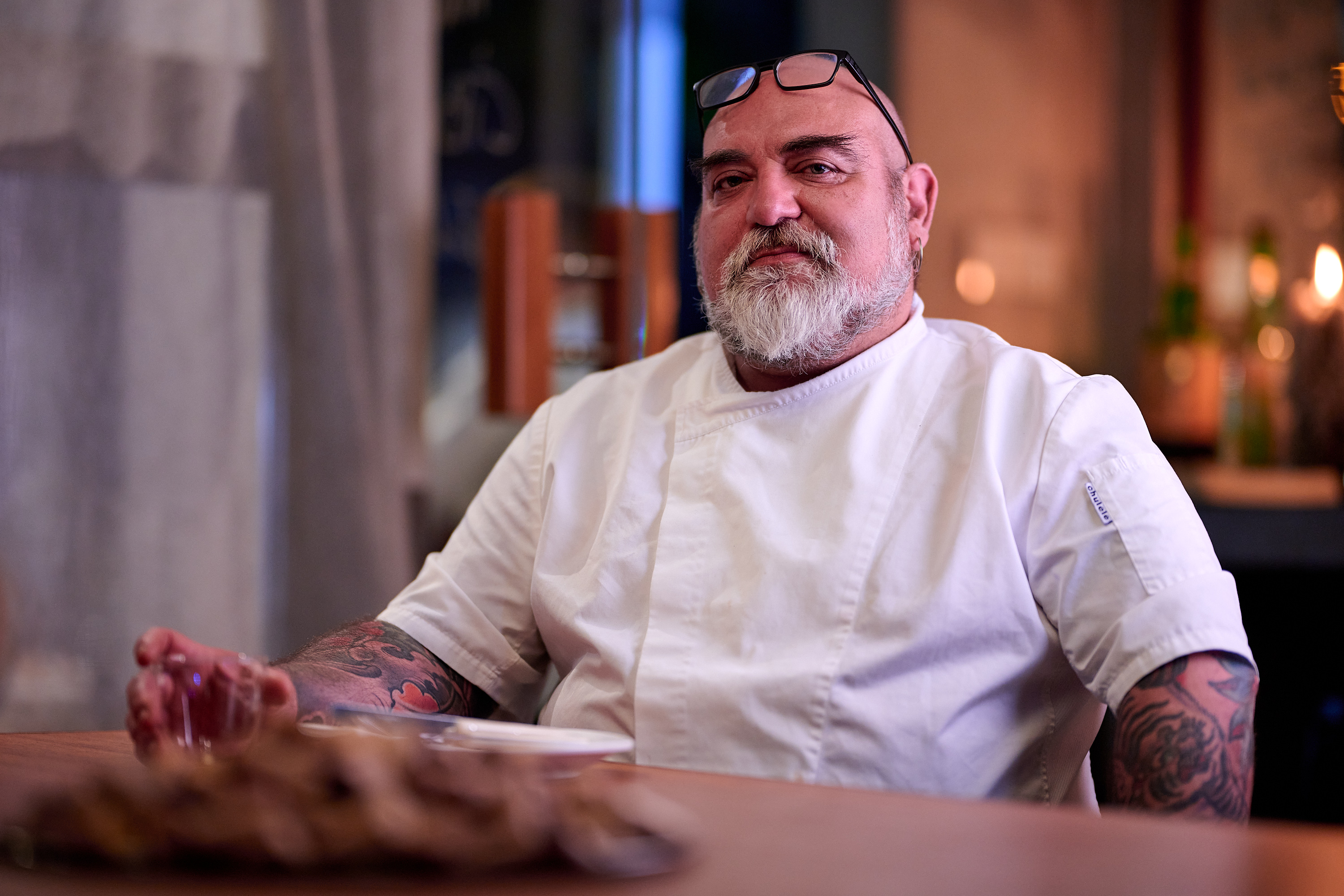
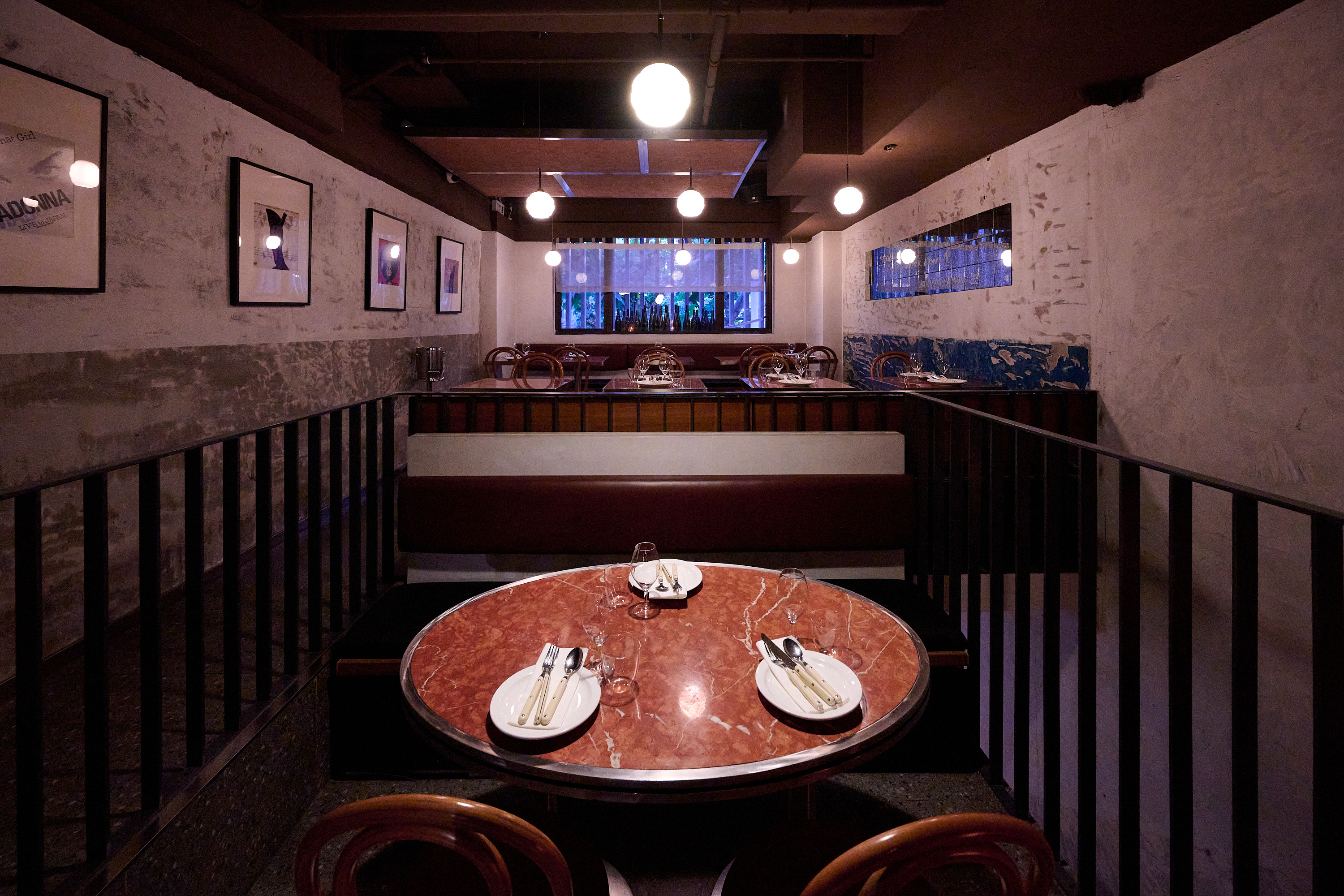
And the dining scene reflects that. The classics, like Jean-Georges or Cuivre, have long set the benchmark for international cuisine here. But Shanghai has also quietly become home to a new wave of restaurants doing things you simply cannot find anywhere else. Kirilista is serving Moscow-style fine dining that has no equivalent elsewhere in Asia. Parlay is doing Kansas-style BBQ that would hold its own anywhere in the American Midwest. KLAY is turning out modern Indian that deserves a conversation well beyond this city. And then there is Bambino, producing fluent, fused Italian cuisine under a chef who goes by, brilliantly, Lucky Lasagna.
As far as wetting your whistle, perhaps the only "international" mention would be Bar Leone, which is a Hong Kong transplant, and requires on average 2-3 hours just to get a seat. That is not an efficient recommendation for a 36-hour traveler. There's the popular Filipino bar Juanito's that also serves Filipino fare that might be a rare treat for many travelers, or dive bar Specters that attracts everything from English teachers, corporate men and women in suits and pantsuits, bohemian artists, the occasional Russian model and a wide range of the undercurrents of Chinese youth culture. Root Down in the NYT piece is a genuinely great suggestion, and to replace Bar Leone with a shorter wait, any of Shingo's bars in Shanghai.
Separately, and perhaps more importantly, the piece misses an entire category of modern Chinese cuisine that is reshaping what dining in this city actually means. You can get dumplings anywhere in the world, but the kind of cooking you find at Cila, CUN (a must try), Xibo, and Cilan is something else entirely. This is Chinese cuisine reimagined from the inside, by a generation of chefs who grew up here and are now doing something with that inheritance that the rest of the world hasn't caught up to yet.
None of these specific places needed to appear in the NYT piece. They serve simply as illustrations of a Shanghai the article doesn't quite reach. And that gap matters, because in my conversations with city officials, one thing comes up repeatedly: Shanghai's ambition to be, in their words, an international city. That aspiration comes clearly from the mayor's office, but it feels like it extends further, as an expression of how not just this city, but the country itself, wants to be connected with the rest of the world. A travel piece that skips past that dimension isn't wrong, exactly. It just isn't complete.
![[Current Trends] What the New York Times Sees in Shanghai – and What It Doesn't](https://obj.shine.cn/files/2026/03/31/9258bf55-73b1-43c1-ba01-45a355832a2a_0.jpg)
Final thoughts
As someone who has pitched his tent in Shanghai for the better part of two decades, it is fascinating, amusing, and at times frustrating to observe how the outside world frames a place like this. But I do genuinely enjoy watching the city get noticed, and I appreciate what these three snapshots, taken together, actually reveal.
Because what the NYT has inadvertently produced, across three pieces and 16 years, is something more valuable than any single travel guide. It's a portrait of a city that kidnaps people with its incessant forward motion, and makes it incredibly difficult to leave. And for those of us who have lived it in real time, reading them back to back is something close to watching your own life flash before your eyes, in the best possible way.
In 2013, Shanghai was loud, dusty and wired on its own ambition. The drilling started at 8am and the party didn't stop until the sun came up and embarrassed everyone involved. It was a city mid-sentence, building itself faster than anyone could keep up with, and daring you to keep pace.
By 2017, the city had grown up, or at least put on a better suit. Cash and flash and Ferraris added a new layer of sparkle to a place that was now beginning to understand its own power. It had arrived, or so many of us thought at the time.
And now, in 2026, Shanghai exists in a category largely of its own. A city that feels, genuinely, like the opening chapter of a future that the rest of the world is still trying to outline. Where super-apps handle nearly every transaction of daily life. Where the streets hum quietly with electric engines. Where old industrial waterfronts have been reborn as destinations, and towering new skylines fold themselves around century-old shikumen (stone-gated) lanes under skies that, some of us genuinely thought would never be blue.
Shanghai has now become a city where others look, to get a sense of what the future could be, and for those with the time to do a 36 hour visit, it is a marvel of modernity, heritage, local delights, and internationalism all baked into its DNA.
Places I don't mention but included in NYT
I do want to caveat my earlier observations in fairness, in that, it is indeed understandably difficult to capture all of what Shanghai is in a mere 36 hours. A nod to Riley, the places she highlights are genuinely worthy of a visitor's time. A quick rundown:
• Yuyuan Garden: A 16th-century classical garden in the old city area that still manages to feel transporting before the crowds arrive.
• Lu Bo Lang: Decades-old Shanghainese snacks spot just outside the garden, reliable and unpretentious.
• Matchmaking Market at People's Square: Parents assembling every weekend with handwritten signs advertising their children. A fascinating, only-in-Shanghai spectacle.
• Ren He Guan: Classic Shanghainese dishes in a 1930s-evocative setting that never tips into theme park territory.
• Mi Shang Prada Rong Zhai: A restored 1918 mansion reimagined by Prada and filmmaker Wong Kar-wai. Have tea in a room clad in velvet and mirrors.
• Kang You Si Ji: The city's go-to wellness clinic for traditional Chinese medicine. The tuina massage converts skeptics.
• Label Del: Tang Dynasty-inspired clothing on Julu Road, at the more interesting end of local fashion.
• Former Residence of Zhang Leping: A free museum for the creator of beloved comic character Sanmao. Most visitors walk straight past it.
• Man Man Tang Bao: Father-and-son, made-to-order xiaolongbao spot puts fancier establishments to shame.
• Condé at the Regent Shanghai: One of the better vantage points for taking in both skylines simultaneously.
• Jazz Bar at the Fairmont Peace Hotel: The band's youngest member is now 70. Playing nightly since 1980.
• Cejerdary: Hairy crab served with near-ceremonial reverence, worth visiting well beyond peak harvest season. A nice little splurge.
• Shanghai First Food Mall: A government-designated piece of non-material cultural heritage. The butterfly cookies will make that make sense.
• Rockbund Art Museum: A longtime fixture, housed in a restored Art Deco building, reliably adventurous in its programming.
• Space 185 at Bund Art Center: Newer, serious, already one of the more compelling gallery spaces on the waterfront.
• Hive Center for Contemporary Art: Worth visiting for the monumental stained-glass skylight alone, before you've looked at a single piece of work.
Editor: Liu Xiaolin
In Case You Missed It...

 Sep 24, 2026
![[The City Asks] Survey One Is Closed. Thank You. Check If You Won](https://obj.shine.cn/files/2026/09/24/aa4bbc67-98bc-4194-b0ac-9b78e6e38e7e_0.jpg)