Top News
Nvidia Reports Doubled Earnings, No Plans to Reinstate Jensen Huang
AI chip giant Nvidia reported net profit in its fiscal third quarter ended October 26 doubled to US$65.3 billion from a year earlier, and revenue also doubled to US$115.8 billion. Revenue in its core data center business surged 110 percent to US$107.6 billion, on ramped up production and shipments of its advanced Vera Rubin series AI chips. Nvidia said revenue in the fourth quarter is expected to surge to about US$130 billion, beating Wall Street forecasts.
Though the earnings cheered investors, pushing Nvidia's share price up 3 percent in after-hours trading in New York, all eyes were on the post-results conference call after last week's resignation by high-profile chief executive Jensen Huang. He left the company he founded and steered for three decades to global dominance amid a scandal over an affair with an alleged Chinese woman.
Despite a groundswell of support for Huang to return to the helm of the company, Nvidia Chairman Harvey Jones said on the conference call that the board doesn't intend to reinstate him. Earlier, in his first public statement since resigning, Huang said he regretted the problems he created for the company and would be "honored" to return to the company. Nvidia's interim chief executive Colette Kress told investors on the call that it's "business as usual" at the company, with its "roadmap is on track and our ambition never greater." Jacob Bourne, an analyst at EMarketer, said, "Even blockbuster earnings beat can't shift the spotlight away from Nvidia's leadership crisis. As the company's first earnings report without Jensen Huang at the helm, concerns will continue to swirl."
China Hits Back at New US Export Restrictions on Chip Exports
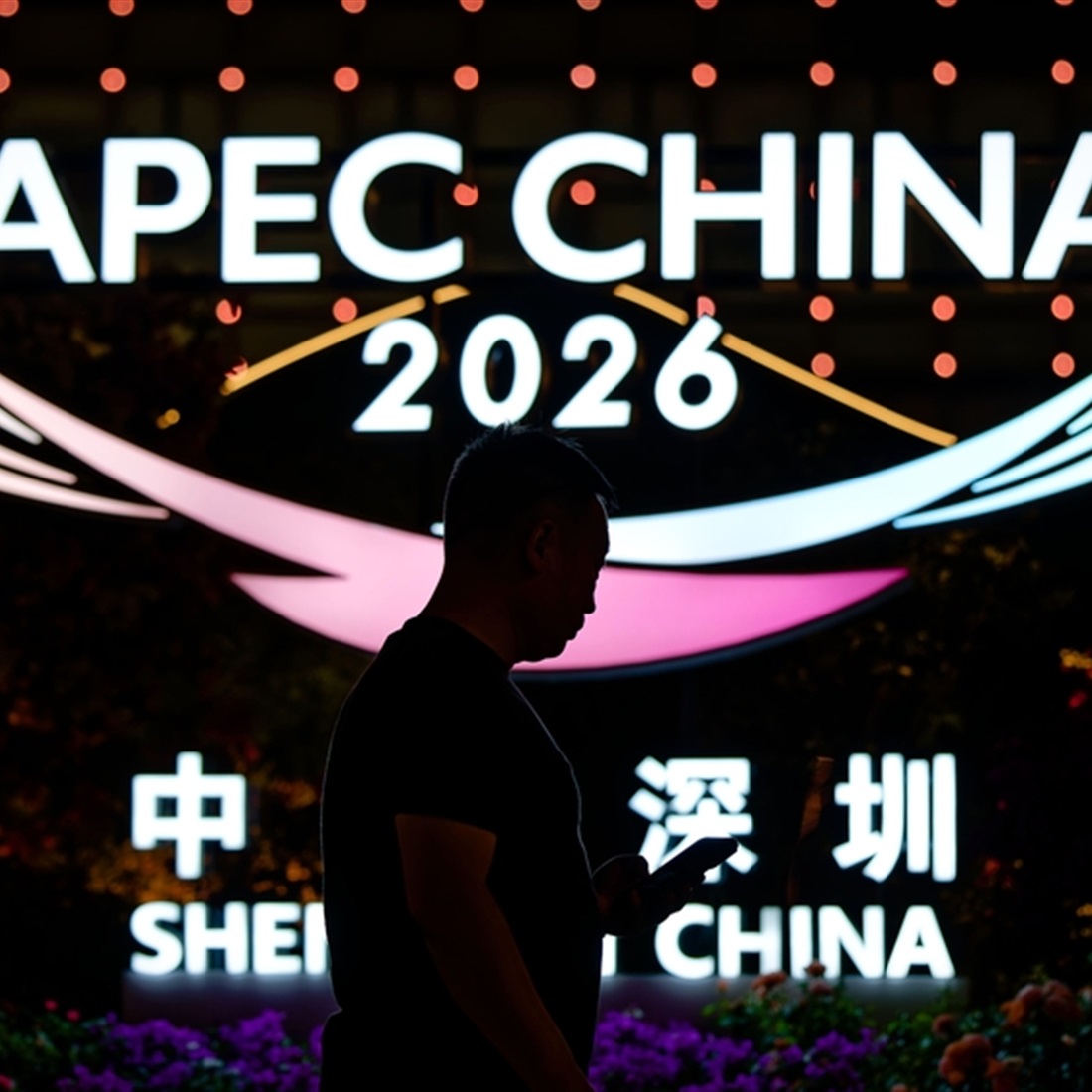
China's Ministry of Commerce said in a statement that it "firmly opposes" the US further tightening restrictions on exports of advanced artificial intelligence, a move mainly aimed at China. It also warned it would take countermeasures if new rules announced this week take effect. The statement was in response to the US Commerce Department announcement that chip sales to third-country data centers supplying computing power to companies in China – and other countries on a weapons embargo list – would be banned. The dispute arises ahead of a scheduled meeting between Chinese President Xi Jinping and US President Donald Trump on the sidelines of the Asia-Pacific Economic Cooperation summit this week in China's technology hub of Shenzhen.
US National Security Network Goes Down
A highly classified network that the US National Security Agency uses for its internal communications is down, CNN reported. The agency, in a statement, said it was experiencing "temporary degradation during scheduled routine maintenance." The White House said there is no evidence of a cyberattack. The problem is the latest in a series of high-profile technology failures in the past week, including a global outage of some Microsoft services, the grounding of all US airport traffic for more than four hours that disrupted flights throughout the weekend, and glitches that affected services at major US banks and at Apple. None has been linked to cybersecurity.
Trump Warns Iran After 'Dirty Bomb' Plan Report
US President Donald Trump said if a report that Iran is developing plans to target top administration officials in Washington with a "dirty bomb" is true, Iran would face dire consequences. He said the US takes any threats seriously. CNN, citing unidentified officials, reported that US intelligence has intercepted "very specific" plans, including "locations and targets," related to a potential Iranian plot to set off a dirty bomb, which combines conventional explosives with radioactive material. However, there is debate within the administration if Iran is even capable of such a feat.
Ukraine Collapses Part of Symbolic Russian Bridge
Ukraine, in retaliation for Russian ballistic missile attacks on two vital bridges in downtown Kiev, struck the bridge connecting Russia and the occupied Crimean Peninsula, collapsing portions of a structure that became a symbol of Russian President Vladimir Putin's ambitions to regain former Russian territories. The Crimean bridge has been a vital supply line for Moscow's troops.
UN Climate Summit Issues Draft of Final Communique
A draft of the final communique from the UN Climate Summit in Turkey calls for an "immediate" transition away from fossil fuels and a goal of deriving 35 percent of global energy from electricity by 2035, among its 144 separate items. It was released four days before the end of the summit in an effort to "draw out parties" on areas of agreement and disagreement, according to Chris Bowen, president of the talks, who is climate and energy minister in Australia, the world's third-largest exporter of fossil fuel. Climate summits often go down to the wire, or a bit beyond deadline, before consensus can be reached on a final statement, following a period of intense negotiations that typically water down the most contentious issues. The final communique needs approval from the nearly 200 nations at the UN summit.
Top Business
JD.com Revenue Turns to Growth, Food Delivery Losses Cut
E-commerce giant JD.com reported third-quarter revenue of 310 billion yuan (US$46.2 billion), a 3.5 percent gain that returned to positive growth from a year earlier. Net income rose 22 percent to 6.5 billion yuan, and operating income swung to 5.2 billion yuan from a year-earlier loss of 1.1 billion yuan. "Q3 marked a solid turnaround for our business," said JD.com Chief Executive Sandy Xu. However, for the first nine months of the year, JD posted a 16 percent decrease in net profit to 18.73 billion yuan amid generally soft consumer spending.
Third quarter performance was anchored by JD's core retail segment, where revenue rose 2.9 percent to 258 billion yuan, with a record gross margin of 20.1 percent. Sales of mobile phones achieved double-digit growth despite higher costs, and general merchandise rose 8.1 percent. Revenue from its logistics services segment increased 16 percent to 64 billion yuan. JD's food delivery service, which has been in cutthroat competition with Meituan and Alibaba since last year, cut losses by 50 percent as government efforts to cool a price war diminished promotional expenses. The company has just concluded its takeover of German electronics retailer Ceconomy. Spending on research and development rose 45 percent as the company moved further into AI with its Dongdong shopping assistant and 11 types of self-developed robots.
China's Big Three Airlines Report Lower Passenger Numbers
Beijing-based Air China, the nation's flagship carrier, said the number of passengers it flew in October fell 4.3 percent to 14 million. The load factor – a metric measuring percent of available seating capacity filled with paying passengers – rose 1.7 points to 87 percent. Passenger traffic measured by revenue passenger kilometers fell 0.2 percent. The number of domestic passengers fell 4.3 percent, and international passengers rose 22.5 percent. Cargo and mail traffic increased 5.9 percent. In October 2026, the carrier introduced two Airbus A320 series aircraft, bringing its fleet size to 976 aircraft.
Shanghai-based China Eastern Airlines said it carried 13 million passengers last month, down 0.1 percent from a year earlier, with the load factor up 1.2 points to 88.7 percent. Revenue passenger kilometers rose 3.9 percent. The number of domestic passengers fell 0.2 percent, and international passengers rose 1.1 percent. Cargo and mail volume increased 3 percent. As of the end of October, the carrier has a fleet of 838 aircraft.
Guangzhou-based China Southern Airlines reported carrying 15 million passengers, a 3.9 percent decline, with its load factor slipping 1.9 points to 86.8 percent. Domestic passenger numbers fell 5.5 percent and international passengers rose 7 percent. Passenger traffic measured by revenue passenger kilometers fell 0.7 percent. Cargo and mail volume fell 7 percent. The company was operating 977 aircraft.
Economy & Markets
Yuan Bond Issues in HK Surpass US Dollar Debt for First Time
Hong Kong's listed bond issues in offshore yuan surpassed US dollar-denominated bond sales for the first time in the first 10 months of this year, anchoring the city's position as the world's top offshore yuan hub, the South China Morning Post reported. Debt issues denominated in offshore yuan, commonly called dim sum bonds, climbed to 342 billion yuan (US$51 billion) in the January-October period, accounting for 42 percent of the city's total listed bond issuance. US dollar-denominated debt accounted for 30 percent, and Hong Kong dollar bonds comprised 16 percent. The offshore yuan also topped the charts by deal volume, with 109 HK-listed dim sum bond issues in the 10 months, compared with 84 in US dollars and 29 in Hong Kong dollars. "Hong Kong's offshore yuan ecosystem is now largely in place," city Financial Secretary Paul Chan Mo-po said at a launch ceremony for Hong Kong's first dim sum bond index. "The tools to invest, to measure performance and to manage risk are now all available in one market."
Japanese Export Growth Exceeds Forecasts
Japan's exports in October surged 20.5 percent from a year earlier, snapping a two-month slowdown and beating market expectations. Shipments of semiconductor equipment rose 49.7 percent. Exports to China increased 13.3 percent, and shipments to the US gained 24 percent. However, import growth of 21.6 percent last month fell shy of forecasts. Petroleum imports climbed 61 by value as Japan attempts to switch sources to American oil from Middle East exporters.
Corporate
Weibo Third-Quarter Profit Plunges
Nasdaq-listed Weibo, a popular Chinese social media platform, reported an 89 percent plunge in third-quarter profit to US$24.5 million on a 7 percent decline in revenue to US$410.2 million, reflecting weaker ad sales and higher costs. Advertising and marketing revenue, Weibo's largest income source, dropped 8 percent to US$344.1 million. Operating expenses rose 6 percent to US$345.9 million, largely because of higher advertising production costs. Operating margin narrowed to 16 percent from 27 percent a year earlier. Weibo had US$2.31 billion in cash, cash equivalents and short-term investments as of September 30.
Miniso Reports Lower Profit, Overseas Growth Slows
Miniso, a global retailer known for affordable lifestyle products, said profit in the first three quarters of the year fell 7.6 percent from a year earlier to 1.3 billion yuan (US$195 million), while revenue rose 19 percent to 18.1 billion yuan. The revenue increase was driven mainly by the company's 4,726 stores on the Chinese mainland, where income jumped 27.4 percent. Overseas contribution to revenue fell to 38.5 percent from 42.1 percent. For the third quarter, revenue rose 30 percent, with net profit, including foreign-exchange losses on the stronger yuan, dropping to 283.2 million yuan from 440.5 million yuan a year ago. Ye Guofu, founder and chief executive of Miniso, said the company is keenly aware that operating environments vary across overseas markets. "Our long-term goal is to achieve sustainable growth rather than simply pursue scale expansion," he said. "Looking ahead, we will advance our globalization with a quality-first approach, steadily replicating the strategies and business model proven in China while tailoring them to local conditions."
Tencent Music Posts Flat Q3 Profit
Tencent Music, an arm of tech giant Tencent, reported third-quarter net profit was flat from a year earlier at 2.2 billion yuan (US$323 million) on a 5.6 percent increase in revenue to 8.9 billion yuan. Music-related services revenue reached 7.7 billion yuan, and membership services revenue came in at 5 billion yuan. For the first nine months of the year, revenue rose 6.2 percent to 25.8 billion yuan, with net profit dropping 24 percent to 6.7 billion yuan. The company repurchased about US$300 million of US-listed shares in the third quarter.
Shiseido to Sell China Cosmetics Brand
Japan's Shiseido announced it will transfer its entire stake in Shiseido Liyuan Cosmetics, the subsidiary that manufactures and sells its China-only cosmetics brand Aupres, to an investor consortium led by IDG Capital. The deal includes the Beijing plant and production equipment. The transfer price was not disclosed. Aupres was launched in 1994, but its performance had languished amid the rise of e-commerce and rival domestic brands.
Editor: Lu Feiran
In Case You Missed It...
 Nov 17, 2026