From Torchlight to Long Tables: The Qiang People Welcome Their Most Important Day
Editor's note:
The United Nations has officially designated 44 Chinese traditions as world cultural heritage. This series examines how each of them defines what it means to be Chinese.
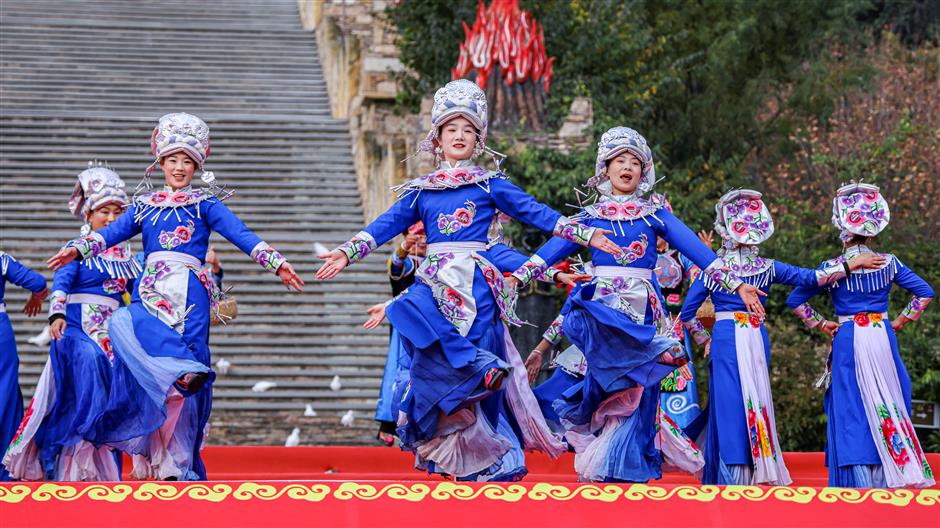
Dances, singing, parades and a long-table feast characterize the Qiang New Year, the most significant day of the year for the ethnic group. Qiang communities across Sichuan Province celebrate this occasion with festivities.
The festival begins on the first day of the 10th lunar month and can last for three to five days.
This year's celebration, which took place on November 20, held special significance as it marked the first Qiang New Year since the tradition was included in the United Nations Educational, Scientific and Cultural Organization's Representative List of the Intangible Cultural Heritage of Humanity in December.
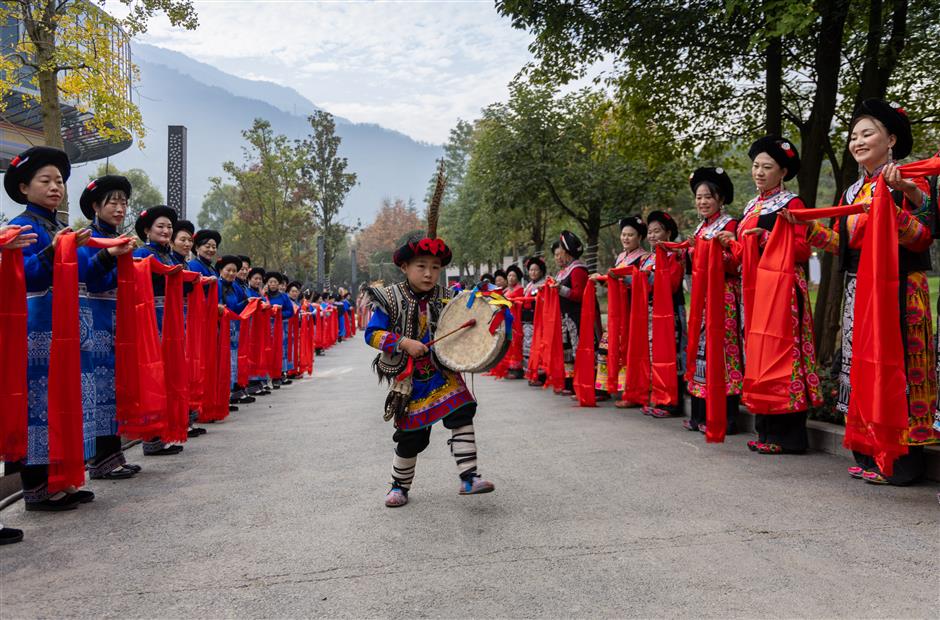
In Wenchuan County in Sichuan's Aba Tibetan and Qiang Autonomous Prefecture, residents stepped out early from their homes to welcome the day. The narrow streets of the mountain town quickly came alive as people donned traditional Qiang attire for the parade. Their vibrant embroidery, silver jewelry and layered costumes transformed the procession into a moving tapestry. Children waved flags while tourists cheered and captured photos.
Following the parade, a cultural gala took place near the town square. As performers sang folk tunes passed down through the centuries, the soft, airy sounds of the Qiang flute filled the air.
The highlight of the celebration was the Shalang dance, an energetic circle dance whose name translates to "sing and dance" in the Qiang language. With synchronized steps and rhythmic handclaps, dancers moved in spirals, expressing the ethnic group's deep gratitude for harvests, safety and harmony with nature.
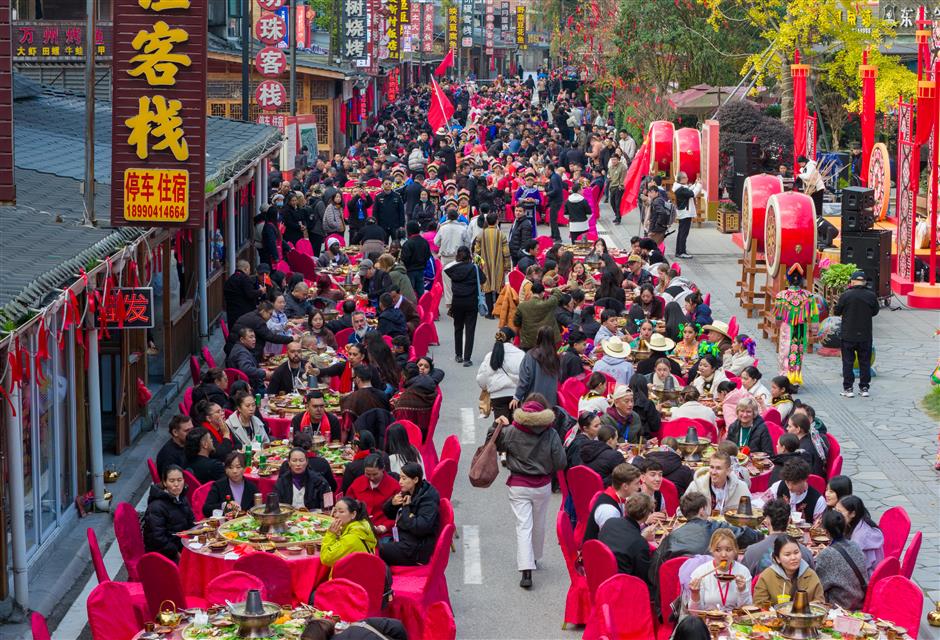
Not far from the stage, the "baba banquet" stretched along alleys and open-air courtyards. More than 100 tables were covered in cloth embroidered with geometric Qiang motifs.
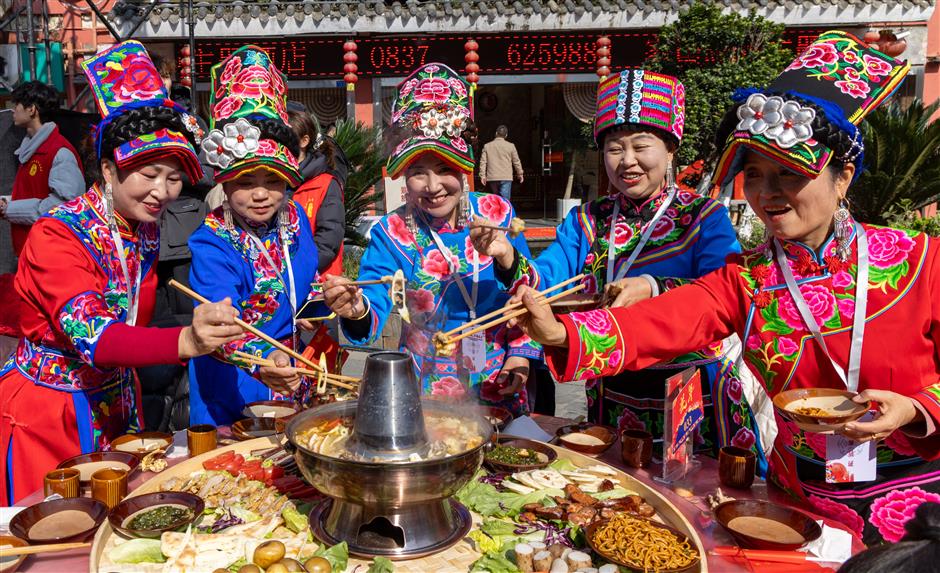
Giant pots of paotang, an old-style Qiang broth featuring ribs, radish and herbs, were simmering. Platters of cured pork, potatoes, buckwheat cakes and other local specialties filled the tables. Villagers in ceremonial dress carried cups of homemade liquor, offering toasts and singing improvised blessing songs that echoed between the alleys.
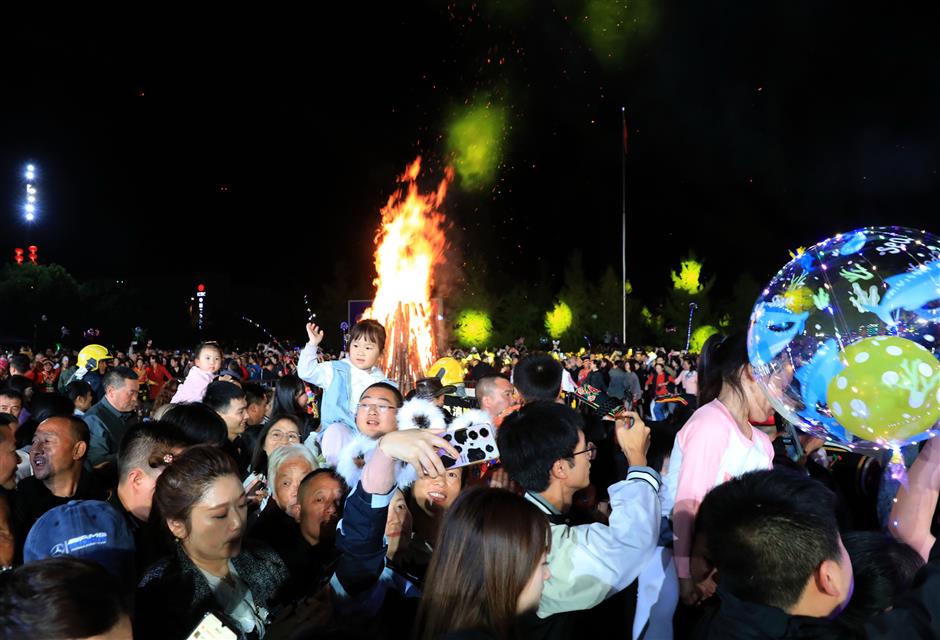
In the Beichuan Qiang Autonomous County, celebrations continued from day into night. After sunset, a respected inheritor of Qiang embroidery walked into the village square and used a torch to ignite a towering bonfire. Its flames shot upward as the crowd cheered. The fire signaled the beginning of the nighttime Shalang dance.
Two 80-meter strips of bright Qiang-red cloth were carried through the dancers, weaving like flowing rivers amid the firelight. Visitors and locals joined hands, their silhouettes forming widening circles around the flames.
Around 8pm, drones rose above the bonfire smoke and painted the night sky with shifting patterns. The digital show layered modern technology onto ancient rituals.
The Qiang people, one of China's oldest ethnic groups, are often referred to as a "living fossil" within Chinese cultural history. Around 300,000 Qiang people live mainly in Aba and Beichuan in southwest China's Sichuan.
In the days leading up to the festival, Qiang people working away from home return to their villages. Families prepare buckwheat dumplings filled with tofu and minced meat. Some households shape dough into tiny cattle, sheep, horses and chickens — miniature offerings that honor the animals sustaining daily life.
One of the festival's core rituals is worshipping the sky deity and the cattle deity. Local tradition holds that the Qiang New Year marks the cattle deity's birthday, so cattle receive gentle care and symbolic decorations. Villagers feed them soft steamed buns and wheat straw. They hang small sun-and-moon-shaped dough ornaments from their horns and release them to roam freely in open fields.
Shibi — Qiang priests — recite ancient scriptures and chant oral histories, performing rites believed to ensure peace and blessings for the year ahead.
The origins of the Qiang New Year stretch far beyond recorded history. A widely cited version appears in the traditional epic “Mujiezhu,” where the daughter of a god descends to earth, marries a young Qiang man, and brings her seeds, livestock and tools. After the autumn harvest, she offers grain and animals to the heavens in thanks. That act of gratitude, passed through generations, became the basis for the Qiang New Year.
Though the festival is ancient, it has not always been uninterrupted. Efforts to revive it began in the mid-1980s, when Qiang communities in Beijing organized a large celebration with national support. In 1988, the Aba prefecture formally designated the Qiang New Year as the official annual festival of the Qiang people.
The 2008 Wenchuan earthquake, however, caused devastating setbacks. The collapse of many Qiang villages led to the loss of ritual venues and artifacts.
The declining use of the Qiang language among younger generations has further complicated cultural transmission, placing key traditions at risk.
Recognizing these challenges, UNESCO listed the Qiang New Year as intangible heritage in need of urgent safeguarding in 2009. After years of protection and community-led revival, it was officially transferred to the Representative List of the Intangible Cultural Heritage of Humanity last year.
Editor: Zhang Liuhao
In Case You Missed It...

 Oct 20, 2026
![[Big News] CNS Launches Shanghai Health Directory](https://obj.shine.cn/files/2026/10/20/5d3cbb6a-70d4-4f74-b549-b830162d63a5_0.jpg)

![[SH Transit] Shanghai Plans Bigger Airports, Stronger Air and Sea Links](https://obj.shine.cn/files/2026/10/20/cc332098-2356-49f9-878f-86691dd8c989_0.jpg)
