Shanghai Revives Ancient Water Towns as Living Neighborhoods
Shanghai is ramping up efforts to revive the traditional Jiangnan (south of the lower reaches of the Yangtze River) heritage of its historic suburban communities, spotlighting authentic local experiences that reconnect residents and visitors with the region's cultural roots.
The city is shifting from freezing these towns as static museums to reviving them as vibrant, living neighborhoods.
The "Shanghai Historical and Cultural Town Protection Regulations" took effect on March 1. The new law covers 11 national-level historic towns and a group of other ancient towns across the city's suburbs recognized for their significant cultural and historical value.
It strictly bans large-scale demolition and high-density development. Instead, it encourages diversified investment to implement small-scale, gradual "micro-renovations" that repair historical structures and upgrade public infrastructure.
This shift aligns with global conservation trends seen in cities like Venice and Kyoto, where the focus has moved from preserving single monuments to protecting "living heritage."
Kyoto provides subsidies to families who maintain traditional Machiya townhouses as primary residences, while Venice recently banned new hotels to stop its residents from being pushed out.
Shanghai's new policy has adopted this model to ensure ancient neighborhoods remain inhabited rather than serving only as commercial backdrops.
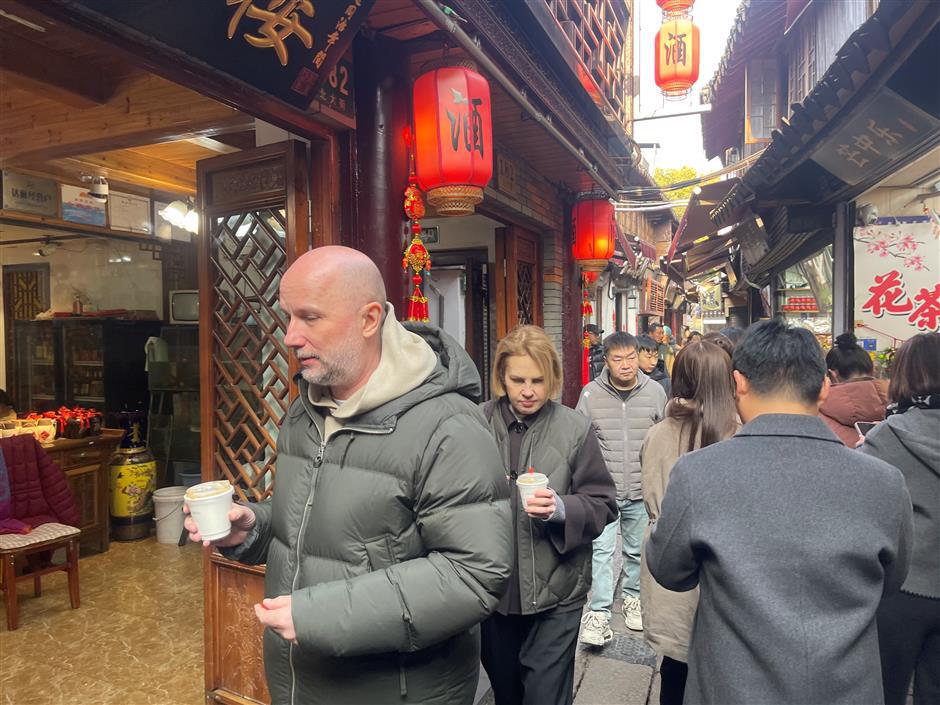
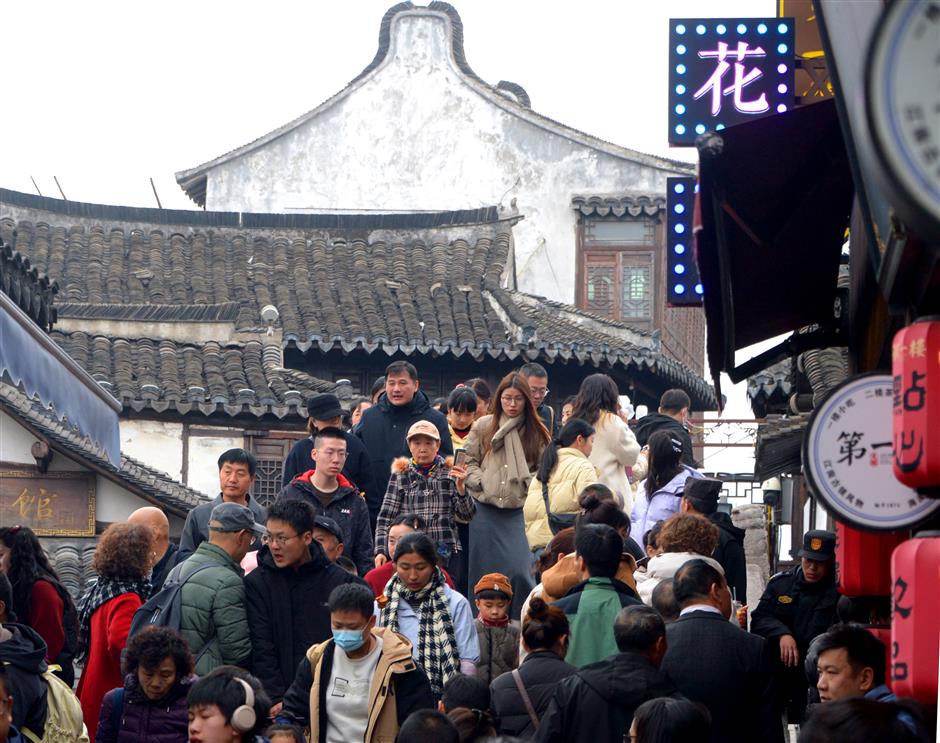
Tourists are driving much of this revival, with overseas visitors now accounting for one-third of all tourists in popular water towns like Zhujiajiao.
"It felt like a journey back in time," said Nick Kembel, a Canadian travel writer who documented the transition from the city's glass towers to the suburbs.
"The modern skyline of Shanghai gave way to a picturesque landscape of narrow lanes and traditional architecture."
Many foreign travelers, seeking a retreat from the "steel forest" of the city, share this sentiment. Many described these destinations as the "Chinese Venice."
Shanghai has 11 national-level historic towns. They include Xinchang, Chuansha, and Gaoqiao in the Pudong New Area; Nanxiang and Jiading Town in Jiading District; Fengjing and Zhangyan in Jinshan District; Zhujiajiao, Liantang, and Jinze in Qingpu District; and Luodian in Baoshan District.
"These areas represent the cultural 'bottom color' of Shanghai, rooted in the traditional Wu and Yue cultures of the Yangtze River Delta," said an official with the Shanghai Housing and Urban-Rural Development Management Commission.
He said the new regulation fills a legal gap in the preservation of these historic assets.
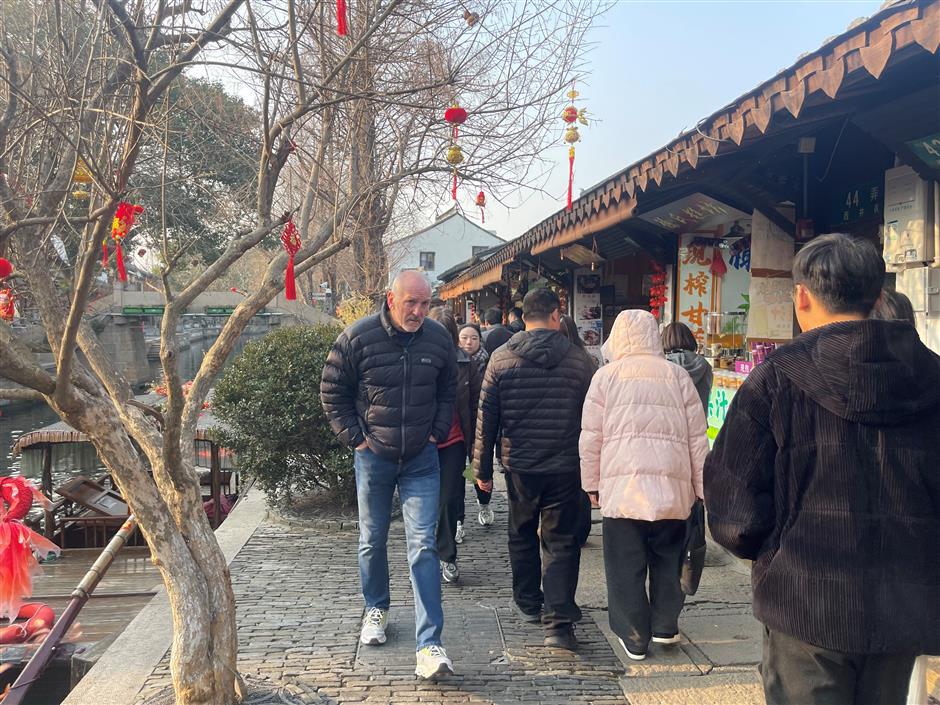
Scent of zhati and stinky tofu
For decades, rapid urban expansion has encroached on ancient settlements. Planners often treated surviving towns as commercial tourist attractions.
It led to a phenomenon called "a thousand towns with one face," where every village looked and smelled the same.
The new law shifts the focus to preserve the entire ecosystem of a town rather than just isolated buildings.
Su Xinbao, deputy chief architect at the East China Architectural Design and Research Institute, helped draft the new rules.
He observed that previous attempts frequently overlooked the wider picture. In the past, workers might save a historical bridge, but they would fill in the river beneath it for a road. The bridge turned into a "dry bridge," stripped of its spirit.
The new law mandates the protection of rivers, docks, ancient wells, and even old trees to maintain the town's original relationship with water.
In Zhujiajiao, the scent of xunlasi, or smoked tofu, and zhati, braised pork knuckle wrapped in bamboo leaves, fills the air.
However, at a recent policy meeting, officials argued about why every water town sells the exact same stinky tofu and braised meat. They want to encourage towns to find their own unique cultural DNA.
Xinchang Town in Pudong is a prime example of a town finding its identity. Unlike the highly commercialized Zhujiajiao, Xinchang maintains a quieter, more residential feel.
Its name means "new salt field," a nod to its history in the salt trade during the Liang Dynasty (502-557). Visitors walk past stone carvings and through the original "four streets and three gardens."
"Xinchang felt like the most 'real' place I visited near the city... People are washing clothes by the river and hanging meat to dry in the sun. It's quiet and authentic," said Sébastien Iervolino from France.
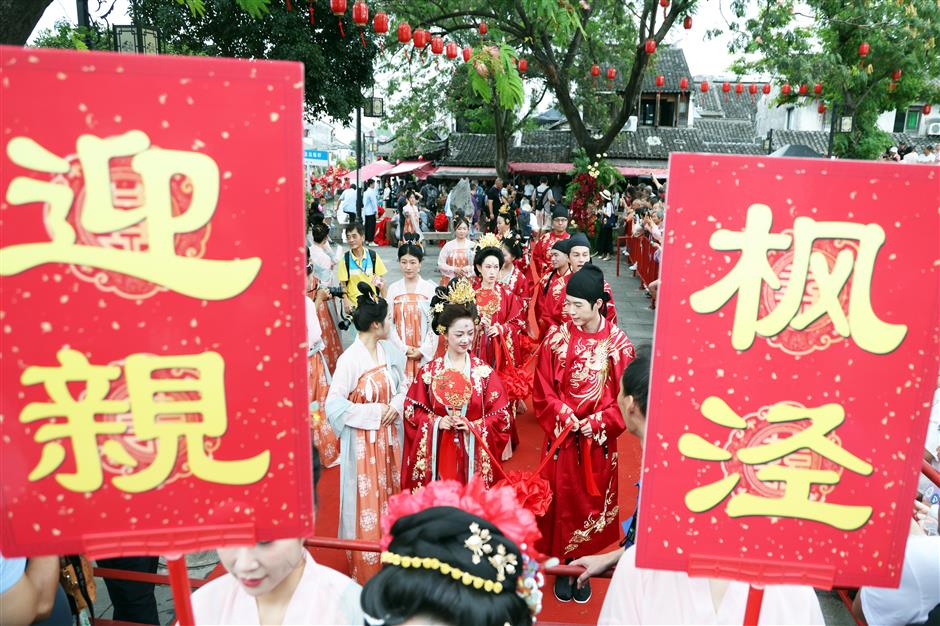
Further south, Fengjing Town in Jinshan District offers a different atmosphere. It is famous for its "wedding theme" and stone bridges that have stood for centuries.
The town is a maze of 52 bridges and dozens of narrow alleyways. Here, the local focus is on folk art and traditional farmers' paintings.
The new regulations provide flexibility for these towns to maintain their dense, historical alleyways by allowing them to bypass modern building codes regarding house spacing and fire truck access.
It also encourages adaptive reuse. Under its guidance, for instance, Zhujiajiao plans to transform an abandoned hospital into a boutique hotel.
A Community of "Smoke and Fire"
Local businesses are proving that high-end, culturally respectful tourism is profitable.
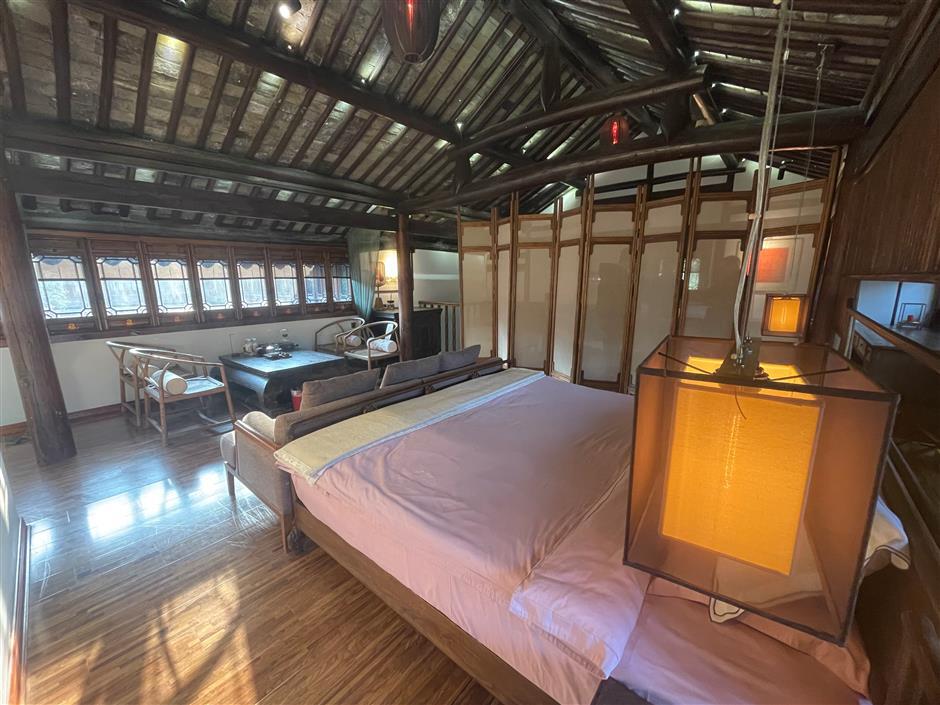
Jiang Hongwei runs the Jingting B&B in Zhujiajiao, a restored Ming Dynasty courtyard where rooms cost between 2,000 and 10,000 yuan (US$1,458) per night.
Foreign travelers make up 85 percent of her bookings since its opening in 2020. Workers at the inn brush the wooden pillars with natural oil every year and burn wormwood daily to protect the ancient timber.
"Our foreign guests love the traditional experience," Jiang said. Guests participate in local customs, such as honoring the traditional "well god" and "sleep god." They enjoy morning tea in the courtyard and listen to traditional opera.
Jiang invested heavily in modern comforts that are hidden from view. She installed double-glazed windows to block noise and floor heating to keep the old brick-and-wood rooms warm during the damp Shanghai winters.
To make visitors feel more comfortable, the town is also updating its basic services. Local food stalls now provide bilingual menus that list every ingredient.
For instance, they clearly explain the ingredients of a traditional zongzi, or glutinous rice dumplings, ensuring foreigners understand exactly what they are consuming.
Such a small change allows tourists to explore local delicacies, like zhati, without hesitation, a guide from Zhujiajiao said.

The new regulations also emphasize the importance of "living" heritage. The aim is to foster a "community of smoke and fire," meaning that towns should continue to be places where local residents live and work, rather than merely functioning as theme parks.
The government is encouraging "micro-renovations" that improve the lives of residents while keeping the historic "shell" of their homes intact.
This approach includes the "morning economy" in Zhujiajiao. Local officials are working to turn the town into the first stop for inbound travelers. They are highlighting the 13-year tradition of the Jiangnan Tea House, which offers free tea to seniors starting as early as 3:30am.
A local official said that there were plans to run a shuttle bus service from the airport to Zhujiajiao for early morning arrivals to enjoy local tea and experience the culture of the area.
But the vision for the future extends beyond tourism. Architect Su suggested that water towns could also become incubators for new industries.
Towns near major tech hubs, like the Huawei campus in Qingpu, could offer lower rents and a high quality of life for young entrepreneurs. Su believes that we should treat a historic town as a diverse community where people can live, work, and innovate.
"Why must every water town just be for tourism?" Su said. He pointed to examples like the Dafen Oil Painting Village in Shenzhen, where a traditional village became a global center for art.
He said with Shanghai's developed transportation network, these towns can host high-tech startups or creative studios while maintaining their ancient Jiangnan appearance.
"We need to treat them as historic neighborhoods with endless possibilities," Su said.
Editor: Xu Qing
In Case You Missed It...
![[Inside China] Did You Know Xuhui Has a Center to Help Foreign Businesses?](https://obj.shine.cn/files/2026/09/20/e7485259-6a51-478d-93dd-13a6c1691cb9_0.jpg)
 Sep 21, 2026
![[SH Transit] Shanghai Speeds Up Work On Five New High-Speed Rail Stations](https://obj.shine.cn/files/2026/09/18/e4351051-0478-4845-88fe-8ca3b4c41ef7_0.jpg)