Where the Sitar Gently Sings: Shujaat Khan Brings the Romance of Raga to Shanghai Yet Again
Ustad Shujaat Husain Khan comes from one of the most revered lineages in Hindustani classical music. From his great-grandfather and grandfather to his father, the legendary Ustad Vilayat Khan — widely regarded as one of the greatest sitar players of the 20th century — music was a way of life passed down through generations.
Raised in this rich artistic environment, Shujaat Khan inherited not only extraordinary technical skill but also a profound understanding of music as emotional expression. For him, mastery of the sitar was never just about precision; it was about making the instrument speak — conveying mood, emotion, complexity and the subtle depth of the human voice.
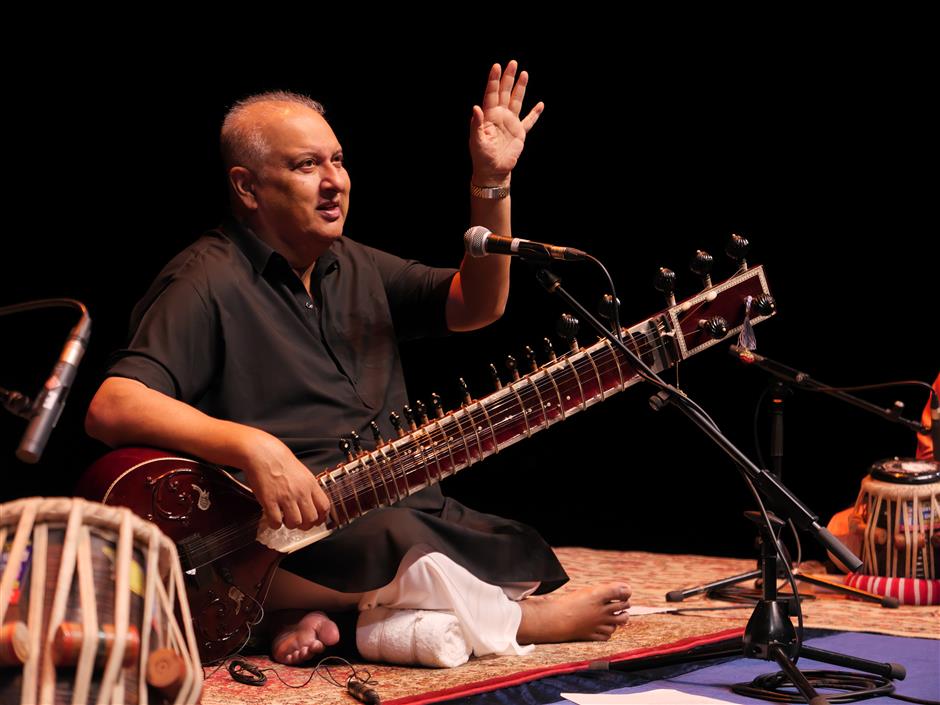
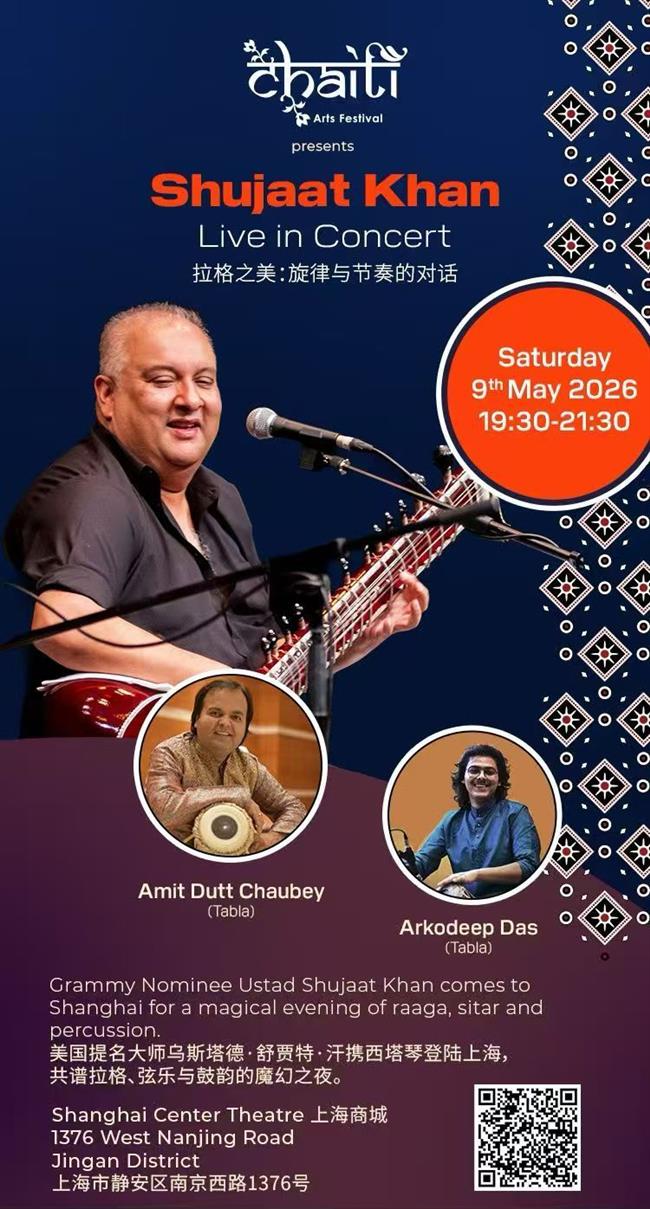
As he returns to China for another series of performances in May, he brings with him that very tradition: a living continuation of a musical legacy shaped over generations. For Chinese audiences, especially those new to Indian classical music, the experience may feel unfamiliar at first, yet profoundly moving.
Reflecting on his past performances in China, Khan speaks warmly of his connection with Chinese audiences.
“I have come to China nearly five times,” he said. “My experiences have always been good. People who come to listen to me already know what to expect. They do their research ... they know what they are going to get.”
Mandy Chen, a musician based in Shanghai, echoes that observation.
“Audiences can expect masterful sitar and an exceptional voice — Shujaat Khan seamlessly blends instrumental virtuosity with his singing,” Chen said. “His sitar mirrors the human voice with striking emotional depth.”
Khan's performances are marked by a rare balance of discipline and spontaneity — structured yet free, deeply traditional yet intensely personal. Known for his thoughtful and detailed rendering of long melodic passages, he prefers subtlety over dramatic rhythmic effects. Rhythmic complexity emerges quietly, almost invisibly, allowing emotion to take center stage.
One of the most distinctive features of his playing is the sweetness of tone he draws from the sitar. During performances, he often hums or sings softly alongside the instrument, creating a sense of intimacy and immediacy that draws listeners closer.
In this way, his music may resonate naturally with Chinese audiences. Much like the reflective depth of the guqin (a plucked seven-string zither) or the expressive virtuosity of the pipa (a pear-shaped lute with four strings), the sitar can be quiet, contemplative and deeply inward. Both Indian and Chinese classical traditions value silence, space, restraint and the slow unfolding of emotion.
If some sitarists make the instrument sound like an orchestra, Khan makes it sound unmistakably human. That may be the clearest reason why his music connects so deeply with audiences around the world.
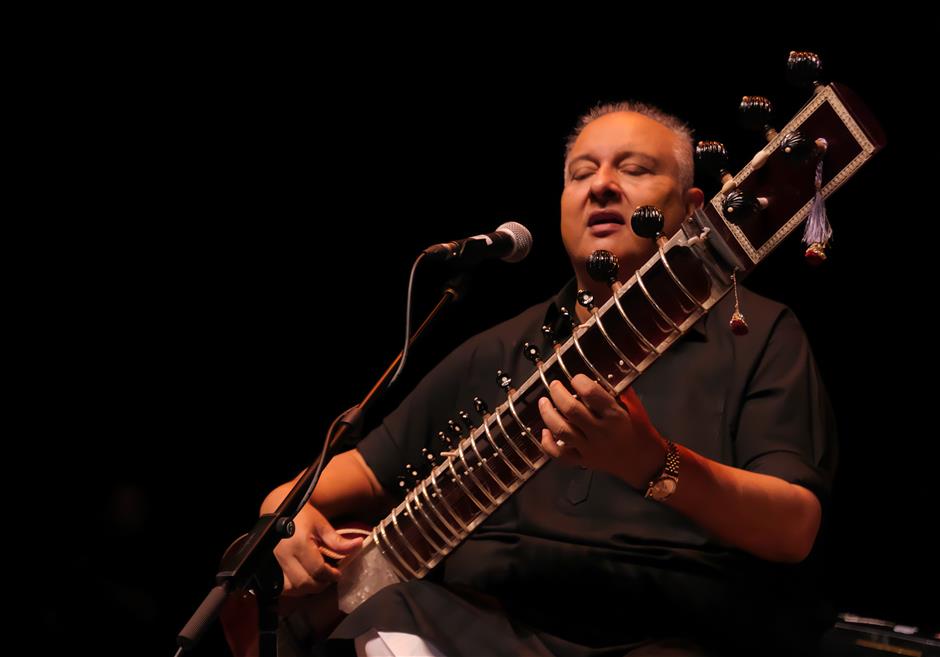
Like jazz, improvisation lies at the heart of every Indian classical music performance. For listeners more familiar with written Western classical compositions, this can be one of the most fascinating differences.
Within the framework of a raga, the artist creates music in real time. Each raga carries its own set of notes, characteristic phrases and emotional atmosphere. The performer must honor these traditions while also bringing something entirely new to the moment.
Thus there is no single “correct” version of a piece — each performance becomes a meeting point between tradition and personal expression. No two concerts are ever the same.
Asked whether he prepares differently for international audiences or adjusts his improvisation with them in mind, Khan is clear.
“No, not too much,” he said.
“I might have a little idea of what I may be playing that evening. I play only 10 or 15 different ragas. I pick one from them.
“But I don’t think it is a great idea to change one’s music according to the country. Chinese music is very different from Indian music. I am not trying to dilute my music to fit or get close to Chinese music.
“In fact, I’ll admit that I did it when I was younger — playing shorter pieces or changing my music to attract Western audiences because we always thought they had a shorter attention span. But as I travel, and China is one of those countries, I understand that China has the same emotional content as anyone else in the world.
“When people go to listen to something specific, they are prepared for that. There is no need for me to change my music at all.”
Siddhart Sinha, who heads Chaiti, a Shanghai-based volunteer organization dedicated to promoting the diverse musical traditions of India and China, believes Khan’s deeply traditional and highly personal style of playing will have a lasting impact on Chinese audiences.
“Chinese audiences can expect an evening of an unmatched musical journey with Shujaat Khan’s singing sitar that blends romance and Sufi soul, where every note feels like a prayer and every melody tells a story of love and spirituality,” Sinha said.
In a cultural landscape where Chinese audiences are increasingly seeking deeper and more immersive artistic experiences, Khan’s performance can connect through melody and emotion. His music offers listeners in China a rare opportunity to experience the spiritual depth, poetic romance and timeless storytelling that define Indian classical music.
Editor: Zhang Liuhao
In Case You Missed It...
 Sep 20, 2026