AI 'Girlfriend' Scam Swindles Victims Out of 1.8 Million Yuan Across China
A man working in Shanghai transferred more than 180,000 yuan (US$26,985) to an online girlfriend he hoped to marry, only to discover that her identity was a fiction built by a fraud ring using artificial intelligence, CCTV News reported on November 2.
The man, identified by his surname Liu, was among 15 victims across China who lost more than 1.8 million yuan to the group, the report said. Those involved received prison terms of up to 11 years and fines.
Behind the supposed girlfriend were people following a carefully staged script, using AI-generated or altered images to make the relationship appear real.

Liu first encountered a woman calling herself Tingting on a short-video platform. Her profile said she was looking for a partner with shared values and wanted to marry. After they connected on WeChat, she told him she was an orphan raised by an aunt and sent him regular messages of concern and affection.
About a month later, she claimed the aunt had a brain tumor and urgently needed money for treatment. A purported medical diagnosis and a photograph of an identity card helped persuade Liu to transfer 40,000 yuan that day.
Further requests followed as the aunt's condition supposedly worsened. Over the next two weeks, his total payments rose to more than 180,000 yuan.
Lu Chao, an assistant prosecutor at the Minhang District People's Procuratorate in Shanghai, told CCTV that Liu even took out small loans. He grew suspicious when he could no longer afford to pay and asked which hospital was treating the aunt. The fraudsters supplied an address but would not make a live video call. Liu then went to police.
Investigators in Minhang traced the operation and arrested people in Guangdong, Shandong, Guizhou and other locations, CCTV reported.
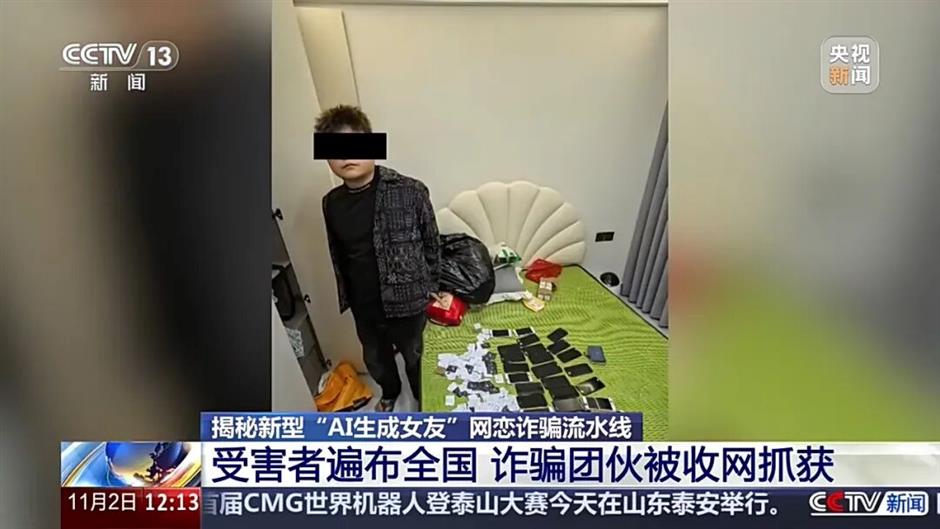
The group's chat operators worked from a seven-day script, sending AI-altered photographs of everyday activities and meals. Instructions included complaining about overtime on the second day and typing casual messages themselves rather than simply copying prepared lines on the third.
An early request for a few hundred yuan served as a test. The fictitious girlfriend would say she was quitting her job after harassment by her boss and opening a shop, then ask the man to pay for a congratulatory flower basket.
Prosecutor Yu Qianqian told CCTV that those willing to pay received further attention. Those who refused to buy flowers or small gifts were marked in the operators' contacts and dropped.
Potential targets were passed to the organizer or a core chat operator. The requests then escalated to invented family medical emergencies, backed by forged identity documents, medical records and hospital-bed photographs.
The demands continued with claims that special medicines were needed, until victims could pay no more. The largest individual loss in the case exceeded 380,000 yuan, CCTV reported.
Editor: Zhu Ying
In Case You Missed It...

 Nov 3, 2026